Essence of Life - Food
  • Home
  • From My Kitchen
    • Heirloom Recipes
    • From God's Own Country
    • Sadhya
    • Kongu Cuisine
    • Chettinaad Cuisine
    • South East Asian
    • Around the World
  • Ebook
  • I Me Myself
THORAN/UPPERI
VENDAKKA THORAN - OKRA STIR-FRY


     Vendakka Thoran/Okra Stir Fry is a simple Kerala style stir-fry cooked in a typical Nadan style. Though we make Thoran/Upperi, a kind of stir fry cooked with mild seasonings and grated Coconut with almost any kind of Vegetable, cooking Thoran with Okra/Lady's Finger is slightly tricky.  The reason is the slimy nature of Okra. According to me, Vendakka/Okra Thoran shouldn't be overcooked, slimy and should be green in Colour. So, I cook Vendakka/Okra Thoran briefly on a medium-high flame to retain its crunchiness, colour and nutrition.
      Whenever I cook this dish I always remember Sheela Chechi(my husband's cousin) who is always fancied by this Vendakka Thoran.  She always asks me how I cut Okra into thin strips and how I am able to retain the green colour in it?  Even during my recent visit to CBE, she asked me this question.  I was really impressed that she remembered the way I cook Vendakka Thoran even after all these years, though I have cooked this dish only once for her.  The trick is nothing but cooking the Vegetable briefly on a Medium-high flame and a pinch of Sugar.
     The speciality of the dish is that the seasonings are tempered in Coconut Oil which gives the typical 'Nadan Ruchi' the most phenomenal & authentic taste and flavour of 'Deivathinthe Swantham Nadu' - God's Own Country.  Thoran/Upperi is a predominant item served along with various other dishes in a Kerala Sadhya(Banquet).  Vendakka Thoran can be served as a side dish for both Roti & Rice.
      Various Vegetables like, Cabbage, Long Beans, French Beans, Snake Gourd, Bitter Gourd, Beetroot, Carrot, Spinach, Okra etc., can be cooked in this method. Even vegetables like Cabbage & Carrot, Beans & Carrot, or all three vegetables Cabbage, Carrot and Beans can be mixed together and prepared in the same way.

For more recipes on SADHYA, click here...


Cuisine - Kerala (South India)
Course - Side Dish
Spice Level - Low- Moderate 
Difficulty - Easy
Serves - 4
Author - SM


Preparation Time - 5 -10 Minutes
Cooking Time - 5 - 7 Minutes


HOW TO COOK VENDAKKA THORAN - OKRA/LADY'S FINGER STIR FRY

 
THORAN/UPPERI
VENDAKKA THORAN - OKRA STIR-FRY

INGREDIENTS :

Okra/Lady's Finger - 3 Cups
Shallots - 4-5 Nos.
Garlic - 1-2 Cloves
Green Chillies - 2 Nos.
Coconut - 2-3 Tbspn
Salt - To Taste
Sugar - a Pinch

For Seasoning :

Mustard Seeds - 1 Tspn
Curry Leaves - 1 Sprig
Cumin Seeds - a Pinch.
Coconut Oil - 1 Tbspn.

METHOD :

  • Clean and wash the Okras through running water for at least 3-4 times.
  • Allow it to drain through a Colander.
  • Pat-dry the Okras with a clean kitchen towel.
  • Chop off the tips and the ends from the Okra.
  • Make 4-5 slits through the Okras lengthwise, then cut it into thin strips(1" length).
  • Finely chop Shallots, Green Chillies & Garlic.
  • Heat Oil in a pan, splutter Mustard Seeds and Curry leaves.
  • Add finely chopped Shallots, Green Chillies, Garlic and saute until shallots turn translucent.
  • Add a pinch of Cumin seeds followed with Okras cut into thin strips.
  • Add Salt & a pinch of Sugar and give a quick stir.
  • Add in the grated Coconut and mix well.
  • Cook Vendakka Thoran/Okra Stir Fry for about 5 Minutes on a medium-high flame.
  • Switch off the flame and allow it to sit in the pan for another 2-3 minutes.
  • Serve Vendakka Thoran as a side dish for Rice or for Chapati.

NOTES :

  • Cut Okras into the desired shape.
  • Can add a pinch of Turmeric to the Vendakka/Okra Thoran, if preferred.
  • Some do not add Onions & Garlic while cooking for a Sadhya.
  • Adding Garlic & Cumin Seeds are truly optional.
  • Cook Vendakka/Okra Thoran briefly on a medium-high flame to retain its crunchiness, colour and nutrition. 
  • Letting it sit in the pan for about 2-3 minutes helps to get rid of any remaining sliminess in Okras. 
  • Adding a pinch of Sugar to the Vendakka Thoran is purely optional, but will help you retain the green colour in the vegetable.
  • I like Vendakka Thoran to be crunchy and slightly undercooked if you do not prefer it that way, cook for another 5 Minutes on a low flame.


TIPS & TRICKS:

To avoid slimy Okra/Lady's Finger:
  • Cook the Vegetable on a high heat.
  • While Stir Frying or for Poriyals/Thoran, avoid crowding your pan or skillet, as this will reduce the heat and cause sliminess.
  • Adding Salt to Okras at the initial stage while cooking also help in getting rid of the sliminess quickly.
  • Cooking the vegetable along with acidic based ingredients also reduces the sliminess.
  • Saute Okra/Lady's Finger briefly in oil before adding it into Curries like Sambar, Puli Kozhambu, Pachadi etc.,
  • Can also simply slice and roast okra in an oven.
SAMBAL
POTATO & ANCHOVIES SAMBAL - SAMBAL KENTANG & IKAN BILIS


     SAMBAL a magical condiment when mixed and cooked with different ingredients cater to spicy, tasty and regionally unique dishes. It is a simple and humble delicacy prevalent in South East Asian regions with notes and flavours unique to the regions and cooking expertise.
      This Potato & Anchovies(Ikan Bilis) Sambal recipe is an unfaltering Malay dish popular and prevalent throughout the region. A simple recipe with simpler ingredients which gives a total justification for a wholesome taste sense. Undoubtedly it hits the mark of the taste buds with a whole lot of sweet, sour & spicy combination which is loved by the locals.
      What makes this recipe tasty is the Sambal. Every household would have some tricks down their sleeves in making a perfect Sambal. When you have a perfect Sambal then these deep fried Potato Slices and Dried Anchovies instantly converts the taste and flavour of the dish to another level. Crunchy bits of Anchovies in midst of Potatoes along with Sambal gives a spicy kick, fiery taste and you totally succumb to the dish even at the first bite. If you are a lover of spicy dishes, then this Potato & Ikan Bilis Sambal is sure to sweep you off your feet. Serve it along with steamed Rice, Ketupat or Lemang.
      Get your Sambal Tumis ready, cut the Potatoes into the desired shape and deep fry them. Cook deep fried Potatoes in Sambal Tumis on a very low flame until each slice is well coated with the Sambal. Finally, add deep fried the Dried Anchovies and give a final stir. Deep Fried Anchovies totally elevates the taste of the dish by giving an awesome texture and flavour. It adds crunchiness to Potatoes & Anchovies Sambal.
 
For a detailed Recipe on, How to Cook SAMBAL TUMIS, Click here...


Cuisine - South-East Asian
Course - Side Dish
Spice Level - Medium-High
Difficulty - Medium
Serves - 4
Author - SM


Preparation Time - 5-10 Minutes
Cooking Time - 20 - 30 Minutes


HOW TO COOK POTATO & ANCHOVIES SAMBAL - SAMBAL KENTANG & IKAN BILIS

SAMBAL
POTATO & ANCHOVIES SAMBAL - SAMBAL KENTANG & IKAN BILIS

INGREDIENTS:


For Sambal Tumis :

Dry Red Chillies - 10-12 Pieces.
Birds-eye Chillies - 5-7 Pieces
Shallots - 10 Nos.
Garlic - 3 Cloves.
Ginger 1" Piece - 1 No.
Galangal 1" Piece - 2 Nos.
Dry Shrimp Paste(Belacan) - 2 Tspns
Tamarind - 2 Tspn
Palm Sugar (Gula Melaka) - 3 Tspns
Salt - To Taste


For Potatoes & Anchovies Sambal :

Onions - 1 No.
Potatoes - 4-6 Nos.
Anchovies - 1/2 Cup
Oil - 1/2 Cup

METHOD :


For Deep fried Potatoes and Anchovies :


  • Peel, Clean and Cut Potatoes into the desired shape. 
  • Clean and soak Dried Anchovies in Water for about 10-15 Minutes.
  • Drain the soaked Anchovies.  Dry it up on a paper towel briefly.
  • Heat Oil in a wok and deep fry the Potato slices until browned and fully cooked.
  • Remove it from Oil and line it up on a Paper Towel.
  • In the remaining Oil, Deep fry the dried Anchovies.
  • Fry until they turn crispy.
  • Remove the fried Anchovies from the Oil and keep it aside.

For Sambal Tumis :


  • Grind soaked Dry Chillies, Roasted Shrimp Paste, Birds Eye Chillies, Garlic Shallots, Ginger & Galangal into a smooth paste.
  • Heat the remaining Oil(Used for deep frying Potatoes and Anchovies) in a wok, pour the Sambal paste into it.
    Saute the ground paste on a high flame for about 10 minutes or until all moisture evaporates.
  • If the mix is a bit dry, add some more oil and saute them on a low flame for another 5-10 minutes or until oil separate from the mix.
  • Add tamarind extract and boil it for another 5 minutes on a low flame.
  • Add salt and palm sugar and mix well.
  • At this stage, the sambal should be fragrant, if not saute it for some more time.
  • Cook this on a low flame for about 12-15 Minutes.

For Potato & Anchovies Sambal :


  • Add Deep fried Potatoes into the Sambal Tumis and cook on a low flame until each piece is well coated with the Sambal.
  • Add finely chopped Onions rings to the above and give a quick stir.
  • Finally, stir in the deep fried dried Anchovies and cook briefly.
  • Immediately switch off the flame.
  • Serve Potato & Anchovies Sambal hot with steamed Rice or any other dish of your choice.

NOTES :


  • I have used the long- wrinkled variety of Dry Red Chilli, which is less spicy. To reduce the spiciness can snip off the soaked dry chillies into two and de-seed them.
  • Blend the shallots coarsely.
  • Grind the sambal paste with less water to avoid splattering while sauteing the Sambal in high flame.
  • Adding the onions cut into rings gives a good texture to the sambal.
  • Deep fry the Anchovies/Ikan Bilis first and set them aside.
  • And finally, toss them into the Sambal to get the much-needed crispiness.
  • Can use the same oil to saute the sambal.
  • Anchovies and dry shrimp paste will add saltiness to the sambal, so add salt at the final stage if necessary.
  • Can add Sugar instead of Palm Sugar.
  • Serve Potatoes & Anchovies(Ikan Bilis) Sambal hot or at room temperature.
SNACKS & SAVOURIES
ONION PAKODA


     Onion Pakoda, one of my favourite fried snack ever, a famous Indian Street Food.  Deep Fried Crispy and Crunchy snack prepared with a wonderful combination of Onions and Gram Flour.  It has different names such as Pakora, Pakodi, Fakkura, Bhajiya, Bhajji or Ponako. A call for a snack or a rainy evening instantly reminds me of Hot deep-fried snacks, but my all time favourite in the long list of snacks is always Onion Pakoda.
     My Dad used to buy Onion Pakodas from a Street Vendor.  It happened only for an instance or two. The reason is my Mother who menace street food, gives elaborate lectures about cleanliness, hygiene etc., & etc., and we end up even not to think about eating outside. If at all an occasion arises when we eat at a restaurant while we travel or during weddings, she is so particular not to allow us to eat Coconut Chutneys served along with Dosa or Idli. She even goes to the extent of saying that they would have added Tap Water to it. As a mother, I can very well understand her worries and concern, but she was too sceptical to things those days. Eating food apart from home cooked was never a thought at home until me and my brother grew up and we had our own preferences.  Even to date, I see my Dad buy Pakodas from Sweet shops, recently he had bought Mundhiri Pakoda from Nellai Lala Sweets(suggested by my SIL Nithya) for me, when I was home.  It was the first time I tasted it and I really fell for it.
     When I started cooking during my College days, Onion Pakoda was one of the most frequented snacks at home.  I & my brother would venture on deep fried snacks like Masal Bonda, Samosa, Vadai, Aloo Tikki etc.,  I perfected the recipe with quite a lot of variations since the beginning.  This particular recipe which I finally stuck to was from my husband's friend, Govindraj's Mother.  She always prepares these Onion Pakoda when we visit her and I felt the texture was quite satisfying.  Her recipe calls for adding a bit of All-purpose Flour and Rice Flour along with Gram Flour and the trick to get crispy Onion Pakodas is mixing the Onions with Butter/hot Oil and Salt.
     Serve these Garma Garam(hot) Onion Pakodas along with a Hot cup of Coffee/Tea.


For more SNACKS & SAVOURIES, Click here...


Cuisine - Indian
Recipe Type - Snacks
Spice Level  - Low
Difficulty - Easy
Serves - 3-4
Author - SM

Preparation Time - 5-10 Minutes.
Cooking Time - 15-20 Minutes.


HOW TO COOK ONION PAKODA

SNACKS & SAVOURIES
ONION PAKODA

INGREDIENTS :

Gram Flour - 1/2 Cup
Rice Flour - 2-3 Tbspn
All Purpose Flour - 2-3 Tbspn
Onions - 4 Nos.
Green Chillies - 2-3 Nos.
Curry Leaves - a Sprig
Ginger - a small Piece
Fennel Seeds - 1/2 Tspn
Coriander Leaves - Few
Butter - 1 Tspn
Salt - To Taste

For Deep Frying :

Vegetable Oil


METHOD :

  • Peel, Clean and Slice Onions into thin slices.
  • Separate the Onion Slices.
  • Add finely chopped Green Chillies, Ginger, Curry Leaves, Coriander Leaves and Fennel Seeds.
  • Add Butter and Salt along with the above ingredients and mix well, until each strand of Onion is well coated with Butter.
  • Now add Gram Flour, Rice Flour and All-purpose Flour to the above and mix well.
  • Sprinkle a little bit of water and mix the ingredients with your hand.
  • Meanwhile heat Oil in a Deep Pan.
  • Once the Oil fumes, lower the flame.
  • Now gently add small chunks of Onion-Flour Mix into the hot oil.
  • Deep fry the Onion Pakodas until it turns into golden brown in colour.
  • While deep frying the Onion Pakodas, flip it once or twice in the hot oil.
  • Fry until it is evenly cooked on all sides.
  • Remove the Onion Pakodas from the Oil with a slotted Spoon.
  • Line the Onion Pakoda on a Paper Towel, to remove any excess Oil from the Pakodas.
  • Serve Onion Pakodas hot with any Chutney, Sauce/Ketchup or Dip of your choice.
  • Goes well with a cup of Hot Coffee/Tea.


NOTES :

  • Cut Onions into thin slices and separate the strands.
  • Can avoid adding Green Chillies, instead add 1/2 Tspn of Red Chilli Powder.
  • When the fresh ingredients are mixed along with Butter and Salt, it tends to ooze out some water.
  • So I usually do not add any water while mixing the ingredients with Flour.
  • Add Water, only if necessary.
  • If you are not adding Butter and Salt to the ingredients, mix all the ingredients sprinkling a little bit of water and finally pour about 1-2 Tbpsn of HOT OIL to the Onion- Flour mix.
  • These two methods, help you to yield crispy and crunchy Onion Pakodas.


PICKLES
GOOSEBERRY PICKLE - NELLIKKAI URUGAI/ACHAR

     I do not get Gooseberries in the place where I live.  There are trees around the city, but I cannot see Gooseberries sold in the market. During our first trip of Malacca, one of the Malaysian city I always love to travel, which holds quite a lot of reminiscence of Fort Cochin.  A city which struck strong with culture and history.  I noticed that the banks of the Melaka River were lined with Gooseberry trees. Even I noticed that in one of the galleries in Malacca Palace Museum, there was a depiction of a popular legend -  King Parameswara was resting under a tree near a river during a hunt when one of his dogs cornered a mouse deer. In self-defence, the mouse deer pushed the dog into the river. Impressed by the courage of the deer, and taking it as a propitious omen of the weak overcoming the powerful, Parameswara decided then and there to build an empire on that very spot. He named it 'Malacca' after the tree where he had just taken shelter at, the Malacca tree which is nothing but a Gooseberry Tree.
     A few years back when I saw the tree in my neighbour's backyard loaded with a lot of Gooseberries, I had collected a huge batch and prepared lots of preserved Gooseberries & Pickles.  They were literally wondering whether the fruit was edible. Me, with my language skills(?!!!), couldn't explain any further. And for my dismay, that was the only time the tree yielded, and it withered off after it.
     So a trip to Little India in Singapore & Kuala Lumpur is incomplete without a batch of Gooseberries.  I love Gooseberry pickles and as a common scenario, the very next day of our trip I would prepare Gooseberry Pickles.  Gooseberry pickles can be prepared in two ways, one method is by using the preserved Gooseberries which are well seasoned and would have turned soft. Pickling gets easier this way.
     Alternatively, Gooseberry Pickles can be prepared in an instant method, where fresh Gooseberries are steamed for about 20-30 minutes or until they turn soft & cooked. Then follow the suit with the preparation of Pickle.
  This Gooseberry Pickle is loaded with a combination of tastes and flavours & it is equally spicy.  Gooseberry Pickle goes well with Curd Rice or simply serve a smidgen of this Gooseberry Pickle to go along with Plain Rice, Sambar/Curry/Rasam of your choice for a simple lunch or serve it in an elaborate Vazhayila Virundhu/Sadhya to add a tinge of uniqueness.


For more PICKLE RECIPES, Click here...


Cuisine - South Indian
Recipe Type - Pickle
Difficulty - Easy
Yields - 2- 21/2 Cups
Author - SM


Preparation Time - 20 - 30 Minutes
Cooking Time(With Preserved Gooseberries) - 15-20 Minutes
Cooking Time(Instant Gooseberry Pickle) - 30 - 45 Minutes
Maturing Time - Immediate


HOW TO MAKE GOOSEBERRY PICKLE - NELLIKKAI URUGAI/ACHAR

PICKLES
GOOSEBERRIES/AMLA/AMALAKI/NELLIKKAI


INGREDIENTS :

Gooseberries - 500 Gms.
Gingelly(Sesame) Oil - 1/2 Cup
Mustard Seeds - 1 Tspn
Turmeric Powder - 1 Tspn
Red Chilli Powder - 3 -4 Tbspn
Asafoetida - 1/2 Tspn
Fenugreek Seeds Powder - 1 Tspn
Salt - To Taste
Sugar - 1 Tspn
Vinegar - 2 Tbspn

METHOD 1 :

With Preserved Gooseberries/Gooseberries in Brine :

PICKLES
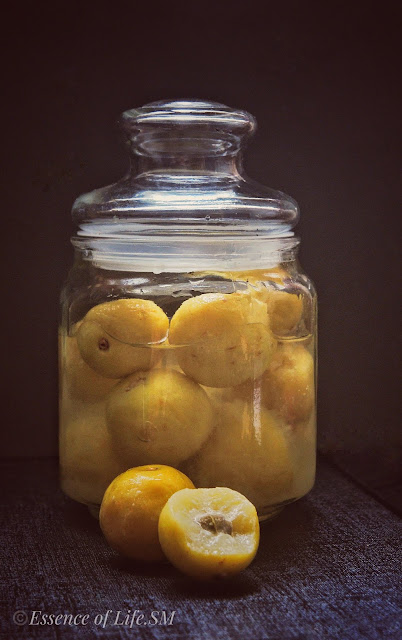
PRESERVED GOOSEBERRIES - GOOSEBERRIES IN BRINE
  • Drain the Gooseberries from the brine.
  • Deseed and separate the Gooseberries into Cloves and keep it aside.
  • Meanwhile, dry roast the Fenugreek seeds on a low flame until it splutters and turns fragrant.
  • Grind the roasted Fenugreek Seeds into a fine powder and keep it aside.
  • Heat Oil on a high flame until it fumes.
  • Lower the flame and splutter Mustard Seeds.
  • Add Turmeric Powder, Red Chilli Powder & Asafoetida Powder to the above and give a quick stir.
  • Pour in the Vinegar along with a pinch of Sugar and mix well.
  • Add the Gooseberry Cloves along with some Salt and mix well.
  • Cook the Pickle on a low flame for few minutes.
  • Finally, add powdered  Fenugreek seeds Powder to the above and mix well.
  • Leave this on a very low flame for a few minutes.
  • Switch off the flame and allow the Gooseberry Pickle/Nellikkai Urugai/Achar to cool down.
  • Store the Gooseberry Pickle/Nellikkai Urugai/Achar in a clean and dry Glass/Ceramic Jar.
  • Gooseberry Pickle/Nellikkai Urugai/Achar tastes great with Curd Rice and is the best accompaniment with Rice Gruel(Kanji/Porridge).
  • Serve a smidgen of Gooseberry Pickle/Nellikkai Urugai/Achar to go along with Plain Rice, Sambar/Curry/Rasam of your choice for a simple lunch or serve it in an elaborate Vazhayila Virundhu/Sadhya.


METHOD 2 :

Instant Gooseberry Pickle :

  • Clean, Wash and pat dry the Gooseberries.
  • Steam cook the Gooseberries for about 20-30 Minutes or until Gooseberries turn soft and cooked.
  • Allow it to cool.
  • Deseed and separate the Gooseberries into Cloves and keep it aside.
  • Meanwhile, dry roast the Fenugreek seeds on a low flame until it splutters and turns fragrant.
  • Grind the roasted Fenugreek Seeds into a fine powder and keep it aside.
  • Heat Oil on a high flame until it fumes.
  • Lower the flame and splutter Mustard Seeds.
  • Add Turmeric Powder, Red Chilli Powder & Asafoetida Powder to the above and give a quick stir.
  • Pour in the Vinegar along with a pinch of Sugar and mix well.
  • Add the Gooseberry Cloves along with some Salt and mix well.
  • Cook the Pickle on a low flame for few minutes.
  • Finally, add powdered  Fenugreek seeds Powder to the above and mix well.
  • Leave this on a very low flame for a few minutes.
  • Switch off the flame and allow the Gooseberry Pickle/Nellikkai Urugai/Achar to cool down.
  • Store the Gooseberry Pickle/Nellikkai Urugai/Achar in a clean and dry Glass/Ceramic Jar.


NOTES :

  • Care should be taken while dry roasting fenugreek seeds.  Do not burn them, which would totally spoil the taste of the pickle.
  • Adjust the amount of Red Chilli Powder to suit your spice level.
  • Pour ample of Gingelly Oil to the pickle.  This will prolong the shelf life of the pickle.
  • Avoid using steel/aluminium/copper container for preserving the Gooseberry Pickle/Nellikkai Urugai/Achar, as they tend to react with the acidic nature of salt and mangoes.
  • A suitable method is to store them in Clean and dry sterilized Glass/Ceramic/Porcelain Jars.
  • Always use clean & dry spoons while handling this Gooseberry Pickle/Nellikkai Urugai/Achar.
  • Wet jars/spoon can spoil the pickle as the moisture in them helps in the growth of Fungus and that would spoil the pickle. 
  • If you feel that extra oil should be added, once the pickle is made, Heat the Sesame Oil, cool it and then pour it over the pickle.
  • If stored properly,  Gooseberry Pickle/Nellikkai Urugai/Achar can last for a month at room temperature and up to a year in the refrigerator.
  • The Pickle should be stored in a dry and dark place.
  • In humid climates, it is advisable to keep the pickle refrigerated to avoid spoilage and for longer shelf life.
HOW TO...
HOW TO PRESERVE GOOSEBERRIES - GOOSEBERRIES IN BRINE

     Though Mangoes are synonymous to pickling in India, seasonal produce like Gooseberries, Lemon etc., find their place in an Indian pantry in terms of storage and preservation for later use.  Pickling has an age-old history & tradition which reflects every part of the world which is still prevalent in Indian households. Drying the produces in Sun or Pickling them in Vinegar or curing it with Salt or in Brine are few methods used for preserving the produces.  BRINE is basically a salt solution. Also Pickling in brine is free from any pathogenic bacteria. Pickling was one method to ensure year-long availability of seasonal products.
     Gooseberries of good quality, unspoiled ones without blemishes can be used for the purpose. Utter care should be taken before pickling them.  Thoroughly sterilize and dry the utensils or jars.  Wash and dry the Gooseberries before adding them into the brine.
     When it comes to preserved Gooseberries I cannot surely brush off my article without writing about my memories related to it.  When I was in my Primary Classes, my school was just a street away.  So there was no need of carrying Lunch Boxes or snacks for recess.  My classmates used to bring their lunch boxes and at least a few bought their snacks for recess time.  As a kid, I was always fancied by those packed snacks in colourful snack boxes.  It was during a season that they started bringing Salted Gooseberries along with Salt & Red Chilli Powder.  It became a trend around the classroom that I literally was urged to do the same.  As a common scenario, my Mom had a big bottle of Salted Gooseberries, well seasoned and cured.  As simple as that I planned to ask her to pack some for my recess period.  When I asked her, my so-called strict mother said, will anybody take such things to school?!!! Oh no, all my expectation went down the drain.  I was totally disappointed.  A few days later I took courage to take few Gooseberries and packed them in a Paper torn out from my notebook.  I even managed to pack some Red Chilli Powder and Salt.  Stealthily I kept it safe inside my school bag.  Mind you, I was only 6 years old then...  Next day, as usual, I took my bag and was about to leave to School, misfortune hit my way or maybe even panic could have struck my conscience... I dropped my bag, all the books along with those Gooseberries fell down.  Needless to say the look in my Mom's face.  What happened next is a history which everybody can guess...
      Another anecdote related to Salted Gooseberries goes with my husband.  If I start the story with the line... Once upon a time, there lived a naughty boy, it would be an understatement.  He is still the naughtiest.  A cranky little boy who has a great love for food.  His love for eating is so that he even forgets the school bag to school, but never his lunch bag.  He would always say who went to school to study?  I always wanted to play and eat.  When he was in Primary classes he studied in a convent.  The Nuns who were his teachers sold Salted Gooseberries to kids during the recess time. It was my husband's duty to sell those Gooseberries to his fellow classmates.  He loved to do the job because he stealthily took few cloves of Gooseberries floating apart in the jar, which those Nuns rarely noticed. A reward gifted by himself for the duty he was rendered into.  He has lots of stories related to food during his childhood days and this particular one always reminds me that every kid would have some memory related to such simple goodies back then.        
 

For more PICKLE RECIPES, Click here...

Cuisine - Indian
Recipe Type - Pickling
Difficulty - Easy
Yields - 2- 21/2 Cups
Author - SM

Preparation Time - 10 - 15 Minutes
Cooking Time - 5 Minutes 
Maturing Time - Few Weeks


HOW TO PRESERVE GOOSEBERRIES - GOOSEBERRIES IN BRINE

HOW TO,,,
HOW TO PRESERVE GOOSEBERRIES - GOOSEBERRIES IN BRINE


INGREDIENTS :

Gooseberries - 500 Gms
Salt - 1/2 Cup
Warm Water - 1/4 Cup

METHOD :

  • Boil the water and allow it to cool.
  • Clean the Gooseberries and allow them to dry on a clean kitchen towel.
  • Wipe them off with a clean cloth to get rid of any extra wetness.
  • Take a clean and dry Bottle or Bharani (Porcelain Jar).
  • Put some salt at the bottom of the Jar.
  • Put few Gooseberries over it.
  • Again put some Salt and top it up with Gooseberries.
  • Follow the suit until all the Gooseberries are salted.
  • Close the lid of the jar and mix well, until the Gooseberries are well coated with Salt.
  • Pour warm water into the jar and mix well.
  • Tightly close the jar and keep it aside in a dry & dark place for a few weeks.
  • Stir the Gooseberries every two days, so that the essence of Gooseberries are well infused into the brine.
  • Initially, the Gooseberries would float over the brine, but gradually they would absorb the brine and double their size.
  • Gooseberries will be ready within a few weeks time.
  • These can be stored in a dry and dark place.
  • In humid climates, it is advisable to keep them refrigerated to avoid spoilage.


NOTES :

  • This Brine preserved Gooseberries make tasty and unique, briny & spiced pickles, which taste awesome with curd rice.
  • Avoid using steel/aluminium/copper container for preserving the Gooseberries, as they tend to react with the acidic nature of salt and Gooseberries.
  • A suitable method is to store them in Clean and dry sterilized Glass/Ceramic/Porcelain Jars.
  • Always use clean & dry spoons while handling these preserved Gooseberries. 
  • Wet jars/spoon can spoil the pickle as the moisture in them helps in the growth of Fungus and that would spoil the Gooseberries. 
  • If stored properly, these preserved Gooseberries can last for a year or so.
  • Can use these preserved Gooseberries to prepare Gooseberries Pickle, Gooseberry Pachadi, Gooseberry Chutney etc., (Just use the Gooseberries and adjust the amount of salt in the recipe).
Newer Posts Older Posts Home

Search Essence of Life - Food

Popular Posts

  • Pesaha Appam & Paal Recipe | Traditional Kerala Indri Appam for Maundy Thursday
  • How to Make Kerala Kanji | Traditional Rice Porridge with Payar, Chammanthi & Achar
  • Maida Chapati - All-Purpose Flour Chapati
  • Kizhi Parotta: Kothu Parotta and Salna Wrapped in Banana Leaves
  • Madurai Mutton Chukka Varuval

Ebook - "What I Cook – For Onam"

Ebook - "What I Cook – For Onam"
Celebrate Onam the authentic way! Discover 25 timeless Kerala Sadya recipes in my ebook What I Cook – For Onam. From avial to payasam, bring home the flavours of tradition. Available now on Amazon!

I Me Myself

SM - Essence of Life
Essence of Life - Food is all about daily cooking with a simple sense of taste and health. It is all about food. Not a day goes by without eating for most of us, so what we eat matters on the whole.

Food in the mode of goodness increases the duration of life, purifies one's existence, and gives strength, health, happiness, and satisfaction. Above all ingredients, the most vital one in my kitchen is love.
Sm
@ Essence of Life - Food

Subscribe Essence of Life - Food

"Guide to our Cookie Policy"

  • Cookie Policy

ASK FIRST!

Please note that all rights for the photographs and texts on this blog, unless otherwise mentioned, rests with the author. Please do not use without permission.

Labels

AROUND THE WORLD 160 BAKING 23 BEVERAGES 18 BIRIYANI & PULAO 28 BREAKFAST 78 CURRIES 103 DESSERTS 118 FROM GODS OWN COUNTRY 178 From My Family's Kitchen - Heirloom Recipes 52 GLOSSARY 23 HOW TO... 64 KERALA PALAHARAM 20 KONGU CUISINE 21 KUIH MUIH 5 MALAYSIAN CUISINE 80 MIDDLE EASTERN CUISINE 12 Manvasanai - Flavours from Tamil Soil 126 PICKLES 26 RICE DISHES 65 ROTIS 9 SADHYA 117 SNACKS & SAVOURIES 69 SOUPS 10 SPICE POWDERS 18 TIFFIN ITEMS 64 VIRUNDHU 15 WINES 10 eBook 1