Essence of Life - Food
  • Home
  • From My Kitchen
    • Heirloom Recipes
    • From God's Own Country
    • Sadhya
    • Kongu Cuisine
    • Chettinaad Cuisine
    • South East Asian
    • Around the World
  • Ebook
  • I Me Myself

SNACKS & SAVOURIES
KARA PORI - SPICY PUFFED RICE


      This Kara Pori is a popular snack in Tamil Nadu.  Particularly it is a common snack in a Coimbatore household.  A quick and easy evening snack, with very few ingredients.  Puffed Rice, Groundnuts/Peanuts, Roasted Gram Dhal(Pottukadalai) and a few seasoning is all that you need for this spicy Snack.  I have used Dry Red Chillies and Garlic for flavouring and have seasoned it with Salt.
     It was a common scenario in our Street around 3-4p.m, a street vendor who sells Puffed Rice, Pottukadalai, Groundnut etc., comes with his small pushcart during this time.  The ladies after their afternoon Siesta would flock around to buy their portion of ingredients and there they go into their kitchen to prepare this Teatime Snack ready for their kids when they come back from School/College.  You can always see a big airtight container filled with this Kara Pori in most of the households.
     Cheap & best yet tasty and filling. My Mom used to make it for us.  I am not a big fan of this snack.  But my hubby is like head over heels for this that I started making it.  But lately, it happened that the puffed rice went soggy when I tried making it after coming down to Malaysia.  And I stopped making it, left alone long forgotten.
     The recent COVID-19 & MCO (Movement Control Order) has kept us all at home.  An unexpected period of time never experienced before.  The quarantine period is strictly obliged and followed where my husband went all alone for Shopping Groceries.  There he came with a big bag of Puffed Rice and immediately he wanted to make this Kara Pori.  Pondered through the web, went through some videos from YouTube and there went my trial once again.  Hurray!!! there it came out unflawed -. Crispy & Spicy.  The first batch got over in no time and back to back I made two batches.  So here you go with the utmost simple snack for this quarantine period - KARA PORI!!!


For more SNACKS & SAVOURIES, Click here...


Cuisine - Tamil Nadu(Coimbatore)
Recipe Type - Snack
Difficulty - Easy
Serves - 4
Author - SM

Preparation Time - 5 Minutes

Cooking Time -  5 -10 Minutes


HOW TO COOK KARA PORI - SPICY PUFFED RICE

SNACKS & SAVOURIES
KARA PORI - SPICY PUFFED RICE


INGREDIENTS:

Coconut Oil - 3 Tbspn
Garlic - 8-10 Cloves
Dry Red Chillies - 3-4 Nos.
Curry Leaves - 2 Sprigs
Ground Nuts - 1/3 Cups
Roasted Gram Dhal(Pottu Kadalai) - 1/3 Cups
Turmeric Powder - 1/2 Tspn
Salt - To Taste
Puffed Rice - 5-6 Cups

METHOD:

  • Peel the Garlic, Crush it and keep it aside.
  • Heat Oil in a Pan, saute crushed Garlic Cloves in the oil until fragrant and slightly browned.
  • Add Dry chillies snapped off into small pieces, along with Curry Leaves and fry on a very low flame for few minutes.
  • Add Pottukadalai and Groundnut to the above and roast in on a very low flame until crisp and roasted. 
  • Immediately add Turmeric Powder and Salt.
  • Fry this on a very low flame until the raw flavour goes.
  • Care should be taken not to burn the ingredients.
  • Add the Puffed Rice and give a good stir until all the ingredients are well combined.
  • Let the flame be at low all the while.
  • Allow it to cool for a few minutes.
  • Store Kara Pori in an airtight container.
  • Kara Pori is a good tea time snack and goes well with hot-hot Tea/Coffee.

NOTES:

  • Taste the Puffed Rice, some Puffed Rice tends to be salty on its own, so adjust the amount of salt in your recipe accordingly. 
  • Adjust the number of Dry Chillies to suit your spice level.
  • I have used slightly crushed Garlic in the recipe, which gives a wonderful flavour to the Kara Pori.
  • Saute it on a low flame until fragrant and slightly browned.
  • Can add a teaspoon of Red Chilli Powder for a Spicy Kara Pori.
  • Coconut Oil yields a wonderful flavour can use any other vegetable oil/ghee.


MALAYSIAN CHICKEN CHOP

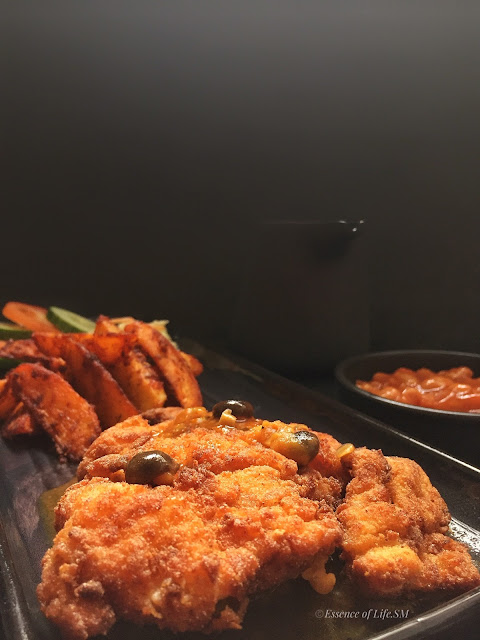
     Living in Malaysia, I have seen Chicken Chop in the menu of all “Western Food” hawker food Stalls. And we love the Chicken Chop Restaurant - "IT ROO CAFE" in JB. It is one place we frequent and their Chicken Chop is famous in town. Super tender chicken wrapped in a crunchy batter, deep-fried or grilled and served with a Creamy Mushroom Sauce/Black Pepper Sauce. Chicken Chop is usually served with French Fries or Baked Potatoes, steam cooked Classic Vegetables or Baked Beans along with Coleslaw and slices of fresh Cucumbers & Tomatoes.
     Malaysia is so fond of this Chicken Chops that a Doctor even gave a Medical Certificate for Chicken Chop, ha... ha... ha... I'm not kidding maybe he wanted to write Chicken Pox and ended up writing Chicken Chop.   So goes the tale of Malaysian Chicken Chop.
     Like any other recipe, Malaysian Chicken Chop fancied me and with my cooking whims tried many recipes of Chicken Chop.  And finally, I succeeded in getting the recipe as we like it at home.  And again it was my Son's taste instinct which found an ingredient which yielded me with more or less a similar Chicken Chop which suited to our taste buds.  And the secret ingredient was Murukku Flour. I had tried dusting the Chicken Breasts with All-purpose Flour, Corn Flour, Bread Crumbs, dipping them in Egg and double coating with batter etc., & etc. Though the recipes were good enough, crisp & crunchy outer layer and juicy & succulent meat, all the while we felt something was missing in the recipe and Murukku Flour did justification to please our taste buds.

Cuisine - Malaysian
Course - Main
Difficulty - Medium
Serves - 4
Author - SM

Preparation Time - 25 -30 Minutes
Marination Time - 3-4 Hours/Overnight
Cooking Time -  45 Minutes - 1 Hour

The Malaysian Chicken Chop is usually served with
  • Deep-fried Chicken
  • Mushroom Sauce/Black Pepper Sauce
  • Baked Potatoes/French Fries
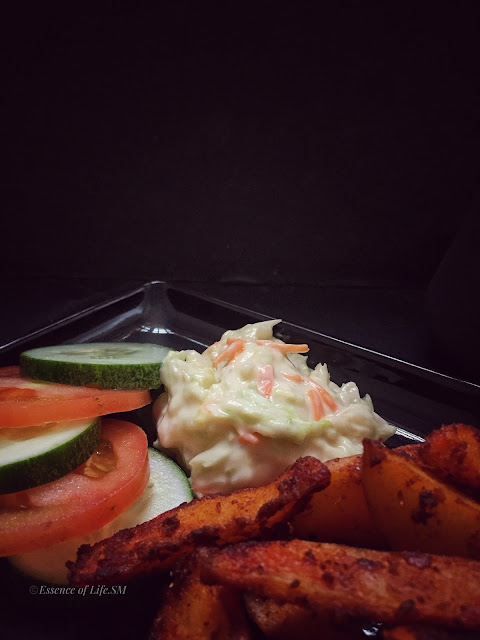
  • Coleslaw
  • Steam-cooked Vegetables/Baked Beans
  • Fresh Slices of Cucumber & Tomatoes

HOW TO COOK MALAYSIAN CHICKEN CHOP

CHICKEN FRY FOR CHICKEN CHOP

MALAYSIAN CHICKEN CHOP
CHICKEN FRY FOR MALAYSIAN CHICKEN CHOP


     The Chicken Pieces are marinated in Buttermilk & Spices for a few hours (or overnight).  Longer the marination time, the meat pieces turn out to be super moist & flavourful. I usually use Chicken Breasts - boneless & skinless, for this chicken chop recipe. Place a plastic wrap over the Chicken Breasts then gently pound it with a meat tenderizer/ a heavy object until the Chicken Pieces turn out to be about half an inch thick. This will help ensure that the whole piece absorbs the flavours and gets evenly cooked.
     Then place the Chicken Pieces in a ziplock bag and marinate it with the ingredients mentioned under 'To Marinate', Seal the bag, and shake to mix it well, then gently massage the sauce into the chicken. Let it marinate in the fridge for at least 3-4 hours or even better, overnight.

Try this BUTTERMILK CHICKEN FRY, for Malaysian Chicken Chop.

INGREDIENTS:

To Marinate:

Chicken  - 4 Breast Pieces
Buttermilk - 1 Cup
Turmeric Powder - 1/4 Tspn
Red Chilli Powder - 3/4 Tbspn
Ginger Garlic Paste - 3 Tspns(Optional)
Salt - To Taste

For the Flour Mixture:

Murukku Flour - 11/2 Cups
Baking Powder - 1 Tbspn(Optional)
White Pepper Powder - 1 Tbspn
Salt - To Taste

For Deep-frying:

Oil

METHOD :

To Marinate:

  • Clean, Wash and drain the Chicken pieces in a colander.
  • Place a plastic wrap over the Chicken Breasts then gently pound it with a meat tenderizer/ a heavy object until the Chicken Pieces turn to be about half an inch thick. 
  • This will help ensure that the whole piece absorbs the flavours and gets evenly cooked.
  • Then place the Chicken Pieces in a ziplock bag and marinate it with the ingredients mentioned under 'To Marinate'.
  • Seal the bag, and shake to mix it well, then gently mix it with your hands until the chicken pieces are well coated with the marinade.
  • Leave the marinated the Chicken Pieces in the refrigerator for about 3-4 Hours/Overnight.

For Malaysian Chicken Chop:

  • Mix the Murukku Flour, Baking Powder along with a dash of salt & Pepper Powder in a wide bowl and keep it aside.
  • Alternatively can substitute Murukku Flour with 2 Cups of All-Purpose Flour + 1/4 Cup of Corn Flour.
  • Remove one Chicken Piece from the marinade at a time and immediately dredge it with the flour mixture.
  • Make sure the Chicken Pieces are completely coated with the flour mixture.
  • Follow the suit for the rest of the Chicken Pieces.
  • Meanwhile, heat Oil in a deep pan on a high flame.
  • Let the oil smoke off.
  • Now reduce the flame to medium-high and deep fry the coated Chicken Pieces.
  • Fry one or two pieces at a time so the oil doesn’t cool down. Make sure not to overcrowd the pan.
  • Turn & fry the chicken so that it browns evenly,
  • Remove the Chicken Pieces from the oil when cooked through and it turns into golden brown in colour.
  • When chicken is done, drain it on a wire rack to keep the fried Chicken crispy.
  • Serve Malaysian Chicken Chop hot, with your favourite accompaniment.
  • Or simply serve it with your choice of Sauces, dips or Salads.

NOTES:

  • To save time & added flavour, you can marinate the chicken earlier and leave it in the refrigerator.
  • Longer the marination time, better the texture.
  • Before dredging the Chicken pieces into the flour, make sure that the pieces are dripping with the marinade.
  • Do not bloat it off.
  • The wetness from the marinade helps to get the pieces well coated with the flour and make an appealing crust.
  • Use a large wide bowl and an excessive amount of flour, so the chicken can be tossed around without a lot of handling.
  • Excessive flour also ensures that the brine doesn’t turn the dry mixture into a batter, which will make the coating doughy. 
  • Can also dredge the Marinated Chicken Pieces with Bread Crumbs for extra crunchy Chicken fries.
  • Another important aspect is to make sure your oil is hot enough.
  • Next thing is don’t overload the pan while frying the Chicken Pieces
  • Overcrowding the pan may cause the temperature of the oil drop, which will make the coating break apart from the Chicken pieces. 
  • Deep fry the Chicken pieces on a medium-high flame.
  • Frying time totally depends upon the size of the Chicken Pieces and the temperature used to fry it.

CREAMY MUSHROOM SAUCE FOR CHICKEN CHOP


MALAYSIAN CHICKEN CHOP
MUSHROOM SAUCE FOR MALAYSIAN CHICKEN CHOP


INGREDIENTS:

For Mushroom Sauce:

Butter  - 1 Tbpsn
Onion - 1 No.(Small)
Mushrooms - 1/4 Cup
Chicken Stock - 1/2 Cup
Oyster Sauce - 1 Tbspn
Brown Sugar - 1/2 Tbpsn
Salt - To Taste
Corn Starch - 1 Tspn


METHOD:

  • Heat Butter in a Pan on medium heat.
  • Add thinly sliced Onions & Mushrooms & saute until Mushrooms turn translucent.
  • Pour in the Oyster Sauce and give a quick stir.
  • Immediately pour in the Chicken Stock along with Brown Sugar & Salt.
  • Allow the mixture to boil.
  • Meanwhile, mix Corn Flour in 2 Tbspn of cold water without any lumps.
  • Pour the Corn Flour mixture to the Mushroom Sauce and mix well.
  • Boil this until the Mushroom Sauce thickens.
  • Switch off the flame and keep it aside.

NOTES:

  • I have used Bunapi Mushrooms in the recipe.
  • Can use Button Mushrooms or any other Mushroom variety of your choice.
  • Can even substitute it with Shitake Mushrooms.
  • I have used fresh Chicken Stock, can substitute it with Chicken Stock Cubes(dissolve it in water).
  • Adjust the amount of salt as the Oyster Sauce and Chicken Cubes already have Salt content in it.
  • Adjust the consistency of the Mushroom Sauce to suit your preference.


OVEN-BAKED POTATOES

MALAYSIAN CHICKEN CHOP
OVEN-BAKED POTATOES FOR MALAYSIAN CHICKEN CHOP

INGREDIENTS:

Potatoes - 6 Nos.
Garlic Butter/ Oil - 3 Tspns 
Red Chilli Powder - 1 Tspn
Italian Herbs - 1 Tspn
All Purpose Flour - 1 Tbspn 
Spring Onions- Few
Salt - To Taste.


METHOD:

  • Wash and clean the potatoes
  • Cut them into Wedges or Quarter them.
  • Drop them into a large pan and pour enough water to cover them. 
  • Add salt, then wait for the water to boil. 
  • When it boils, lower the heat, and cook the potatoes uncovered for 2 Minutes. 
  • Drain the potatoes in a colander, shake the colander back and forth a few times to fluff them up. 
  • Sprinkle the Flour and Salt, and shake it once or twice until they are evenly and thinly coated with the mix.
  • Melt the Garlic Butter in Microwave High for 2 minutes.
  • Mix the Red Chilli Powder and the Italian Herbs into the hot butter and give a toss.
  • Again Microwave it on High for a minute.
  • Carefully drop the Potatoes into the hot butter.
  • Turn and roll them until the Potato Wedges are coated well with spices and butter.
  • Spread them in a single layer.
  • Roast the Potatoes in Microwave High for 8 Minutes.
  • Turn them over and Roast it again for 6-8 Minutes, until they turn golden and crispy.
  • Sprinkle finely chopped scallions and Microwave at High for a minute.
  • Serve Hot with any dish or soup of your choice.
For a detailed Recipe on Oven-baked Potatoes, click here...

NOTES:

  • Garlic Butter can be substituted with plain butter or any type of vegetable oil. 
  • Coating the Potatoes with a small amount of butter/oil is the trick behind getting nice and crispy skins and soft, fluffy texture inside.


COLESLAW

MALAYSIAN CHICKEN CHOP
COLESLAW FOR MALAYSIAN CHICKEN CHOP


INGREDIENTS:

Vegetables:

Cabbage - 1 Cup
Carrots - 1/4 Cup 

Optional Vegetables:

Onion - 1 No.
Bell Peppers - few

For Coleslaw Dressing

Mayonnaise - 1/2 Cup
Vinegar - 11/2 Tbpsn
Salt - To Taste
Sugar/Honey -11/2 Tbspn

METHOD:

  • Clean, Wash & Shred the Cabbage and cut it into thin Strips. 
  • Clean, Peel & wash the Carrots and then cut it into thin long strips(about1"long). 
  • In a big mixing bowl, combine the ingredients mentioned under "For Coleslaw Dressing."
  • Add the Vegetables and just toss to evenly coat.
  • Can serve it right away.
For a detailed Recipe on Homemade Coleslaw, click here...

NOTES: 

  • Cutting the Cabbage & Carrots into thin strips gives a crunchy texture to the Coleslaw.
  • Can add a combination of Cabbage varieties too(Green, White, Purple etc.,).
  • Can also add thinly sliced Onions or vegetables like Bell Pepper, Olives, Spring Onions, Pickles or fruits like Apple, Pineapple and add some Nuts for an added crunchiness in every bite.
  • Some recipes even call for adding Dijon Mustards or seasoning the Coleslaw with Herbs or Pepper Powder.

FRESHLY SLICED CUCUMBERS & TOMATOES AND BAKED BEANS


MALAYSIAN CHICKEN CHOP


INGREDIENTS:

Cucumber - few Slices
Tomato - few Slices
Baked Beans - 1 Tin(Canned)

METHOD:

  • Clean & Wash the Cucumber, cut off the ends and slice few pieces(Skin on) out of it.
  • Slice Tomatoes and keep it aside.
  • I have used canned Baked Beans in this recipe.
  • I have removed it from the can, boiled it for a few minutes and then I served it along with Malaysian Chicken Chop.

HOW TO SERVE MALAYSIAN CHICKEN CHOP

MALAYSIAN CHICKEN CHOP

Serving Suggestion:

  • In a Serving Tray, place the deep-fried Chicken Piece.
  • Pour in a ladle of Mushroom Sauce over it.
  • Serve it along with Oven-baked Potatoes, Homemade Coleslaw, Sliced Cucumbers, Tomatoes & Baked Beans.

Notes:

  • I have served Oven-baked Potatoes in the recipe, can also serve French Fries along with this.
  • Another commonly served sauce for this Malaysian Chicken Chop is Black Pepper Sauce.
  • Can serve fried Eggs or Eggs cooked Sunny side up.
  • Serving fresh Cucumber & Tomatoes are purely optional.
  • Serving Baked Beans is also an optional choice.


SALADS
HOMEMADE COLESLAW RECIPE

A Slice of Soviet in My Soul

     My love for Russia particularly Russian Books & Communism started during my primary school days.  Rather young for the thoughts of Communism indeed.  But I was fascinated by the ideology along with Russia then. The place of War & Peace, Anna Karenina, Leo Tolstoy, Pushkin, Lenin and Stalin... I grew up reading Russian literature, mainly classics. I had always wanted to travel to Russia then. I still have Russia particularly Moscow & Leningrad(St.Petersburg) in my travel list until today.
    

A Bookshop That Knew My Childhood

    Even as a schoolgirl, I was already poring over Russian classics, books I’d won as prizes for debates, essays, and dance competitions. During my Primary School Days, the school gave away Prizes for our extracurricular and academic abilities in the form of Books.  Most of the books were Russian classics and I loved reading them.  I found that it was a kind of opening into another world. Masha & the Bear, Emelya and the Pike, The Blue Cup etc., & etc., as early as when I was just 3-5 years old and it led to many other Good Reads.  I even remember reading a book about Crusaders (though a European Classic), when I was 8, later deeply realising the depth of history meant in the book. Russian Collaboration with India & Indira was a known fact in the 1980s that there was a Book shop around the shop lots in Nehru Stadium - Century Book House(If my memory isn't rusted).
 
    I stepped into Century Bookshop near Nehru Stadium a few months back— a place that once felt like a treasure trove to my younger self. As I spoke with the salesperson, I couldn’t help but share my fond memories of visiting the shop during my school days, especially my excitement over picking up Russian classics in Malayalam.

    When I spoke of Pushkin, Tolstoy, Alexander Raskin and those dusty, dog-eared pages that shaped my early reading years, the lady behind the counter listened wide-eyed, a little awestruck. Those books were more than stories — they were passports to a world I had never visited.

    In 1987, under the vibrant banner of “Hindi-Rusi Bhai Bhai”, India and the Soviet Union came together in one of the most glorious cultural collaborations in their shared history. And somewhere amidst the rhythm of performances and the roar of applause in Coimbatore, a young girl in a Korathi costume danced her heart out — that was me. Today, I feel incredibly privileged to recall that I was part of this grand fiesta. Back then, I wasn’t just another performer — I was an ardent admirer of the USSR.

    My curiosity about Karl Marx, Lenin, and the ideals of Communism wasn’t something taught — it was something I absorbed, instinctively drawn to a culture that felt both distant and strangely familiar. Their literature, their resilience, their hauntingly lyrical storytelling — it all left a mark.  I still have those old, slightly musty Russian books stacked in a quiet corner of my shelf — Pushkin, Tolstoy, Gorky... their words may have aged, but my awe hasn’t. 

     The '90s bought in a wave of change as the Soviet Union gave way to Russia and these publications gradually went out of circulation.  I still have those books saved at home.  Even when I recently found my favourite childhood read Achante Balyam (When Daddy was a Little Boy), by Alexander Ruskin in a pdf form.  I jumped out of happiness like a kid. Saved it into my Phone's Books Library and read it once again.  Loads of Nostalgic memories lining up along with the book.

     There came my acquaintances with Coleslaw, Pavlova & Vodka.  Remember these were my know-hows when I was 6 years and I had to use my dictionary to find out what these words meant.  Oh! they were foods, was a big realisation and it took me long years after that to even taste a Coleslaw and Pavlova. Later knowing the fact that Coleslaw originated from Dutch Cuisine and not Russian.  But never going to taste Vodka & that's my choice.
     My first affair with Coleslaw was when I got hold of an Antique Malayalam Cook Book. When I found the recipe in it, the first recipe I tried from the book was Coleslaw. This homemade Coleslaw Recipe uses just 4 base Ingredients - Mayonnaise, Vinegar, Salt & Sugar(Some recipes even call for adding Dijon Mustards). Ya, don't forget to add finely shredded Cabbages & Carrots into the creamy dressing. You can use any type of Cabbage for this recipe or combine your favourites Cabbage varieties in it.  Then comes the Carrots, grate it/chop it up into thin strips. Chopping the Cabbages & Carrots into thin long strips is the secret behind crunchy Coleslaw.  So spend some time getting it precisely done.  You can even add thinly sliced Onions & Bell Peppers, Pickles, Olives, garnish it with Spring Onions, season it with Herbs etc., 
     This Coleslaw recipe is creamy, crisp and refreshing, with just enough creamy dressing to bring it all together. It's a great side for many different dishes! Coleslaw goes well with just about anything Roasted/Grilled Chicken /Lamb, Chicken Chop, Lamb Ribs, Fish & Chips, Deep-fried Chicken (a default combo served in KFC). For a Desi fiesta try Coleslaw with Tandoori Chicken & Tangdi Kababs or simply serve it along with Cutlets and Kebabs. I even love them stuffed inside Sandwiches, Burgers or Hot Dogs.

Cuisine - Dutch, Russian
Course - Side Dish
Difficulty -Easy
Serves - 3-4
Author - SM

Preparation Time - 10 -15 Minutes


HOW TO MAKE COLESLAW/HOMEMADE COLESLAW RECIPE

SALADS
HOMEMADE COLESLAW RECIPE


INGREDIENTS:

Vegetables:

Cabbage - 1 Cup
Carrots - 1/4 Cup 

Optional Vegetables:

Onion - 1 No.
Bell Peppers - few

For Coleslaw Dressing

Mayonnaise - 1/2 Cup
Vinegar - 11/2 Tbpsn
Salt - To Taste
Sugar/Honey -11/2 Tbspn

METHOD:

  • Clean, Wash & Shred the Cabbage and cut it into thin Strips. 
  • Clean, Peel & wash the Carrots and then cut it into thin long strips(about1"long). 
  • In a big mixing bowl, combine the ingredients mentioned under "For Coleslaw Dressing."
  • Add the Vegetables and just toss to evenly coat.
  • Can serve it right away.

SALADS
HOMEMADE COLESLAW RECIPE


NOTES: 

  • Cutting the Cabbage & Carrots into thin strips gives a crunchy texture to the Coleslaw.
  • Can add a combination of Cabbage varieties too(Green, White, Purple etc.,).
  • Can also add thinly sliced Onions or vegetables like Bell Pepper, Olives, Spring Onions, Pickles or fruits like Apple, Pineapple and add some Nuts for an added crunchiness in every bite.
  • Some recipes even call for adding Dijon Mustards or seasoning the Coleslaw with Herbs or Pepper Powder. 


HOW TO COOK RICE
HOW TO COOK BROWN RICE

      This post is all bout "How to perfectly cook Brown Rice"  Brown Rice is a form of  Raw Rice, a whole grain. Once the Paddy is harvested, the inedible husk(outer cover) is removed(De-husking) from it and what you get is the BROWN RICE. The outer hull is still on there and that is what makes this Rice look, Brown.  It’s got the germ and bran, as well. These things give it more fibre with a slightly nutty flavour and a chewy texture.
      Once the process of dehusking is done, the rice goes through another process which is Polishing or removing the bran from the Brown Rice and what you get is the refined version of Rice - WHITE RICE/RAW RICE. The hull, germ, and bran have been removed from white rice. That makes it cook pretty faster. But brown rice can take up to 45 minutes to cook in a saucepan. That’s the big difference between a White Rice & a Brown Rice.
 
RICE
BROWN RICE

      I started using Brown Rice a bit lately.  Initially, I procrastinated the thought by thinking sometime later, would it be easy to cook, do I really need use Brown Rice etc., & etc., Then when I finally got a packet of Brown Rice, it was not an easy task as any other type of Rice.  I have always found myself lucky in the process of Cooking Rice.  I couldn’t get how to cook brown rice right during my first few attempts.  It turned out to be gluey and sometimes slightly uncooked, trying out with various Rice Water Ratio and also by Soaking the Rice.  As a thumb Rule again Trial & Error works, but finally the Trial & Error will yield you with Trial & Success.
      Brown Rice comes in various forms like Long Grained, Medium-grained, Short Grained etc., some packages even say they are converted or quick cook Rice.  Even there is Brown Basmati Rice.  More or less all these varieties cook more or less the same, but some don't. On the first hand, I always check the package to see what measurement they have suggested, follow it as a first Trial and if it works, all good, stick on to the measurement. But mostly I haven't been lucky enough in the process.  They say for Al Dante!!! But for me, it is surely not so.
   
RICE
BROWN RICE
   
     "Brown Rice" is the one variety of Rice used in South East Asian Countries, where rice is a staple.  It can be used for cooking it as Rice or converting it into Fried Rice Recipes or into Kuihs, Sweets, Porridges, Desserts etc., Brown Rice is finding its own place next to Raw Rice throughout South East Asian Countries. Even restaurants have started to have an option of serving you Brown Rice these days.  Brown Rice can be used while making Porridges/Kanji/Soups etc., 
     What's a deal cooking a Rice?  Maybe that is the first thing which can pop up into our mind. Cooking rice is a daily chore done without a second thought.  It can be any type/variety of rice -Raw Rice, Par-boiled Rice, Kerala Rose Matta Rice, Glutinous Rice, Fragrant/Jasmine Rice, Basmati Rice, Brown Rice,  Sushi Rice, Risotto Rice, Calrose Rice etc., & etc.,
     In general, any variety or type of Rice is cooked in pretty much the same way. They just sometimes vary only with Rice: Water Ratio & cooking time. You can easily adjust the texture of your rice to your liking by adding more or limiting water. My technique to get perfectly cooked rice is 'Trial and Error Method'. Any variety or type of Rice it can be, cooking with your instincts and mainly to suit your preference is the only foolproof method.  Few trial and errors don't matter in the long run of cooking and it is the only way to perfect yourself and find a suitable method of your own which perfectly suits your cooking style.
      Rinsing the Rice well before using and traditionally cooking the Rice in a Saucepan or an earthen Pot with a lot of water and then draining off the extra starch is one best method to cook Brown Rice, any type of Rice as a matter of fact.  This old-school method is followed by most of the yesteryear people. This method removes any extra starch from the Rice making it healthier.     Hectic lifestyle has brought forth easy and less time-consuming methods like cooking the rice in Rice Cooker/Pressure Cooker.  I have tried to give a few easy methods to perfectly cook Brown Rice, generally, I cook Brown Rice in a Rice Cooker or in a Pressure Cooker. The other methods are also tried and tested.


For detailed recipes on HOW TO COOK DIFFERENT VARIETIES OF RICE, Click here...

HOW TO BUY AND STORE BROWN RICE: 

RICE
BROWN RICE

    Brown Rice contains healthy Germs and Natural Oils in it.  so it has a shorter shelf-life compared to other varieties of Rice.  So it is advisable to store Brown Rice in the refrigerator/freezer in an airtight container.

  • A good quality Brown Rice would last longer.
  • Buy a long-grained Raw Rice (make sure the pack doesn't contain too many broken pieces).
  • Make sure the Rice is free from bugs(Weevils).
  • Store it in a clean and dry place in an airtight container free from moist.


HOW TO COOK BROWN RICE


HOW TO COOK RICE
HOW TO COOK BROWN RICE

FOR PERFECTLY COOKED BROWN RICE :

  • A good brand of Brown Rice will do half of the job.
  • The secret of perfectly cooked Brown Rice is getting the right ratio of water to rice. Typically, the instructions on the package call for 21/2 cups Water for every 1 cup of Rice (1:21/2 Cups Rice: Water Ratio), if you like your rice “al dente.”  If you need a bowl of softer rice, add a bit more water. 
  • Though it isn't necessary, I would prefer to rinse the rice before cooking. Rinse the rice once or twice, moving your fingers through the rice, until the water runs clear.
  • Drain the water.

METHOD:

HOW TO COOK BROWN RICE IN A SAUCEPAN

  • Place the Brown Rice in a saucepan big enough to hold the rice and water.
  • Add enough water to cover the rice by a little over 3/4 inch above the rice. (For 1 Cup of Raw Rice, I use just over 21/2 cups of  Water).
  • Keeping the saucepan uncovered, bring the rice to a boil.
  • Once the water begins to boil, lower the flame.
  • Cover the pot and cook the rice in low flame for about 15-20 minutes.
  • Once the rice is cooked, remove from fire and keep it aside for at least 10 minutes to cool down.
  • Fluff up the Brown Rice with a fork or a chopstick before serving.
*Sometimes the rice is cooked with more water.  Once the rice is cooked the remaining water is drained from the Saucepan. This reduces the stickiness of the rice.

HOW TO COOK BROWN RICE IN A RICE COOKER

(Rice Water Ratio 1: 21/2 Cups)

  • Place 1 Cup of Brown Rice in the rice cooker
  • Add 21/2 Cup of Water.
  • Cover the Rice Cooker and turn it on.
  • Cook until it automatically turns off.
  • Leave the in warm mode for another 5-10 minutes.
  • Allow it to cool for a few minutes.
  • Fluff up the Brown Rice with a fork or a chopstick before serving.


HOW TO COOK BROWN RICE IN A PRESSURE COOKER

(Rice Water Ratio 1: 2 to 21/4 Cups)

  • Place 1 Cup of Brown Rice in a bowl.
  • Add  2 to 21/4 Cups of Water.
  • Place the bowl inside the Pressure Cooker.
  • Fix the gasket inside the lid and cover the pressure cooker.
  • Begin cooking under pressure over high heat for 2-3 Whistle.
  • Then lower the flame and cook for 3 more whistles.
  • Switch off the flame and wait for the pressure to release.
  • Once the pressure is totally released, open the lid and remove the bowl with cooked rice from the pressure cooker.
  • Allow it to cool for a few minutes.
  • Fluff up the Brown Rice with a fork or a chopstick before serving.

HOW TO COOK BROWN RICE IN A STEAMER

(Soaking Overnight/4-6 Hours + Rice Water Ratio 1: 2 Cups)

     Brown Rice tastes best steamed. Steam cooking fluffs up the rice and retains the fullness of its natural texture.  And the most important factor they are gluten-free.  Any type of steamers do the trick brilliantly, maybe the traditional bamboo steamers, Stainless Steel/ Aluminium steamers, or Electronic Steamers. In each of these devices, hot, moist steam completely surrounds the grains of rice inside, cooking them perfectly. But the Rice need to be soaked overnight or at least for 4-6 hours. And also the cooking time is relatively higher compared to other methods.

  • Wash and soak 1 Cup of Rice in ample of Water.
  • Soak the Rice overnight or at least for 4-6 hours.
  • Once soaked, discard the water and drain the rice in a colander.
  • Fit a rack or steaming trivet into a pot or a steamer large enough to accommodate the bowl.
  • Pour about an inch of water into the pot or a steamer. 
  • Place 1 Cup of Brown Rice in a bowl on the rack (it shouldn’t touch the water in the pot),
  • Pour 2 Cup of Water to the Rice.
  • Cover the pot or steamer, and bring the water in the steamer to a boil in high flame. 
  • As soon as the water in the pot begins to boil, reduce the heat.
  • Steam Cook the Rice for 60-65 minutes.
  • Check whether the Rice is cooked.
  • Once the rice is cooked switch off the flames and take the pot off the heat.
  • Use tongs or a hot pad to remove the hot bowl from the steam pot.
  • Leave it aside for a few minutes to cool down.
  • Fluff up the Brown Rice with a fork or a chopstick before serving.

HOW TO COOK BROWN RICE IN AN ELECTRONIC STEAMER

(Soaking Overnight/4-6 Hours +Rice Water Ratio 1: 2 Cups)

  • Wash and soak 1 Cup of Rice in ample of Water.
  • Soak the Rice overnight or at least for 4-6 hours.
  • Once soaked, discard the water and drain the rice in a colander.
  • If using an electric steamer, fill the steamer's water reservoir to the "max" line.
  • Place 1 cup of Brown Rice and 2 Cups of Water in a bowl.
  • If your steamer has multi-level,  place the rice bowl at the lowest level.
  • Cover the rice bowl.
  • Turn on the steamer and set the timing for 60-65 minutes.
  • Check whether the Rice is cooked. 
  • Once it's cooked remove the rice bowl from the steamer and allow it to cool down for a few minutes.
  • Fluff up the Brown Rice before serving.


HOW TO COOK RICE
HOW TO COOK BROWN RICE

NOTES:

  • The amount of water needed can vary depending on the type of Brown Rice. The short-grained and Brown Basmati needs less water compared to the long grained & medium-grained Brown Rice.
  • I prefer cooking Brown Rice in a Rice Cooker.
  • Cooking Brown Rice in a rice cooker is equally tricky & easy. If you get the knack of it then it's really easy. Try cooking as per the ratio mentioned in directions of the Rice Cooker manual. Adjust the water until you get a perfectly cooked Raw Rice.  Few trial and errors don't matter.
  • I get perfectly cooked Brown Rice at 1:21/2 ratio in Rice cooker.
  • Use your preferred method to Cook Brown Rice.
  • Adjust the amount of water to suit the way you prefer Rice to be.
  • And while cooking for dishes like Fried Rice, reduce a little bit of water and cook the Brown Rice along with a drizzle of Oil.
  • Cold or @ room temperature Raw Rice suits well for making Fried Rice & variety rice dishes.
  • If you do not have a steamer, a large wok or a pan with a lid will do the job.
  • Fill the wok or pan with water, set a rack inside the wok to place the rice bowl and close the lid.


PINEAPPLES
HEALTH BENEFITS OF PINEAPPLE

      Pineapple, the fruit is so much related to Tropical for me. A popular fruit packed with nutrients, antioxidants and other helpful compounds, such as enzymes that can fight inflammation and diseases.
Pineapple and its compounds have been linked to many health benefits, including aiding digestion, boosting immunity and speeding up recovery from surgery. Pineapples can be eaten raw or can be processed in a variety of food products such as Jam, Juice, Wine and it is one popular fruit sold Canned. Pineapples are also incredibly versatile and can be consumed in a variety of ways.
     Pineapple offers a wealth of health benefits due to its high nutrient and antioxidant contents. 
Pineapples are rich in Vitamins A and K, Phosphorus, Zinc and Calcium.  It is especially rich in Vitamin C and Manganese. Vitamin C is essential for growth and development, maintain a healthy immune system and aiding the absorption of Iron from our diet. Meanwhile, Manganese is a naturally occurring mineral that aids growth, maintains healthy metabolism and has antioxidant properties.  Pineapple with its loaded nutrient is one best fruit to boost the immune system.

HEALTH BENEFITS OF A PINEAPPLE

      Pineapples are low in calories but have an incredibly impressive nutrient profile.  Pineapples have been a part of traditional medicine for centuries.

BOOSTS ENERGY:

      Pineapple has a rich source of Manganese, which helps to boost the creation of enzymes which are responsible for boosting up the energy in our Body.

WEIGHT LOSS:

     The high water content in the fruit proves beneficial for Weight Loss. Pineapples are a low-calorie, fat-free food with a low Glycemic Index. Pineapple also contains compounds with antioxidant properties and also helps to improve energy metabolism.

EYE HEALTH:

      Due to the high levels of antioxidants and Vitamin C, Pineapple may even help prevent cataracts and other age-related eye conditions like age-related Macular Degeneration, Glaucoma etc., Also, it contains a lot of Beta carotene – an essential element needed for a healthy vision that should be consumed regularly.

CANCER:

    Pineapple contains compounds that reduce oxidative stress and inflammation, both of which are linked to Cancer. The enzyme Bromelain is a compound found in Pineapple, which may stimulate cell death in certain cancer cells and aid white blood cell function. Pineapples contain loads of antioxidants that help to capture and fight against free radicals. This slows down the cell damage process, thus preventing some types of cancer. Certain enzymes found in Pineapple can shrink or kill cancer cells.

BLOOD PRESSURE: 

      Pineapple is rich in Potassium. The high Potassium content helps to reduce the effects of Sodium in people with High Blood Pressure.  It also helps to ease the tension of the blood vessels and promotes proper blood circulation to various parts of the body.  As your blood vessels relax, your blood pressure reduces and the flow of blood is less restricted. Pineapples can help prevent such conditions as Stroke and Atherosclerosis.

HEALTHY BOWEL:

     Pineapples provide the essential dietary fibre along with Vitamin C, which aids in Digestion & a healthy bowel.  Pineapples have proved to soothe inflammatory bowel diseases by reducing gut inflammation and preventing diarrhoea. Also, it helps to digest protein-rich foods.  Pineapples are a good source of fibre. It soothes the stomach and promotes digestion. It also hydrates the body and helps in regular bowel movements which may reduce the risk of constipation and protect against bowel diseases. It also strengthens the Kidneys by flushing out the toxins.

RELIEVES NAUSEA:

      A glass of Pineapple Juice can help beat the morning sickness for pregnant women. It is also helpful for people suffering from motion sickness.  Few glasses of Pineapple juice just before a long bus trip or a flight can reduce the symptoms of motion sickness.

IMMUNITY:

     Pineapples have anti-inflammatory properties that may boost the immune system.  Pineapples are a powerful source of Vitamin C, a primary water-soluble antioxidant that fights cell damage and prevents joint pains and heart diseases.

BONE HEALTH:

      In addition to Vitamin C, Pineapples also have plenty of Manganese which strengthens bones and connecting tissues. Manganese helps in preventing osteoporosis in postmenopausal women. One cup of fresh Pineapple Juice contains over 70% of the required daily dose of manganese. Kids, adults and elderly people should eat a few chunks of pineapple a day to keep their bodies strong.

HEALTHY SKIN:

     Vitamin C in the fruit proves beneficial for the skin. Manganese in Pineapples supports healthy bones and tissues, while the antioxidant vitamin C promotes healing and helps your body absorb Iron. Antioxidants in Pineapples may reduce cellular damage by protecting cell membranes.

TREATS SINUSES & ALLERGY SWELLINGS:

      Vitamin C helps to reduce mucus in the throat and nose. Adding Pineapples in your daily diet is believed to ease up up seasonal allergies.

TREATS COLD & COUGH:

      Pineapples are loaded with Vitamin C and anti-inflammatory compounds.  This proves to be a great remedy for treating nasty colds & coughing.  Bromelain present in Pineapples reduce swellings and respiratory problems. Enzymes in Pineapples helps to reduce the inflammation and clean up excessive mucus in the respiratory system.  It is believed that a glass of Pineapple Juice can soothe the symptom of Cold & Cough faster than a glass of Orange Juice.

PREVENT ASTHMA:

      Beta-carotene is found in pineapples can lower the risk of Asthma. It also helps to detox your body from harmful substances and reduce inflammation levels caused by stress, pollution and poor nutrition.

REDUCES BLOOD CLOT:

      Bromelain present in Pineapples helps reduce excessive coagulation of the blood.

 STRENGTHEN THE GUMS:

      Astringent agents present in Pineapples help to tighten up gum tissues and even prevent oral cancer. Pineapple is believed to fix loosening of teeth or the retraction of the gums. Keep your teeth healthy and strong by munching some Pineapples.

TREATS ACNE:

      Pineapples can be used both externally and internally to improve your skin condition. The anti-inflammatory qualities of Vitamin C, Bromelain and special enzymes found in Pineapples proves beneficial in treating Acne.  Mix it with some turmeric for an amazing natural mask to treat your face.

TREATS FOOT CRACKS:

      Scrubbing your feet with Pineapple helps to get soothing relief for inflammation and swelling, triggered by the cracks and make your feet smooth and radiant.

STRENGTHEN THE NAILS:

     Pineapple is a good source of Vitamin A & Vitamin B.  These minerals helps to keep your nails strong and healthy. It could be applied topical and munched regularly.

CURE CHAPPED LIPS:

     Pineapple helps to hydrate the body. Mix Pineapple with Coconut Oil to soothe chapped skin and Lips.

HAIR GROWTH:

     Vitamin C & Antioxidants present in Pineapples are a powerful source which helps fight against free radicals that damage hair growth. Pineapple extracts, when applied to the scalp, are known to provide vital nutrients to the follicles to make your hair grow better, thicker, and shinier.

PROMOTES MENTAL HEALTH: 

     Pineapple provides a good source of Amino Acid called Tryptophan which helps the body to produce Serotonin otherwise called the HAPPY HORMONE.  Amino Acids along with Nutrients like Vitamin B is essential to keep your mind stable, producing enough energy and positivity.


HOW TO SELECT, STORE & USE A PINEAPPLE

HOW TO SELECT A PINEAPPLE

  • Choose fresh-looking pineapples with green leaves and a firm shell. The pineapple should also have a small amount of “give” when squeezed gently.
  • You should be able to smell the distinctive pineapple smell when you put your nose close to the bottom of the fruit.

HOW TO STORE A PINEAPPLE

  • Pineapples will keep longer if refrigerated in a perforated plastic bag, up to 3-5 days.
  • If using within 1-2 days, store pineapples at room temperature.

HOW TO CUT A PINEAPPLE

  • To cut a pineapple, start by cutting off the crown and bottom. Kee the Pineapple upright and cut away the peel. deep enough to remove the eyes. Cut in half lengthwise, then halve each half to give you four quarters. Cut out and discard the core from the centre of each quarter. Cut into chunks or simply Slice it up and enjoy!

PINEAPPLES IN YOUR DAILY DIET

PINEAPPLES
HEALTH BENEFITS OF PINEAPPLE

     Pineapples are naturally sweet, eat them as such or prepare a Sugarless Pineapple Juice it becomes a healthy way to cut down your calories.  Pineapples can be added into your daily diet, some easy ways to enjoy Pineapples are to :
  • Eat Pineapple plain as a snack.
  • Drink it as a Pineapple Juice.
  • Use Pineapples in a Fruit Salad.
  • Add Pineapple or Pineapple Juice to a smoothie.
  • Fresh Pineapple Juice can be added into your favourite drink to convert it into a fancy Mocktail like Virgin Pina Colada or a Cocktail.
  • Add Grapes & Pineapple to a piece of Cheese and serve it as an appetizer or dessert.
  • Can convert it into Wines.
  • Can make a wonderful & flavour-filled Pineapple Fried Rice.
  • Pineapple is used in various Curries like Pineapple Pulissery, Pineapple Rasam, Madhura Curry, Nyonya Pineapple & Chicken Curry etc.,
  • It is also used while making Salads & Pickles.
  • Can make wonderful Desserts like Pineapple Ice cream, Pineapple Pudding, Pineapple upside-down cake, Pineapple Kesari etc.,

TRIVIA: Fun Facts About Pineapple:

  • Pineapple gets its English name from the look-a-like "PINECONE".
  • It takes almost 3 years for a single Pineapple to reach maturation. 
  • Once harvested, Pineapples don’t continue to ripen.

Newer Posts Older Posts Home
Search Essence of Life - Food

I Me Myself

SM - Essence of Life
Essence of Life - Food is all about daily cooking with a simple sense of taste and health. It is all about food. Not a day goes by without eating for most of us, so what we eat matters on the whole. Food in the mode of goodness increases the duration of life, purifies one's existence, and gives strength, health, happiness, and satisfaction. Above all ingredients, the most vital one in my kitchen is love.
Sm
@ Essence of Life - Food

Popular Posts

  • Traditional Olan Recipe - A Kerala Classic from Madhya Thiruvithamkoor
  • Kizhi Parotta: Kothu Parotta and Salna Wrapped in Banana Leaves
  • How to Serve Onam & Vishu Sadhya: Tips for the Perfect Kerala Feast
  • Authentic Ambur Vaniyambadi Chicken Biryani Recipe (Traditional Tamil Nadu Style)
  • Avalose Unda Recipe – Traditional Kerala Sweet Made with Avalose Podi

Labels

AROUND THE WORLD BAKING BEVERAGES BIRIYANI & PULAO BREAKFAST CURRIES DESSERTS FROM GODS OWN COUNTRY From My Family's Kitchen - Heirloom Recipes GLOSSARY HOW TO... KERALA PALAHARAM KONGU CUISINE KUIH MUIH MALAYSIAN CUISINE MIDDLE EASTERN CUISINE Manvasanai - Flavours from Tamil Soil PICKLES RICE DISHES ROTIS SADHYA SNACKS & SAVOURIES SOUPS SPICE POWDERS TIFFIN ITEMS VIRUNDHU WINES eBook
Ebook - What I Cook - For Onam

Ebook - “What I Cook - For Onam”

Amazon.com/dp/B0CGPVY6J3

Indulge in Kerala’s Culinary Heritage: Traditional Onam Sadhya Recipes, with Expert Serving Tips! Celebrate Onam the authentic way! Discover 25 timeless Kerala Sadya recipes in my ebook. From avial to payasam, bring home the flavours of tradition. Available now on Amazon!

Essence of Life

Subscribe & Follow

© 2026 | Essence of Life - Food

  • Home
  • Ask First
    Please note that all rights for the photographs and texts on this blog, unless otherwise mentioned, rests with the author. Please do not use without permission.
  • Privacy Policy