Essence of Life - Food
  • Home
  • From My Kitchen
    • Heirloom Recipes
    • From God's Own Country
    • Sadhya
    • Kongu Cuisine
    • Chettinaad Cuisine
    • South East Asian
    • Around the World
  • Ebook
  • I Me Myself

THORAN/UPPERI/PORIYAL
CHENA THORAN/UPPERI - STIR-FRIED ELEPHANT YAM


     Recipes with Elephant Foot Yam or so-called Chena in Malayalam pops out only when I get hold of this vegetable.  We do not get Elephant Foot Yam in Malaysia, so a trip to Singapore is always incomplete without one or two big sized Yams from Little India.  It is my husband's favourite vegetable and until the stock gets over, I would repeatedly be making Chena Mezhukkupuratti or Chena Thoran/Upperi, or Chena Fry. I love to incorporate it into Avial, Koottukari, Kalan, Moru Curry etc., & etc.,
     This Chena Thoran/Upperi is a simple Kerala Style stir fry prepared with Chena/Elephant Yam usually seasoned with mild spices and condiments and finally topped up with few spoons of grated coconut. Thoran/Upperi is a predominant Sadhya Item served along with various other dishes in a Kerala Sadhya(Banquet). This quick & easy Chena/Elephant Yam Thoran can easily be squeezed into your Sadhya item.


Few other Thoran/Upperi which can be served in a Sadhya or a simple Lunch Menu:

  • Cabbage Thoran
  • Cabbage, Carrot & Beans Thoran
  • Achinga Payar/Long Beans Thoran 
  • Cheera/Spinach Thoran 
  • Beetroot Thoran/Poriyal 
  • Vendakka/Okra Thoran
  • Pavakka/Bitter Gourd Thoran
  • Cheru Payar Parippu/Yellow Moong Thoran
  • Cheru Payar/Green Moong Thoran
  • Kovakka/Ivy Gourd Thoran
  • Padavalanga/Snake Gourd Thoran 
  • Mathanga/Yellow Pumpkin Thoran 
  • Vazhakoombu/Plantain Flower Thoran 
  • Chena Thoran/Chena Upperi

           Thoran is a classical Kerala Style stir-fried vegetable which is a common style of preparation in Kerala Cuisine.  Some regions of Kerala call it 'Upperi'. It is one dish served in the long list of Sadhya (Banquet) item during Onam/Vishu. The authentic taste of Thorans comes from Coconut & Coconut Oil used in the recipe. Goes well with steamed rice or Kerala Rose Matta Rice.  Simply serve it with Moru Curry/Moru Kachiyathu/Pulissery or any other curry of your choice and Pappadam for a complete meal.

For more recipes for SADHYA, click here...


Cuisine - Kerala (South India) 
Course - Side Dish
Spice Level - Moderate
Difficulty - Easy
Serves - 4
Author - SM


Preparation Time - 5 -10 Minutes
Cooking Time - 10-15 Minutes


For more Recipes from GODS OWN COUNTRY - KERALA  click here...


HOW TO MAKE CHENA THORAN/UPPERI

KERALA STYLE ELEPHANT FOOT YAM STIR-FRY


INGREDIENTS :

Chena/Elephant Yam  - 2 Cups
Shallots - 4-5 Nos.
Garlic - 1-2 Cloves (Optional)
Green Chillies - 2 Nos.
Coconut - 2-3 Tbspn
Turmeric Powder - 1/8th Tspn
Salt - To Taste
Sugar - a Pinch

For Tempering :

Mustard Seeds - 1 Tspn
Bengal Gram/Urad Dhal - 1 Tspn(Optional)
Curry Leaves - 1 Sprig
Coconut Oil - 1 Tbspn.

METHOD :

  • Clean, Peel & wash the Elephant Yam.
  • Chop the Elephant Yam into small cubes and soak it in salted water for few minutes.
  • Add chopped Elephant Yam/Chena along with Turmeric Powder, a dash of Salt & a pinch of Sugar.
  • Pour in 1/2 Cup of Water and cook until the vegetable turns soft.
  • Do not overcook, it shouldn't turn mushy.
  • Meanwhile, finely chop Shallots, Green Chillies & Garlic.
  • Heat Oil in a pan, splutter Mustard Seeds, Bengal Gram/Urad Dhal and Curry Leaves.
  • Add finely chopped Shallots, Green Chillies, Garlic and saute until shallots turn translucent.
  • Add the cooked Elephant Yam/Chena and give a quick stir.
  • Add in grated Coconut and mix well.
  • Cook for a while on a low flame.
  • Switch off the flame and serve Elephant Yam/Chena Thoran/Upperi hot with steamed White Rice or Kerala Rose Matta Rice.
  • Can be served along with any Curry fo your choice and Rice, it goes well as a side dish with Moru Curry/Moru Kachiyathu/Pulissery, Rasam etc.,
  • Can serve this Chena Thoran/Upperi as one side dish in the long list of Sadhya Items.

NOTES :

  • I have pre-cooked the Elephant Yams in a Sauce Pan before adding it along with the seasonings.
  • Alternatively can pre-cook the vegetable in a Pressure Cooker for a whistle.
  • Some do not add Onions & Garlic while cooking for a Sadhya.
  • Adding Garlic is truly optional.
  • I have used Coconut Oil in the recipe, can use any other vegetable oil.


PAYASAM, PRADHAMAN & KHEER
APPLE SAGO PAYASAM/KHEER
     Today is Thiruvonam, yet another Onam Season - Onakkaalam!!!

à´ªൂà´•്കളവും, à´ªൂà´µിà´³ിà´¯ും...
ഓണക്à´•ോà´Ÿിà´¯ും, ഓണസദ്യയുà´®ാà´¯ി...
à´’à´°ു à´ªൊà´¨്à´¨ോà´£ം à´•ൂà´Ÿി... 

à´Žà´²്à´²ാവർക്à´•ും à´Žà´¨്à´±െ à´¹ൃദയം à´¨ിറഞ്à´ž à´“à´£ാà´¶ംസകൾ !!!

      Apple & Sago Kheer or simply Apple Sago Payasam - though not a contemporary Payasam which falls under traditional Payasams or Pradhamans, is an absolute treat if you love a fruity flavour in your Payasams/Kheers.  The idea of Apple Payasam popped into my mind when I had few untouched Apples lying in my refrigerator.  Thinking of what to do with them, I came up with ideas like Apple Halwa, then as usual Apple Pickle, then thought why not give a try and convert it into a Payasam.
     This recipe is a simple twist given to Thai Mango Sago Dessert, but clearly with an Indian touch.  Used Cow Milk instead of Coconut Milk and added Cardamom Powder to the Payasam.  No Payasam/Pradhaman/Kheer is complete without the addition of Cardamom Powder according to me. Also I have garnished this Apple Sago Payasam with Ghee roasted slivered Cashew Nuts and Almonds.  The texture of grated Apples in the Payasam was amazing with a melt in the mouth texture. And Apples give a natural Sweetness to the Payasam with a mild note of Sourness.  But it totally depends upon the type of Apples used in the recipe.  I have used locally available Fuji Apples in this recipe.
     Addition of Sago/Tapioca Pearls came into my mind thinking that just the Apples may not give a wholesome texture in the Payasam.  And I thought Apples may have a melt in mouth texture, which may leave the Payasam with nothing to chew upon. Though Apples did total justice to the Payasam giving a wonderful texture and natural sweetness.  This Payasam/Kheer can be made with just the Apples too.

PAYASAM, PRADHAMAN & KHEER
APPLE SAGO PAYASAM/KHEER


For more PAYASAM/PRADHAMAN/KHEER Recipes, Click here ... 


Cuisine - Indian
Recipe Type - Payasam/Pradhaman/Kheer, Dessert
Difficulty - Easy
Serves - 3 - 4
Author - SM  

Preparation Time - 5 - 10 Minutes
Cooking Time - 20 - 30 Minutes


APPLE SAGO PAYASAM/KHEER

PAYASAM, PRADHAMAN & KHEER
APPLE SAGO PAYASAM/KHEER

INGREDIENTS:

To Cook Tapioca Pearls/Sago/Javvarisi :

Tapioca Pearls/Sago/Javvarisi - 1/3 Cup
Ghee - 1 Tbspn
Water - 1 Cup
Salt - a Pinch

For Apple Sago Payasam/Kheer:

Apple - 1 No.
Ghee - 1 Tbspn
Milk - 3 Cups
Milkmaid/Condensed Milk - 1/2 Cup
Sugar - 1 Tbspn
Cardamoms - 3-4 Pods
 

For Garnishing:

 
Ghee - 1 Tbspn
Cashew Nuts -10-12 Nos.
Almonds - 10-12 Nos.


PAYASAM, PRADHAMAN & KHEER
APPLE SAGO PAYASAM/KHEER

METHOD:

To Cook Sago/Tapioca Pearls: 

  • Heat 1 Tbspn of Ghee in a Pressure Cooker/non-stick/heavy-bottomed pan.
  • Roast the Tapioca Pearls/Sago/Javvarisi on a very low flame until it Pops. (stirring and toasting it consistently).
  • Add 1 Cup of Water along with a pinch of Salt and pressure cook the Roasted Tapioca Pearls/Sago/Javvarisi.
  • Pressure cook for 2 Whistles on a high flame, reduce the flame and cook for another 3-4 whistle.
  • Switch off the flame and allow the pressure to release.

For Apple Sago Payasam/Kheer:

  • Heat 1 Tbspn of Ghee in a pan and roast the slivered Cashew Nuts & Almonds on a low flame until it turns into a light golden brown in colour.
  • Remove it with slotted spoons and keep it aside.
  • In a separate Pan Boil the Milk, stirring it continuously.
  • Meanwhile Wash, Peel, Core & Grate the Apple.
  • Fry the grated Apple in the remaining Ghee on a low flame until it turns translucent.
  • Pour in the Milk to the above.  Let the temperature of both the sauteed Apples and Milk be the same.
  • Otherwise, it may curdle the Milk.
  • Cook this on a low flame stirring it continuously for few minutes.
  • Now add cooked Tapioca Pearls/Sago & give a quick stir.
  • Pour in the Condensed Milk and mix well. 
  • Let it cook on a low flame for a few minutes, make sure to stir the Payasam frequently.
  • Grind the Cardamom Pods along with Sugar into a fine powder and add it to the Apple Sago Payasam/Kheer.
  • Allow it to boil on a very low flame for about 5-10 minutes, stirring frequently.
  • Switch off the flame once it reaches the desired consistency.
  • Garnish it with ghee roasted Cashew Nuts and Almonds or any other dry fruits & nuts of your choice.
  • Serve Apple Sago Payasam/Kheer hot or cold.


PAYASAM, PRADHAMAN & KHEER
APPLE SAGO PAYASAM/KHEER

NOTES:

  • Care should be taken not to burn or brown the Tapioca Pearls/Sago/Javvarisi.
  • Stir continuously while roasting the Tapioca Pearls/Sago/Javvarisi until it pops. 
  • Roast the Tapioca Pearls/Sago/Javvarisi on a very low flame.
  • Use the grated Apples immediately.  Otherwise, they may tend to get oxidized, which can alter the colour of the Payasam.
  • Saute the grated Apples on a very low flame until it turns translucent.  Care should be taken not to burn the grated apples.
  • Make sure that the Sauteed Apples and the Milk are at the same temperature while mixing them up together.
  • Otherwise, it can curdle the Milk.
  • Adjust the amount of Condensed Milk & Sugar to suit your sweet level.
  • Stir the Apple Sago Payasam frequently while cooking. Otherwise, they tend to get scorched/burnt at the bottom.
  • Can garnish the Apple Sago Payasam with your choice of Nuts and Dry Fruits.
  • Grinding Cardamoms along with sugar, helps you to get a finely ground powder.
  • Apple Sago Payasam/Kheer tends to become thicker once cooled down, pour some milk and adjust accordingly.
  • Can refrigerate the Payasam and serve it chilled too.


_______________________________________________________________________________

SHOP RELATED PRODUCTS:


BANANA CHIPS
KERALA BANANA CHIPS - ETHAKKA UPPERI/KAYA VARUTHATHU

   Today is Uthradam, the first day of the 4 days of Onam celebration. There is a saying in Malayalam for the day "ഉത്à´°ാà´Ÿà´ª്à´ªാà´š്à´šിൽ!!! " Uthrada Pachil which means the folks are busy getting ready for Onam Celebration, buying or making food items, purchasing clothing and gifts for Onam. If you are all in midst of that Uthrada Pachil, let's get with an easy recipe to add into Onasadhya, Our very own God's Own Country's Naadan Palaharam, a tiny snack which takes an important place in Sadhya - the one & only KERALA BANANA CHIPS - ETHAKKA UPPERI/KAYA VARUTHATHU.

   Well, I am happy and brimming with memories when I am writing this Post. One reason is that this is my 600th Post and I am sharing one of my all-time favourites - Kerala Banana Chips.
While nearing to 600th Post I had already decided, unlike my other benchmark recipes, what I am going to write.  I knew it would reach the 600th mark in August and it's going to be an Onam Season, so I saved this recipe especially for the day. My Benchmark Posts came out of blues and happened to be family favourites.
  • 100th Post being Hainanese Chicken Rice, a wonderful recipe which I perfected for my family, 
  • 200th Post being Mutton Cutlet/Lamb Croquettes, a default starter frequented during festivities, functions, get-togethers etc., at home.  
  • 300th Post being Kerala Kallu Shappu Style Beef Roast, a wonderful Kerala Classic which I frequent at home  & 
  • 400th Post was a recipe from our family(Syrian Christian household) traditional recipe prepared on Maundy Thursday - Pesaha Appam & Paal.  
  • 500th Post was my all-time favourite Madras Style Mutton Biriyani.
     And again, now for my 600th Post, I am posting one of my most loved snack, a family favourite, an Authentic Kerala Banana Chips/Ethakka Upperi.  But right from my 1st Post to this one, all recipes are tried and tested, some which came out good even at my first attempt and some which I perfected after a few trial & errors. I have always thought that this recipe is one tough of a thing.  Though I have seen quite a number of Chips stall frying them with ease.  I had always thought that it has to be tricky and there is always some secret behind those crispy thin slices of Banana Chips.  And above all, I never ever thought that I would make Banana Chips at home until I saw my Aunt Sindu Ammai who served this Banana Chips when we visited their house in Palaghat.  She said it is quite easy and the trick is to pour salted water to the Oil just before removing the deep-fried Banana Slices.
    Well, my mind started working upon it and when I found Raw Nendhra Bananas immediately I got into action. Even for my first trial, the Banana Chips came out to be too good. From then on, no looking back.  For people like me who live abroad and are deprived with Naadan Palaharangal, the only choice is to perfect it on your own, so that you get to savour it whenever your instincts get on the roll.
    This recipe is just as easy as that -  Thinly sliced Plantains or Raw Nendhra Bananas are Deep-fried in Coconut Oil and simply seasoned with Salted Water & Turmeric.  We have to directly pour a few teaspoons of Salted Water into the hot oil. Yes, you heard it right Salted Water and this step is done when the Banana Slices are still getting Deep fried in Oil.  This way the salt gets evenly coated to each slice & the Turmeric in the seasoned water gives a perfect Golden Yellow colour to these Banana Chips.
     Banana Chips colloquially called Ethakka Upperi or Kaya Varuthathu in Malayalam is one nostalgic snack of every Malayali.  A popular Kerala Snack or Palaharam prepared with two main ingredients synonymous to God's Own Country - Coconut Oil and Nendhra Kaya(Plantain). These Banana Chips are traditionally prepared with thinly sliced Raw Nendhra Banana.  Even slightly ripe Bananas are used which gives a naturally sweet Banana Chips.  And another version is Nalumuri or four pieces, which is usually served in a Sadhya.  That is nothing but the thin Banana Slices cut into four which calls for the name Naalumuri/Naaluvaravu.  Banana Chips hold a special place in Kerala Cuisine and is one important item served in a Kerala Sadhya/Banquet.

For more recipes on SNACKS & SAVOURIES, Click here...

Cuisine - Kerala
Recipe Type - Snacks
Spice Level - Low
Difficulty - Medium
Author - SM

Preparation Time - 25-30 Minutes
Cooking Time - 30 -45 Minutes


For more KERALA PALAHARAM RECIPES, Click here...

HOW TO MAKE  KERALA BANANA CHIPS - ETHAKKA UPPERI/KAYA VARUTHATHU


BANANA CHIPS
KERALA BANANA CHIPS - ETHAKKA UPPERI/KAYA VARUTHATHU

INGREDIENTS:

To Soak the Plantains:

Raw Nendhra Banana (Plantain)/Nenthra Kaya - 4 No's
Turmeric - 1/2 Teaspoon
Water - 3–4 Cups


For Deep Frying:

Coconut Oil


For Seasoned Water:

Turmeric Powder - 1/2 Teaspoon
Salt -1 Teaspoon
Water - 1/2 Cup

METHOD:

  • Mix Turmeric Powder to 3–4 Cups of Water in a large Pan.
  • Peel the outer skin of the Nendhra Bananas and immerse them in the Turmeric mixed Water for about 10–20 minutes.
  • Then remove the peeled Plantains from the turmeric water and wipe it off with a Kitchen Towel/Paper Towel.
  • Then Slice it into this Round pieces.  You can use a sharp Knife or a slicer for the purpose.
  • Leave the sliced Banana Pieces on a clean kitchen towel or a large plate.  Do not crowd the slices.
  • Meanwhile, heat Oil in a pan, let the flame be at high initially.
  • Then reduce the flame to medium heat, Coconut oil tends to become smoky when kept on high flame.
  • If you are an expert then you can directly slice the Plantains into the hot oil.
  • Otherwise, gently drop the sliced Plantains into the hot Oil.
  • Do not overcrowd the oil.
  • Stir it Occasionally and gently flip it up once or twice or until the slices are separated and don't stick to each other.
  • Fry this for about 7–10 minutes approximately.
  • Now lower the flame and sprinkle just a little bit of Salt-Turmeric Solution.
  • Immediately close the pan with a lid.  This will avoid any splitter -splatters.
  • Care should be taken while doing this step.
  • Let it fry until all the splashing sound stops.
  • Remove the lid after a couple of Minutes.
  • Now, increase the flame to Medium and gently toss the Banana Slices on every side.
  • Fry until the Banana Slices turn crisp & golden yellow colour.
  • Remove the Banana Chips from the Oil and line it up in a Paper towel.
  • Repeat the suit for the rest of the batch.
  • Allow the Kerala Banana Chips to cool down.
  • Transfer it into an airtight container.
  • Stays good for up to a week to 10 Days.

 
BANANA CHIPS
KERALA BANANA CHIPS - ETHAKKA UPPERI/KAYA VARUTHATHU

NOTES:

  • Soaking the peeled Plantains in Salt & Turmeric Water helps to remove the stickiness from the Plantains and also removes the Raw smell.
  • It also avoids oxidation and retains the colour of the Plantains.
  • While heating the Coconut Oil for deep-frying, initially heat it on a high flame, then reduce it to medium flame.
  • Oil should not become smoky.
  • Care should be taken while pouring the Salted Water into the Oil.
  • It may splash. Immediately close the pan with a lid.  This will avoid any splitter -splatters.
  • Pouring salted water into the Oil is a traditional trick used while making Kerala Banana Chips.
  • And also it ensures that the Salt is equally coated to each slice without leaving any salty bites.
  • Banana Slices should be deep-fried until it becomes crisp and turns into golden yellow in colour. 
  • To check whether the Chips is perfectly fried, take one slice and crush it. If it is still soft, then fry it on a low flame until it becomes crisp.


SAMBAR
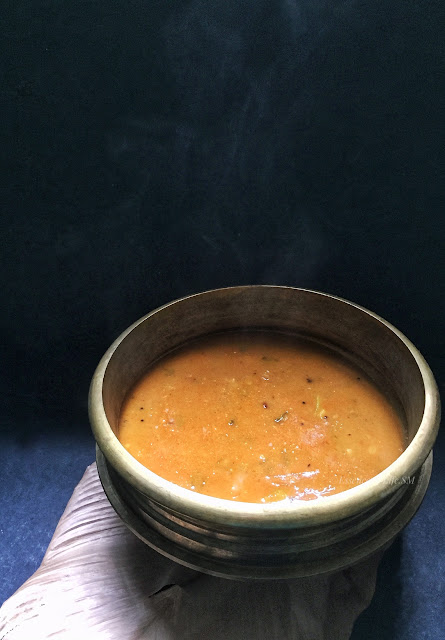
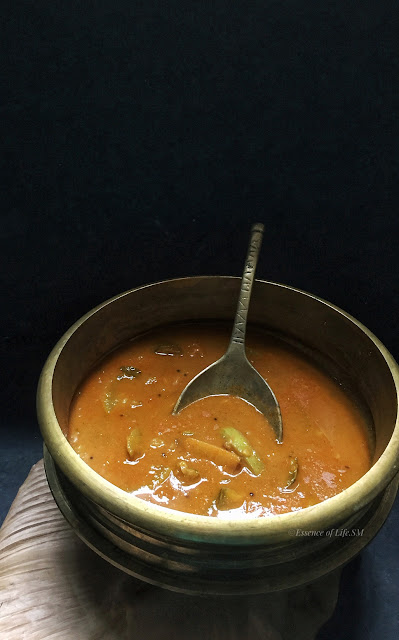
KERALA SADHYA SAMBAR


     à´¸ാà´®്à´ªാർ ഇല്à´²ാà´¤െ à´Žà´¨്à´¤ു സദ്à´¯ ?!!! What's a Sadhya without a Sambar?!!!

    When it comes to a Sadhya, one main dish which can never be compromised with is SAMBAR. I have noticed that the Sambar served in a Sadhya has a flavour & aroma unique to itself.  Well, Sambar is one dish or Curry talked much about its provenance and variations.  As I had earlier mentioned in my Varutharacha Sambar Recipe that Sambar is a signature dish.  It varies with each & every person, kitchen to kitchen &  regionally.  The versatility and diversity of Sambar are so overwhelming that it can be paired with almost every dish in South Indian Cuisine. One Curry which suits with versatility from Steamed Rice to Tiffin items like Idli, Dosa, Uthappam, Ven Pongal, Vadai, Upma etc., It has become a quintessential accompaniment in South Indian Cuisine & highly popularised by South Indian Restaurants.
     Though the provenance of the quintessential Tamilian Sambar was a Maratha creation, it can be found in almost every South Indian Cuisine & also in Udupi Cuisine with regional variations. Palaghat Iyers, who migrated to Kerala from Tamil Nadu would have brought the tradition of Sambar to Kerala Cuisine. And what made their Sambar distinct is the addition of locally available ingredients. Obviously, we all know if it is Kerala then it should be Coconut & Coconut Oil.  Most of the Kerala Sambar uses Coconut in the recipe and the Sambar recipes without Coconut also find its unique mark as all the seasoning are done in Coconut Oil.
     When it comes to Sadhya Sambar, it is one major attraction in a Sadhya Vattom.  One of the main Ozhichu Curry or Curry served along with Rice.  Though Curries like Paruppu, Parippu Curry, Moru Curry, Pulissery, Rasam are also served, Sambar is a must and unavoidable curry when it comes to Kerala Sadhya or Tamil Style Virundhu.  Well, what makes a Sadhya Sambar special is that it should be flavourful & aromatic and should stand alone in midst of other long listed dishes in a Sadhya Vattom.
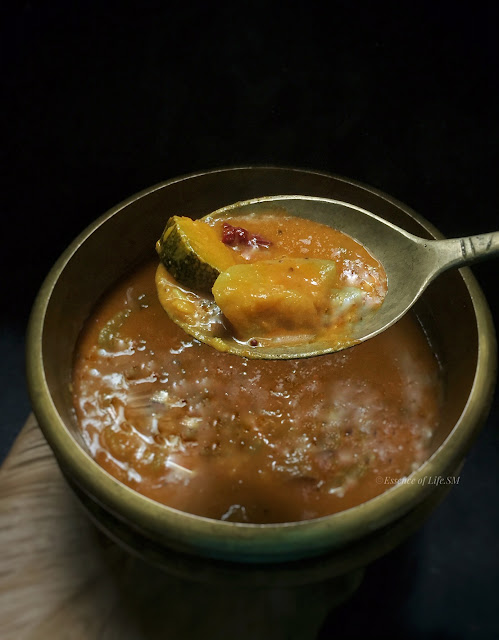
     Some even make it simpler by preparing it with Sambar Powder. But traditionally Sadhya Sambar is prepared in an elaborate way. Though the basic ingredients of a Sambar come under a broad outline - Tuvar Dhal & Tamarind based Curry.  But other ingredients vary according to the cook and region.  During family Weddings in Kerala, I have seen cooks making it with freshly roasted and ground Sambar Masala and the Vegetables used for a Sadhya Sambar has its unique style.  Local Vegetables like Ash Gourd, Pumpkin, Drumstick, Brinjal (Eggplant), Okra (Lady's Finger), Elephant Foot Yam, Raw Banana, Yellow Cucumber (Vellarikka) & Tomatoes are added in it.  Usually, Shallots or Ulli are not used while cooking for Sadhya. But Ulli/Shallot Sambar is one authentic Sambar commonly found in Kerala & Tamil Cuisine.
    Sambar is always Sambar, but it acquires the flavour of the spices, coconut & the vegetables added into it to make it more special indeed.  Though this recipe is similar to Varutharacha Sambar, the uniqueness of Kerala Sadhya Sambar comes with the addition of a few other spices & usage of traditional Vegetables and above all tempering the seasoning in Coconut Oil.  Some even keep Sadhya Sambar simple and prepare it in a quick & easy method, as there would be a long list of dishes to be prepared for a Sadhya Vattom.  But this Sadhya Sambar recipe is a traditional method prepared commonly by cooks in Kerala for a Sadhya.

For more SADHYA RECIPES, click here...

Cuisine - Kerala (South India)
Course - Curry, Side Dish
Spice Level - Medium
Difficulty - Medium
Serves - 3- 4  
Author - SM               


Preparation Time - 15 -20 Minutes
Cooking Time - 25 - 30 Minutes


For more recipes from GODS OWN COUNTRY - KERALA  click here...


HOW TO MAKE KERALA SADHYA SAMBAR
SAMBAR
KERALA SADHYA SAMBAR


INGREDIENTS :

For Dhal:

Tuvar Dhal(Pigeon Pea) - 1/2 Cup
Turmeric Powder - a Pinch
Coconut Oil/Ghee - 1 Teaspoon (Optional)

To Roast & Grind :

Coconut Oil - 1 Tbspn
Asafoetida Block - a Small Piece (Size of 1 cm Cube)
Fenugreek Seeds - 1/2 Teaspoon
Dry Red Chillies - 4–5 Nos.
Coriander Seeds -  3 Teaspoons
Cumin Seeds - a Pinch
Peppercorns - 2–3 Corns
Curry Leaves - 1 Sprig
Coconut - 1/2 Cup


Other Ingredients:

Mixed Traditional Vegetables - 1 - 11/2 Cup
Tomato - 1 Medium Sized
Tamarind - 1 Lemon Size
Salt - To Taste
Jaggery - a very Small Piece (Optional)

For Tempering:

Coconut Oil - 1 Tablespoon
Mustard Seeds - 1 Tablespoon
Fenugreek Seeds - 1 Pinch (Optional)
Curry Leaves - a Sprig

SAMBAR
KERALA SADHYA SAMBAR


METHOD:

To Cook Dhal:

  • Wash and soak Tuvar Dhal for about 30 minutes (Optional).
  • Discard the water used for soaking the Dhal.
  • Pour about 11/2 Cups of Water for 1/2 Cup of Tuvar Dhal, add Turmeric Powder & a teaspoon of Coconut Oil/Ghee.
  • Pressure-cook the Tuvar Dhal on a high flame a whistle and for another 1 or 2 Whistles on a low flame.
  • Switch off the flame and allow it to cool.
  • Mash the cooked Tuvar Dhal slightly with the back of a ladle (optional). 
For more details on How to cook Beans Lentils and Pulses, click here ...

To Roast & Grind - Sadhya Sambar Masala :

  • Heat Coconut Oil in a pan, and roast the ingredients mentioned under 'To Roast & Grind", on a very low flame.
  • First, add the Asafoetida block and fry for a while until it turns crisp & aromatic.
  • Follow it with Fenugreek seeds, let it splutter.
  • Then add Coriander Seeds and Dry Chillies.  Fry until the raw flavour goes and they turn aromatic.
  • Add Curry Leaves and grated Coconut along with Cumin Seeds & Peppercorns.
  • Fry this until grated Coconut turns into golden brown on a very low flame. 
  • Care should be taken not to burn the spices and coconuts, which will totally spoil the flavour.  
  • Switch off the flame and allow it to cool.
  • Grind this into a smooth paste, adding little water while grinding.
  • Fresh Sadhya Sambar Masala is ready for use.

For Kerala Sadhya Sambar:

  • Soak Tamarind in warm water for few minutes and extract tamarind juice out of it and keep it aside.
  • Clean, cut/chop the Vegetables accordingly.
  • Chop the Tomatoes and keep it aside.
  • Add the Vegetables and the Tomatoes to the cooked Tuvar Dhal along with a dash of Salt and mix well.
  • Cook the Vegetables on a low flame.
  • Once the Vegetables are cooked add the Tamarind Extract and boil it for a few minutes until the raw flavour goes.
  • Pour the ground Sadhya Sambar Masala, add enough water and allow it to boil.
  • Lower the flame and boil it until the raw flavour goes.
  • Add Jaggery & adjust the amount of Salt and mix well.
  • Leave it on a low flame for a few more minutes or until you get the desired consistency.


For Tempering:

  • Heat Coconut Oil in a pan, Splutter Mustard seeds, Fenugreek Seeds and Curry Leaves.
  • Pour the Sambar into the tempering and boil it for a few minutes.
  • Switch off the flame and cover the Sambar with a lid.
  • This is to retain the flavours and also helps the flavours get well infused into the Sambar.
  • Serve Varutharacha Sambar hot with Steamed Rice with a drizzle of Ghee (Clarified Butter) over it.
  • Goes well with Idli, Dosa, Uthappam, Upma, Pongal etc.,& etc.,
  • Kerala Sadhya Sambar is an unavoidable accompaniment in a Kerala Sadhya (Banquet).
 

SAMBAR
KERALA SADHYA SAMBAR


NOTES:

  • Can add a teaspoon of Ghee/Coconut Oil while Cooking the Dhal.
  • This will help avoid splattering of water around the pressure cooker.
  • Also, it will increase the surface area, alternatively speeding up the cooking time.
  • Discarding the water used to soak and adding fresh water to cook the Dhal, will reduce the risk of bloating & flatulence caused by lentils. 
  • Cooking time solely depends on the nature of the dhal, heat, amount of water and method of cooking. Adjust accordingly.
  • Can also cook the Tuvar Dhal in a regular saucepan.
  • Can also add Coriander Powder and Red Chilly Powder instead of whole seeds.
  • If adding spice powders, fry the coconut until golden brown and then follow it with the spice powders.
  • My Mother uses an extra amount of Asafoetida in her Varutharacha Sambar which is the secret ingredient which makes it extra special. Can do the same for this Sadhya Sambar too.
  • But some do not prefer the overwhelming flavour & aroma of Asafoetida in Sambar.
  • Adjust the amount of the above spices, Asafoetida & Tamarind to suit your preference.
  • Freshly ground Sambar Masala makes this Sadhya Sambar extra special with fresh flavours.
  • Adding Jaggery is truly Optional, but it helps to balance the overall taste of the Sambar.
  • Local Vegetables like Ash Gourd, Pumpkin, Drumstick, Brinjal (Eggplant), Okra (Lady's Finger), Elephant Foot Yam, Bottle Gourd, Raw Banana, Yellow Cucumber(Vellarikka) etc., can be used in this Sambar.
  • Use any, one or two vegetables or mix up a few of them for the recipe. 
  • Shallots are usually not added while preparing Sambar for Sadhya.
  • If using Shallots saute it in some Oil until it turns translucent and then add it along with other Vegetables.
  • If using Okra (Lady's Finger), fry them in a bit of oil until the sticky nature of the okra is removed before adding it into the Sambar.
  • I have used Coconut Oil in the recipe. Can use any other Vegetable Oil/Ghee.
  • Kerala Sadhya Sambar goes well with both Tiffin items & Rice.

A close-up of Varutharacha Inji Curry being served from a traditional ceramic bharani with a spoon, showing the rich jammy texture.

The Legendary 1000 Curry: Varutharacha Inji Puli


"Authentic Sadhya Style Varutharacha Inji Puli (ഇഞ്à´šി à´ªുà´³ി)Recipe" 

If the legendary scholar Vararuchi accepted a single ginger condiment as a substitute for a thousand curries, it was surely the Inji Curry. Unlike simpler versions, this version of traditional Kerala Inji Puli specifically cooked for Sadhyas, involves shallow-frying fresh ginger, green chillies, and curry leaves in coconut oil before coarsely pounding them into a fragrant, Inji Curry. It is a classic combination of sour, sweet, and spicy notes that rejuvenates the palate instantaneously. Whether you are preparing a grand Onam/Vishu Sadhya or looking for the perfect companion for Paal Kanji, this Sadhya Style Puli Inji recipe is an absolute must have. 


A Fable of a Thousand Curries and a Mother-in-Law’s Diary

    There is a famous fable in Kerala about Panjami and Vararuchi. When asked to prepare a meal with a thousand curries, she served Inji Puli or was it Inji Thayir? While the legend doesn't specify if she made the quick version or this rich Varutharacha style, in my kitchen, this one takes the limelight when I am in mood for a bit of extravagance. 

    This recipe is deeply personal. Years ago, my Mother-in-Law (MIL) jotted this down from a TV show, and I have kept her handwritten transcript tucked away in my Recipe Diary ever since. Every time I smell the ginger turning crispy in coconut oil, I am reminded of her beautiful handwriting and the way she valued these "Extraordinary" flavours.

What is Varutharacha Inji Curry?

    In literal terms, Varutharacha translates to Fried (Varuthu) and Ground/Pounded (Aracha). In this authentic Kerala method, the fresh ingredients are shallow-fried in coconut oil until crispy before being coarsely pounded to maintain a signature texture.

    This technique is a trademark of traditional Kerala wedding cooks, colloquially known as Dahannakaran. By frying the ginger and chillies first, they ensure the Inji Puli stays fresh, aromatic, and rich for a much longer time. Roasting the ingredients doesn't just extend the shelf life; it infuses the Varutharacha Inji Curry with a deep, smoky note that is far more complex than a standard Puli Inji.

Love this recipe? You might also enjoy the version I grew up with. Discover the raw, tangy notes of Amma’s Authentic Palakkadan Inji Puli and find your favorite style!


A handwritten recipe for Inji Curry in Malayalam script by Omana Jacob, detailing the "Varutharacha" method of frying ginger and chillies for Inji Puli.

Handwritten transcript of Varutharacha Inji Puli by my Mother-in-Law.


Why You Will Love This Recipe

  • The "Varutharacha" Flavour: Frying the ingredients first removes the raw sharp edge and replaces it with a rich roasted aroma.
  • The 1000-Curry: It acts as a powerful digestive, perfect for heavy feast days.
  • Heirloom Recipe: A recipe rescued from a handwritten family diary.
  • Versatility: While it's a "must-have" for a banana leaf Sadhya meal, it's just as heavenly with simple Curd Rice or Kanji (Rice Porridge).
 

Recipe Overview

  • Cuisine: Kerala (South Indian)
  • Recipe Type: Condiment / Side Dish
  • Yields: 1.5 to 2 Cups
  • Difficulty: Easy
  • Author: SM @ Essence of Life - Food

Time Estimate

  • Preparation Time: 10 Minutes
  • Cooking Time: 30 Minutes
  • Total Time: 40 Minutes


"Ready to cook a grand Grand Kerala Sadhya? Explore more Onam/Vishu Sadhya Recipes here... and bring the authentic taste of tradition to your banana leaf."


How to Cook Varutharacha Inji Curry (Step-by-Step Guide)

An annotated photo of the prepared ingredients for Varutharacha Inji Curry: fried ginger, chopped green chillies, curry leaves, tamarind paste, and liquid jaggery, arranged on a dark board.

Ingredient guide for Kerala Style Varutharacha Inji Puli

Ingredients for Varutharacha Inji Curry

To Fry and Pound:

  • 1/2 Cup Fresh Ginger (cleaned and sliced thin)
  • 3-4 Green Chillies (slit)
  • A sprig of Curry Leaves
  • 1 Tbsp Coconut Oil

For the Inji Curry:

  • 1/2 Tsp Turmeric Powder
  • 1 Tsp Red Chilli Powder
  • 1/4 Tsp Fenugreek Powder (Roasted & Ground)
  • 1/8 Tsp Asafoetida (Kayam) Optional
  • 2 Tbsp Thick Tamarind Paste
  • 1.5 Tbsp Jaggery (adjust to taste)
  • Salt to taste

For the Tempering:

  • 1 Tbsp Coconut Oil
  • 1/2 Tsp Mustard Seeds
  • 1-2 Dry Red Chillies
  • A sprig of Curry Leaves 
A flat-lay photo showing prepped ingredients—fried ginger, chopped green chillies, curry leaves, tamarind, and jaggery—arranged on a black board next to an open handwritten recipe diary in Malayalam script.

Varutharacha Inji Curry - Ingredients and original recipe


Method - Detailed Cooking Instructions

Step 1: Preparation & Roasting

  • Dry roast the fenugreek seeds on a very low flame until they splutter and turn aromatic. Grind into a fine powder and set aside. 
  • Clean and slice the ginger into thin round slices.
  • Slit the Green Chillies. 

Step 2: The "Varutharacha" Secret

  • Heat 1 tablespoon of coconut oil in a pan. 
  • Fry the ginger slices until they are golden brown, fragrant, and slightly crispy. 
  • Follow suit with the slit green chillies and curry leaves. 
  • Once cooled, coarsely pound or pulse them in a small blender jar.  
Pro Tip - Do not make a smooth paste; we want texture!

Step 3: The Tempering

  • In the same pan (add a splash more oil if needed), splutter the mustard seeds, dry red chillies, and curry leaves. 
  • Add the fenugreek powder and asafoetida, giving it a quick stir.

Step 4: Building the Flavours

  • Add the pounded ginger-chilly mix back into the pan. 
  • Stir in the turmeric and red chilli powder on a low flame, so the spices don't burn.

Step 5: The Simmer

  • Add the tamarind paste and salt with a sprinkle of water. 
  • Allow it to boil, then reduce the flame and stir in the jaggery. 
  • Let it simmer until the oil separates and the curry reaches a dark, jammy consistency.

top-down view of dark, Varutharacha Inji Curry inside a traditional brown and white ceramic jar (Bharani) garnished with a fresh sprig of fried curry leaves.

Traditional Kerala Inji Puli - Varutharacha Inji Curry


Pro Tips and Notes

  • The Texture Rule: Ensure the ginger is pounded coarsely. Those little bits of fried ginger add texture to this Inji Curry.
  • The Balance: Jaggery isn't just for sweetness; it balances the tartness of the tamarind. Always taste at the end!
  • The Cooking Vessel Rule: Avoid cooking this recipe in iron woks, copper, or bronze vessels. The high acidity of the tamarind reacts with these metals almost instantly. If you must use them, transfer the Inji Curry to a glass or ceramic bowl immediately after turning off the heat. Leaving it in the pan for even ten minutes can impart a harsh, metallic "irony" taste that spoils the delicate balance of jaggery and ginger.


Serving Suggestions

  • Traditional Sadhya: Serve a small dollop in the bottom left corner of your banana leaf.  This versatile dish beautifully complements various meal settings. This recipe effortlessly fits into a traditional Sadhya spread, adding a tangy and spicy dimension to the festive Vishu/Onam Sadhya.
  • My personal Favourites: Pairs beautifully with Paal Kanji (Coconut milk rice porridge) or Curd Rice. So simply serve it with Kanji (Rice Porridge)
  • Everyday Lunch: A fantastic companion for rice and any Moru Curry - buttermilk based curries or Sambar.

Storage Suggestions

Proper storage is the secret to keeping Inji Puli fresh and flavourful. Because it is essentially a cooked preserve, much like a traditional pickle. Its shelf life depends heavily on the moisture content and the oil used.
  • Room Temperature: If cooked properly (until the oil separates) and kept in a cool, dry place, it can stay fresh for up to a week or even 10 days. To ensure this, always use an extra bit of oil during the final stage of cooking and strictly use only a clean, dry spoon for serving.
  • Refrigerator: This is the most reliable method. Stored in an airtight glass jar, it stays perfectly fresh for up to a month.
  • Freezer: For long-term preservation, you can freeze Inji Puli for 3 months to a year. It holds its flavour remarkably well. When you’re ready to use it, simply thaw the required portion and reheat it gently with a tiny splash of water to restore its jammy consistency.

Storage Container:

  • Use only Glass, Porcelain, or Ceramic jars for long-term storage.
  • The "No-Metal" Zone: Avoid using steel, aluminium, or copper containers for storing. Over time, the acidic nature of the tamarind and salt will start "pitting" the metal and react with the condiment. A traditional Bharani (ceramic jar) is the most apt one!

FAQs

Q: Why fry the ginger & green chillies first? 

  • It removes the raw "bite" of the ginger and adds a roasted, deep flavour profile unique to this style. And it stays fresh for a longer time - longer shelf life.

Q: Can I use tamarind water instead of paste? 

  • Yes, just use very thick tamarind extract and simmer it longer to reach the desired thickness.

Q: Can I use white sugar or cane sugar instead of jaggery?

  • While you can use cane sugar as a substitute, Jaggery (Gud/Sarkara) is traditional used which provides a deep, earthy, and sweetness that balances the sharp acidity of the tamarind in a way that refined sugar cannot. If you want that authentic Sadhya Style dark, jammy glaze and complex flavour profile, jaggery is the essential choice. If you must use a substitute, dark brown sugar is the next best option to mimic that molasses-like depth.

Q: Is this dish spicy? 

  • It has a kick from the ginger and chillies, but the jaggery and tamarind mellow it out into a balanced condiment.

Recipes You Might Like 

  • Traditional Sadhya Sambar
  • Sadhya Madhura Curry
  • Palakkad Matta Rice Kanji, Payar, Chammanthu & Pappadam

"Love this recipe? There are hundreds more waiting for you! Discover more culinary treasures from God’s Own Country here…"


A detailed close-up shot looking inside a traditional ceramic Bharani (jar) filled with dark, jammy, glistening Varutharacha Inji Curry, garnished with a single sprig of fried curry leaves, highlighting the coarse texture of fried and pounded ginger.

Authentic fried and pounded texture of Kerala style Inji Curry (ഇഞ്à´šി à´ªുà´³ി).


Sadhya Speciality 

Whether it’s a grand celebration or a simple midweek meal, this Varutharacha Inji Curry brings a touch of tradition and a burst of legendary flavor to your table. This Sadhya style Inji Puli recipe is a tapestry of folklore, nostalgia, and family love, which is surely going to be a great addition to your Onam/Vishu Sadhya.

Planning your own grand feast and feeling a bit overwhelmed? Don't worry, I’ve got you covered! Grab my ebook What I Cook for Onam for a complete guide to a traditional, stress-free Sadhya that tastes just like home."

Happy cooking!


Newer Posts Older Posts Home
Search Essence of Life - Food

I Me Myself

A vintage-style horizontal oval frame showcasing ornate silver spoons on a dark rustic surface

Essence of Life - Food is all about daily cooking with a simple sense of taste and health. It is all about food. Not a day goes by without eating for most of us, so what we eat matters on the whole. Food in the mode of goodness increases the duration of life, purifies one's existence, and gives strength, health, happiness, and satisfaction. Above all ingredients, the most vital one in my kitchen is love.

Sm @ Essence of Life - Food

Popular Posts

  • Kizhi Parotta: Kothu Parotta and Salna Wrapped in Banana Leaves
  • Traditional Olan Recipe - A Kerala Classic from Madhya Thiruvithamkoor
  • Authentic Ambur Vaniyambadi Chicken Biryani Recipe (Traditional Tamil Nadu Style)
  • Avalose Unda Recipe – Traditional Kerala Sweet Made with Avalose Podi
  • How to Make Kerala Kanji | Traditional Rice Porridge with Payar, Chammanthi & Achar

Labels

AROUND THE WORLD BAKING BEVERAGES BIRIYANI & PULAO BREAKFAST CURRIES DESSERTS FROM GODS OWN COUNTRY From My Family's Kitchen - Heirloom Recipes GLOSSARY HOW TO... KERALA PALAHARAM KONGU CUISINE KUIH MUIH MALAYSIAN CUISINE MIDDLE EASTERN CUISINE Manvasanai - Flavours from Tamil Soil PICKLES RICE DISHES ROTIS SADHYA SNACKS & SAVOURIES SOUPS SPICE POWDERS TIFFIN ITEMS VIRUNDHU WINES eBook
Ebook - What I Cook - For Onam

Ebook - “What I Cook - For Onam”

Amazon.com/dp/B0CGPVY6J3

Indulge in Kerala’s Culinary Heritage: Traditional Onam Sadhya Recipes, with Expert Serving Tips! Celebrate Onam the authentic way! Discover 25 timeless Kerala Sadya recipes in my ebook. From avial to payasam, bring home the flavours of tradition. Available now on Amazon!

Essence of Life

Subscribe & Follow

© 2026 | Essence of Life - Food

  • Home
  • Ask First
    Please note that all rights for the photographs and texts on this blog, unless otherwise mentioned, rests with the author. Please do not use without permission.
  • Privacy Policy