Essence of Life - Food
  • Home
  • From My Kitchen
    • Heirloom Recipes
    • From God's Own Country
    • Sadhya
    • Kongu Cuisine
    • Chettinaad Cuisine
    • South East Asian
    • Around the World
  • Ebook
  • I Me Myself


HEALTH BENEFITS OF CURRY LEAVES

   Curry Leaves Tree is one common shrub found in an Indian household. As the name suggests, it is so synonymous to a Curry, an unavoidable add on when it comes to most of the Indian savoury dishes. Curry Leaves are widely used in Indian Cuisine. Along with a few other common plants, Curry Leaves tree is one shrub planted in a kitchen garden. Curry Leaves are colloquially called Karuveppilai in Tamil and Kariveppila in Malayalam which means Black/Curry Neem Leaves. Well, even I had a misinterpretation during my initial days in my -in-laws place. My MIL says it as Veppila(which means Neem Leaves) & I was wondering whether they were using Neem Leaves in cooking. Later to realize that it was a simple colloquial way of saying it so just leaving the Kari/Curry out of it. Thank God, I didn't use a handful of Neem Leaves to season a curry, in the pursuit of pleasing my MIL😅. 

   The reason for a Curry Leaf Tree in our house in Malaysia is my MIL. During one of her visits, she suggested we plant a Curry Leaf Tree & it is almost seven years, standing tall & loyal with avatar sized leaves. That's what one of our acquaintances said when she took some Curry Leaves from the plant. It has grown tall and has spread out wide branches. I have never since bought Curry Leaves from the market.  

   Curry Leaves holds numerous tales & proverbs proclaiming its therapeutic & culinary uses. No loyal Indian cook can say that he/she has completed their cooking scenes without a sprig of Curry Leaves. When I came across with this word - A sprig of Curry Leaves, I was awed by the word and was wondering whether it was Sprig/Spring. I was only 6 or 7 years old then. As a common practice, I went searching for the word in my dog-eared Longman English Pocket dictionary with a red colour cover. Well, I learned a new word that day.


HEALTH BENEFITS OF CURRY LEAVES
CURRY LEAVES

    So many words and so many anecdotes do the dictionary hold that it was one thing I have used day in day out during my growing ages. I owned it as early as when I was three years old & the dictionary is still there at my home. But if somebody says it is a book, it would become a laughing stock because it has turned into a bunch of yellowed out of age pages - just pages. That is normally the condition of any book I use. Have to rescue it when I go home next time.

   Well coming back to Curry Leaves - the unique flavour & aroma of these leaves were valued by our ancestors and they easily incorporated it into our daily cooking as a quintessential seasoning or as a tempering. Some dishes even call Curry Leaves as the main ingredient like Curry Leaves Thogayal/Chutney, Curry Leaves Podi(Spice Powder), Curries like Kariveppilai Kuzhambu, Kariveppilai Sadham etc.,


   Curry Leaves as such can optimize the dish it is added into. Fresh ones impart a wonderful aroma & flavour. The wonderful aroma of fresh curry leaves in a glass of cold Buttermilk(Sambharam) is so welcoming & refreshing. Needless to say about the aroma it imparts in Neeragaram/Pazhayasadham.  It imparts a unique flavour when added into a dish fresh, boiled, fried or ground. Well, if you are living in a place where you cannot get Curry Leaves, you can store them in a ziplock bag in a freezer or dry it up in a shade and store it in airtight containers. It can also be dried & powdered and then used in Curries like Sambar, Rasams etc.,

   Curry Leaf is an exceptionally nutritious herb catering its benefits both as a herb and as a medicine. No Indian Curry is complete without a sprig of Curry Leaves in it & my Mom had her tricks to make us eat Curry Leaves. I grew up hearing that it is loaded with Iron and benefits hair growth, gets rid of Anaemia etc., & etc., And during my Postpartum along with Moringa Leaves, Curry Leaves were added into my daily diet. For building up strength, treating Anemia and also helps in secreting breast milk. The Leaves provide expectant mothers with necessary calcium, vitamins, zinc and iron. Calcium helps to strengthen the bones. Zinc plays a vital role in hair growth and skin health & Iron alleviates Anaemia. 


"CURRY LEAVES - THE CURE LEAF"


Names of Curry Leaves in other Languages:


Tamil - Kariveppilai

Malayalam- Kariveppila

Kannada - Karibevu / Baisoppu / Karibevina Soppu

Telugu - Karivepaku / Karepaku

Tulu - Bevudirae 

Hindi - Kadi Patta / Kathnim / Mitha Neem / Curry Patta / Gandhela / Bareanga

Marathi - Kadhi Patta / Karhinimb / Poospala / Gandla / Jhirang / Pandheri Kunthi

Gujarati - Mitho Limdo / Meetho Limbado / Goranimb / Kadhilimbdo

Bengali - Curry Patta / Barsanga / Kariphulli

Konkani - Karbapathi / Beva Palo

Oriya - Bhrusanga Patra / Barsan / Basango / Bhuraunga

Punjabi - Kadipatti / Curry Patta

Assamese - Narasingha Sinhalese - Karapincha

Bahasa Melayu - Daun Kari


CURRY LEAVES - NUTRITIONAL VALUE & USES


    Curry Leaf is an important seasoning herb in most of the Asian Cuisines. It is one tree which can be easily grown and maintained. A Curry Leaf Tree is one common shrub seen in most of the South Indian households. The leaves retain lots of Vitamins and Minerals. It can be used fresh or dried.

   Curry Leaf is a good source of Proteins, Vitamins & Minerals. It is also rich in antioxidants which help protect cells from damage. Curry Leaves are a rich source of minerals like Iron, Calcium, Potassium, essential Amino Acids and Vitamin A, B, C & E. It is a good source of dietary fibre too.


HEALTH BENEFITS OF CURRY LEAVES


HEALTH BENEFITS OF CURRY LEAVES


    Curry Leaves has been used as a Food & as a Natural Medicine for years. Apart from being a versatile Culinary Herb, Curry Leaves offer a wide range of Health Benefits too.


Treats Anemia:


    Curry Leaves are an excellent source of Iron & Folic Acid. Folic Acid helps the body to absorb iron and helps in increasing the Red Blood Cell count. Curry Leaves is very helpful in treating and preventing Anemia and also believed to treat Sickle Cell disease.


Regulate Blood Sugar Levels:


    Curry Leaves helps to reduce the amount of glucose in the blood, as well as sugar & protein in the urine. Alternatively, increasing the haemoglobin levels and overall protein content. Curry Leaves affect insulin activity of the body and balance blood sugar levels helping to reduce some diabetic symptoms. Curry Leaves are successful at reducing lipid and glucose levels and regulating oxidative stress in diabetic patients, which means it lowers blood sugar and cholesterol and improves protection against cell damage.


Lowers Cholesterol: 


    Curry Leaves are a good source of antioxidants which helps to reduce LDL(bad cholesterol level) and triggers the increase of HDL(good cholesterol). Increase in HDL protects our body from heart disease and atherosclerosis.  Try to incorporate Curry Leaves in your daily meals. Alternatively, having fresh leaves on an empty stomach every day can also help in lowering cholesterol.


Aids Weight Loss:


    Curry Leaves can be effective in reducing and controlling weight gain. Vitamin B present in Curry Leaves helps with smooth and efficient digestion and can assist the body when converting food into energy, rather than storing it as fat. Daily consumption of Curry Leaves enhances digestion, reduces fat and cleanses the intestine helping in reducing excess weight.  Ayurveda suggests having a ball of crushed curry leaves every morning in empty stomach with honey for weight loss along with a strict diet.


Treats Bacterial Infections:


    Curry Leaves are known for its antibacterial, antifungal, and antimicrobial properties, which helps combat infections caused by Salmonella, Rhizopus and E.Coli.


Aids Digestion & Treats Stomach Complaints:


    Antibiotic & Antibacterial Properties of Curry Leaves help to inhibit the growth of various pathogens & Vitamin B present in Curry Leaves helps with digestion. Curry Leaves can be used to treat stomach disorders, such as Constipation, Gastritis, Diarhhea and Ulcerative Colitis. Gently crush some Curry Leaves into a small berry sized ball & have it with Buttermilk. Consume this twice or thrice a day for relief from Diarrhoea.


Congestion & Cold:


    Ayurveda uses Curry Leaves as an effective home remedy to treat wet cough, sinusitis or chest congestion. It helps to loosen up and release congested mucous. Take a spoon of powdered curry leaves and honey. Make it a paste and eat this mixture twice a day to get relief from congestion.


Eye Health:


    Curry Leaves serves as a good source of Vitamin A and with its Antioxidant properties. Curry Leaves helps to improve eyesight helps to impart strength and rejuvenation to the eyes. It also curtails the development of Cataract. Curry Leaves may stop the dilation of retinal vessels, prevent the thickening of capillary membranes, and inhibit retinal dysfunction.


Preventing and Treating Cancer:


    Curry Leaves are rich source of Anti-oxidants.  Curry leaves contain compounds that have significant anticancer effects that suppress the development of cancer cells.


Relieves Morning Sickness:


    Curry Leaves helps to relieve the symptoms of Morning Sickness during pregnancy. Consumption of curry leaves help in the secretion of digestive enzymes, which provides ease from nausea, vomiting and morning sickness.


For Skin:


    Curry Leaves contains Protein & Minerals like Iron & Calcium which helps to protect skin cell damage. It also contains hydrating and detoxifying elements, which also boost the skin and hair. It can be successful in curing skin infections and sores. Curry Leaves are efficient in reducing pimple, acne and black marks.


Curry Leaves For Hair


    Curry Leaves are rich in Vitamins like A, B, E, C & minerals like Iron, Magnesium, Copper & Calcium, which strengthens and nourishes hair follicles from the roots. Curry Leaves protects hair against free radicals and keeps it clean and healthy. Curry Leaf is a medicinal herb which provides protection to the hair & scalp with its anti-oxidant, anti-microbial & anti-inflammatory properties.


Anti-Dandruff:

Regular use of Curry Leaves helps to remove dead hair follicles, which is one of the reasons behind dandruff.  A hair mask prepared with Curry Leaves,Yogurt/Curd & Fenugreek Seeds helps to remove dandruff, removes excess oil from the scalp, hydrates the hair roots and has potent antifungal properties.

Anti-bacterial:

Curry Leaf extracts have been proven to be very effective against certain bacterial strains. It helps to treat minor scalp infections as it has anti-bacterial & anti-inflammatory properties. Curry leaves are quite mild and hence it is also suitable for people who have scalp sensitivity.

Prevent Hair Fall - The protein and beta-carotene present in Curry Leaves help in increasing hair growth and reducing the hair fall. The Anti-oxidants, Proteins & Amino Acids present in Curry Leaves are also beneficial in moisturizing the scalp and strengthening the hair follicles.


Rejuvenation of Hair Follicles - The anti-oxidant property of Curry Leaves helps to replace dead hair follicles quickly. It induces the growth of new hair follicles as it assists in the scalp restoration process, helping the hair follicles breathe. It also provides a balanced environment of pH and moisture on the scalp and thus aids in hair growth.
 

Nourish Damaged Hair - Regular use of chemicals on hair and exposure to pollution may make the hair dull, dry and lifeless. Curry leaves help in restoring the moisture and also helps in strengthening the hair follicles.


Prevent Premature Greying - Hair greying is a natural phenomenon. Sometimes premature greying may occur due to genetic reasons, alcohol usage or due to stress. It can also be caused due to environmental conditions & chemical treatments. However, vitamin B in Curry Leaves helps in strengthening and nourishing the hair and also helps in delaying the hair greying process. Curry leaves prevent premature greying of hair by restoring the pigment melanin which is essential for the black colour of hair. It also acts as a protective agent against oxidative stress by free radicals which damage the scalp and hair.


For Dry Hair - Heat Coconut Oil with a few Curry Leaves in it. Boil it and then cool it down. This Oil provides deep conditioning to dry and dull hair. Keep this oil mixture applied on hair for half an hour and then shampoo as usual.


Natural Hair Conditioner - Applying a decoction made by boiling curry leaves in water may help in controlling the fizziness & dry hair. Use this decoction as a last rinse after shampooing and conditioning the hair. 


CULINARY USES OF CURRY LEAVES


HEALTH BENEFITS OF CURRY LEAVES
CURRY LEAVES


  • Fresh Curry Leaves are used as an ingredient in many Indian & South-east Asian dishes.  
  • Whole or Chopped/Crushed Curry Leaves are added while tempering most of the Savoury dishes in Indian Cuisine.
  • Curry Leaves while used as a tempering enhances the flavour of dishes like Sambar, Rasam, Poriyal/Thoran, Kootu, Pachadi etc.,
  • Fresh Curry Leaves in dishes like Avial & Olan brings out its natural aroma & flavour in the dish.
  • Tiffin items like Upma, Pongal, Sevai etc., tastes great when tempered with Curry Leaves.
  • It is also added as a garnish in dishes like Raithas, Dhals, Curries and in Porridges like Neeragaram/Pazhangkanji, Ragi/Finger Millet Koozh etc.,
  • Fresh Curry Leaves can be added into instant Dosa varieties like Gothumai/All-purpose Flour Dosai, Rava Dosai etc., 
  • It can also be added while making Adai Dosai, Paniyarams etc., along with other seasonings.
  • Deep-fried snacks/Fritters like Vadai, Pakodas, Bondas etc., tastes great when you add curry leaves into it. 
  • Curry Leaves are used to make refreshing summer drinks and a traditional drink called 'Sambharam/Neer Mor/Chaas'.
  • Fresh Curry Leaves are used to make Chutneys, Chammanthi & Thogayals. 
  • Kariveppilai Sadham is one rice dish which uses Curry Leaves to flavour the rice. 
  • Curry Leaves can also be used to make spice powders like Karuveppilai Podi, which can be mixed with rice and eaten. Add a drizzle of Ghee/Gingelly oil to enhance the flavour.
  • Fresh Curry Leaf is one main ingredient in a curry called Kariveppilai Kuzhambu or make Karuveppilai Thuvaiyal.
  • Can make a flavourful South Indian style Seafood dish with Prawns called Karuveppilai Eral.
  • Deep-fried Curry Leaves add a wonderful flavour to snacks like South Indian Mixture, Kara Boondhi etc.,


For more Recipes & Dishes with CURRY LEAVES, Click here...


HOW TO STORE CURRY LEAVES


While buying Curry Leaves, look out for fresh leaves with no signs of browning. The freshness of Curry leaves gives out the best of its flavours. Can use it fresh or dried and can also be stored in the freezer.


Storing Curry Leaves in Water @ room temperature:


  • Wash the Curry Leaves along with the stalk through running water.
  • Do not remove the leaves from the stalk.
  • Discard any old, wilted, blackened/yellowed leaves.
  • Fill a small Vase/Glass bottle with water(about1/3).
  • Insert the Curry Leaves Stalks to the Vase/Bottle filled with water.
  • Change the water periodically or when the colour of the water changes.
  • Cover the bottle/Vase with an empty plastic cover/cling wrap(Optional).
  • If stored properly, Curry Leaves can last in room temperature for a few days.


Storing Curry Leaves in the refrigerator:


  • Remove the stalks of the Curry Leaves.
  • Discard any old, wilted, blackened/yellowed leaves.
  • Wash the leaves through running water.
  • Line it up on a clean kitchen towel and allow it to dry.
  • The idea is to remove the moisture from the leaves.
  • Line up the container(used for storing) with a paper towel.
  • Spread the fresh Curry Leaves in it.
  • Cover the leaves with another paper towel.
  • Cover the container and leave it in the refrigerator. 
  • Refrigerated Curry Leaves stay longer this way.


Storing Curry Leaves in the Freezer:


  • Remove the stalks of the Curry Leaves.
  • Discard any old, wilted, blackened/yellowed leaves.
  • Wash the leaves through running water.
  • Line it up on a clean kitchen towel and allow it to dry.
  • The idea is to remove the moisture from the leaves.
  • Can Freeze the Curry Leaves and store it in a Ziploc Bag.
  • Can use these Curry Leaves directly while making 'Sambharam/Neer Mor/Chaas' or while making Neeragaram/Pazhankanji, Ragi Koozh
  • Alternatively can thaw the Curry Leaves, squeeze out excess water and use accordingly.
  • Curry Leaves when left in the freezer stays good for more than a month. 


Drying the Curry Leaves:


  • Dry the Curry Leaves under direct sunlight/under shade until the leaves are dry.
  • It may take a few days for this purpose.
  • This method suits the people living in suitable weather condition.
  • Alternatively can dry the leaves in an Oven.
  • Place the leaves in 1 - 2 layers in a shallow oven-safe pan. 
  • Adjust the heat setting of the oven to low 170°F /80 °C.
  • Bake it for 30 minutes to an hour.
  • Adjust the timing as per your oven settings.
  • Do not allow the leaves to brown. 
  • Store it in an airtight container.


 ______________________________________________________________________


DISCLAIMER: Please remember these treatments options are meant as guidelines and in no way replace the advice or treatment provided by your medical practitioner. It is always good to seek the advice of your physician, homoeopath, naturopath, or herbalist for professional advice in any matter related to your health. This article is for information purposes only.


CLUSTER BEANS
KOTHAVARANGAI/CLUSTER BEANS
 

    Kothavarangai or the Cluster Beans is an annual legume. Young, fresh cluster beans have got a narrow, slender, long body together with tiny pods with a slightly bitter taste. It is a popular vegetable widely used in Indian Cuisine. The tender vegetable is used in cooking whereas the mature pods (seeds) are collected to be dried, then powdered to flour which is colloquially called Guar Gum. Guar Gum is commercially used as a thickening agent in industrial food preparations like ice creams, bakery products, as a stabilizer in cheese, cold meat processing etc.

    Cluster Beans are widely used in Indian cooking. It is called as Kothavarangai in Tamil, Kothavarakka in Malayalam, Goruchikkudu Kaya in Telugu, Gori Kayi in Kannada, Guar ki Phalli in Hindi, Govari in Marathi & Govar in Gujarati. Cluster Beans/Kothavarangai can be used in curries, stir-fries or sometimes dried and used as Vathal/Kondattams. This vegetable can also be cooked as Kootu along with Dhal and is one vegetable commonly used while preparing Paruppu Usuli. It is also one vegetable added while cooking Avial. It is also used while making Sambar.    

   Kothavarangai or the Cluster Beans contains a wide variety of Nutrients, Vitamins & Minerals with high levels of dietary Fiber & Protein. It is rich in Minerals like Calcium & Phosphorus. This vegetable is loaded with health benefits and also aids in weight loss as it is low in calories.


  • Aids in Weight Loss 
  • Improves & Strengthens the bones & hair.
  • Good for a healthy Heart
  • Helps to reduce Blood Cholesterol
  • Improves Digestion
  • Relieves Constipation
  • Strengthens the Immune System
  • Relieves Osteoarthritis
  • Helps to reduce the risk of Diabetics   


    Cluster Beans/Kothavarangai Poriyal is a simple Tamilnadu Style stir fry prepared with finely chopped Cluster Beans usually seasoned with mild spices and condiments and finally topped up with few spoons of grated coconut. Poriyal is one common side dish in a daily lunch menu and also one of the side dishes served in a Virundhu/Sadhya. It can also be cooked in a Kerala Style by using Coconut Oil. Though there is not much of a difference when it comes to Poriyal/Thoran, the Oil used and the usage of Seasonings makes a stir fry unique to the region.


Cuisine - South Indian

 Course - Side Dish

 Spice Level - Low - Moderate

 Difficulty - Easy

 Serves - 4

 Author - SM


 Preparation Time - 5 -10 Minutes

 Cooking Time - 5 - 7 Minutes


HOW TO MAKE KOTHAVARANGAI/CLUSTER BEANS PORIYAL


PORIYAL
KOTHAVARANGAI/CLUSTER BEANS PORIYAL

INGREDIENTS:


Cluster Beans/Kothavarangai - 2 Cups

Shallots - 4-5 Nos.

Garlic - 1-2 Cloves

Green Chillies - 2 Nos.

Coconut - 2-3 Tbspn

Salt - To Taste

Sugar - a Pinch


For Tempering:


Mustard Seeds - 1 Tspn

Bengal Gram/Urad Dhal - 1 Tspn(Optional)

Curry Leaves - 1 Sprig

Vegetable Oil - 1 Tbspn.


METHOD:


  • Clean, wash & cut the ends of the Cluster Beans/Kothavarangai.
  • Chop the Cluster Beans/Kothavarangai finely and keep it aside.
  • Finely chop Shallots, Green Chillies & Garlic.
  • Heat oil in a pan, splutter Mustard Seeds, Bengal Gram/Urad Dhal and Curry Leaves.
  • Add finely chopped Shallots, Green Chillies, Garlic and saute until shallots turn translucent.
  • Add chopped Cluster Beans/Kothavarangai along with a dash of salt & a pinch of Sugar.
  • Cover and cook briefly.
  • Add in the grated coconut and mix well.
  • Cook for a while on a low flame.
  • Cluster Beans/Kothavarangai Poriyal can be served along with Rice & Curry or as one of the side dishes in a Virundhu/Sadhya.


PORIYAL
KOTHAVARANGAI/CLUSTER BEANS PORIYAL

NOTES:


  • Can add a pinch of Turmeric if preferred.
  • Some do not add Onions & Garlic while cooking for a Virundhu/Sadhya.
  • Adding Garlic is optional.
  • I have used Coconut Oil in the recipe, can use any other vegetable oil. 
  • Adding grated coconut is optional.


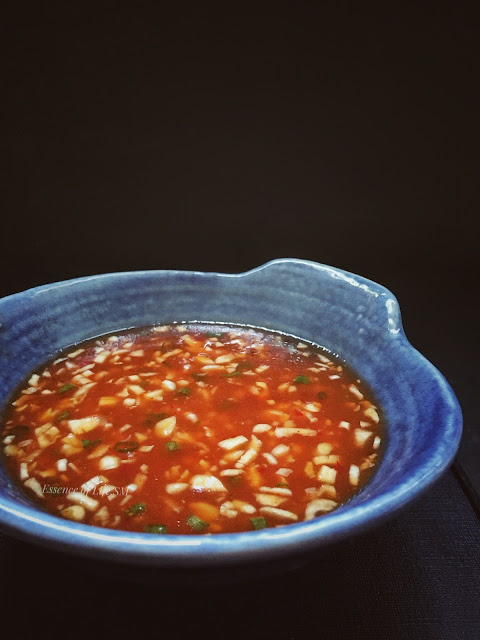
A bowl of Ginger Garlic Chilli Sauce with chopped garlic pieces, presented in a blue ceramic bowl against a dark background.

Ginger Garlic Chilli Sauce


Ginger Garlic Chilli Sauce: A Zesty Condiment for Every Meal

A Perfect Pairing with Hainanese Chicken Rice

    Ginger Garlic Chilli Sauce is the quintessential condiment served alongside the beloved Hainanese Chicken Rice. But its versatility extends beyond just chicken rice—this easy-to-make sauce pairs wonderfully with fried or steamed chicken, fish, and meat. With a delightful mix of tangy, spicy, sour, and mildly salty flavours, this sauce is a true taste enhancer that teases and tantalizes your taste buds.

The Secret to a Flavourful Sauce: Fresh Ingredients

    The key to a standout Ginger Garlic Chilli Sauce lies in using fresh ingredients. The natural juices from the chillies, garlic, and ginger create a symphony of flavours that make this sauce truly remarkable. Balancing the right amount of salt, sugar, and lime juice is essential, with lime juice providing that necessary tang. If lime isn't available, you can substitute it with calamansi juice, white vinegar, or rice wine vinegar. This sauce is a versatile condiment, perfect as a dipping sauce or an accompaniment to various dishes.

Popular Uses in Malaysia and Singapore

    In Malaysia and Singapore, Ginger Garlic Chilli Sauce is a must-have with Hainanese Chicken Rice. A touch of chicken broth is often added to the sauce, enriching its flavour and ensuring it complements the chicken rice perfectly. But don’t limit this zesty sauce to just one dish—it’s equally delicious with steamed chicken, roasted chicken or duck, pandan fried chicken, Thai spring rolls, and Vietnamese fresh spring rolls (Gỏi cuốn). You can also serve it alongside rice, fried rice, or noodles for an extra burst of flavour


Explore the Full Recipe of Hainanese Chicken Rice, here...


Cuisine: Malaysian (Hainanese)
Recipe Type: Condiment, Sauce
Difficulty Level: Easy
Yields: Approximately 1 Cup
Author: SM

Preparation Time: 10–15 Minutes


How to Make Ginger Garlic Chilli Sauce


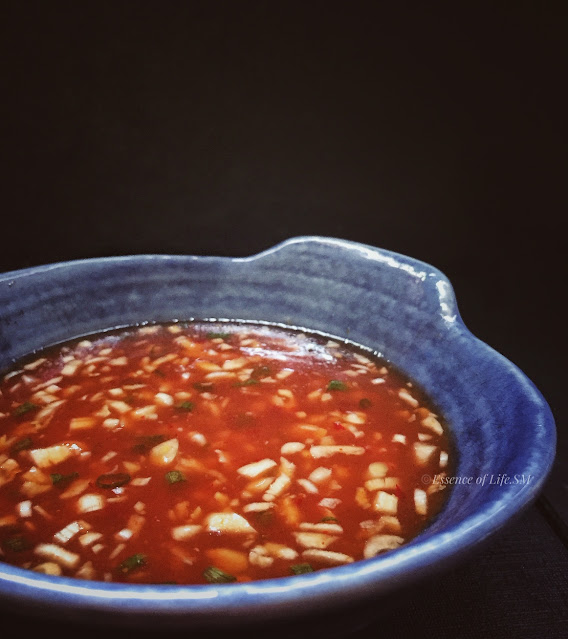
A close-up of Ginger Garlic Chilli Sauce in a blue ceramic bowl, highlighting the texture and ingredients against a dark background.

Close-up of Ginger Garlic Chilli Sauce


    Ginger Garlic Chilli Sauce is a staple in Malaysian (Hainanese) cuisine, known for its vibrant flavours and versatility. This easy recipe requires minimal preparation time, making it a convenient addition to any meal. Whether you're enhancing the taste of Hainanese Chicken Rice or adding a punch of flavour to your favourite dishes, this sauce is a must-try.


Ingredients for Ginger Garlic Chilli Sauce

Red Chillies: 10 Nos.
Red Bird's Eye Chillies: 5 Nos.
Ginger: 1 piece (2 inches)
Garlic: 5–6 cloves
Limau Kasturi/Calamansi Juice: 4–5 tablespoons
Brown Sugar: To taste
Salt: To taste


Method: How to Make Ginger Garlic Chilli Sauce

Prepare the Ingredients:   

  • Coarsely grind the red chillies, bird's eye chillies, ginger, and garlic cloves. Avoid adding water while grinding to maintain the sauce's consistency.

Mix the Sauce:

  • After grinding, blend the mixture with calamansi juice until well combined.
  • Add salt and a dash of brown sugar to balance the flavours. Mix thoroughly.

Store the Sauce:

  • Transfer the sauce into a clean, dry glass jar.
  • Keep it refrigerated to preserve its freshness. When stored properly, the sauce can last up to 3–4 weeks.

Notes and Tips for Perfecting Your Ginger Garlic Chilli Sauce:

  • Use Fresh Ingredients: Fresh red chillies and red bird's eye chillies are used in this recipe for an authentic flavour.
  • Adjust Spice Levels: For a milder version, remove the seeds from the chillies and adjust the quantity according to your spice preference.
  • Flavour Development: The sauce’s flavours intensify after being refrigerated. Allow it to rest for a day or two, then taste and adjust with additional salt or sugar if necessary.
  • Substitutes: If calamansi juice is unavailable, you can use white rice wine vinegar as a substitute.
  • For Hainanese Chicken Rice: When preparing this sauce for Hainanese Chicken Rice, consider adding a few teaspoons of chicken broth for an enhanced taste.                                  

Storage Tips:

  • Avoid storing the sauce in steel, aluminium, or copper containers, as these materials can react with the acidic elements like salt and lime juice.
  • Opt for clean and dry porcelain, glass, or ceramic jars to store the sauce.
  • Always use a clean, dry spoon—preferably a wooden one—when scooping out the sauce to prevent contamination.
  • Proper storage in the refrigerator ensures the sauce remains fresh for up to 3–4 weeks.

Authentic Ginger Garlic Chilli Sauce Recipe: Perfect Condiment for Hainanese Chicken Rice & More

    Whether you’re serving it with a traditional dish or adding a kick to your favourite meals, Ginger Garlic Chilli Sauce is a versatile and flavourful addition to your kitchen repertoire. With its unique blend of flavours, this sauce is sure to become a staple in your home.


Malaysian Kopi C with creamer, held in hand with morning sunlight filtering through the steam rising from the cup.

Savour the Richness of Malaysian Kopi C


How to Make Traditional Malaysian Coffee - Kopi

Celebrate International Coffee Day with Malaysian Kopi

    Waking up to International Coffee Day inspired me to finally write about Malaysian Kopi and the unique experience of Kopitiams. If you haven't visited Malaysia yet, you're missing out on incredible food and unforgettable coffee experiences. While travel might be off the cards for now(I'm writing this during the peak time of COVID-19), you can still enjoy the rich flavours of Malaysian Kopi right at home. Let's dive into the world of traditional Malaysian coffee and learn how to make it yourself!

What is a Kopitiam?

    A Kopitiam (a traditional coffee shop) is one of the most authentic and humble coffee establishments you can find. These coffee houses are prevalent in Malaysia, Singapore, Indonesia, Brunei, and Southern Thailand. They offer a unique style of coffee called Kopi, along with Teh (tea), beverages like Horlicks and Milo, and simple meals.

    The word 'kopi' is a Malay term for 'Coffee' and 'tiam' is the Hokkien/Hakka term for a shop (店).Kopitiam menus typically include half-boiled eggs with soy sauce, salt, and pepper, bread toast with kaya (a coconut-based jam made with egg, coconut milk, and sugar), and various local delicacies.


raditional ivory-colored Kopi Tiam cup with green floral patterns, filled with strong black Kopi, spoon on saucer, set over a Mandarin newspaper.

Classic Kopitiam Moment with Black Kopi


Experiencing a Kopitiam in JB City Centre

    One of our favourite Kopitiams is Kin Wah Kopitiam in JB City Centre. Even at 6 AM, this small corner lot is bustling with people. The setting is simple, with tiny red plastic stools and rickety tables. Despite the chaos, the agile waiters ensure your order is served correctly. Our usual order includes a strong Kopi O (black coffee) or Kopi (with milk), Milo Ais (iced Milo) for the kids, and toasted butter kaya bread. They also serve delicious Malaysian dishes like Nasi Lemak, Mee Goreng, Mee Rebus, Karipuffs, and Kuihs.

A Poetic Moment in a Kopitiam Alley

    Sitting in the alley near this Kopitiam once inspired me to write a poem. The moody, about-to-rain weather and the surrounding crowd sparked these lines


Sitting in an Alley ...


An old street in the heart of a city 

A street tended to look clean

Buildings proclaiming their age

Named to be as Vintage...

A style fascinating the present generation

Different faces pop up every now & then,

Inquisitive looks, a look which holds newness.

Tourists, locals, photographers, residents...

All walking around the streets

What these streets hold for them

Is completely unknown

To the onlookers...


Typical styles unique to themselves 

Are the shops lined up in the alley 

Some ancient

Like pages from a yellowed

Dog-eared book 

With age-old owners 

Lingering around with ease 

Maybe, they’ve lived their life

In this alley clock-in, clock-out

Rusted out in the withering times

Stooped and shrivelled out of old age... 

Living a life of their own...


Some shops decked up to look old

Showcasing the commercials.

Fascinating the odds

Quite synonymous is the style 

Of a barbershop, small and lighted

Lined up with Decors from a thrift shop.

An age-old red building flaunting the tradition 

Typical restaurants catering food in the name of classics

Small Kopitiams, bakeries & eateries

Streets with painted walls

Captivating the curious eyes 

Encasing an urge for a click...


All along I sit in my car,

Watching with awe,

The street, an age-old alley

Standing out in the sands of time.

The dimly lighted shops

Smells wafting from nearby restaurants

The moving crowd 

The curious little faces

With expressionless definitions

All the more the moving cars

Moving so close to our car, 

That I get alarmed when each one passes by...


The name of the Street is 

Jalan Tan Hiok Nee

Johor Bahru


raditional ivory-colored Kopi Tiam cup with green floral patterns, filled with strong black Kopi, spoon on saucer.
Classic Kopitiam Moment with Black Kopi

    Let's delve back into the world of Malaysian Coffee—Kopi. During a visit to Singapore, I had a fascinating chat with the Kopi maker (is it alright to call him a Barista?) at a Kopitiam located beneath the National Arts Centre at Esplanade. Curious about crafting this delightful brew at home, I asked for his secrets. With a warm smile, he assured me it's quite straightforward. The essential ingredient? Simply a good quality coffee powder.

    Here's his method: All you need is a mug, a coffee sock, or a fine-meshed filter—nothing too fancy or complicated. First, measure the coffee powder and pack it into the coffee sock. Next, place the sock into the mug and pour in boiling water—ideally between 90°C and 95°C. Let it brew for a few minutes, and voilà, you've made Malaysian-style Kopi. Whether you prefer it strong and bold or light and mild, adjust the brew to your taste. Add a sweetener and enjoy it as a robust Kopi O (black coffee) or dress it up with creamer or condensed milk for a creamier Kopi C.

    In the diverse world of Kopitiam culture, every variation of coffee and tea carries its own signature. I was initially intrigued by the unique 'initials' used—Kopi O (Kopi Or (or) Kopi Kosong), Kopi C (truly Kopi Si), Kopi Peng, Teh O, Teh C, Teh Halia, Teh Tarik, and many more, each with its own distinct character.


What You Need to Know About Malaysian Kopi


raditional ivory-colored Kopi Tiam cup with green floral patterns, filled with strong black Kopi, spoon on saucer, set over a Mandarin newspaper.
Classic Kopitiam Moment with Black Kopi

    Malaysian Kopi is distinct from your typical coffee due to its strong, rich flavour and unique preparation method. Unlike the more commonly known Arabica beans, traditional Malaysian Coffee is made from Robusta beans, which are known for their higher caffeine content and bolder taste. This coffee is traditionally roasted in a mixture of butter and sugar, giving it a caramelized aroma unlike any other, making this Kopi Recipe uniquely Malaysian.

Enriching Your Kopi Experience

    To fully immerse yourself in the Malaysian coffee culture, try pairing your Kopi with some classic Kopitiam treats like kaya toast. The combination of rich coffee and sweet, buttery toast makes for a delightful breakfast or snack.


Explore more Beverages, here...


Cuisine - Malaysian(Hainanese)
Recipe Type - Beverage
Difficulty - Easy - Medium
Serves - 1
Author - SM   


Brewing Time - 5 Minutes
Preparation Time - 5–10 Minutes
 

For more traditional Malaysian recipes and beverage guides, visit Essence of Life - Food.


"Unveiling the Art of Traditional Malaysian Coffee - Kopi: Your Complete Guide"


A cup of strong Kopi C or Kopi Si, accompanied by a small white porcelain creamer jug, set on a saucer with spoon over a Mandarin newspaper.

Stir and Sip: Creamy Kopi C


Essential Tools for Brewing Kopi:

    To get started with Malaysian brewing technique, you’ll need a few basic tools, just the most simple, but traditional Kopi gears.

  • Kopi Sock: This cloth filter is the key to authentic Malaysian Kopi.
  • Kopi Pot: Preferably stainless steel, used to catch and brew the coffee.
  • Porcelain Cups: To serve the Kopi in traditional style (with green floral prints).

 Then, of course, you would need some roasted and ground coffee powder. It’s really simple, all you need to do is to immerse (brew) the Kopi powder in hot water for about 3–5 mins to get a kopi concentrate. Then, remove the kopi grounds, dilute if necessary and serve!


Let's see how it is made traditionally,

  • This recipe allows you to scale up your kopi brewing and to cater for more.
  • The Coffee brew ratio is 12- 15gms of Kopi powder for every 240 ml Cup 


Step-by-Step Guide:

Ingredients to Brew Malaysian Kopi:

Ground Coffee Powder: 12-15 grams
Hot Water: 240 ml
 

Optional Ingredients:


Sugar/Brown Sugar

or

Creamer/Condensed Milk


Malaysian Kopi Brewing Method:

Brewing Kopi O/Kopi Or (Black Coffee):

  • Place the Kopi sock over the pot.
  • Add coffee to the sock and pour water heated to 90°C - 95°C.
  • Ensure that all the Kopi powder is thoroughly saturated.
  • Allow it to brew for 3–4 minutes, then gently tap to mix.
  • Gently remove the sock, tapping out the brew
  • Serve in a porcelain cup with optional sweetener.
  • I typically enjoy my Kopi strong and unsweetened, which in local terms is known as Kopi Gao (or Kopi Kau).
 
Making Kopi C/Kopi Si (with Condensed Milk)


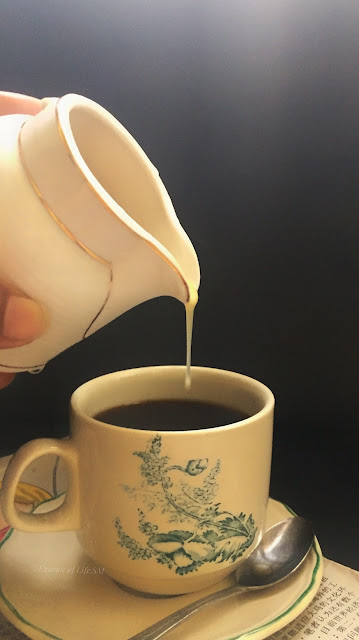
Pouring creamer from a creamer jug into a cup of strong black Kopi, with drops of creamer clearly visible, set on a saucer with a spoon over a Mandarin newspaper.

Morning Cuppa - Creamer infusion into Kopi O


  • Follow the same steps as above but add a tablespoon of condensed milk or creamer to the cup before pouring the coffee.

Variations and Tips

Malaysian coffee variations:

    Explore other popular Malaysian coffee variations, like Kopi Peng (iced coffee) and Kopi Po (diluted coffee). Each variant offers a different experience and caters to various palates.

Malaysian Kopi C with creamer, held in hand with morning sunlight filtering through the steam rising from the cup.

Savour the Richness of Malaysian Kopi C


Notes & Tips:

  • This brew leans towards the robust end of the spectrum, often referred to as "Kopi Gao" or "Strong Coffee," a preference I personally favour. 
  • Adjusting the strength is simple—simply vary the amount of water added to tailor your cuppa to your taste buds. 
  • For a milder version, known as "Kopi Po," dilute the brew with additional hot water, ensuring to maintain the temperature for optimal flavour extraction. 
  • Conversely, if you fancy a chilled variant, transform your Kopi into "Kopi Peng" by pouring it over ice cubes in a tall glass for a refreshing treat.

A Quick Tip:

  • In the absence of traditional Kopi gear, fear not! A humble mug can serve as a worthy substitute for the stainless steel Kopi Pot. 
  • As for the essential coffee sock, a quick trip to your local hardware or utility store should yield a suitable alternative.

    Now that you know how to make traditional Malaysian Kopi, you can enjoy this invigorating beverage from the comfort of your home. Experiment with the strength and sweetness to tailor it exactly to your taste. Whether you’re sipping a robust Kopi O or a creamy Kopi C, making traditional Malaysian Kopi at home allows you to experience a piece of Malaysian culture. Celebrate International Coffee Day by brewing your own Malaysian Kopi and enjoy the rich, bold flavours that make this coffee unique.


Newer Posts Older Posts Home
Search Essence of Life - Food

I Me Myself

A vintage-style horizontal oval frame showcasing ornate silver spoons on a dark rustic surface

Essence of Life - Food is all about daily cooking with a simple sense of taste and health. It is all about food. Not a day goes by without eating for most of us, so what we eat matters on the whole. Food in the mode of goodness increases the duration of life, purifies one's existence, and gives strength, health, happiness, and satisfaction. Above all ingredients, the most vital one in my kitchen is love.

Sm @ Essence of Life - Food

Popular Posts

  • Kizhi Parotta: Kothu Parotta and Salna Wrapped in Banana Leaves
  • Pesaha Appam & Paal Recipe | Traditional Kerala Indri Appam for Maundy Thursday
  • Madurai Mutton Chukka Varuval
  • Traditional Olan Recipe - A Kerala Classic from Madhya Thiruvithamkoor
  • How to Make Kerala Kanji | Traditional Rice Porridge with Payar, Chammanthi & Achar

Labels

AROUND THE WORLD BAKING BEVERAGES BIRIYANI & PULAO BREAKFAST CURRIES DESSERTS FROM GODS OWN COUNTRY From My Family's Kitchen - Heirloom Recipes GLOSSARY HOW TO... KERALA PALAHARAM KONGU CUISINE KUIH MUIH MALAYSIAN CUISINE MIDDLE EASTERN CUISINE Manvasanai - Flavours from Tamil Soil PICKLES RICE DISHES ROTIS SADHYA SNACKS & SAVOURIES SOUPS SPICE POWDERS TIFFIN ITEMS VIRUNDHU WINES eBook
Ebook - What I Cook - For Onam

Ebook - “What I Cook - For Onam”

Amazon.com/dp/B0CGPVY6J3

Indulge in Kerala’s Culinary Heritage: Traditional Onam Sadhya Recipes, with Expert Serving Tips! Celebrate Onam the authentic way! Discover 25 timeless Kerala Sadya recipes in my ebook. From avial to payasam, bring home the flavours of tradition. Available now on Amazon!

Essence of Life

Subscribe & Follow

© 2026 | Essence of Life - Food

  • Home
  • Ask First
    Please note that all rights for the photographs and texts on this blog, unless otherwise mentioned, rests with the author. Please do not use without permission.
  • Privacy Policy