 |
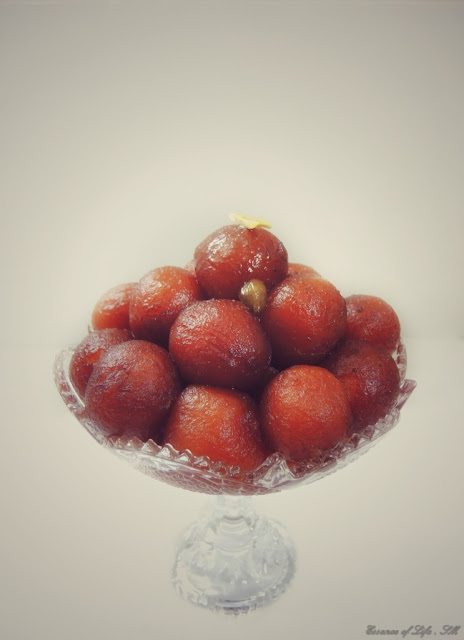
| GULAB JAMUN |
Gulab Jamun is a popular Indian Dessert. It is basically a North Indian sweet which has found its way into all Indian hearts with its soft texture, lightness and awesome taste. An all-time favourite at home and the most frequented Sweet ever. This was the one & only classic Indian sweet I have been making from my college days and by hook or crook it always comes out to be perfect for me. So I have always loved this Sweet for the reason that it never messes with me and another reason is that, it is my Son's favourtie Sweet. And hurray!!! After all these years, I know why it's his favourite - it has 'Gulab' in it & that is 'Rose'.
The history of Gulab Jamun travels back to medieval India, where the Persian invaders brought this into Indian cuisine. There is also a belief that it was accidentally prepared by the personal chef of Shah Jahan. I literally wonder how almost all rich and tasty dishes come from Mughal cuisine? Once prepared and catered only for Royal Palates, have probed into our kitchen too...
Gulab means Rose(Flower) and Jamun means Black Plum(Fruit) in Hindi. As we add Rose water/essence in the syrup and the fried dough balls look like Jamun Fruit, this wonderfully melt-in-mouth sweet inherited its name - Gulab Jamun. Though we can find numerous variations and varieties like
Makkan Peda, Kala Jamun,
Pantua,
Langcha, Ledikeni, Chitrakoot, Dry Jamun etc., which looks & tastes similar to Gulab Jamun. Gulab Jamun stands out with its popularity & taste.
Traditionally Gulab Jamuns are made with Khoya/Mawa as one of its main ingredients and fried in ghee. But this recipe goes for Milk Powder instead of Khoya (thickened evaporated milk) or Paneer (Cottage Cheese) and I usually fry them in vegetable oil. And I do make the classic ones -
Gulab Jamuns with Khova or Paneer whenever I readily have these
homemade dairy products at home. When it comes to flavouring the Sweet, you can simply use Cardamoms or go along with adding Rose Essence/Rose Water. Yet for a rich flavour & colour add a few strands of Saffron in it. Even some recipes call for adding some type of fillings like dry fruits & nuts in it.
Cuisine - Indian
Recipe Type - Sweet, Dessert
Difficulty - Medium
Serves - 3 - 4
Author - SM
Preparation Time - 15 - 20 Minutes
Leavening Time - 5 - 8 Minutes
Cooking Time - 30 - 45 Minutes
Soaking Time - 2 - 3 Hours
HOW TO MAKE GULAB JAMUN WITH MILK POWDER
 |
GULAB JAMUN
|
INGREDIENTS:
For Gulab Jamun:
Milk Powder - 1 Cup
All Purpose Flour (Maida) - 1/4 Cup
Baking Powder - A Pinch
Curd - 1 - 2 Tbspn
Ghee - 1/2 Tspn
Salt - A Pinch (Optional)
Almonds/Pistachios - Few (Optional)
- Whisk together Milk Powder, All Purpose Flour & Baking Soda in a bowl.
- Add Ghee and 1 Tbsp of curd into it and mix well.
- Knead the dough by adding a little curd at a time, to get a soft texture.
- The dough should not be crumbly or dry. If it is dry, add some yoghurt and knead again.
- Leave this aside for about 5-8 Minutes.
- Make smooth small balls from the dough.
- Heat Oil/Ghee, reduce the flame to low.
- Add the balls and fry them until they become golden brown in colour.
- Toss the balls frequently in oil to get an even colour.
- When they are done, remove them from the oil with a slotted spoon and drop them into the sugar syrup.
- Let the fried Gulab Jamuns soak in the sugar syrup for at least 2-3 hours.
- Serve Gulab Jamuns warm or cold, topped with sugar syrup.
- Can also garnish them with Almonds or Pistachio slivers.
 |
| GULAB JAMUN |
For Sugar Syrup:
- Add Sugar and Water, in a heavy bottomed pan.
- Keep this on a low flame and do not stir the sugar.
- Let the Sugar dissolve automatically due to the heat.
- Do not stir when the sugar solution starts to boil. This will affect the consistency of the syrup.
- Once the sugar is dissolved and when the sugar solution starts to boil, add 2 Tbspns of milk into it.
- This is to remove the dirt from the Sugar. The dirt coagulates and starts to float on top and at the sides of the pan, remove them from the sugar solution using a slotted spoon.
- Always keep the flame low. Once the dirt is removed, strain the syrup using a strainer.
- Stir in Cardamom Powder, Rose Water/Essence and Saffron.
- STICKY SYRUP : For Gulab Jamuns we need a bit of a sticky syrup. To test the consistency, take the syrup in a ladle and touch it with your fingers. It should be sticky if we slide it through our fingers.
- Switch off the fire and leave the sugar syrup aside.
- Overheating the sugar solution will caramelize it.
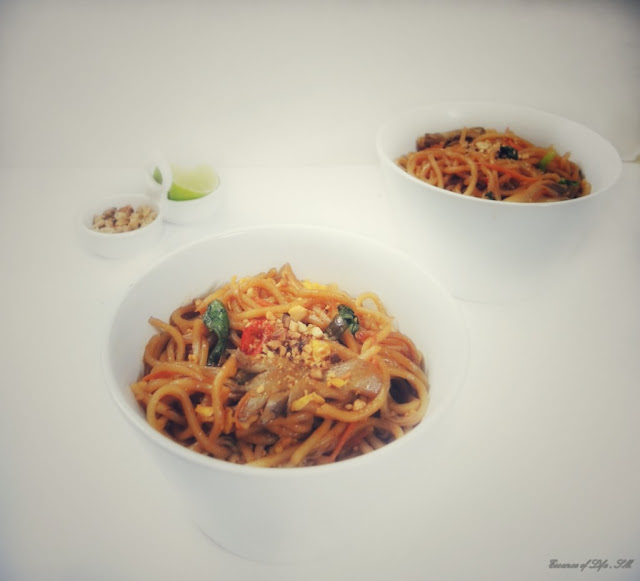 |
| MEE GORENG MAMAK |
Malaysia is a haven for food and there is no shortage of spicy fried noodle varieties. Quite a number of versions, wet, dry, spicy, saucy Noodles or locally called Mee recipes are prevalent throughout Malaysia and in its neighbouring countries.
The first time I tasted it was from our nearby Pasar Malam (Night Market). Since then, I have tasted more than a dozen different versions of Mee Goreng(Stir-fried Noodles), but MEE GORENG MAMAK, the Indian-inspired stir-fried noodle dish caught my tongue instantly. But I have never tasted this version in India. 'Mee' means 'Noodles' and 'Goreng' means 'Stir-Fried' in Malay. This is a version mostly cooked by Indian Muslims in Malaysia and Indonesia. This is one of the easiest Mee Goreng Mamak recipes with the taste much closer to the food stalls. But I feel there is no standard taste for this recipe. Every restaurant or food stall will have some uniqueness in the condiments they use and with the ingredients they add. This is absolutely a noodle dish with flexibilities. This Mee Goreng Mamak/spicy fried noodles is a perfect mixture of salt, spice and sauces, tossed with cabbage, bean sprouts, chicken pieces, sawi (mustard greens) and egg. What I love the most is the garnish, fried onions and peanuts with a drizzle of calamansi over it. It enhances the taste of the dish instantly.
Initially, I was quite doubtful whether I could cook the same way as in restaurants. But after some time I thought why not give a try. But it took few attempts for me cook Mee Goreng Mamak in a perfect way. I have slightly tailored it to suit my family’s taste buds as usual without compromising to the authentic taste.
Cuisine - South-East Asian
Course - Main
Spice Level - Moderate
Difficulty - Medium
Serves - 4
Author - SM
Preparation Time - 20 - 30 Minutes
Cooking Time - 20 - 30 Minutes
INGREDIENTS :
Yellow Noodles - 500 Gms
Chicken Breast Meat -1/2 Cup
Eggs - 2 Nos.
Prawns -10 -12 Nos.
Fish Cakes / Soft Tofu - 100 Gms
Bean Sprouts - Handful
Cabbage -Few Shreds
Carrot - Few Shreds
Sawi (Mustard Greens) - Handful
Oil - 3 Tbspn
Salt - To Taste
Sugar - 1 Tspn
For Sambal Paste :
Dried Chillies - 8-10 Nos.
Toasted Belacan (shrimp paste) - 1/2 Tbsp
Shallots - 6-8 Nos.
Garlic - 6-8 Cloves
Ginger - 1/2" Piece
For the Sauce Mix:
Tomato Ketchup - 3 Tbspns
Chilli Sauce - 2 Tbspns
Dark Soy Sauce/ABC Sauce - 1 Tbspn
Light Soy Sauce - 1 Tbspn
Turmeric Powder - 1/2 Tspn
Curry Powder - 1 Tspn (Optional)
For Garnishing:
Cucumber Slices Coriander Leaves /Spring Onions
Fried Onions
Dry Roasted Peanuts (ground)
Lime or Calamansi (Limau Nipis)
METHOD :
- De-seed the Dry Chillies and boil them in hot water for five minutes. Strain the water and remove any remaining seeds.
- Dry toast the Dry Shrimp Paste (Belacan).
- Dry roast the peanuts and grind them into a coarse powder.
- Blend the Chillies, Shallots, Garlic, Ginger, toasted Belacan with some water to a smooth and thick paste.
- Mix all the items under Sauce Mix and keep it aside.
- Shred the Cabbage and cut it into thin strips.
- Pee, wash and Cut the Carrots into thin strips.
- In the meantime, heat a small frying pan with oil and shallow fry the Fish Cakes/ Tofu.
- Beat the eggs slightly with a pinch of salt and scramble it.
- Shallow fry the Chicken pieces and Prawns with a pinch of salt until they are cooked.
- If using Yellow Noodles, dip them in hot water for few minutes. Drain and discard the water.
- Heat Oil in a wok and fry the Sambal with a dash of salt.
- Saute it until the oil separate from the mix and turns fragrant.
- Once the sambal is cooked, add thin strips of Carrots, shallow fried Chicken Pieces and Prawns to it.
- Pour in the Sauce Mix to the above and give a quick stir.
- Top it up with the Noodles and gently mix all the ingredients until well combined.
- Gently toss the ingredients in the wok and let the noodles cook on a high flame for a few minutes.
- Finally, add shredded Cabbage, Sawi/Choy Sum, Bean Sprouts and mix well.
- Add scrambled Egg to the above and give a quick stir.
- Switch off the flame and serve Mee Goreng Mamak hot.
- Garnish Mee Goreng Mamak with Cucumber Slices, Lime wedges and sliced Red Chillies.
- Sprinkle crushed Peanuts and Fried Onions.
- Serve Mee Goreng Mamak along with Tomato/Red Chilli Sauce.
NOTES :
- Ensure sambal is not too watery. If it is watery, Mee Goreng can turn soggy.
- Can add fried anchovies into the sambal and grind it coarsely.
- I didn't add anchovies in this recipe.
- Adjust the spiciness according to your preference.
- De-seeding and discarding the water used to boil the chillies is to ensure that the dish is not very hot.
- If you prefer a bit of sweetness in Mee Goreng Mamak recipe, can add sugar.
- Adding Sugar is purely optional
- ABC Sauce and Red Chilli Sauce on its own give a bit of sweetness to the dish, so adjust accordingly.
 |
| KAPPA/TAPIOCA PUZHUNGIYATHU WITH MULAGU CHALICHATHU |
Tapioca/Cassava is one of the earliest domesticated plants for more than 120 000 years. It is believed to have been migrated from South America to other parts of the world. Travelled to Africa, Europe and Asia along with Portuguese and Spanish Sailors.
At the end of 19th century, there was a drastic famine in South India. Then the king of Thiruvithangoor of Kerala imported this root from Sri Lanka. Also, as it was brought into India by the Portuguese Sailors in Ships. It inherited its name - Kappal Kizhangu /Kappa Kizhangu, where Kappal means Ship and Kizhangu means Root in Malayalam &Tamil.
Tapioca has a special place in Kerala Cuisine, it is a delicacy of every Malayalee. Kappa and Meen Curry, Kappa Puzhukku and Porridge, or just a simple Kappa puzhungiyathu (steamed) along with pounded Shallots & Chillies Chutney, all taste heavenly. Kappa/Maracheeni/Poola Kizhangu / Maravalli has become a staple food of Keralites since early days.
Cuisine : Kerala (South India)
Recipe Type : Steamed Tapioca and Condiment
Spice Level : Medium - High
Difficulty : Easy
Serves : 3- 4
Author : SM
Preparation Time - 5 - 10 Minutes
Cooking Time - 10 - 15 Minutes
For more recipes from
GODS OWN COUNTRY - KERALA click here...
INGREDIENTS :
Tapioca - 1/2 kg
Turmeric Powder - 1/2 Tspn (optional)
Water - Until it covers the Tapioca pieces
Salt - to taste
METHOD :
To Boil Tapioca :
- Peel the tapioca and wash it.
- Then cut it into pieces of the desired size.
- Wash it well until the water is clear.
- Boil tapioca in water by adding salt and turmeric powder.
- Cook until the pieces are soft.
- Drain and discard the water.
For Mulagu Chalichathu/ Pound Chillies :
Green chillies /Birds Eye Chilli (Kanthari Mulaku) - 8-10 Nos.
Shallots - 20 Nos.
Tamarind - a Small Piece
Coconut oil - 11/2 Tbspn
Salt - To Taste
METHOD :
- Crush Green Chillies and Shallots by using a mortar and pestle.
- Add tamarind, salt to the above and mix well.
- Drizzle coconut oil over it.
Serve hot-hot Kappa puzhungiyathu, with Mulagu chalichathu.
NOTES :
- Cook Tapioca with enough water and discard the excess water.
- Adding Turmeric is totally optional.
- Can use a small mixer jar to grind shallots and chillies. Grind them coarsely.
- Adjust the number of chillies according to your level of preferred spiciness.
Important : Food Safety
- Tapioca naturally produces cyanide*, which is poisonous to humans; however, the cyanide may be removed during processing.
- So peel and wash it thoroughly with enough water.
- Also, can soak them in water overnight and then discard the water and wash them again before cooking.
- Cook Tapioca with enough water to cover them, and then discard the water once it is cooked.
- These steps ensure that the little amount of toxin present in it are removed.
*Cyanogenic glycosides present in tapioca, releases hydrogen cyanide during enzymatic hydrolysis by beta-glucosidase. These are transformed within humans and animals after the plant tissue has been macerated
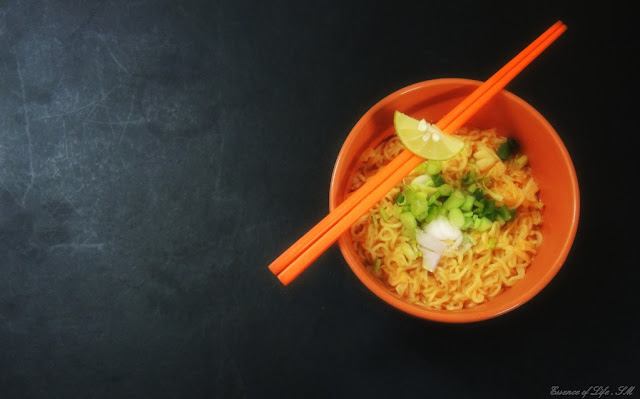 |
| MAGGI - SOUPY CURRY NOODLES |
There’s nothing like a hearty, warming soup. And there comes for rescue MAGGI CURRY INSTANT NOODLES. A quick fix for your instant soupy cravings. This is an incredibly easy and delicious spicy noodle soup with a dash of light soy sauce, poached eggs and vegetables of your choice. This soupy noodles pair perfectly with Sawi (mustard leaves) /Choy Sum greens, shredded chicken, soft-boiled eggs and any vegetables of your choice like mushrooms or cabbage. This is the way I make this recipe and it would be ready within minutes.
Though I have frequented this dish quite a number of times, my son outnumbers the times he has cooked this recipe for himself. There goes a turn at midnight that both my kids try their own versions of recipes when I am not there in the kitchen. He comes up with new ingredients and versions everytime he cook this Soupy Maggi Noodles, but not a chance come by for me to taste them.
Cuisine - South-East Asian
Course - Main Course, Soup
Spice Level - Medium
Difficulty - Easy
Serves - 1
Author - SM
Preparation Time - 10 - 15 Minutes
Cooking Time - 5- 7 Minutes
INGREDIENTS :
Maggi Noodles - 1 Pack
Chicken Stock / Water - 400 ml
Garlic - 2-3 Cloves
Bird's Eye Chillies - 2-3 Nos.
Light Soy Sauce - 1 Tspn.
Chicken - 50 Gms
Mushrooms - 50 Gms
Cabbage - 50 Gms
Sawi Grees/ Choy Sum Greens - Few
Spring Onions - Few
Fried Onions(Bawang Goreng) - Few Pinches
Egg - 1 No (Optional)
Oil - 1 Tbspn.
Salt - To Taste
METHOD :
- Pound Garlic and Bird's Eye Chillies using a Mortar and Pestle (can blend them coarsely in a mixer).
- Heat Oil in a pan and saute the ground mix on a low flame until fragrant.
- Add the tastemaker and saute for a while.
- Add Light Soy Sauce and mix well.
- Now add shredded Chicken Pieces and Mushroom and saute for a while, until the chicken changes its colour.
- Pour water or chicken stock and leave it to boil.
- Taste the broth and add salt if necessary.
- Now add the noodles and give a quick stir.
- Allow the noodles to cook on a high flame for about 2-3 minutes.
- Tip the egg into the soup and leave it undisturbed until it cooks.
- Turn off the heat and add shredded Cabbage & Greens.
- Garnish Maggi Soupy Curry Noodles with Spring Onions, Fried Onions and serve hot.
NOTES :
- As this recipe is a bit soupy, I have added more water than mentioned in the pack.
- I have not added eggs in this recipe. Can add them as poached, or just drop the eggs in the soup, stir it and leave them until they are cooked. Can serve them as boiled eggs along with the bowl of soup
- Can use any type of mushroom, if using Enoki Mushrooms add them in the hot soup as a garnish.
 |
| KASHMIRI PULAO RECIPE |
Kashmiri Pulao is a mild but flavourfully rich dish. It is an absolute treat to our eyes as well as to our senses. Kashmiri Pulao beautifies and enhances the whole palate with its variant colours and flavours. The origin of this dish is from Kashmir, a valley between snow clad mountains in North India. Kashmiri Cuisine is influenced by three different styles of cooking from Kashmiri Pandits, Muslims (Wazwan) & Rajputs. Kashmiri Cuisine is as delectable as its scenic beauty and so is this Kashmiri Pulao.
Kashmiri pulao is richly prepared from their local produce, especially the Basmati Rice, fresh fruits, crisp vegetables and expensive dry fruits. Accompanied by the most delicious curries like
Butter Chicken,
Kadai Chicken,
Mutton Rogan Josh,
Lucknowi Gosht Korma or vegetarian gravies like Dhal Makhani,
Green Peas Masala,
Malai Kofta or
Paneer Butter Masala - the dish becomes a wholesome royal treatment.
Kashmiri Puloa is slightly a sweet version of Pulao, so it braces up fantastically with spicy and tangy gravies, both vegetarian and non-vegetarian. I have not added any fresh fruits in this recipe.
Cuisine - Kashmiri
Course - Main
Spice Level - Low
Difficulty - Medium
Serves - 3-4
Author -
SM
Preparation Time - 15-20 Minutes
Soaking Time - 20-30 Minutes
Cooking Time - 30-45 Minutes
KASHMIRI PULAO RECIPE
INGREDIENTS :
Basmati Rice - 2 Cups
Onion - 1 No.
Green Chillies - 4 Nos.
Saffron - 1 Pinch
Ghee - 2 Tbspn
Cream - 1/2 Cup
Water - 3 Cups
Salt - To Taste
Spices :
Cinnamon Stick - 1" Stick
Bay Leaf - 1 Piece
Cloves - 3 Nos.
Caraway Seeds /Shah Jeera - 1 Tspn
Green Cardamoms - 2-3Nos.
Black Cardamoms - 2 Nos.
Dry Ginger Powder - ½ tsp
Fennel Powder - 1 tsp
Onion - 1 No.
Cashews Nuts - 12 -15 Nos.
Almonds - 8 -10 Nos.
Pistachios - 8 -10 Nos.
Golden Raisins - Few
Black Raisins - Few
Ghee - 1 Tbspn
METHOD :
- Wash and soak Basmati Rice for 30 minutes.
- Soak Saffron strands in 1 Tbspn of warm milk.
- Blanch the Almonds and chop them.
- Boil 3 cups of water and keep it aside.
- Heat Ghee in a pan, add all the ingredients mentioned under 'spices' and fry them on a low flame for few minutes.
- Saute Onions and Green Chillies until onions turn translucent.
- Add freshly ground Dry Ginger Powder and Fennel Powder & give a quick stir.
- Add the Basmati Rice, Saffron soaked milk, Cream & mix well.
- Pour water and salt, stir and cover the pan.
- Leave this on a low flame until the rice is cooked.
- Meanwhile, fry the sliced onions in ghee/oil with a dash of salt until crisp and caramelized.
- Remove and drain them on a paper towel.
- In the remaining ghee fry the dry fruits and nuts.
- When the rice is cooked, fluff it up slowly. Care should be taken not to break the rice.
- Garnish Kashmiri Pulao with caramelized onions, fried dry fruits and nuts.
- Serve Kashmiri Pulao hot with any spicy curry of your choice.
NOTES :
- Soak the rice at-least for 20-30 minutes.
- Adjust the amount of water according to the required measurement.
- Can add any preferred dry fruits and nuts of your choice.
- Can also add fresh fruits like small pieces of apple, pineapple and pomegranate.
- If adding fresh fruits, garnish them just before serving.
- Adding freshly ground dry ginger powder and fennel powder gives more flavour to the pulao.
- Can add thick milk instead of cream.
- Can cook the Kashmiri Pulao in a pressure cooker too, if so leave in high flame for a whistle and leave it on a low flame for 10-12 minutes.
- I cooked this in a Microwave. Sauteed and mixed all the ingredients on a stove top in a pan, then transferred it into a microwave-safe bowl and cooked on Micro Power High for 15-20 minutes.
- Keep the lid closed while cooking the rice, this will lock the flavours.
- Just fluff the Kashmiri Pulao with a fork slowly without breaking the rice, just before garnishing.


