Essence of Life - Food
  • Home
  • From My Kitchen
    • Heirloom Recipes
    • From God's Own Country
    • Sadhya
    • Kongu Cuisine
    • Chettinaad Cuisine
    • South East Asian
    • Around the World
  • Ebook
  • I Me Myself
FOOD AS MEDICINE
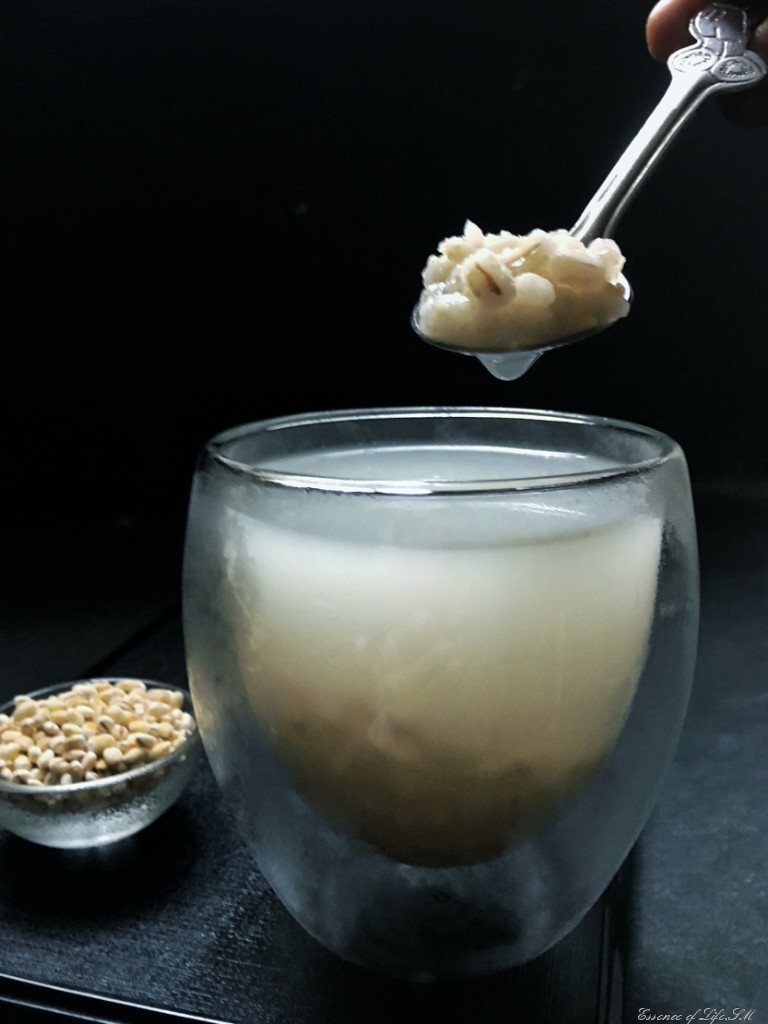
BARLEY DRINK
      Barley drink is one best homemade drink to keep your body cool and beat the internal heat.  Barley is a cereal grain, white in colour when hulled, a monocotyledon in the shape and colour of a pearl.  So it is commonly called as Barley Pearls.  Every Cuisine has its own home remedies to get rid of simple ailments and when it comes to Cold & Sore throat, this cooling Barley Drink is a traditional cure in many Chinese households.  Even it can treat Ance.
     Barley is rich in Carbohydrates, but has a remarkable amount of dietary fibre and has a very low-fat content.  It also contains minerals like Calcium, Iron, Magnesium, Selenium and Copper(which is very rarely found in any other food source).  It is a good source of Vitamins A, B1, B2, B6, B12, C, D, E & K.  Barley is rich in Anti-oxidants and Phytochemicals.
    As Barley has high soluble fibre, it helps in reducing Cholesterol and Blood Glucose Level. It is also a powerful Diuretic, which proves beneficial in keeping your body cool and benefits a healthy Kidney function too.  Barley also helps detoxify our body in a natural way.
    Cooking Barley Drink is quite easy.  I have given two methods of cooking Barley - In a Sauce Pan and in a Pressure Cooker.  Pressure Cooker method is a quick way of getting the job done.  Barley Drink as such has no much of a taste & flavour.  To sweeten it up with your choice of sweeteners like Sugar, Rock Sugar, Brown Sugar, Palm Sugar or add Candied Winter Melons. For a twist of fragrant Barley Drink cook it up with a knot of Pandan/Screwpine Leaf.  Can add some Lemon Juice to add a tinge of tanginess to the drink.

Health Benefits of Barley: 

High dietary fibre -
        helps to lower cholesterol
        fights constipation
        improves digestion
Low-Fat Content -
        helps in weight loss
Presence of Minerals -
        Helps lower Blood Pressure
        Maintains a healthy Bone
        Maintains a Healthy Heart
        Prevents Cancer
        Reduces Inflammation
   

Cuisine - Chinese, South East Asian
Recipe Type - Drink
Difficulty - Easy
Serves - 2
Author - SM

Preparation Time - 5 - 10 Minutes
Cooking Time - 30 - 45 Minutes


For more JUICES, DRINKS & SMOOTHIES, Click here...

HOW TO MAKE BARLEY DRINK


INGREDIENTS :

Barley Pearls - 1/4 Cup
Water - 1 Litre
Salt - a Pinch
Sugar/Rock Sugar - To Taste

Optional Ingredients :

Pandan/Screwpine Leaves - 1 Leaf
Dry Winter Melons - 1/4 Cup


METHOD :

In a Sauce Pan :

  • Wash the Barley Pearls 2 -3 times or until water runs clear.
  • Pour 1 Litre of Water to the Barley Pearls along with a pinch of Salt in a Sauce Pan.
  • Bring it to boil on a high flame.
  • Reduce the flame and cook on a low flame for other 30-45 minutes or until the Barley Pearls are well cooked and turns soft.
  • Adjust the amount of water, if necessary.
  • Add the Rock Sugar/Sugar at this stage and mix well.
  • Leave this on a flame for about 7-10 minutes.
  • Switch off the flame.
  • Serve Barley Drink hot or cold.

In a Pressure Cooker : 

  • Wash the Barley Pearls 2 -3 times or until water runs clear.
  • Pour 1 Litre of Water to the Barley Pearls along with a pinch of Salt in a Pressure Cooker.
  • Cover the Lid and cook on high flame for 4-5 Whistles.
  • Lower the flame and cook for other 7-8 whistles or for about 10-12 minutes.
  • Switch off the flame and allow the pressure to release.
  • Once the Pressure is released, remove the lid. 
  • Adjust the amount of water, if necessary.
  • Add the Rock Sugar/Sugar at this stage and mix well.
  • Leave this on a flame for about 5 minutes.
  • Switch off the flame.
  • Serve Barley Drink hot or cold.

NOTES:

  • If adding Pandan/Screwpine Leaves, tie it into a know and add it at the initial stage along with water and barley pearls.
  • Remove the Pandan Leaves once the Barley is cooked, leaving it in the drink for a long time can give a slightly bitter taste to the Barley Drink.
  • Add Candied Winter Melons also at the initial stage.
  • Adjust the amount of Rock Sugar /Sugar, if adding Candied Winter Melons.
  • As Candied Winter Melons are already sweet, it will on its own impart a sweetness to the Barley Drink.
  • Can also add some Milk to the Barely drink just before serving.
  • For a twist to plain Barley Drink, add some Lemon Juice to add a tinge of tanginess to the drink.
  • Can serve the Barley Drink hot or cold.
  • Can refrigerate the Barley drink for 1-2 Days.  
  • If storing the Barley Drink in the refrigerator for more than a day, remove the Barley Pearls from the Drink.
  • Otherwise, the Barley Drink may turn slimy.
  • Can use the cooked Barley Pearls in Soups, Stews and even in Cendol.
TIFFIN ITEMS
SEMIYA UPMA

     Semiya Upma - a South Indian dish prepared with roasted Vermicelli or Varutha Semiya is a quick fix Tiffin item which can be served as a Breakfast dish or as a simple evening Tiffin or for a simple Dinner. Common versions of  Upmas are prepared with Semolina/White Rava and Broken Wheat.  But this a version of Upma prepared with Vermicelli/Semiya.  Semiya or Seviyan is a type of Vermicelli prepared with Wheat Flour/All Purpose Flour, there are even Semiya varieties made with Millets like Ragi, Varagu, Thinai etc.,
     The strands of this type of Roasted Vermicelli are thin and they are already roasted.  I normally use ready-made Varutha Semiya/Roasted Vermicelli while preparing Semiya Upma.  But when it comes to making Vermicelli/Semiya Payasam, I use the thick stranded ones which are not roasted.  There a quite a number of varieties of Semiya Upma.  But this recipe is a simple version prepared with mild seasonings.  Serve Semiya Upma along with Coconut Chutney & Sambar or any chutney of your choice for an extra note of flavour and taste.


Cuisine - South Indian
Course - Main Course
Difficulty - Easy
Serves - 2-3
Author - SM

Preparation Time - 5-10 Minutes
Cooking Time - 15- 20 Minutes


For more recipes on TIFFIN ITEMS, Click here...

INGREDIENTS :

Roasted Vermicelli / Semiya - 2 Cups
Onion - 1 No.
Green Chillies - 5-6 Nos.
Ginger - 1/2" Piece
Garlic - 2 Cloves(Optional)
Curry Leaves - 1 Sprig
Mustard - 1 Tspn
Urad Dhal / Black Gram Dhal - 2 Tspn.
Bengal Gram Dhal - 1 Tspn
Ghee/ Oil - 3 Tbspns
Water -  4 Cups(Approximately)
Salt - To Taste

METHOD:

  • Chop Onions, Green Chillies, Garlic and Ginger.
  • Heat Ghee in a pan, splutter Mustard seeds, fry Bengal Gram Dhal and Urad dhal until they turn into light golden brown in colour.
  • Saute Onions, Green Chillies, Ginger, Garlic and Curry Leaves, until Onions turn translucent.
  • Pour 4 Cups of Water into the pan and boil.
  • Add Salt to taste.
  • When Water starts to boil, lower the flame and add a tablespoon of Ghee or oil into it and give a quick stir.
  • Slowly add Roasted Vermicelli/Semiya in small batches.
  • Stir continuously while adding Roasted Vermicelli/Semiya into the boiling water to avoid forming lumps.
  • Mix well and close the pan.
  • Leave it on a low flame for 3-4 minutes or until the mixture turns slightly thicker.
  • Add some ghee(optional) and stir it at regular intervals.
  • Cook on a very low flame until Roasted Vermicelli/Semiya turns soft.
  • Serve Roasted Vermicelli/Semiya Upma hot with any Chutney, Sambar or any preferred Curries.  Goes well with Curd/Yoghurt too.
  • Can eat with Sugar sprinkled over it.

NOTES :

  • I have used ready made roasted Roasted Vermicelli/Semiya in this recipe.
  • If you are using normal Vermicelli, roast in along with few teaspoons of Ghee/Oil until it turns into light golden brown in colour.
  • Adjust the amount of water to suit the type of Vermicelli you are using.
  • Over-roasted Roasted Vermicelli/Semiya tends to become dark and dry even after adding enough water, and under-roasted Roasted Vermicelli/Semiya turns gooey.
  • Can add 1/4 Teaspoon of Turmeric and few drops of lemon juice, if you prefer a slight tanginess in your Roasted Vermicelli/Semiya Upma.
  • Can also add vegetables like Carrot, Beans or Peas to Roasted Vermicelli/Semiya Upma.
  • If adding Vegetables add them immediately after sauteing the Onions, and let the vegetable turn soft, before adding water.
  • Can add few teaspoons of Ghee to Roasted Vermicelli/Semiya Upma, at the final stage too.
  • Adding Ghee to Roasted Vermicelli/Semiya Upma gives a nice flavour and texture to the dish. 
  • Can substitute it with any Vegetable Oil too.

DRINKS
MANGO LASSI

     Yet another refreshing drink for Summer, prepared with ripe Mangoes, Yogurt/Curd and Milk.  With the richness of traditional Lassi comes along the flavour of Summer - Mangoes.  Mango Lassi is a delicious combination of a Milk Shake and a Smoothie with an authentic Indian touch.  Some recipes call for adding a pinch of Cardamom or Saffron to enhance the flavour of the drink.
     Mango Lassi is one best way to enjoy the seasonal fruit. Serve it as a refreshing drink to quench your thirst during sweltering Summer days or as a Dessert to wash out the spicy dishes.  Lassi happily falls under the category of a dessert masquerading as a drink.
     Lassi - A popular drink throughout the Northern States of India, are whipped up into many variations to bring a special note of the same drink throughout India. Among which Mango Lassi tops the popularity. A sip of the Sweet and Flavour filled Mango Lassi, is an utter treat and utmost delicacy.


For more JUICES, SMOOTHIES & DRINKS, Click here...


Cuisine - North Indian
Recipe Type - Drink
Difficulty - Easy
Serves - 1 Tall Glass
Author - SM  

Preparation Time - 10 - 15 Minutes


INGREDIENTS :

Mango - 1 No.
Thick Yogurt/Curd - 1 Cup
Milk - 1/2 Cup
Ice Cubes - 1/4 Cup
Sugar - 2-3 Tablespoons
Fresh Cream - 2 Tablespoons (Optional)
Salt - a Pinch

METHOD :

  • Wash, Peel and Cut Mangoes into small pieces and discard the seed.
  • Crush the Ice Cubes in a blender.
  • Add Mango, Yogurt/Curd, Milk, Fresh Cream and Sugar along with a pinch of Salt to the crushed Ice cubes and whip it up in a blender for a few minutes.
  • Blend until all the ingredients are well puréed and Sugar is well dissolved.
  • Pour Mango Lassi into a tall glass.
  • Serve Mango Lassi Chilled.

NOTES:

  • The Yogurt/Curd should not the sour.
  • Can substitute Water for Milk.
  • Adjust the sweetness to suit your taste preference.
  • Adding fresh cream is totally optional.
  • Adding a pinch of Salt to Mango Lassi, helps to enhance the overall taste of the drink.
  • Can add Cardamom Powder while making Mango Lassi, if you prefer a much flavoured drink.


RASAM
MILAGU/PEPPER RASAM
     Milagu Rasam/Pepper Rasam is the first thing a South Indian would suggest, on the onset of Cold or Flu.  Recently I was down with fever and Sore Throat, what Doctor suggested to me was the same, a dosage of Hot Milagu Rasam along with Rice or as a Soup.  It proves true to nature, the Pepper in this Rasam is the best home remedy for cold and flu.
      A combination of Tomatoes, Tamarind, Cumin and mainly Pepper is what makes this Milagu Rasam.  All ingredients play its role as an individual doctor helping to heal a sore throat, blocked nose, cold and flu. Yet another Kongu special Kollu Rasam also is one of the best home remedies for Cold and Flu. When your Nose is totally stuffy, it subtles your sense of smell and taste, it's always comforting to have spicy and aromatic Rasams.
      All the more if you are on the cooking side when you are sick, it would be the toughest part.  This Milagu/Pepper Rasam is a simple recipe which can be prepared within minutes.  Few ingredients and simple steps of cooking add an extra note of favourability when it comes to Milagu/Pepper Rasam.  Don't succumb your instincts to prepare this Rasam only when your sick, this is a wonderful recipe which can be prepared for all occasions, even for a Virundhu(Banquet).
     Among the varieties of numerous Rasams, Milagu Rasam imbibes the goodness of Pepper and the spices added to it.  It is a good home remedy for cold and flu. Enjoy this wonderful Milagu Rasam with Rice or drink it as a soup.


For more Rasam Recipes, Click here...


Cuisine - South Indian
Recipe Type - Soup/Rasam
Spice Level  - Medium
Difficulty - Easy
Serves - 2-3
Author - SM

Preparation Time - 10 - 15 Minutes
Cooking Time - 10 - 15 Minutes

  MILAGU/PEPPER RASAM

INGREDIENTS :

For Milagu/Pepper Rasam :

Tomatoes - 1 Nos.
Tamarind - 1/2 Lime Size.
Turmeric Powder - 1/2 Tspn
Salt - To Taste
Jaggery / Sugar - A pinch (Optional)

For Tempering :

Sesame Oil - 2 Tspns
Mustard Seeds - 1/2 Tspn
Fenugreek Seeds - 1/4 Tspn
Asafoetida Powder - A Pinch
Dry Red Chillies - 1-2 Nos.


To Grind :

Peppercorns - 11/2 Tspn
Cumin Seeds - 1 Tspn
Curry Leaves - 2 Sprigs

For Garnishing :

Coriander Leaves - Few

METHOD : 

  • Soak Tamarind in water for few minutes and extract tamarind juice out of it.
  • Add Chopped Tomatoes to 1 Cup of Water along with Tamarind extract, Turmeric Powder and Salt.
  • Boil this for about 5-8 minutes.
  • Grind/pound the Peppercorns, Cumin Seeds and Curry Leaves coarsely.
  • Add the coarsely ground mixture to the Tomato-Tamarind Water along with some Jaggery and stir well.
  • Allow it to boil for few minutes on a low flame.
  • Switch off the flame and leave it aside.
  • Heat Sesame Oil in a pan, lower the flame, splutter Mustard seeds, Fenugreek Seeds, and Dry Red Chillies.
  • Add Asafoetida to the above and give a quick stir.
  • Pour Tomato - Tamarind mix to the seasonings and mix well.
  • Switch off the flame, garnish Milagu/Pepper Rasam with Coriander Leaves and immediately cover the Rasam bowl.
  • Serve Milagu/Pepper Rasam hot with Rice or simply have it as a Soup.

NOTES :

  • Can crush few cloves of Garlic along with cumin and peppercorns and add it to the Milagu/Pepper rasam, if preferred.  
  • Can season the Milagu/Pepper Rasam in Ghee instead of Sesame Oil.
  • But if you are preparing the Milagu/Pepper Rasam when you are sick use Sesame Oil or any other Vegetable Oil.
  • Adding Jaggery also is purely optional, but it compliments well with Tamarind.
  • Do not over boil the Milagu/Pepper Rasam, which will spoil the flavour, taste and the nutritious value.
  • Covering the Rasam bowl immediately after the seasonings are added is to retain and infuse the flavours into the Rasam.

FOOD AS MEDICINE
MURUNGAI KEERAI/MORINGA LEAVES KOOTU

     Murungai Keerai/Moringa Leaves are small leaves of Moringa/Drumstick Tree.  It is a common scene in any South Indian household to plant a Moringa/Drumstick Tree in their kitchen garden.  A Moringa/Drumstick Tree is a slender tree with drooping branches with small leaves, white flowers and long pods of drumsticks.  In ancient days there was a belief that the leaves, Drumstick(long pods of the tree), the Seeds from the pods, Moringa Flowers, Bark of the tree and the Resin can cure more than 300 ailments. And the tree sticks on to the belief to date. It is exceptionally nutritious tree catering its benefits both as a vegetable and as a medicine.
      Moringa Leaves are a rich source of minerals like Iron, Calcium, Potassium, essential Amino Acids and Vitamin A, B & C.  It is a good source of dietary fibre too.
      Most of the parts of the Moringa/Drumstick Tree are used either for cooking or as a medicine.
It is used as
  • Food 
  • Medicine
  • Water Purifier
  • Cattle Fodder
  • Fertiliser
  • Natural pesticide
  • Fuelwood and other uses

        Though a variety of recipes can be prepared from the Moringa Leaves, this is a simple recipe prepared with Murungai Keerai/Moringa Leaves and Bengal Gram Dhal, commonly called as Kootu in South India. A combination of a Dhal and vegetable/greens, tempered with mild spices. I usually add some grated coconut to the Kootu Recipe. Sometimes I grind the grated coconut with Garlic, Green Chillies and Cumin seeds and add it to the Kootu Recipe.

Cuisine - South India
Course - Side Dish
Spice Level - Medium-High
Difficulty - Easy
Serves - 2- 3
Author - SM


Preparation Time - 10-15 Minutes
Cooking Time - 15 - 20 Minutes

INGREDIENTS :

Moringa Leaves /Murungai Keerai - 1 Cup
Bengal Gram Dhal  - 1/2 Cup
Ginger - A Small Piece (Optional)
Asafoetida - A pinch.
Turmeric Powder - 1Teaspoon
Oil - 1 Teaspoon


To Temper and Sauté :

Oil  - 1 Tablespoon
Mustard Seeds - 1 Teaspoon
Cumin Seeds - A Pinch
Dry Red Chillies - 2 No's.
Curry Leaves - 1 Sprig
Onion - 1/2 No.
Garlic - 1 Clove (optional)
Green Chillies - 2-3 Nos.
Coconut - 3 Tablespoons


METHOD:

                 For more details on How to cook Beans Lentils and Pulses, click here ...

  • Clean and wash Bengal Gram Dhal until water runs clear.  Drain it and pour about 11/2 Cups of water to it.
  • Pressure-cook Bengal Gram Dhal(Kadala Paruppu) along with a drizzle of Oil, and a pinch of Asafoetida for 2 Whistles on a High Flame and 2 Whistles on a low flame. 
  • The Dhal should be well cooked.
  • Remove the Moringa Leaves and discard the stalks.
  • Wash the Moringa Leaves through running water in a Colander. Leave it aside for the water to drain from the leaves.
  • Add the Moringa Leaves to the cooked Bengal Gram Dhal, along with Turmeric Powder, finely chopped Ginger, a pinch of Sugar and Salt.
  • Cover and cook for few minutes until the Moringa Leaves are cooked.
  • Do not overcook the Moringa Leaves (they may turn black).
  • Heat oil in a pan, splutter Mustard Seeds, Dry Red Chillies and Curry Leaves.
  • Add Cumin seeds and give a quick stir.
  • Immediately add finely chopped Onions, Garlic and Green Chillies to the above and sauté until onions turn translucent.
  • Add grated Coconut to the above and give a quick stir.
  • Fry this for a while on a very low flame.
  • Add cooked Bengal Gram Dhal and Moringa Leaves to the tempering and mix well.
  • Adjust the consistency of the Murngai Keerai/Moringa Leaves Kootu to your preference.

NOTES :

  • This is a slightly dry version of Kootu, so I have not added much water while cooking the Moringa Leaves Kootu.
  • And I temper and saute them in the above method.
  • If you want a slightly mushy Kootu, You can cook Dhal for two/three more whistles.
  • And alternatively can add coarsely ground coconut mix to the Dhal and Vegetable Kootu.
  • For the above version, Pulse grated Coconut, Green Chillies, Garlic and Cumin Seeds for 2-3 times. (Do not grind)
  • Add this to the cooked Bengal Gram Dhal and Moringa Leaves with 1/2 cup of water and mix well.
  • Leave this on a low flame until raw flavour goes for few minutes and it reaches the desired consistency.
  • Can add any other Indian Green varieties and prepare the same Kootu.
  • Can substitute Bengal Gram Dhal with Moong Dhal/Tuvar Dhal too.

    HEALTH BENEFITS :

    • Drumstick/Moringa leaves are rich in vitamin A and thus benefits Eyes.
    • It is a good source of Calcium and thus facilitates healthy bones.
    • It has a cooling, calming effect on our system,
    • It is diuretic and reduces bile secretion and stops indigestion.
    • Drumstick/Moringa leaves thus increase the Appetite.
    • Vitamin B in this Drumstick assist in increasing the metabolism and thus digesting the fats, proteins, sugar and carbohydrates better and faster.
    • Vitamin B also stimulates the Nervous System.
    • Drumstick/Moringa leaves prevent Anemia.
    • It also helps in preventing Heart Diseases.
    • Vitamin C boosts the Immune System.
    • It also acts as a detoxifying agent.
    • Drumstick/Moringa leaves are extremely popular for reducing high blood pressure and bad cholesterol. 
    • Drumstick/Moringa leaves control the Sugar level in diabetic patients.
    • The fibre and the minerals in Drumstick/Moringa leaves support healthy digestion and combat flatulence, constipation, colic pain and ulcer.
    • In Ayurveda, it is also known to prevent premature greying and improve hair growth.
    • It helps to treat Acne.
    • It is also beneficial in the treating Asthma.
    • Helps to treat Arthritis.
    • Drumstick/Moringa leaves increases Breast Milk Secretion.
    ______________________________________________________________

    *DISCLAIMER:

          Please remember these options are only meant as guidelines and in no way replaces the advice or treatment provided by your medical practitioner. It is always good to seek the advice of your physician for professional advice on any matter related to your health. This is for information purposes only.


    CHICKEN
    PEPPER CHICKEN FRY WITH POTATO SLICES
        
          This Pepper Chicken Fry with Potato Slices is a family recipe. Chicken, when combined with deep-fried Potato slices, makes this Pepper Fry a most sought dish at home.  Non-Vegetarian curries without Potatoes is a taboo according to my husband and kids, so no wonder how this dish is welcomed by them. The first time I tasted this Pepper Chicken  Fry was at my in-law's place.  My MIL's elder sister Pearly aunty has a special skill in cooking and an inevitable skill for serving. I saw her preparing this Pepper Chicken Fry with deep fried Potato Slices in a meticulous way.  This is one Chicken dish frequented at home, and when the idea of starting a blog crept my mind this was one of the first few recipes which came to my mind.
         My MIL's family has a deep routed Portuguese Culture imbibed in their cuisine mainly because they are from the coastal city of Fort Cochin.  Somewhere or the other most of their dishes have a touch of diverse cuisines. May be their skill of Wine Making, Fruit Cakes, Puddings, Full Roasted Chicken, Stews & Vindaloos are living legacy of the distinctive culture of the land.  Living in the family and learning the family style of cooking tradition is one thing I cherish the most. Adding Potatoes or any other starchy vegetable into Non-vegetarian dishes have been their style of cooking which most of the other parts of Kerala has not much adapted.  We can see a similar type of cooking in Malaysia too, especially in Nyonya Cuisine which also has a strong Portuguese influence.
          Cochin being the Gateway of Kerala, the city has always surprised me with its unique vibrancy and absolute distinctiveness.  It is the "Land of a Life Time" with a diverse blend of Indo, European, Portuguese, Jewish & Arab way of life. My curiosity started with the information that the huge Chinese Fishing Nets/Lift Nets(Cheena Vala) used for Fishing is a special technique built by the Chinese as early as 14th Century. Combing through the neighbourhoods of Cochin, we can still see a wide array of Culture & telltale sign of History, silently tucked in quaint bylanes. My love for the place and food lingers on...


    Cuisine - Indian
    Course - Side Dish
    Difficulty - Medium
    Spice Level - High
    Serves - 2-3
    Author - SM

    Preparation Time - 20 - 30 Minutes
    Cooking Time - 25 - 30 Minutes.

    INGREDIENTS :

    For Deep Fried Potato Slices :

    Potato - 6-7 Nos.
    Salt - To Taste
    Turmeric Powder - a Pinch
    Oil - To Deep Fry

    For Pepper Chicken Fry :

    Chicken - 500 Gms
    Onion - 2 Nos.
    Ginger Garlic Paste - 2 Tbspn
    Turmeric Powder - 1/2 Tspn
    Red Chilli Powder - 1 Tspn
    Garam Masala Powder - 1 Tspn
    Pepper Powder - 2 Tbspn
    Curry Leaves - 2 Sprigs
    Salt - To Taste

    To Garnish :

    Coriander Leaves - few
    Oil - 3-4 Tbspn

    CHICKEN
    PEPPER CHICKEN FRY WITH POTATO SLICES

    HOW TO MAKE PEPPER CHICKEN FRY WITH POTATO SLICES

    METHOD :

    For Deep Fried Potato Slices :

    • Clean and Peel the Potatoes, then cut them into thin Slices.
    • In a wide bowl take some water, add a dash of Salt a pinch of Turmeric to the water and mix well.
    • Soak the Potato slices in Water for about 20-30 Minutes.
    • Drain and discard the water.
    • Line up the Potato slices on a clean kitchen towel to dry.
    • Heat Oil in a deep pan on a high flame and allow it to smoke off.
    • Lower the flame to medium.
    • Deep fry the Potato Slices until they turn crispy and into light golden brown in colour.
    • Remove the Potato Slices with a slotted spoon and line it up on Paper Towels.

    For Pepper Chicken Fry :

    • Clean, wash and Cut chicken into small pieces.
    • Heat Oil in a Pan and sear the Chicken Pieces with a dash of Salt.
    • Sear the Chicken Pieces for about 5-7 minutes or until they turn into white colour.
    • Remove the Chicken pieces from the pan and keep it aside.
    • Heat oil, saute Onions (Cut lengthwise) along with Curry Leaves until onions turn translucent.
    • Add the Ginger-Garlic paste to the above and saute until fragrant on a very low flame.
    • Add Turmeric Powder, Red Chilli Powder and Garam Masala Powder to the above and fry for a while on a very low flame.
    • Add the seared Chicken pieces to above mix along with Pepper powder and mix well.
    • Leave this on a very low flame until the Chicken pieces are well cooked and turn soft. 
    • Can sprinkle some water to cook the chicken.
    • Finally, add the deep fried Potato Slices to the Pepper Chicken Fry and mix well.
    • Care should be taken not to break the Potato Slices.
    • Leave this on a low flame for few minutes, until the Chicken pieces & Potato Slices are well roasted.
    • Leave it on a low flame until the Curry turns dry and every piece is well coated with the Masala.
    • Garnish Pepper Chicken Fry with Coriander Leaves and serve hot.
    • Goes well as a side dish with Roti & Rice.

    NOTES :

    • Adjust the amount of Pepper Powder to suit your spice level.
    • Adding freshly ground Peppercorns gives a wonderful aroma.
    • Cook the dish on a low flame until each and every piece is well roasted and coated with the masala.
    • Care should be taken not to break the Potato slice while stirring the dish.


    Thai mango sticky rice with coconut milk being poured over glutinous rice and fresh mango slices

    Thai Mango Sticky Rice with Coconut Milk


     What is Thai Mango Sticky Rice


         'Thai Mango Sticky Rice' is a popular Thai Dessert, called as KHAO NIAO MA MUANG.  A simple combination of Steam cooked Glutinous Rice and Slices of Mangoes served with a drizzle of Sweetened Coconut Milk. Thai Mango Sticky Rice is an exotic & easy Thai Dessert which is truly traditional, tropical, tasty and all the more fulfilling.

    [Jump to Recipe]

          Though Mangoes are available throughout the year in Thailand, it peaks its season during the months of April, May and June when Malaysian markets are loaded with Local and Thai Mangoes. Sticky Rice is a particular variety of rice grown in South East and East Asia.  Though commonly called as Glutinous Rice(not because they contain any gluten, but for the reason they are sticky).  Sticky Rice tends to become Sticky and Translucent once cooked. The trick of getting perfectly cooked Sticky Rice is to soak them before cooking.

         Steam cooked Sticky Rice is then served along with Sweet Mangoes with a drizzle of Sweetened Coconut Milk.  Some recipes serve Thai Mango Sticky Rice with garnishes like Roasted Sesame Seeds or cooked Yellow Moong Dhal. The dessert is best eaten warm.  We can even find Food Vendors selling these sweetened sticky Rice along with Durians instead of Mangoes.  Recently, I even found a recipe with Jack Fruit. Yet to try these combinations.

         My love for Thai Food took over me gradually but when it comes to this dessert, it was Love at First Bite.  Though the Sticky Rice in Coconut Milk was a faint reminiscence of Paal Kanji (Coconut Milk Porridge), the exotic combination of the Rice with Mangoes made me fall in love with this Dessert the moment I tasted it. It is one of that must order dish while we eat at Thai Restaurants and the most frequented Thai Dessert at home.

    For more Recipes from Thai Cuisine, Click here...


    Cuisine - Thai
    Course - Dessert
    Difficulty - Medium
    Serves -2-3
    Author - SM

    Preparation Time - 10 - 15 Minutes
    Soaking Time - Overnight
    Cooking Time - 30-45 Minutes
     
    If you love Thai desserts, you can also try this Thai Red Ruby Dessert - Tab Tim Grob


    Authentic Thai Dessert - Khao Niao Mamuang/Thai Mango Sticky Rice 

    WHITE GLUTINOUS RICE / STICKY RICE

    White Glutinous Rice in a wooden bowl showing the texture of the sticky rice

    White Glutinous Rice -  Sticky Rice

    Ingredients for Thai Mango Sticky Rice: 

        This authentic Thai mango sticky rice recipe is one of the most popular Thai desserts made with glutinous rice, coconut milk and ripe mangoes 

    TO COOK STICKY RICE/WHITE GLUTINOUS RICE:

    Sticky Rice - 1 Cup
    Water - 1 Cup
    Salt - a Pinch

    FOR THAI MANGO STICKY RICE:

    Mango - 2 Nos.
    Coconut Milk - 1–11/2 Cups
    Sugar - 2-3 Tbspn
    Salt - a Pinch
    Pandan Leaf/Screw pine Leaf - 1 Leaf (optional)

    For a detailed Recipe on How to make Coconut Milk from scratch, Click here...
     

    Method - Step-by-step Guide on how to make Thai Mango Sticky Rice:

    Khao Niao Mamuang Thai mango sticky rice with ripe mango slices on banana leaf

    Authentic Thai Mango Sticky Rice with Fresh Mango Slices

    HOW TO COOK STICKY RICE/GLUTINOUS RICE:

    IN STEAMER - TRADITIONAL METHOD :

    • Wash the Sticky Rice for two-three times or until the water runs clear.
    • Soak the Sticky Rice in ample of water for about 2-3 Hours or Overnight.
    • Once soaked, drain the sticky rice and discard the water.
    • Pour 5-6 Cups of Water at the bottom of the Steamer.
    • Carefully place the steamer plate and line it up with a clean Muslin/Cheesecloth.
    • Spread the Sticky Rice over the Muslin/Cheesecloth and cover the steamer with the lid.
    • Cook the Sticky Rice on high flame for about 5-8 minutes.
    • Lower the flame to Medium and cook for the other 15-20 minutes.
    • Once cooked the Sticky Rice would turn translucent.
    • Switch off the flame and leave it aside for about 8-10 Minutes.
    • Remove the lid of the Steamer and fluff up the rice with a chopstick/fork.
    • Transfer the cooked Sticky Rice into a bowl.

    MICROWAVE METHOD:

    • Soak the Sticky Rice in Warm Water for 10-15 minutes.
    • Drain the Sticky Rice and discard the water,
    • Add the Sticky Rice and Water in a Microwave safe Bowl big enough to hold rice and water.
    • For 1 Cup of Sticky Rice, I used 1 Cup of Water.(Rice Water Ratio = 1:1).
    • Cover the bowl and cook on high power for 3 Minutes.
    • Carefully remove the bowl and stir the ingredients well.
    • Cook for another 3 Minutes.
    • Once cooked the Sticky Rice would turn translucent.
    • Remove the bowl and give a quick stir.
    • If the Sticky Rice has not cooked, cook for another few minutes.
    • The timing to cook the Sticky Rice depends on the type of Microwave.
    • For every 2-3 minutes remove the bowl from the Microwave and mix it well.
    • This way you can ensure that the Sticky rice is evenly cooked.

    FOR THAI MANGO STICKY RICE:

    Mangoes :

    • Wash and Peel the Mangoes.
    • Slice up the Mangoes, discard the seed and leave them aside.

    Coconut Milk for Thai Mango Sticky Rice:


    • Add Sugar and a pinch of Salt to the Coconut Milk and mix well.
    • Tie up a Pandan Leaf(Screw pine Leaf) and add it into the coconut milk.
    • Boil the Coconut Milk on a medium flame for about 5-7 minutes, stirring continuously.
    • Lower the flame and boil for another 2-3 minutes.
    • Switch off the flame.
    • Discard the Pandan Leaf(Screw pine Leaf) from the Coconut Milk.

    COMBINING THE INGREDIENTS FOR THAI MANGO STICKY RICE

    • Take a Scoop of Sticky Rice and place it on a serving plate.
    • Let the Sticky Rice be hot.
    • Pour 3/4 the amount of Warm Coconut Milk over the hot Sticky Rice.
    • Let it sit for about 5-7 Minutes
    • Let the Sticky Rice absorbs the Coconut Milk.
    • Line up the Mango Slices along with the Sticky Rice and Coconut Milk.
    • Drizzle the rest of the Coconut Milk just before serving the Thai Mango Sticky Rice.

    Protips & Notes for Perfect Thai Mango Sticky Rice:


    • Soak the Sticky Rice before cooking.
    • Let the Sticky Rice and Coconut Milk be hot when they are mixed together.
    • This will enable the rice to absorb the Coconut Milk.
    • Adding a pinch of Salt to the Coconut Milk will enhance the overall taste of the Dessert.
    • Adding Pandan Leaf/Screw pine Leaf to the Coconut Milk is truly optional.
    • This is mildly sweet dessert when combined with Mangoes gives a wonderful and unique taste.
    • Can Substitute Sticky Rice/Glutinous Rice with Fragrant Rice/any other variety of long grained Raw rice variety.
    • Cook the rice accordingly.  
    • Can Substitute half the amount of water with Coconut Milk while cooking the Sticky Rice.
    • This will give more flavour to the Sticky Rice.

    Pair this Authentic Thai Dessert with a comforting Thai meal like Tom Yum Soup or Thai Pineapple Fried Rice for complete meal.


    FAQs 

    Q: Can I use regular rice instead of sticky rice?

    • A: Sticky rice is traditional, but short-grain rice works as a substitute with slightly different texture.

    Q: Why is my sticky rice not soft?

    • A: It likely wasn’t soaked long enough before cooking.

    Q: Can I make mango sticky rice ahead of time?

    • A: Yes, but best served warm for best texture and flavour. 

    Ambalapuzha Paal Payasam, a renowned dessert offered at the Ambalapuzha Sri Krishna Temple, served in a brass uruli alongside a brass container of uncooked rice and peacock feathers, symbolising Lord Krishna.

    Ambalapuzha Paal Payasam - Divine Offering


    Ambalapuzha Paal Payasam Recipe: A Traditional Kerala Ari Payasam

        Discover the rich and creamy delight of Ambalapuzha Paal Payasam, a traditional Kerala rice pudding that’s as simple as it is sublime. This iconic dessert, made with Kerala Rose Matta rice (also known as Unakkalari or Chembavu Ari), offers an authentic taste that sets it apart from its contemporaries.

        While many variations of rice kheer use Basmati rice, the classic Paal Payasam recipe adheres to tradition by using Rose Matta rice. This not only enhances the flavour but also contributes to the dessert’s signature pink hue and creamy texture. The secret to achieving this perfect blend of taste and texture lies in the slow-cooking method. Gently simmering the pudding on a low flame allows the rice to cook uniformly, absorbing the milky sweetness and transforming into a rich and velvety treat.

        Whether you’re a novice or an experienced cook, making Paal Payasam in your own kitchen is a rewarding experience. This dish isn’t just a treat for the taste buds; it’s a piece of Kerala’s culinary heritage, promising a taste of nostalgia with every spoonful.

    Easy 3-Ingredient Paal Payasam Recipe: A Must-Try for Onam and Vishu

        Experience the simplicity and sweetness of Paal Payasam, a beloved Kerala dessert perfect for any festive occasion like Onam or Vishu. Made with just three basic ingredients—rice, milk, and sugar—this Payasam recipe is a quintessential dish in any Sadhya, (but only next to the prestigious Palada Pradhaman).

        For those who love a bit of texture and extra flavour, adding nuts and cardamom is optional but recommended. This version of Paal Payasam, also known as Vella Payasam or White Payasam, is uniquely prepared in a pressure cooker, simplifying the cooking process without compromising on taste.

        Whether you're celebrating a festival or just craving a sweet, creamy treat, this Paal Payasam recipe is sure to impress. It’s not only quick and easy but also ranks at the top of the list for most cherished festive desserts during major celebrations.

    Discover the Divine Ambalapuzha Paal Payasam: A Culinary Gem from Kerala

        The legendary Ambalapuzha Paal Payasam is not just a sweet treat; it's a revered Naivedyam (offering) at the Sree Krishna Temple in Ambalapuzha. Known for its unique preparation and divine taste, this dish has a devout following.

        The secret to the unmatched flavour of Ambalapuzha Paal Payasam lies in its traditional cooking method. The recipe calls for milk, slowly reduced over six hours, combined with water drawn from the temple well and milk sourced directly from the temple's Goshala cows. Cooked in a traditional bronze Uruli, this method infuses the payasam with a heavenly essence that makes it more than just food—it's a taste of spirituality.

        While I have yet to experience this heavenly dessert first-hand, the storied reputation of Ambalapuzha Paal Payasam is enough to inspire any culinary enthusiast to try recreating it at home, bringing a piece of Kerala’s divine flavour into their own kitchen.


    For more Payasam/Pradhaman/Kheer Recipes, Click here...

    Cuisine - Kerala (India)
    Recipe Type - Pradhaman/Payasam, Dessert
    Difficulty - Easy
    Serves - 4-6
    Author - SM

    Preparation Time - 15–25 Minutes
    Cooking Time - 30–45 Minutes

    Ambalapuzha Paal Payasam Recipe: A Traditional Kerala Dessert

    Ambalapuzha Paal Payasam, a renowned dessert offered at the Ambalapuzha Sri Krishna Temple, served in a brass uruli alongside a brass container of uncooked rice and peacock feathers, symbolising Lord Krishna.

    Ambalapuzha Paal Payasam - Divine Offering


    Ingredients for Ambalapuzha Paal Payasam:

    Kerala Rose Matta Rice/Unakkalari - 4 tablespoons
    Sugar: 10 tablespoons
    Milk: 2 litres
    Cardamom Powder: 1 teaspoon (optional)
    Cashew Nuts: A few (optional)


    Method:

    Preparing the Rice:

    • Clean, wash, and soak the Kerala Rose Matta Rice in 1.5 cups of water for about 20–30 minutes.
    • Once soaked, drain the rice and discard the soaking water.

    Prepping Add-ons (if at all you're adding it!):

    • Chop the cashew nuts into small pieces for later use.
    • Optionally, grind the cardamom along with a few teaspoons of sugar into a fine powder for enhanced flavour.

    Cooking Method in Uruli (Traditional Bronze Vessel):

    • Heat the Uruli on medium-low heat and ensure it is clean and dry before use.
    • Add soaked rice, sugar, and a small amount of milk to the Uruli, stirring constantly.
    • Gradually add the rest of the milk and cook on low heat, stirring continuously to prevent sticking.
    • Once the rice is cooked and the milk reduces to a creamy consistency, add cardamom powder and chopped cashew nuts.
    • Continue cooking on low heat until desired thickness is achieved, stirring occasionally.

    Cooking the Payasam in Pressure Cooker:

    • Combine the soaked rice, sugar, milk, cardamom powder, and chopped cashew nuts in a clean pressure cooker.
    • Secure the lid and cook on high heat until you hear the pressure release, then reduce to the lowest flame.
    • Continue to cook on low heat for 30–45 minutes, ensuring the flavours meld beautifully.

    Final Steps:

    • After cooking, turn off the flame and allow the pressure cooker to naturally release steam and cool down completely.
    • Once cooled, gently stir the Paal Payasam to mix all the ingredients well.

    Serving:

    • Serve your Ambalapuzha Paal Payasam hot or chilled, as preferred.

    Explore More Sadhya Recipes here...

    Additional Tips & Notes for Perfect Paal Payasam:

    • Ensure the payasam is cooked on a very low flame to avoid any spills or burns.
    • For a different variation, you can use Basmati rice, which requires less soaking and cooking time.
    • Traditionally, this payasam is cooked in a bronze vessel (Uruli) for an authentic taste and texture.
    • If using a normal pan, ensure consistent stirring to prevent the payasam from sticking to the bottom.
    • Slow cooking is essential for achieving the rich, creamy texture and the signature pink hue of the Ambalapuzha Paal Payasam. 
    • Adjust the sweetness and toppings according to your taste, and enjoy this heavenly dessert from Kerala's culinary repertoire.

    Crafting Tradition in Every Spoonful

        Each spoonful of this delightful dessert isn't just about savouring its creamy richness; it's about embracing a cherished piece of Kerala's culinary heritage. Whether you choose the traditional slow-cooked approach in an Uruli or opt for the modern ease of a pressure cooker, this Paal Payasam is a testament to the timeless allure of Indian sweets.

        Perfect for any festival, family gathering, or a quiet moment of reflection, this Paal Payasam promises to transport you straight to the heart of Kerala with its authentic flavours and soothing texture. So, why wait? Dive into the divine experience of making your own Ambalapuzha Paal Payasam and let your taste buds revel in the symphony of simplicity and sweetness.

        For those enchanted by the flavours of Kerala and inspired to try more, my blog has a treasure trove of traditional recipes that are as fulfilling to cook as they are to eat. Explore Essence of Life - Food and transform your kitchen into a festival of flavours!


    Newer Posts Older Posts Home
    Search Essence of Life - Food

    I Me Myself

    A vintage-style horizontal oval frame showcasing ornate silver spoons on a dark rustic surface

    Essence of Life - Food is all about daily cooking with a simple sense of taste and health. It is all about food. Not a day goes by without eating for most of us, so what we eat matters on the whole. Food in the mode of goodness increases the duration of life, purifies one's existence, and gives strength, health, happiness, and satisfaction. Above all ingredients, the most vital one in my kitchen is love.

    Sm @ Essence of Life - Food

    Popular Posts

    • Kizhi Parotta: Kothu Parotta and Salna Wrapped in Banana Leaves
    • Pesaha Appam & Paal Recipe | Traditional Kerala Indri Appam for Maundy Thursday
    • Madurai Mutton Chukka Varuval
    • Traditional Olan Recipe - A Kerala Classic from Madhya Thiruvithamkoor
    • How to Make Kerala Kanji | Traditional Rice Porridge with Payar, Chammanthi & Achar

    Labels

    AROUND THE WORLD BAKING BEVERAGES BIRIYANI & PULAO BREAKFAST CURRIES DESSERTS FROM GODS OWN COUNTRY From My Family's Kitchen - Heirloom Recipes GLOSSARY HOW TO... KERALA PALAHARAM KONGU CUISINE KUIH MUIH MALAYSIAN CUISINE MIDDLE EASTERN CUISINE Manvasanai - Flavours from Tamil Soil PICKLES RICE DISHES ROTIS SADHYA SNACKS & SAVOURIES SOUPS SPICE POWDERS TIFFIN ITEMS VIRUNDHU WINES eBook
    Ebook - What I Cook - For Onam

    Ebook - “What I Cook - For Onam”

    Amazon.com/dp/B0CGPVY6J3

    Indulge in Kerala’s Culinary Heritage: Traditional Onam Sadhya Recipes, with Expert Serving Tips! Celebrate Onam the authentic way! Discover 25 timeless Kerala Sadya recipes in my ebook. From avial to payasam, bring home the flavours of tradition. Available now on Amazon!

    Essence of Life

    Subscribe & Follow

    © 2026 | Essence of Life - Food

    • Home
    • Ask First
      Please note that all rights for the photographs and texts on this blog, unless otherwise mentioned, rests with the author. Please do not use without permission.
    • Privacy Policy