Essence of Life - Food
  • Home
  • From My Kitchen
    • Heirloom Recipes
    • From God's Own Country
    • Sadhya
    • Kongu Cuisine
    • Chettinaad Cuisine
    • South East Asian
    • Around the World
  • Ebook
  • I Me Myself
Homemade ginger wine served chilled with ice and spiced garnish

Homemade Ginger Wine with Ice

Ginger Wine – A Homemade, Heartwarming Toast to New Beginnings

Homemade Ginger Wine - Fresh, Spicy & Made Without Yeast 

"This easy homemade ginger wine recipe is made without yeast, infused with fresh ginger and chillies, and is a festive must-have for Christmas or New Year."

Let’s welcome the New Year with a cheer... and a clink!
A glass of my long-dreamt-of homemade Ginger Wine – warming, aromatic, and soul-hugging. 🍷✨

    As I write this, Essence of Life – Food completes its 3rd year and steps gracefully into its 4th (2019). And what better way to celebrate this milestone – and the new beginnings that come with January – than by finally ticking off a recipe I’d been meaning to make for years?

Yes, years.

A Recipe 10 Years in the Waiting...

    This Ginger Wine Recipe has lived quietly in my handwritten recipe book since 2009 – underlined, starred, and stubbornly marked “for next time.” Every now and then, I’d buy ginger specifically for it, only to back out at the last minute. Maybe it was the timing, maybe the laziness – who knows?

    But this year, with a few batches of Raisin Wine and Banana Wine already snug in my wine corner, I decided: enough waiting! I rolled up my sleeves and brought this spicy little number to life.

And it didn’t disappoint.

What Makes This Ginger Wine Special?

This isn’t your store-bought wine. It’s:

  • Made without yeast (yes, natural fermentation!)
  • Infused with the sharp heat of fresh ginger roots
  • Balanced with dry red chillies for a warm zing
  • Deepened by a touch of caramelised sugar – for that gorgeous hue and bittersweet body
  • No raisins, no additives – just honest, old-fashioned flavours. 


    The first sip is like being wrapped in a spiced shawl – earthy, bold, and just sweet enough.  (Though I didn't sip any!!! 😅)


Let's look into the Cultural Significance of Ginger Wine

Ginger Wine in Indian Christian Communities

    Now here’s a sip of tradition that goes way beyond the bottle! Ginger wine isn’t just a cosy winter warmer or a Christmas classic across the world—it also holds a beautifully nostalgic spot in the hearts of many Indian Christian communities.  Especially among East Indian Catholics in Mumbai and Goan Catholics. These communities have a long tradition of making homemade wines like ginger wine for festive occasions such as Christmas and weddings.

A Festive Favourite in East Indian & Goan Homes

    Among the *East Indian Catholics of Mumbai and Goan Christians, homemade wines are not just recipes—they’re rituals. Come Christmas or a wedding, kitchens buzz with the making of ginger wine, toddy, and even khimad (a local brew you probably haven’t heard of unless you’ve been lucky enough to sit at one of those bustling festive tables).

    In East Indian homes, ginger wine is often lovingly simmered in earthen jars and later served in quaint little clay glasses called cheuvnies. Rustic, earthy, and utterly charming—just the way Christmas memories should be.

Kolkata’s Christmas Tradition

    Travel to Kolkata, and you’ll find another heart-warming tradition: homemade ginger wine, paired with rich fruit cake, gifted and shared as tokens of love during Christmas. It’s not just a treat—it’s a custom soaked in sweetness and sentiment.

Ginger Wine is More Than a Drink—It’s a Heritage

    From the mud pots of Mumbai to the colonial lanes of Kolkata, ginger wine has quietly fermented into something more than just a drink. It’s a symbol of togetherness, of heritage lovingly passed from one kitchen to another—one glass at a time.  And it stays as a meaningful part of Indian Christian culinary heritage and festive culture.


*Did You Know?  Despite the name, “East Indian” Catholics actually hail from Mumbai and surrounding areas in western India — the term was given by the Portuguese and British long ago to distinguish them from other Indian Christians. So, no, they’re not from Northeast India! Just a quirky historical label that stuck around.


New Year, New Cheers! 


    Let’s raise a toast to 2019 – to tradition, to homemade joys, and to this humble yet celebratory Ginger Wine. 🥂

Ginger Wine – The Recipe Overview

  • Recipe Type: Homemade Wine
  • Difficulty: Medium
  • Yield: 1.5 bottles
  • Author: SM, Essence of Life – Food

Time Estimate

  • Prep Time: 30–45 mins
  • Fermentation Time: 7–10 days


Love this one? Wait till you see the rest – Dive into more Homemade Wine Recipes here!


Old-School Ginger Wine – Traditional, Easy, Festive, Fiery & Full of Flavour


Close-up of iced ginger wine showing rich golden colour

Close-up of Ginger Wine on Ice


Ingredients

  • Ginger – 1 cup, fresh and peeled
  • Sugar – 3 cups
  • Dry Red Chillies – 10–12 (adjust to taste)
  • Lemon Juice – juice of 2 lemons (or 2 teaspoons of citric acid)
  • Water – 1.5 litres
  • Caramelised Sugar – ½ cup (see below for detailed instruction)


Let's first see How to make Caramel Syrup for Ginger wine,

How to Caramelise Sugar for Ginger Wine

 
Conical flask and pour jar filled with rich homemade caramel, beside a sugar bottle and scattered sugar crystals

Homemade Caramel Syrup


Ingredients for Caramel

  • Sugar – ½ cup
  • Water – 1 tablespoon
  • Warm water – ¼ cup (heated but not boiling)


For a detailed step-by-step guide on How to make Caramel Syrup, click the link.


Step-by-Step Method for Caramelizing

Combine Sugar and Water

  •  In a heavy-bottomed pan, add ½ cup sugar and 1 tbsp water.

Melt Sugar

  • Place the pan on medium heat and let the sugar melt slowly without stirring.

ProTip: Do not stir the sugar & water while melting to avoid crystallisation.  And use medium heat throughout the entire process for even caramelisation and to prevent burning.

 Watch for Colour Change

  • Keep an eye on the sugar syrup as it turns golden brown. Remove from heat once this colour is reached.

ProTip: Caramelise to your preferred colour, from golden brown (mild flavour) to dark brown (richer flavour).


Warm Water

  • Meanwhile, warm ¼ cup water until just warm (not boiling).
  • Add Warm Water carefully.
  • Slowly pour the warm water into the caramelised sugar. Be cautious of bubbling and splashing.

*Safety Note: Pour slowly and carefully—caramelised sugar can splash and cause burns.  Do not stir the sugar and water while melting to avoid crystallisation. Use warm water only; do not use hot or cold water to avoid seizing the caramel.

Boil the Mixture 

  • Return the pan to medium heat and boil gently for about 5 minutes.

Cool Down

  • Turn off the heat and let the caramel cool before using.

ProTip: Caramel can be prepared in advance and refrigerated until needed.


Step-by-Step Method for Ginger Wine

Prep the Ginger

  • Wash and peel the ginger thoroughly.
  • Slice it roughly, then coarsely crush using a mixer grinder or mortar-pestle.

ProTip: Crushing helps extract more flavour. Don’t grind it too fine – we want flavour, not mush!

Simmer the Base Mixture

  • In a large heavy-bottomed pan, add the crushed ginger, sugar, dry red chillies, and 1.5 litres of water.
  • Bring it to a boil on medium heat, then simmer for 30 minutes, letting the flavours meld.

Note: Your kitchen will smell absolutely divine at this stage.
ProTip: Adjust chilli count based on their heat. Mine weren’t too spicy, so I used 12.

Cool & Transfer

  • Turn off the heat and let the mixture cool completely.
  • Transfer to a glass or ceramic jar (or traditional bharani), ensuring it’s big enough to hold everything with room to stir.
  • Cover it with a tight-fitting lid.

ProTip: Avoid plastic or metal containers for fermentation. Ceramic and glass are your best mates here.

Add Lemon & Caramel

  • The next day, add lemon juice (or citric acid) and caramelised sugar to the cooled ginger mix.
  • Stir well with a long wooden ladle.

Note: Lemon adds zing and helps preserve. Citric acid is a great substitute if you're out of lemons.
ProTip: See below for how to make caramelised sugar easily at home.

Fermentation Time

  • Cover the jar and set it aside to ferment for 7 to 10 days.
  • Each day, open the jar, stir well with a clean wooden ladle, and cover it again.

Note: Stirring is crucial to keep fermentation active and healthy.
ProTip: In tropical weather, fermentation can happen faster – keep an eye and nose on it!

Strain & Store
  • After 7–10 days, strain the mixture using a fine muslin cloth or sieve.
  • Discard the sediment and transfer the wine to sterilised glass bottles.
  • Store in the refrigerator for longer shelf life.

ProTip: Always use clean, dry bottles. Moisture invites mould – and we don’t want that drama! Do we?

Serve & Enjoy

  • Serve chilled with a handful of ice cubes.
  • It’s sweet, spicy, zesty – and oh so satisfying. Cheers!

ProTip: Store the bottled Ginger Wine in the refrigerator for longer shelf life and to keep the flavours fresh.


Ginger Wine Storage Suggestions

  • Once fermented and strained, store the Ginger Wine in clean, dry glass bottles.
  • Refrigerate for best shelf life and flavour retention.
  • If stored well, it stays good for up to 6 months or more.
  • Avoid plastic bottles — the acidity of the wine doesn’t play well with them.

ProTip: Label your bottles with the date brewed – it’s handy for tracking the ageing process.

Serving Suggestions

  • Chill and pour over a generous handful of ice cubes.
  • Pair it with Christmas fruit cake, spiced biscuits, or just a relaxed evening.
  • You can even use it as a base for cocktails – try my Dragon Cocktail with fresh orange juice!
  • Add a slice of lemon or a curl of orange zest for an elegant touch.

ProTip: The wine matures in flavour over weeks. So, if you can wait (I know it’s hard), it gets even better!Ginger Wine, Demystified

FAQ - Ginger Wine, Demystified

Is this an alcoholic drink?

  • Yes, this version naturally ferments and contains mild alcohol. It’s not a hard liquor, but a mellow homebrew.

Can I skip the red chillies?

  • You can reduce or skip, but they add a subtle warmth and complexity. Don’t worry — it won’t turn fiery.

Why does wine turn cloudy? Is it spoiled?

  • Cloudiness during fermentation is normal. But if it smells off, or develops mould, discard it. Cleanliness is key.

What if I don’t have a Bharani or Earthen jar?

  • Use a glass jar with a tight lid. Just ensure it’s non-reactive and roomy.

Can I make it without caramelised sugar?

  • Yes, but caramel gives it depth, colour, and a rich finish. It’s worth that extra step!

 
Refreshing ginger wine with ice & garnish in a wine glass

Homemade Ginger Wine Recipe


A Sip of Time-Honoured Warmth

    There’s something timeless about a bottle of homemade Ginger Wine — bold, spicy, gently sweet, and laced with memories. It’s not just a festive drink; it’s a bottled legacy. Whether you make it for Christmas, Easter, or just because nostalgia knocks, this golden brew connects generations.

    So roll up your sleeves, let the aromas fill your kitchen, and taste the magic of slow brewing. And hey, once you master this, the world of home brews is yours to explore…

Recipes you might like:

  • Fancy a Grape Wine just like grandma made?
  • Or maybe Pineapple Wine that’s tropical and tangy.
  • Banana Wine, Dates Wine, Apple Wine – all waiting for you.
  • And don’t forget to shake up a Dragon Cocktail – my zesty ginger wine + orange mix for parties that slay.
  • Craving a fizzy twist? Try my refreshing Ginger Ale made from the same ginger wine – it’s sparkle with soul!

    If you enjoyed this recipe, you’ll absolutely love my collection of classic homemade wines and beverages — each one with a story, a season, and a soul.

    Take a sip and let tradition swirl on your palate — brewed right from your kitchen! I'd absolutely love to hear what you think — drop your thoughts in the comments below! 🥂

Homemade Ginger Wine isn't just a drink—it's a toast to tradition. Let this be your new festive favourite. 🍷




    PARTY MENU
    CHRISTMAS/NEW YEAR EVE MENU

         There are numerous Christmas/New Year Eve Menu from all Around the World that bring a taste unique to the land and there are various menus which could be taken as inspiration too. Even there are food traditions strictly followed related to each festival around the world. For each New Year, every culture summons upon specific food for good luck for the next 365 Days, food that connotes Prosperity, Health and Good Luck.
         But what I can always flaunt is the set of Recipes I usually cook up for a Party, very much Indian to heart with a combination of dishes from various Regional Cuisines and a few from Around the World along with traditional must-have Dishes. In my opinion, Festival is always synonymous not to good food but to GREAT FOOD.
         Let me bring you a new set of menu choice for this year's Christmas/New Year Eve Menu.  Here I have tried to bring out a collection of those recipes put together for a quick Menu Planning. Throw your Party with a fabulous selection of Recipes in an Indian style, including Traditional Cakes, Home-made Wines, recipes for Appetizers, Indian Breads, Side Dishes, Flavoured Rice, Raithas and finish off your meal with a wonderful combination of Desserts & Drinks.

    CHRISTMAS/NEW YEAR EVE MENU :


    Let's begin the Party with...

    Cakes & Wine 

    CHRISTMAS/NEW YEAR EVE MENU
    CAKES & WINE


         What's a Party without Wines and when it comes to home-made Wines it adds an extra Zing. Serve it along with Classic Fruit Cake for celebration.  If you are not a fan of Fruit Cake serve Chocolate Cake instead.

    For more CAKE Recipes, Click here...
    For more WINE  Recipes, Click here...


    BANANA WINE
    CLASSIC CHRISTMAS POUND CAKE
    LIGHT FRUIT CAKE 
    DARK CHOCOLATE CAKE 


    FIRST COURSE :

    Appetizers/Starters 

    CHRISTMAS/NEW YEAR EVE MENU
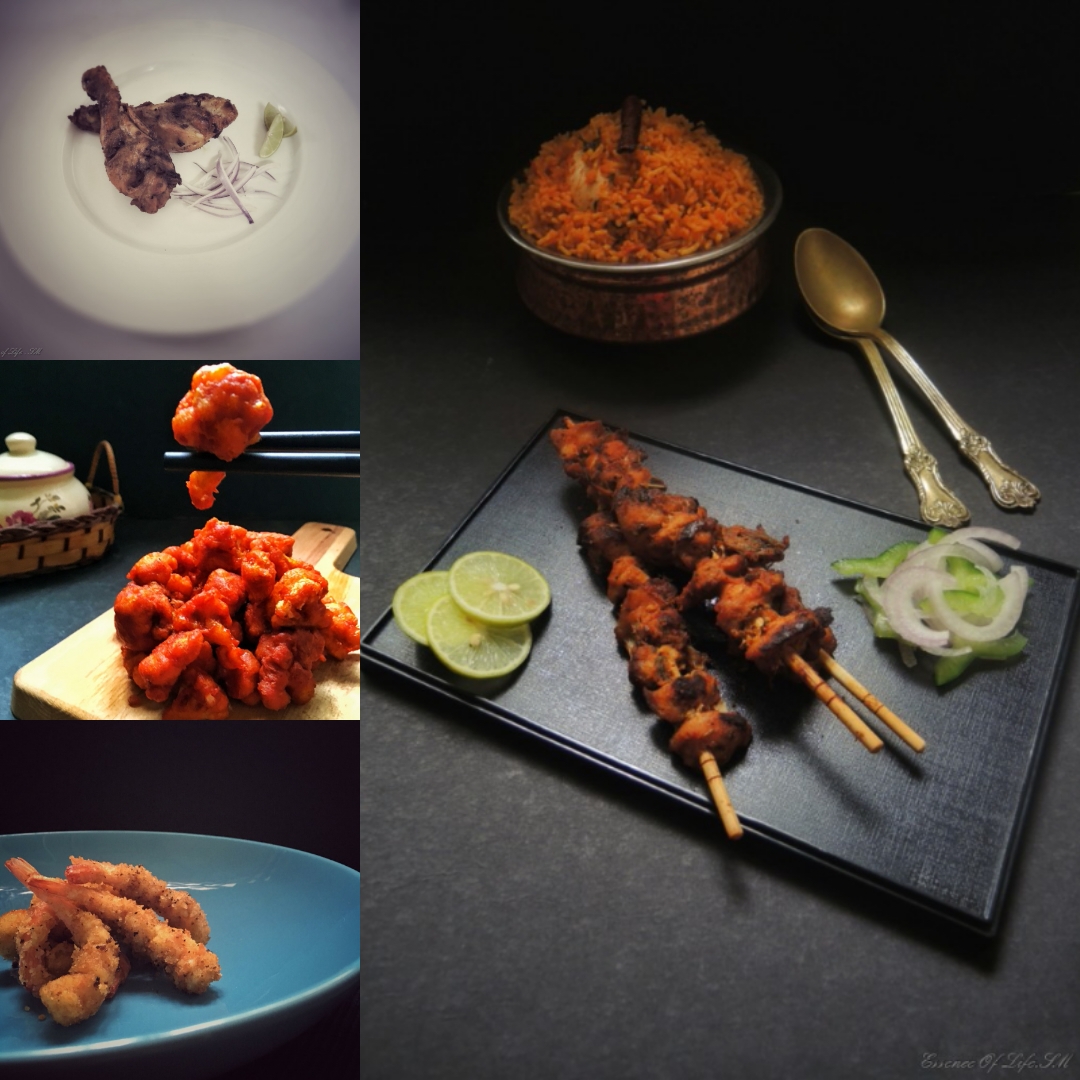
    APPETIZERS/STARTERS

    Serve the First Course with a choice of Starters with a variety of Dips & Sauces to go along with it.

    For more recipes on STARTERS/APPETIZERS, Click here...


    TANDOORI CHICKEN
    CHICKEN TIKKA 
    GOBI/CAULIFLOWER 65
    PRAWN TEMPURA


    SECOND COURSE :

      IDIYAPPAM-MUTTON PAYA /BUTTER NAAN WITH CURRIES

    CHRISTMAS/NEW YEAR EVE MENU
    INDIAN BREAD & CURRIES

        Serve the Second Course with Idiyappam and Mutton Paya traditionally. For a Vegetarian side dish serve Idiyappam with Vegetable White Kuruma 
     or 
        Serve North Indian Speciality of Butter Naan along with a unique Chicken White Shahi Korma.  For a Vegetarian Side Dish, Malai Kofta in Shahi Korma would be a great option.


    For more Recipes on Curries/Gravies, Click here...

    IDIYAPPAM
    MUTTON PAYA
    VEGETABLE WHITE KURMA
    or
    BUTTER NAAN 
     CHICKEN SHAHI KORMA
    MALAI KOFTA IN SHAHI KORMA 
                     

    THIRD COURSE :

      CHICKEN/MUTTON BIRIYANI WITH SIDE DISHES & RAITHAS

    CHRISTMAS/NEW YEAR EVE MENU
    FLAVOURED RICE, SIDE DISHES & RAITHAS


        Serve the Third Course with a Choice of Flavoured Rice like Chicken/Mutton Biriyani and a Side dish to go along with it.  A Yogurt/Curd based Raitha will serve best along with Biriyani.
    For more Recipes on Flavoured Rice, Click here...


    Flavoured Rice :
    CHICKEN BIRIYANI
    MUTTON BIRIYANI


    Side Dishes : 
    FISH TAWA FRY
    THANJAVUR MUTTON MUNDHIRI VARUVAL
    PRAWN MASALA
    QUAIL EGG ROAST


    Raithas :
    ONION RAITHA
    CUCUMBER RAITHA


    FOURTH COURSE :

     PLAIN RICE SERVED WITH RASAM/ CURD RICE/VERMICELLI

    CHRISTMAS/NEW YEAR EVE MENU
    RICE, RASAM, CURD & PICKLE


         As the Fourth Course of Meal serve, steamed Par-boiled Rice/Basmati Rice with your choice of Rasam.  Orange Rasam is a refreshing twist added to the normal Rasam, which will surely rejuvenate the meal. To finish off the meal. serve cool & comforting Curd Rice/Thayir Sadham, alternatively can serve Thayir Semiya/Curd Vermicelli. Or simply serve a cup of Curd(Yogurt)/Buttermilk along with steamed rice. No Indian meal is complete without a smidgen of Pickle and crunchy appetizers like Appalam/Pappadam or Vadagam. Rasam/Curd/Buttermilk is served to complete the meal and also helps in digestion.

    For more Rasam Varieties, Click here...

    STEAMED PARBOILED RICE
    ORANGE RASAM
    CURD RICE/THAYIR SADHAM
    THAYIR SEMIYA/CURD VERMICELLI
    AVAKKAI URUGAI 
                                        

    FIFTH COURSE : 

     DESSERTS &DRINKS 

    CHRISTMAS/NEW YEAR EVE MENU
    DESSERTS & DRINKS


    A sweet note adds merry to your festive mood. Finish of the Menu with your choice of Dessert/Drink :


    FRUIT SALAD WITH CUSTARD SAUCE 
    COCONUT PUDDING - TEMBLEQUE 
    VIRGIN PINA COLADA 
    KULFI 
    MANGO LASSI


    For more recipes on DESSERTS, Click here...

         Whether you're planning a large gathering or just a small soirée, these Christmas/New Year's Eve Menu will be a hit at your party.  I have tried to round up the best Christmas/New Year Party Menu, especially from my collection. From Home-made Wine & traditional Fruit Cake, Appetizers to the Desserts - treat everyone's palate to the happiest with these special recipes. What's a celebration without GREAT FOOD!!!

    Wishing you all a 


    MERRY CHRISTMAS & A HAPPY NEW YEAR !!!

    SM


    CHICKEN
    NATTU KOZHI KULAMBU

        Nattu Kozhi Kulambu - a traditional South Indian village style Chicken Curry prepared with Nattu Kozhi/Panna Kozhi/Naadan Kozhi.  These are native-bred free range chicken reared in farms/village households.  These free-range chickens are allowed to graze and roam freely in search of their own food. Mostly they are fed with natural ingredients. Free Range Chickens/Nattu Kozhi are healthier, tastier and are an age-old breed once commonly bred in every household.
        You can find a few Chickens grazing around in villages and it was a common scenario in my grand mother's place too. The Hen and the Rooster graze around with its flock the whole day and find its shelter in a coop during night time. A Chicken coop is where the fowl are kept safe and secure. Haystacks are laid inside the Coop for egg-laying, and perches are made on which the birds can sleep.  My grandfather makes sure that every hen is closed inside the Coop and I always found it quite amusing that they flock up to the Coop hearing the unflawing sound he uses for the purpose.  The Chicken Coop was a natural caved in place in a side wall at my Grand mother's place and it was closed with two wooden planks which were slid into the spot from a slot made at the top of the Coop. But what I found most ironic about the fact is that a Chicken found its last breath at the arrival of a guest. Totally bred, fed and taken care to feast over it.
          Every Region and Cuisine has its own style of Cooking Nattu Kozhi Kulambu and this recipe is a special recipe of Chef Damodhar.  An authentic chicken Curry prepared with freshly ground spices and cooked in an earthen pot. As said 'Ammiyil arachu vacha Nattu Kozhi Patta Kilappum' (a lyrical from song Sooriyano Chandirano in Sankar's Sivaji Movie) which says that the free-range chicken prepared with freshly ground spices in a mortar and pestle is an utter delicacy.  Usage of Local spices, Ingredients and method of cooking in this recipe reflects a lot of traditional cooking and South Indian Village lifestyle.

    For more CHICKEN Recipes, Click here...

    Cuisine - Tamil Nadu, South India
    Course - Side Dish
    Spice Level - Medium-High
    Difficulty - Easy
    Serves - 3-4
    Author - SM

    Preparation Time - 15-20 Minutes
    Cooking Time - 30 - 45 Minutes

    HOW TO COOK NATTU KOZHI KULAMBU


    INGREDIENTS :

    To Saute and Grind :

    Oil - 1 Tbspn
    Shallots - 1 Cup
    Dry Red Chillies - 8-10 Nos.
    Coriander Seeds - 2 Tbspn
    Peppercorns - 1/2 Tspn
    Cumin Seeds - 1/2 Tspn
    Curry Leaves - a Sprig

    For Nattu Kozhi Kulambu:

    Oil - 2 Tbspn
    Fennel Seeds - 1/2 Tspn
    Curry Leaves - a Sprig
    Nattu Kozhi/Free-range Chicken - 1/2 Kg.
    Ginger Garlic Paste - 2 Tbspn
    Green Chillies - 2 Nos.
    Turmeric Powder - 1/2 Tspn
    Tamarind - 1 Lime Size
    Salt - To Taste

    To Garnish :

    Coriander Leaves - few(Optional)

    METHOD : 

    To Saute and Grind :

    • Heat Oil in a pan, Saute Shallots, Dry Red Chillies, Coriander Seeds on a very low flame.
    • Saute until Onions turn translucent and the Spices turn fragrant.
    • Add Cumin Seeds, Peppercorns and Curry Leaves to the above and fry for a while.
    • Switch off the flame and the ingredients to cool down.
    • Grind the above ingredients into a smooth paste and keep it aside.

    For Nattu Kozhi Kulambu:

    • Clean, Wash and cut Chicken into pieces.
    • Heat Oil in a Pan/Earthen pot, splutter Fennel Seeds & Curry Leaves on a low flame.
    • Immediately add Chicken Pieces and sear the meat until the colour changes.
    • Add Ginger Garlic Paste, Green Chillies(Slit into two) to the above and saute until it turns aromatic.
    • Add Turmeric Powder and give a quick stir.
    • Pour in the Ground paste and mix well.
    • Add Salt and cook until oil separates from the masala.
    • Add some water & leave it on a low flame and cook until the Chicken Pieces turn soft and succulent.
    • Pour in the Tamarind extract and boil it on a low flame until raw flavour goes.
    • Cook the Nattu Kozhi Kulambu on a low flame until it reaches the desired consistency.
    • Garnish  Nattu Kozhi Kulambu with finely chopped Coriander Leaves.
    • Nattu Kozhi Kulambu goes well with Dosa, Idli, Kal Dosai, Uthappam,  Idiyappam, Appam etc.,
    • This Curry goes well with both Roti & Rice.

    NOTES :

    • Can cook the same recipe with broiler chicken too.
    • Nattu Kozhi/Free Range Chicken takes time to cook, adjust the time accordingly.
    • Adjust the amount of spices to suit your taste preference.
    • Slow cooking the Curry on a very low flame in an earthen pot yields an aromatic Nattu Kozhi Kulambu with perfectly cooked Chicken pieces.


    TIFFIN ITEMS
    KAL DOSAI


        When it comes to Classic Tiffin items like Idli & Dosa South Indian Cuisine is spoilt by choices and loaded with options.  The same batter with a slight variation converts itself into a different dish with a new look. Kal Dosai is a soft & spongy version of a normal Dosa. It is prepared with a Batter ground from a combination of soaked ingredients like Raw Rice, Parboiled Rice and Urad Dhal.  What gives the soft and spongy texture to this Dosa is the addition of Raw Rice to the Batter.
         Kal Dosai is traditionally prepared in an iron griddle colloquially called a 'Dosai Kal', and hence the name 'Kal Dosai'.  This is one of the famous South Indian Tiffin items and also a popular dish in most of the restaurants. Kal Dosai is slightly thicker than the normal Dosai with a soft and spongy texture.
    While cooking a Kal Dosai, keep in mind to,
    • Heat the Dosa Griddle and then lower the flame.
    • The batter should be poured and spread in such a manner that the Dosa is slightly thicker.
    • Cook Kal Dosai on a very low flame.
    • There is no need to flip and cook Kal Dosai. We have to slow cook the Kal Dosai only on one side. 
    • Can cover the Dosai with a lid and cook the dosa.
    • Well-fermented Batter yields lots of small pores around the Kal Dosai.
    • Kal Dosai should be Soft, Spongy and white in colour even after it is cooked.
         Whenever we dine out, my husband loves to order this Kal Dosai. I initially thought they were soft cooked traditional Dosas. There were the days where Moms prepared such Dosas and not the crispy thinly spread Paper Roast like Dosas at home, but the big Non-Stick Dosa Griddle has bought in the restaurant style Crisp Dosas into every household and those soft home-made Dosas lost its popularity. Though it seemed to be like a normal fluffy soft Dosa, the ones traditionally prepared at home, the ingredients used for Kal Dosai batter is different and plays a major role in the texture of this variety of Dosa. This soft, spongy white coloured Kal Dosai can be served with your choice of Chutney/Sambar or Curries like Vegetable Kurma, Coconut Sothi. It goes well with traditional style Chicken/Mutton Curries and Fish Curries.

    Cuisine - South Indian
    Course - Main Course
    Recipe Type - Dosai, Pancake
    Difficulty - Medium
    Serves - 3-4
    Author - SM   

    Preparation Time - 15-20 Minutes
    Soaking Time - 8-10 Hours
    Fermenting Time - 8-10 Hours/Overnight
    Cooking Time - 20 - 30 Minutes


    HOW TO COOK KAL DOSAI


    TIFFIN ITEMS
    KAL DOSAI


    INGREDIENTS :

    Par-boiled Rice - 1 Cup
    Raw Rice - 1 Cup
    Urad Dhal - 1/2 Cup
    Fenugreek Seeds - 1/2 Teaspoon
    Salt - To Taste
    Oil/Ghee - For Dosa

    METHOD :

    For Kal Dosai Batter :

    • Clean, Wash & Soak Par-boiled Rice and Raw Rice with ample of Water.
    • In a separate bowl, clean, wash & soak Urad Dhal and Fenugreek Seeds.
    • Soak the ingredients for about 6-8 hours.
    • Once soaked, Drain the water from the Urad Dhal and grind it in a mixer or grinder.
    • Grind Urad Dhal and Fenugreek seeds by sprinkling water little at a time.
    • Grind the ingredients for about 15-20 minutes.
    • Once the Urad Dhal is well ground, it would turn up fluffy and into a ball like consistency.
    • Switch off the mixer/grinder, transfer the Urad Dhal Batter into a Bowl and keep it aside.
    • Next, drain the Water from the soaked rice and grind it in a mixer or grinder.
    • Grind the Rice into a smooth batter.
    • Combine the Rice Batter and Urad Dhal Batter.
    • Mix both the batters thoroughly until well combined.
    • Cover the Bowl and leave the batter aside.
    • Allow it to ferment for about 8-10 hours/overnight.
    • Once the batter gets fermented well, add Salt and mix well.

    For Kal Dosai:

    • Heat the Dosa Griddle on a high flame and then lower the flame.
    • Smear the Griddle with oil.
    • Thoroughly mix the Dosa Batter and pour one big ladle of batter over the Dosa Griddle.
    • Slightly spread the batter so that the Dosa is slightly thicker.
    • Keep the flame at low while cooking Kal Dosai.
    • Drizzle a few teaspoons of Oil/Ghee over the Kal Dosai.
    • Cover the Kal Dosai with a lid and cook on a very low flame for a few minutes.
    • Once cooked, remove the Kal Dosai from the griddle (there is no need to flip and cook the Dosai).

    TIFFIN ITEMS
    KAL DOSAI

    NOTES :

    • Use Par-boiled Rice/Idli Rice along with good quality Raw Rice for Kal Dosai recipe.
    • The ingredients should be finely ground to a thick batter.
    • Fermentation plays a major role, imparting the Dosa with a soft and spongy texture.
    • Allow the batter to ferment for about 8-10 hours/overnight.
    • If you live in a cold climate, leave it in a warm place until the batter ferments.
    • Cook the Dosa on a very low flame, there is no need to flip and cook Kal Dosai.
    DESSERTS - FOR THE SWEET TOOTH
    COCONUT PUDDING - TEMBLEQUE


         An Old-fashioned Coconut Pudding made with fresh Coconut Milk, Gelatin and Fresh Coconut Slices.  This is a perfect dessert as it is rich, creamy and delicious. I love things made with Coconut, Coconut Milk, Tender Coconut or in Coconut Oil.  The Malayalee in me secretly pops out to reach my hands on anything prepared in the name of Coconut.  My kids always tease, saying that it reflects the true Keralite sense in me that I am genetically made up to like the ingredient.  Coconut has always been my favourite ingredient ever. Needless to say, that I use Coconut and Coconut products lavishly in my kitchen.
          This Coconut Pudding is truly a Tropical dish found throughout the world where Coconut is found in abundance.  This wonderful Coconut Pudding is called as Tembleque, which means "wiggly," is famous throughout Puerto Rico. Coconut Pudding/Tembleque recipe makes a rich, cool coconut-flavoured dessert that comes together within minutes! Simply cook the pudding, chill it in the refrigerator until firm, and unmold for an elegant, sweet ending to any meal. For this Coconut Pudding, I used freshly extracted thick coconut milk with some coconut cream instead of Fresh Cream and have flavoured it with Pandan/Screwpine essence for a tropical touch.
         This is a simple Dessert recipe which can be incorporated into your Party menu within no time.  Also, this Coconut Pudding wasn't overly Sweet. Garnish the Coconut Pudding with tender Coconut Slices or for a much-flavoured version serve it with Toasted Coconut. For an extravagant and rich dessert, serve this simple Coconut Pudding with Whipped Cream.  This Coconut Pudding is a wonderful Dessert, rich, creamy, smooth with a nice Coconut flavour.

    Recipe Type - Pudding, Dessert
    Difficulty - Easy
    Serves - 4- 6
    Author - SM

    Preparation Time - 10 -15 Minutes
    Cooking Time - 10 -15 Minutes
    Setting Time - 4 - 5 Hours

    HOW TO MAKE COCONUT PUDDING - TEMBLEQUE


    DESSERTS - FOR THE SWEET TOOTH
    COCONUT PUDDING - TEMBLEQUE


    INGREDIENTS :

    Fresh Cream/Coconut Cream - 3/4 Cup
    Water - 1/2 Cup
    Gelatin- 1 Tspn
    Sugar - 1/4 cup
    Fresh Coconut Milk - 2 Cups(Thick)
    Vanilla/Pandan Essence - 1/2 Teaspoon
    Corn Flour - 2 Tspn
    Fresh Coconut Slices - Few

    For a Detailed Recipe on HOW TO MAKE COCONUT MILK, Click here...

    METHOD :

    • Boil 1/2 Cup of Water, add the Gelatin Powder and boil it on a low flame until well combined. Keep it aside.
    • Mix Corn Flour along with few teaspoons of cold water without any lumps and keep it aside.
    • Pour fresh Cream in a wide bowl and boil it on a low flame stirring continuously for few minutes.
    • Add Sugar to the fresh cream and cook on a low flame until Sugar dissolves.
    • Add the dissolved Gelatin mix and cook for another few minutes stirring continuously.
    • Stir the ingredients well while you cook the mixture.
    • This is to ensure that no lumps are formed in the Pudding.
    • Pour in the Vanilla Extract/Pandan Essence to the above mixture and mix well.
    • Pour in the Corn Flour mixture and cook on a low flame stirring continuously.
    • Cook until the mixture thickens and slightly sticks to the ladle.
    • Switch off the flame.
    • Pour in the thick Coconut Milk to the above mixture and mix well until well combined. 
    • Switch on the flame and cook the Coconut Pudding on a low flame stirring continuously for few minutes. 
    • Add freshly grated/sliced Coconut to the pudding and switch off the flame.
    • Allow the Coconut Pudding to cool down.
    • Pour it into the Pudding mould or any other serving bowl of your choice.
    • Refrigerate the Coconut Pudding for about 4-5 Hours or until you serve the dish.
    • Serve the Coconut Pudding chilled.
    • If you need to unmold, run a thin knife around the edge. Invert mould (or moulds) onto a serving plate. 

    NOTES :

    • I have used freshly extracted home-made thick Coconut Milk and fresh Cream in this recipe.
    • Can substitute Fresh Cream with Coconut Cream for a dairy free Coconut Pudding Recipe.
    • Can substitute Gelatin with China Grass.
    • I have used 1/4 Cup of Sugar in the recipe, adjust to suit your taste preference.
    • Pandan flavour in Coconut based desserts go hand in hand.
    • Can use Vanilla Extract/Coconut Rum to flavour the dessert.
    • Soft and tender Coconut Slices tastes great when garnished in this Coconut Pudding.
    • Can also use the tender slices from Tender Coconut.
    • Can also Serve the Coconut Pudding with Toasted Coconut Slices/freshly grated Coconut.

    DESSERTS - FOR THE SWEET TOOTH
    COCONUT PUDDING - TEMBLEQUE

    TRIVIA - A QUICK NOTE:

    How to make Toasted Coconut:

    • Toasted, shredded coconut makes a deliciously sweet and crunchy topping for all types of desserts, like Coconut Pudding/Tembleque, Coconut Ice Cream, Cakes etc.,
    • To toast shredded coconut, pre-heat an Electric Oven  400°F/200°C. 
    • Spread the grated coconut evenly on the pan in a single layer.
    • Toast, stirring occasionally until coconut turns golden brown and crisp for about 7-10 minutes. 
    Note:
    • The high-fat content in coconut can make the shredded pieces go from golden brown to black and charred, within minutes.
    • Once the coconut turns into light golden brown in colour, remove the pan from the oven.
    • Immediately transfer the toasted coconut from the hot pan to a flat plate.
    • This will prevent the pan’s residual heat from over-cooking the coconut.
    • Allow the toasted Coconut to cool down before storing it in airtight containers.
    • Can use the toasted coconut as a garnish in Coconut Pudding, Coconut Ice Cream, Cookies, Cakes etc.,

         Pound Cake is one of the easiest recipes when it comes to baking. And if you are baking a Classic Christmas Fruit Cake with Pound Cake Recipe, the job gets easier. When Baking is called as meticulous and precious science of measurement, Pound Cakes goes easily with the formula.  Pound Cake is the oldest way of Baking a Cake that it date backs to 1700s. Pound Cake the name itself holds the recipe within. Ok, why is it called a Pound Cake?  Let's get into the fact - a Pound of Flour, a Pound of Butter, a Pound of Sugar and a Pound of Egg(Ya, you heard it right, a pound of Egg).
         So much of measurement for a cake!  That's literally too much!  No, the fact is that the measurement for every ingredient remains the same in a Pound Cake.  So the ratio lies in your hand. Take it as a Cup or a Kilo keep the ratio same for all the ingredients.  It sounds pretty simple.  A simple Pound Cake Recipe can be taken as a baseline and converted into quite a lot of variations.  Convert it into Chocolatey Chocolate Cakes, Rich Fruit Cakes, Flavoured cakes like Vanilla/Strawberry/Pandan/Banana, Citrusy Cakes with Orange/Lemon... the sky is limit when it comes to the twist of flavours while baking a Pound Cake.  It is a foolproof recipe.
         But what I like the most about a Pound Cake is how successful it is at liberating the amateur baker from the strict rules of recipes. I literally started my baking with a Pound Cake Recipe.  My MIL's cake recipe for every flavour, a simple Vanilla Cake/ a Chocolate Cake and her default traditional Kerala Plum Cake, for all of the Cake Recipes she follows the Pound Cake formula. Simple, yet rich and moist.  This Classic Christmas Pound Cake is our family recipe & my MIL's speciality.
         Classic Christmas Cake camouflaged with a simple Pound Cake Recipe converts the traditional cake into a simple baking task.  Christmas Fruit Cake on its own is a tempting symbol of indulgence, lacing along and profoundly displaying the traditions.  Ready to knock you out with its taste, flavour, texture and aroma, making you addictive from every bite, this boozy cornucopia hides within itself layers of flavours, from dry fruits soaked in Raisin Wine, Nuts, Spices, Vanilla and Dark Caramel
         Try this wonderful recipe for this Season and treat yourself with a sweet indulgence synonymous to Christmas.

    MERRY CHRISTMAS!!!


    For more CAKE Recipes, Click here...

    Recipe Type - Cake, Dessert
    Difficulty - Medium
    Yields - 2 Medium Sized Cakes
    Author - SM

    Preparation Time - 30 -45 Minutes
    Soaking Time for Fruits - 24 Hours to 1 Month.
    Cooking Time - 45 Minutes - 1 Hour(for 1 Cake)


    HOW TO MAKE CLASSIC CHRISTMAS POUND CAKE - RICH FRUIT CAKE


    INGREDIENTS :

    For Soaking:

    Golden Raisins - 1/4 Cup
    Dark Raisins - 1/2 Cup
    Dates - 1/4 Cup
    Currants/Prunes - 1/4 Cup
    Candied Peels - 1/4 Cup
    Glazed Cherries - 1/4 Cup
    Tutti Frutti - 1/2 Cup
    Dried Cranberries - 1/4 Cup
    Wine/Rum/Brandy/Orange Juice - 1 - 1.5 Cups

    For HOMEMADE TUTTI FRUTTI & CANDIED ORANGE PEELS, Click here...

    Nuts :

    Cashew Nuts - 1/2 Cup
    Walnuts - 1/2 Cup
    Almonds - 1/4 Cup
    Hazelnut - 1/4 Cup

    For Spice Powder:

    Cinnamon - 1/4 Tspn
    Nutmeg - 1/4 Tspn

    For Caramel:

    Sugar - ½ Cup
    Water - 1 Tbsp
    Warm water - ¼ Cup

    For Classic Christmas Pound Cake/Rich Fruit Cake:

    All-Purpose Flour - 2 Cups
    Baking Powder - 1¼ Tsp
    Baking Soda - ½ Tsp
    Sugar - 2 Cups
    Butter - 2 Cup
    Eggs - 4 Nos.
    Vanilla Extract - 2 Tspn
    Strawberry Jam/Marmalade - 1 Tbspn
    Orange/Lemon Zest - 1/4 Cup


    For a detailed recipe on HOW TO SOAK DRY FRUITS FOR CHRISTMAS FRUIT CAKE, Click here...

    For Caramel 


    METHOD :

    • In a heavy-bottomed pan, combine 1/2 cup of Sugar & 1 Tbsp of Water.
    • Heat it & let the sugar melt on a medium flame. Do not stir.
    • Wait until the colour of the caramelized sugar becomes DARK BROWN.
    • Meanwhile, warm up 1/4 cup of Water. Do not boil.
    • Remove the caramelized sugar from fire and slowly pour in the warm water into it.
    • Place the pan over the flame again and boil it in medium flame for about 5 minutes.
    • Switch off the flame and allow it to cool.

    NOTES :

    • Caramelize the sugar to your preferred colour choice - golden brown to dark brown.
    • At the initial stage, do not stir Sugar and Water.
    • Do the whole process on a medium flame.
    • Carefully pour warm water into the caramelized sugar. Do not use hot water or cold water for the purpose.
    • Utter care should be taken while pouring the warm water into the caramelized sugar as the liquid may splash and cause burns.
    • Caramel can be prepared earlier and refrigerated.

    Spice Powder & Nuts


    METHOD :

    • Grind all the Spices with a few teaspoons of Sugar into a fine powder & keep it aside.
    • Chop all the nuts finely and keep it aside.

    NOTES :

    • Spices like Cinnamon, Nutmeg, All Spice, Cloves etc., suits well for the purpose.
    • I usually use Nutmeg and Cinnamon in my Christmas Fruit Cake Recipe
    • Use any Nuts of your choice. ( I used Nuts like Cashewnuts, Walnuts & Blanched Almonds).
    • Can soak finely chopped Nuts along with the dry fruits, but it tends to lose the crunchiness.
    • It would be a good idea not to soak the Nuts.  
    • Roast the Nuts and dust it up with the Flour used for baking the cake, just before adding it into the Cake Batter.


    For Classic Christmas Pound Cake/Rich Fruit Cake 


    METHOD :

    • Preheat the oven at 180 Degree Celsius for about 10 - 15 Minutes.
    • Drain the soaked fruits & keep it aside. Retain the drained wine.
    • Add 1-2 Tablespoons of All Purpose Flour over the soaked fruits and toss them up.
    • Finely chop the Nuts, if using Almonds Blach the almonds, peel and then chop it.
    • Toast the Nuts and keep it aside.
    • Toss the Toasted Nuts with few teaspoons of flour and keep it aside.
    • This avoids the Dry Fruits & Nuts sinking to the bottom of the cake while baking.
    • Powder the Sugar and keep it aside.
    • Powder the Spices along with few teaspoons of Sugar into a fine powder and keep it aside.
    • Sift the Flour along with Baking Soda, Baking Powder and a pinch of Salt thrice.
    • In a large bowl beat Butter until soft, add powdered sugar and beat until it's well combined and soft.
    • Add Eggs one at a time into the butter mixture and beat well until soft and fluffy.
    • Add Vanilla Essence, Jam, Caramel, Spice Powder and beat it well.
    • Add the sifted flour in batches alternating it with the retained Wine/Liquor.
    • Beat after each batch until the flour is well combined into the mix.
    • Add soaked dry Fruits, Roasted Nuts along with some freshly grated Orange/Lemon zest to the cake batter.
    • Grease the Cake Tins and dust them up with Flour.  Line the tins with Baking Paper.
    • Pour the Cake Batter into the prepared tins and smoothen the tops.
    • Bake the cakes in the preheated at the centre rack of the oven at 180 Degree Celsius for about 45 mins to 1 hour or until the skewers come out clean.
    • Let cool in the Cake Tin on a rack.
    • Remove the Christmas Pound Cake from the pan carefully and peel off the baking paper.
    • Cut into the desired shape and store the Christmas Fruit Cake in airtight containers.
    • Classic Christmas Pound Cake/Rich Fruit Cake stays good for a week or two at room temperature.

    For Longer Shelf Life :

    • Soak a clean cheese cloth in the wine/brandy/rum and wrap it around the Christmas Fruit Cake.
    • Wrap it in plastic wrap and refrigerate the Cake.  Can be refrigerated for up to 3 Months.
    • Before serving remove them from the plastic wrap and drizzle some liqueur over it.

    NOTES:

    • Eggs and Butter should be at room temperature.
    • Weigh the Eggs with the shell(before breaking it open).
    • For 2 Cups of Flour, It equalled to 4 Eggs.
    • I used Strawberry Jam for the purpose, can also use Orange Marmalade.
    • Use a hearty amount of Lemon/Orange Zest for a refreshing Citrusy Note in the Christmas Fruit Cake.
    • Can substitute White Sugar with Brown Sugar.
    • If you feel 2 Cups of Sugar may yield a sweeter Fruit Cake. Adjust the amount of Sugar accordingly. 
    • I have used 4 Cups of Fruits and Nuts in this Christmas Cake Recipe.
    • A rich and good Fruit Cake would have ample of  Dry Fruits & Nuts( at least half the weight of the cake should be Dry Fruits & Nuts).
    • Adjust the amount of Dry Fruit and Nuts according to the number of cakes you need to Bake.
    • Use only 4-5 Tbspns of retained wine/liquor in the cake batter.  
    • Use the remaining wine/liquor to brush over the top of the cake, if you are storing it for a long period of time.
    • Adjust the baking time according to your oven settings.
    • If you are baking a Light Fruit Cake with the same recipe, avoid adding caramel to the batter.
    Newer Posts Older Posts Home
    Search for a Recipe

    I Me Myself

    A vintage-style horizontal oval frame showcasing ornate silver spoons on a dark rustic surface

    Essence of Life - Food is all about daily cooking with a simple sense of taste and health. It is all about food. Not a day goes by without eating for most of us, so what we eat matters on the whole. Food in the mode of goodness increases the duration of life, purifies one's existence, and gives strength, health, happiness, and satisfaction. Above all ingredients, the most vital one in my kitchen is love.

    Sm

    Popular Posts

    • Kizhi Parotta: Kothu Parotta and Salna Wrapped in Banana Leaves
    • How to Make Kerala Kanji | Traditional Rice Porridge with Payar, Chammanthi & Achar
    • Maida Chapati - All-Purpose Flour Chapati
    • Brewing Authentic Malaysian Kopi: A Step-by-Step Guide to Mastering the Art of Kopi Making
    • Quick & Easy Pressure Cooker Ragi/Finger Millet Kali Recipe
    Ebook - What I Cook - For Onam

    Ebook - “What I Cook - For Onam”

    Amazon.com/dp/B0CGPVY6J3

    Indulge in Kerala’s Culinary Heritage: Traditional Onam Sadhya Recipes, with Expert Serving Tips! Celebrate Onam the authentic way! Discover 25 timeless Kerala Sadya recipes in my ebook. From avial to payasam, bring home the flavours of tradition. Available now on Amazon!

    Essence of Life

    Subscribe & Follow

    © 2026 | Essence of Life - Food

    • Home
    • Ask First
      Please note that all rights for the photographs and texts on this blog, unless otherwise mentioned, rests with the author. Please do not use without permission.
    • Privacy Policy