Essence of Life - Food
  • Home
  • From My Kitchen
    • Heirloom Recipes
    • From God's Own Country
    • Sadhya
    • Kongu Cuisine
    • Chettinaad Cuisine
    • South East Asian
    • Around the World
  • Ebook
  • I Me Myself
SADHYA, FROM GODS OWN COUNTRY, LUNCH MENU, VEGGIES
PADAVALANGA THORAN/STIR-FRIED SNAKE GOURD

     
      Snake Gourd is a vine plant with narrow, twisted, elongated fruit. An age-old vegetable originally domesticated since ancient times in India, and the wild form of the species is native to Southern, Eastern & South-East parts of Asia. Snake Gourds belong to Pumpkin family.  The shoots, tendrils and leaves of the plant can also be eaten.   The taste of the vegetable is bitter with an unpleasant odour, but this often disappears when cooked,  But when the vegetable is ripe, the bitterness is difficult to be eliminated. 
      Snake Gourd is widely used in Indian cooking. It is called as Podalanga in Tamil, Padavalanga in Malayalam, Padwal/Chichinda in Hindi. Snake Gourds can be used in curries, stir-fries or sometimes converted into fritters.  This vegetable is commonly cooked as Kootu along with Dhals.
    Snake Gourd contains a wide variety of Nutrients, Vitamins & Minerals with high levels of dietary Fiber & Protein.  It is rich in Vitamin A, B, C, & Minerals like Manganese, Magnesium, Calcium, Iron, Potassium & Iodine.  The vegetable is loaded with health benefits.

  • It has the ability to reduce fever
  • Hydrate the body
  • Detoxifies the body
  • Improves Digestion
  • Relieves Constipation
  • Strengthens the Immune System
  • Helps to reduce the risk of DIabetics.
  • Aids in Weight Loss 
  • Improves & strengthens the Hair
     Padavalanga/Snake Gourd Thoran is a simple Kerala Style stir fry prepared with finely chopped Snake Gourds, usually seasoned with mild spices and condiments and finally topped up with few spoons of grated coconut. Thoran/Upperi is a predominant Sadhya Item served along with various other dishes in a Kerala Sadhya(Banquet). This quick & easy Padavalanga/Snake Gourd Thoran can easily be squeezed into your Sadhya item.


Few other Thoran/Upperi which can be served in a Sadhya or a simple Lunch Menu:

  • Cabbage Thoran
  • Cabbage, Carrot & Beans Thoran
  • Achinga Payar/Long Beans Thoran 
  • Cheera/Spinach Thoran 
  • Beetroot Thoran/Poriyal 
  • Vendakka/Okra Thoran
  • Pavakka/Bitter Gourd Thoran
  • Cheru Payar Parippu/Yellow Moong Thoran
  • Cheru Payar/Green Moong Thoran
  • Kovakka/Ivy Gourd Thoran
  • Padavalanga/Snake Gourd Thoran 
  • Mathanga/Yellow Pumpkin Thoran 
  • Vazhakoombu/Plantain Flower Thoran


For more recipes on SADHYA, click here...


Cuisine - Kerala (South India)
Course - Side dish
Spice Level - Low - Moderate
Difficulty - Easy
Serves - 4
Author - SM


Preparation Time - 5 -10 Minutes
Cooking Time - 5 - 7 Minutes


For more RECIPES FROM GODS OWN COUNTRY, Click here...


HOW TO COOK PADAVALANGA THORAN/STIR-FRIED SNAKE GOURD


INGREDIENTS :

Snake Gourd - 2 Cups
Shallots - 4-5 Nos.
Ginger - a Small Piece(Optional)
Garlic - 1-2 Cloves
Green Chillies - 2 Nos.
Coconut - 2-3 Tbspn
Salt - To Taste
Sugar - a Pinch

For Tempering :

Mustard Seeds - 1 Tspn
Bengal Gram/Urad Dhal - 1 Tspn(Optional)
Curry Leaves - 1 Sprig
Coconut Oil - 1 Tbspn.

METHOD :

  • Clean, wash & cut the ends of the Snake Gourd.
  • Scrap and remove the white coloured coating over the skin.
  • Cut the vegetable into halves, remove the white portion at the centre with seeds.
  • Chop the snake gourd into tiny cubes and keep it aside.
  • Finely chop Shallots, Green Chillies & Garlic.
  • Heat Oil in a pan, splutter Mustard Seeds, Bengal Gram/Urad Dhal and Curry Leaves.
  • Add finely chopped Shallots, Green Chillies, Garlic and saute until shallots turn translucent.
  • Add chopped Snake Gourds along with a dash of Salt & a pinch of Sugar.
  • Cover and cook briefly.
  • Add in grated Coconut and mix well.
  • Cook for a while on a low flame.
  • Snake Gourd/Padavalanga Thoran can be served along with Rice & Curry or as one of the side dishes in a Sadhya.

NOTES :

  • Can add a pinch of Turmeric if preferred.
  • Some do not add Onions & Garlic while cooking for a Sadhya.
  • Adding Garlic is truly optional.
  • I have used Coconut Oil in the recipe, can use any other vegetable oil. 


     Today is Onam - Thiruvonam.  A year-long wait, when the King comes knocking the doors of God's Own Country. The land gets ready to welcome the King - Mahabali.  A festive mode clings along with a 10 day long celebrations starting from Atham and Thiruvonam is the next big day.
     Indian festivals are all about food, new clothes and cultural activities. But always the highlight being the food and the delicacies attached to the traditions play a big role in all festivals. Onam is
no exception to the fact. The grand feast served on a Banana Leaf is appealing not only to our eyes but also delectable to our taste buds.  Sadhya is a grand affair with a huge number of vegetarian delicacies ranging from 5 to 12 items or sometimes 16 to 24 preparations on the menu. Traditionally the number of items served ranges in multiples of 8, utmost up to 64 items on the whole.  The dishes are prepared with a perfect balance to appeal all six tastes - Sweet, Salty, Spicy, Sourness, Bitterness and Pungency.  But the highlight of any Sadhya is the Payasam which is served as the last item.

DELICIOUS PAYASAMS FOR A SADHYA

DELICIOUS PAYASAMS FOR SADHYA, PAYASAM/PRADHAMAN/KHEER, SADHYA
DELICIOUS PAYASAMS FOR A SADHYA


LETS TALK ABOUT PAYASAM...


     Payasam is served as a last item in a Kerala Sadhya, a long spread of food in a Banana Leaf catering a long list of Sadhya Vibhavangal depending on the grandeur of the banquet/Sadhya.  Though Last served, Payasam reigns the Sadhya undoubtedly as a King, appeasing & satiating our taste buds.  The taste of a Payasam lingers in our taste buds prolonging too longer and staying there for ever.  Without a Payasam, a Sadhya is considered to be incomplete.
     After eating such an elaborate meal, would you have a little space to accommodate the Payasam?  My Dad says, just a lick of Pickle or Inji Curry can help you do the job.  And that is true.  I have done the trick so many times to gobble up a bowl of Payasam in a Sadhya.  So is the importance and speciality of a Payasam in a Sadhya.
     Sadhya is ubiquitous to Onam and Vishu & Payasam/Pradhaman is ubiquitous to a Sadhya. Traditionally it is served on a plantain(banana) leaf. The rich heritage and tradition are indigenous to these Payasam.  Sadhya is finished with Pradhaman or Payasam.  It is usually mixed along with Pappadam and Pazham. Pappadam, Pazham & Payasam are considered as the 3 important dishes in a Sadhya. Even the poorest of families in the days of yore make sure to at least prepare the simplest of a Payasam to commemorate the event and serve it with Pappadam and a Banana(Pazham).  So Payasam, how simple it may be, is a must in a Sadhya.
     When talking about Payasam & Pradhaman a Classic dish of any Sadhya is usually misinterpreted.  Not many know the difference between pradhaman and payasam. It is often confusing and referred to as the same dish by many.  Even I am not sure with the difference between a Payasam & a Pradhaman.  From what I know, Single cooked is Payasam, where as Double-cooked is Pradhaman.  Pradhaman involves cooking twice, like for Ada, first the Ada is cooked and then it is added into a sweet concoction to convert it into a Pradhaman. A payasam which involves double cooking becomes a Pradhaman.  Pradhaman is thicker and involves twice the work. Commonly Payasam is prepared in Temples to appease Gods.  As Pradhamans involve double cooking like for cooking Ada or Fruits, Pradhamans are not served for God.
     Whereas a dessert of the same genre is Kheer, the North Indian sibling of Payasam & Pradhaman.  Kheer differs from many Indian desserts because it has two quite distinct origins. The first is the ancient Indian tradition of 'Payas', which survives to this day in South India as 'Payasam'. And the second is the Middle Eastern 'Sheer' brought to India by Arabs in the medieval age.
    
     I have tried to gather up some traditional South Indian Payasams & Pradhamans which can be easily prepared for a Sadhya or as a simple dessert, whenever a sweet tooth pops up.


For more PAYASAMS, PRADHAMANS & KHEERS, Click here...


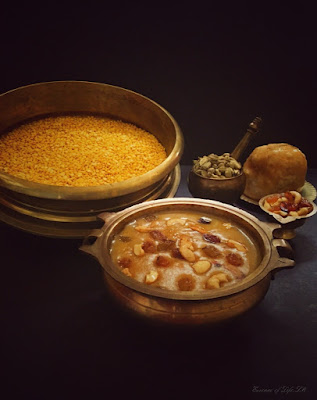
 PALADA PAYASAM/PRADHAMAN

DELICIOUS PAYASAMS FOR SADHYA, PAYASAM/PRADHAMAN/KHEER, SADHYA
PALADA PAYASAM/PRADHAMAN

     When it comes to Payasam and Pradhamans, Palada Payasam/Pradhaman is one of the most traditional desserts of 'GODS OWN COUNTRY' and it is called as the King of Desserts in Kerala. When talking about Payasam, Palada Pradhaman/Payasam can never skip the thought. Palada Pradhaman/Payasam is prepared with Cow's Milk and sweetened with Sugar.
     Palada Pradhaman/Payasam is a delectable concoction made with Cow's Milk and Sugar with a special ingredient 'Ada'(Rice Flakes) as a base.  Ada gives a delicate texture and special flavour and taste to this wonderful 'Palada Pradhaman/Payasam'. Slow cooking is one method which would yield a light Pink coloured Palada Pradhaman/Payasam, which converts this tasty dessert into a visual treat.

For PALADA PAYASAM RECIPE, Click here...


AMBALAPUZHA PAAL PAYASAM/ARI PAYASAM

DELICIOUS PAYASAMS FOR SADHYA, PAYASAM/PRADHAMAN/KHEER, SADHYA
AMBALA PUZHA PAAL PAYASAM/ARI PAYASAM
     Paal Payasam/Ari Payasam/Rice Payasam is the best and the simplest payasam ever.  The most delicious AMBALA PUZHA PAAL PAYASAM literally is a dessert prepared with Rice in a Milk base. This authentic Paal Payasam sticks on to the traditional rule of using Kerala Rose Matta Rice/ Unakkalari which gives an authentic taste and flavour to the dessert.  The trick behind perfectly cooked Paal Payasam is slow cooking on a very low flame which yields a pink colour to the Paal Payasam, it gives a perfect texture to the rice and makes the Payasam Rich and Creamy.
This is one of the most common Payasam served in a Sadhya & Paal Payasam or Palada Payasam tops the list during Onam/Vishu Sadhya.
       Most of all, if it is Paal Payasam then it is undoubtedly Ambalapuzha Paal Payasam.  This dessert is a famous Naivedyam/Prasadham at Sree Krishna Temple in Ambalapuzha(Kerala). This Paal Payasam is served as a Naivedyam - the so-called Ambalapuzha Paal Payasam is a speciality and all the more Divine with an unbeatable taste.

For AMBALAPUZHA PAAL PAYASAM/ARI PAYASAM RECIPE, Click here... 


ADA PRADHAMAN


DELICIOUS PAYASAMS FOR SADHYA, PAYASAM/PRADHAMAN/KHEER, SADHYA
ADA PRADHAMAN

     Ada Pradhaman is one of the most traditional desserts of GODS OWN COUNTRY and it is called as the King of Desserts in Kerala. When talking about Ada Pradhaman, Ada is a tiny square-shaped Rice Flake. Ada the basic ingredient used for this type of pradhaman is prepared with Unakkalari(a type of Raw Rice) Powder.  Ada Pradhaman is a delectable concoction made with Coconut Milk and Jaggery (Cane Sugar) with a special ingredient 'Ada'(Rice Flakes) as a base.  Ada gives a delicate texture and special flavour and taste to this wonderful 'Ada Pradhaman'.

For ADA PRADHAMAN RECIPE, Click here...


GOTHAMBU PAYASAM - BROKEN WHEAT PAYASAM


DELICIOUS PAYASAMS FOR SADHYA, PAYASAM/PRADHAMAN/KHEER, SADHYA
GOTHAMBU PAYASAM - BROKEN WHEAT PAYASAM

      Gothambu Payasam/Pradhaman is a Classic Payasam prepared with Broken Wheat/Nurungu Gothambu in a delectable concoction made with Coconut Milk and Jaggery & flavoured with Cardamoms & Dry Ginger.  The Broken Wheat/Nurungu Gothambu in this Pradhaman is slightly bigger than the Samba Gothumai Rava/Broken Wheat/Dhalia we use for Upmas. This Broken Wheat/Nurungu  Gothambu has a wonderful texture when cooked. It is one of the Traditional Pradhamans of Kerala, cooked during special occasions and festivals.
     Though there is a debate on whether Gothambu Payasam comes under Pradhaman or Payasam, as it does not involve double cooking of the ingredients.  Mostly it is categorized under Payasam.


For GOTHAMBU PAYASAM RECIPE, Click here...


PARIPPU PRADHAMAN


DELICIOUS PAYASAMS FOR SADHYA, PAYASAM/PRADHAMAN/KHEER, SADHYA
PARIPPU PRADHAMAN

     Parippu Pradhaman is a classic Kerala style Payasam prepared with Moong Dhal/Cheru Payar Parippu in a delectable concoction made with Coconut Milk and Jaggery.  All the more the Parippu (lentil) for this Pradhaman is Cheru Payar/Moong Dhal/Pasi Paruppu, an easily digestible lentil. It is one of the Traditional Pradhamans of Kerala, cooked during special occasions and festivals.  
     Even this payasam is often confused and debated whether Parippu Payasam comes under Pradhaman or Payasam, as it does not involve double cooking of the ingredients.  Mostly it is categorized under Payasam. But some say as it involves dry-roasting the Cheru Payar before making Payasam it can be categorized as Pradhaman.


For PARIPPU PRADHAMAN RECIPE, Click here...


VERMICELLI PAYASAM/SEMIYA PAYASAM 


DELICIOUS PAYASAMS FOR SADHYA, PAYASAM/PRADHAMAN/KHEER, SADHYA
VERMICELLI PAYASAM/SEMIYA PAYASAM
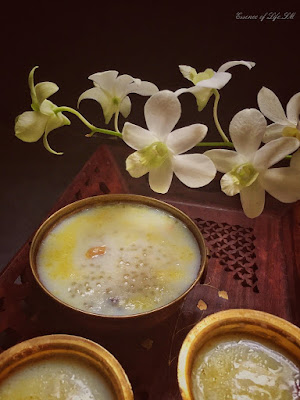
      Vermicelli Payasam/Semiya Payasam is one of the Classical Indian Dessert/Pudding prepared with roasted Vermicelli, Milk and Sugar. Semiya Payasam as it is called in South India and as Seviyan Kheer in North India and Sheer Khurma in Pakistan, Afghanistan and Arabian countries, are the same versions of Vermicelli pudding with slight variations in texture and consistency along with varied garnishes used. Though the base ingredients remain the same, it can be converted into a rich dessert with its variations in garnishings and flavourings. If there is one quickest dessert, then it is none other than Semiya/Vermicelli Payasam.  This is a version of Persian Sheer Khurma which converted itself palatable to South Indian Cuisine.


For VERMICELLI PAYASAM/SEMIYA PAYASAM  RECIPE, Click here...


JAVVARI PAYASAM/SAGO PAYASAM


DELICIOUS PAYASAMS FOR SADHYA, PAYASAM/PRADHAMAN/KHEER, SADHYA
JAVVARI PAYASAM/SAGO PAYASAM
     Javvari Payasam/Sago Payasam is another Classical Indian Dessert/Pudding prepared with roasted Tapioca Pearls/Sago, Milk and Sugar. Javvari Payasam as it is called in South India and as Sabudhana Kheer in North India, are the same versions of Tapioca Pearl pudding with slight variations in texture and consistency along with varied garnishes used. Though the base ingredients remain the same, it can be converted into a rich dessert with its variations in garnishing and flavourings.
      Javvari Payasam/Sago Payasam can be prepared by soaking the Tapioca Pearls/Sago/Javvarisi or alternatively it can also be prepared by roasting the Tapioca Pearls/Sago/Javvarisi in ghee.  This is the easiest method and also gives a better texture to the Javvari Payasam/Sago Payasam.  Sago/Tapioca Pearls can also be combined up with Vermicelli to make Javvarisi-Semiya Payasam.  Another version of Sago Payasam with Jaggery and Coconut Milk is also prevalent in and around South India.


For JAVVARI PAYASAM/SAGO PAYASAM RECIPE, Click here...


ELANEER PAYASAM/TENDER COCONUT PAYASAM


DELICIOUS PAYASAMS FOR SADHYA, PAYASAM/PRADHAMAN/KHEER, SADHYA
ELANEER PAYASAM/TENDER COCONUT PAYASAM
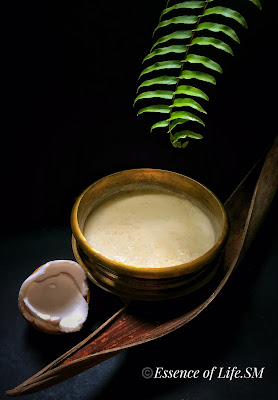
     Elaneer/Karikku Payasam - Tender Coconut Payasam is a delectable concoction prepared with Tender Coconut Shavings as a base in Tender Coconut Water, Cow's Milk & it can be sweetened with Sugar/Rock Sugar.  It has a mild texture with extraordinary aroma of fresh Coconut Shavings.  This is a simple and mildly sweet dessert.  If you are craving for something light but flavourful dessert, then this Payasam is sure to appease your senses.
     An authentic Payasam from Kongu Cuisine which is famous for its extensive use of Local Produce, subtle use of spices and cooking with fresh ingredients.


For ELANEER PAYASAM/TENDER COCONUT PAYASAM RECIPE, Click here...


NEYPAYASAM


DELICIOUS PAYASAMS FOR SADHYA, PAYASAM/PRADHAMAN/KHEER, SADHYA
NEYPAYASAM
     The one & only, utmost divine - Neypayasam, an all-time favourite of a Malayali. A Payasam served as a Prasadham in almost all Temples in Kerala.  Neypayasam is served in Temples to appease the Gods.  Raw Rice/Unakkalari slow-cooked in a copious amount of Ghee and Jaggery, which gives its name - Neypayasam.  This utter sweet & thick concoction is meant to be eaten only little at a time, unlike other Payasams.


For NEYPAYASAM RECIPE, Click here...


CHAKKA PRADHAMAN/JACKFRUIT PAYASAM 


DELICIOUS PAYASAMS FOR SADHYA, PAYASAM/PRADHAMAN/KHEER, SADHYA
CHAKKA PRADHAMAN/JACKFRUIT PAYASAM
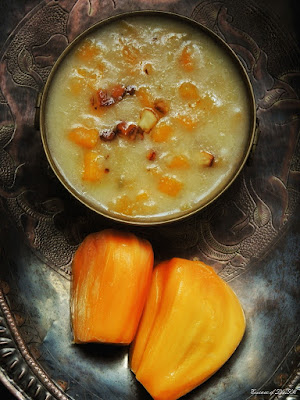
     In this Chakka Pradhaman - Jackfruit Payasam recipe I have used fresh Jackfruit pieces. Ground Jackfruit pieces are cooked along with Jaggery syrup and flavoured with Cardamoms & Dry Ginger Powder.  This Chakka Pradhaman is extensively laced with fresh homemade Coconut Milk, which makes this dessert a delectable delicacy. Chakka Pradhaman can also be cooked with Chakka Varattiyathu (Jackfruit pieces cooked and preserved in Jaggery syrup). The fragrance from Jackfruit gives a special note to this Chakka Pradhaman.  This classic dessert is unique to itself.  When the fruit is in season this Payasam would be an added gradeur to a classic Sadhya.
     As this Jack Fruit Payasam involves double cooking, may be cooking the Jackfruits in Jaggery or as converting it into Chakka Varattiyathu and then preparing it into a Payasam, this dish is commonly termed as Chakka Pradhaman. Lore attached to it makes it as a commonly served Payasam in a Wedding Sadhya.


For CHAKKA PRADHAMAN/JACKFRUIT PAYASAM RECIPE, Click here...


JACK FRUIT & RICE PAYASAM - PONSA GHARAI


DELICIOUS PAYASAMS FOR SADHYA, PAYASAM/PRADHAMAN/KHEER, SADHYA
JACK FRUIT & RICE PAYASAM - PONSA GHARAI

      Jackfruit and Rice Payasam is a tasty dessert prepared with Jackfruit slices, Rice, Coconut Milk/Milk & Jaggery/Sugar, flavoured with Cardamoms and garnished with Cashews & Almonds. Authentic Chakka Pradhaman/Jackfruit Pradhaman is the one which is quite prevalent and popular Pradhaman prepared with Jackfruit in Kerala Cuisine.
      But this type of Payasam is unique to Udupi/Konkani Cuisine and it is called 'PONSA GHARAI'.  This Jackfruit Rice Payasam recipe has a wonderful texture from Jackfruit slices and soaked Rice with a unique aroma synonymous to Jackfruit.


For JACK FRUIT & RICE PAYASAM - PONSA GHARAI RECIPE, Click here...


MAMBAZHA PRADHAMAN/MANGO PAYASAM


DELICIOUS PAYASAMS FOR SADHYA, PAYASAM/PRADHAMAN/KHEER, SADHYA
MAMBAZHA PRADHAMAN/MANGO PAYASAM
    
 
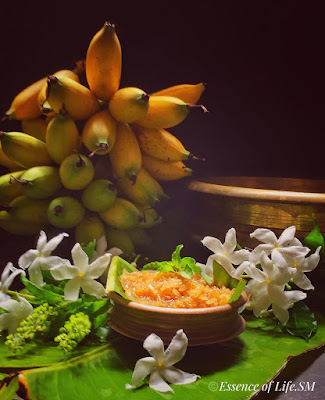
    Mambazha Pradhaman/Mango Payasam is a delectable concoction made with Mango as a base in Coconut Milk and Jaggery (Cane Sugar).  This dessert yields an extraordinary flavour and aroma unique to Mangoes.  Pradhamans prepared with fruits like Mango, has a wonderful note of flavour unique to the fruit in it enhancing the overall flavour and taste of the dessert. This is one of the most unique and classic desserts of GOD'S OWN COUNTRY.
     Mambazha Pradhaman/Mango Payasam comes into limelight when Mangoes are in season.  Commonly this Pradhaman is prepared during Vishu when Mangoes are in season.  If you can get hold of Mangoes, then this Mambazha Pradhaman would be a tasty addition in your Sadhya.


For MAMBAZHA PRADHAMAN/MANGO PAYASAM RECIPE, Click here...


NENDHRA PAZHA PRADHAMAN 


DELICIOUS PAYASAMS FOR SADHYA, PAYASAM/PRADHAMAN/KHEER, SADHYA
NENDHRA PAZHA PRADHAMAN
     Nendhra Pazha Pradhaman is a delectable concoction made with Coconut Milk and Jaggery (Cane Sugar) prepared with Banana as a base.  Nendhra Pazham or Etha Pazham is a variety of Banana commonly found in South India and it is a crowned possession in Kerala Cuisine due to its wide usage. This variety of Banana has a slightly firmer pulp and a deep yellow colour compared to other varieties which makes it suitable for converting it into wonderful dishes & desserts.
     Nendhra Pazham is steam cooked and mashed before adding it into the Jaggery Concoction & Coconut Milk.  Pradhamans prepared with fruits like Nendhra Pazham has a wonderful note of that fruit in it enhancing the overall flavour and taste of the dessert. This is one of the most unique and classic desserts of GOD'S OWN COUNTRY.

For NENDHRA PAZHA PRADHAMAN RECIPE, Click here...


MATHANGA PIDI - SWEET PUMPKIN DUMPLINGS


DELICIOUS PAYASAMS FOR SADHYA, PAYASAM/PRADHAMAN/KHEER, SADHYA
MATHANGA PIDI - SWEET PUMPKIN DUMPLINGS
     Mathanga Pidi /Sweet Pumpkin Dumplings are nothing but dumplings made out of a mixture of steam-cooked Pumpkins/Squash, grated Coconut & Wheat Flour.  Then these small dumplings are cooked in a Coconut Milk & Jaggery Base and flavoured with Cardamoms.  These tiny pumpkin dumplings are so soft and succulent & taste great.
     Though this is an authentic recipe from Kerala Cuisine, a family recipe, this dessert doesn't come under classic Payasam recipes served in a Sadhya. If you are literally in the mood for a twist in a Payasam recipe, then this Mathanga Pidi is sure to appease your taste buds.

For MATHANGA PIDI - SWEET PUMPKIN DUMPLINGS RECIPE, Click here...


AVAL PAYASAM WITH ROCK SUGAR


DELICIOUS PAYASAMS FOR SADHYA, PAYASAM/PRADHAMAN/KHEER, SADHYA
AVAL PAYASAM WITH ROCK SUGAR
    
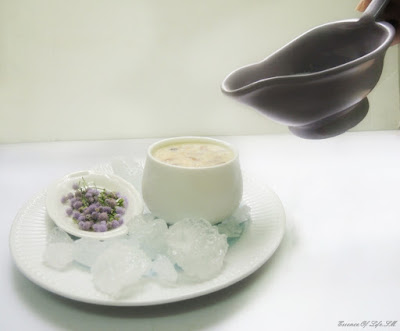
     Aval Payasam is a simple Payasam recipe prepared with Beaten Rice/Poha/Avalakki.  This Payasam can be incorporated within a few minutes.  Toasted Aval is cooked in milk and sweetened with Rock Sugar (Kalkandu).  The main ingredients in this recipe are Aval/Poha/Flattened Rice, Milk and Rock Sugar.  Rock Sugar is considered to have therapeutic properties, but it is higher in calories compared to white sugar. Aval Payasam can also be made with Refined Sugar/Jaggery.  The texture of Aval is awesome that they turn so soft and succulent when added to milk.
     This is a common Payasam made for Gokulashtami/Krishna Jayanthi to commemorate Lord Krishna's love for this payasam and to proclaim the lore of Krishna & Sudama(Kuchelan).

For AVAL PAYASAM WITH ROCK SUGAR RECIPE, Click here...


CARROT PAYASAM/KHEER


DELICIOUS PAYASAMS FOR SADHYA, PAYASAM/PRADHAMAN/KHEER, SADHYA
CARROT PAYASAM/KHEER
     Carrot Kheer/Carrot Payasam is a classic North Indian style Kheer, where Carrots serve as a basic ingredient along with Milk and Sugar, with a note of Ghee.  This Carrot Kheer is garnished with roasted Nuts. Grated Carrots are sautéed in Ghee and then slow-cooked in Milk and Sugar until it reaches a perfect texture.


For CARROT PAYASAM/KHEER RECIPE, Click here...


THENGA PAAL PAYASAM

DELICIOUS PAYASAMS FOR SADHYA, PAYASAM/PRADHAMAN/KHEER, SADHYA
THENGA PAAL PAYASAM
     Thenga Paal Payasam is a traditional Tamil style dessert prepared uniquely on the first day of the Tamil month Aadi.  So this Thenga Paal Payasam is called as Aadi Paal.  This is a simple concoction made with Coconut Milk & Jaggery with a mild note of Cardamom in it. Though it is a norm to add a base ingredient in any of the Payasams, this Thenga Paal Payasam is just a concoction made with Coconut Milk & Jaggery.  A simple delicacy usually prepared as an Offering to God(Naivedhyam) on the first day of the month of Aadi.  


For THENGA PAAL PAYASAM  RECIPE, Click here...


FIRNI


DELICIOUS PAYASAMS FOR SADHYA, PAYASAM/PRADHAMAN/KHEER, SADHYA
FIRNI
     Thanks to the Mughals for introducing yet another delicacy into Indian Cuisine. Rich & tasty - Firni.  A simple dessert prepared with soaked and coarsely ground Basmati Rice cooked in Milk and sweetened with Sugar.  Firni is copiously garnished with Nuts & Saffron.
     The origin of the dessert is believed to be Middle Eastern, but can also be seen in Persian, Lebanese, Moroccan & Afghani Cuisine. A lot of innovative variations are found with this recipe these days, the Badam-Pista Firni, Mango, Rose, Kesar(Saffron) etc., & etc., This Firni is the basic authentic recipe of the dessert.

For FIRNI RECIPE, Click here...


    Let's celebrate this Onam with the undoubtful combination of Payasam, Pappadam & Pazham.

DELICIOUS PAYASAMS FOR SADHYA, PAYASAM/PRADHAMAN/KHEER, SADHYA
DELICIOUS PAYASAMS FOR A SADHYA


"Ellavarkkum Ente Hridhayam Niranja Onasamsagal."


SHOP RELATED ITEMS:

PAYASAM/PRADHAMAN/KHEER/ DESSERTS, FOR THE SWEET TOOTH, SADHYA
MAMBAZHA PRADHAMAN - MANGO PAYASAM


     There is no dish in the Indian cuisine rather than a Payasam that is rooted deep within the culture and tradition. This dessert has become so synonymous from simple celebrations to festivities to religious ceremonies. Serving Payasam is an unwritten norm ingrained in our tradition that no auspicious occasion is complete without serving this dessert.  And when it comes to Sadhya(Kerala style Banquet) it is totally incomplete without Payasam/Pradhaman.  The type & number of Payasam/Pradhaman served in a Sadhya commemorates the grandeur of the occasion.
     Though Palada Pradhaman/Paal Payasam tops the grandeur when it comes to a topnotch Sadhya, seasonal Payasams/Pradhamans prepared with Fruits also follows the list.  Pradhamans prepared with Chakka(Jackfruit), Nendhra Pazham & Mango are delectable additions along with various other numerous varieties of Pradhamans, like Parippu Pradhaman, Palada Pradhaman, Ada Pradhaman, Gothambu Pradhaman, etc.,
     Pradhamans prepared with fruits like Nendhra Pazham, Jackfruit or Mango, has a wonderful note of flavour unique to the fruit in it enhancing the overall flavour and taste of the dessert. This is one of the most unique and classic desserts of GOD'S OWN COUNTRY. Though I have already updated various other Pradhamans prepared with fruits like Chakka Pradhaman & Nendhra Pazha Pradhaman, Mambazha Pradhaman/Mango Payasam comes into limelight when Mangoes are in season.  Commonly this Pradhaman is prepared during Vishu when Mangoes are in season.  But here in Malaysia, we get Mangoes and Jackfruit almost all the year through.  So whenever I get hold of these fruits, every now and then I end up making these Pradhamans.
     Mambazha Pradhaman is a delectable concoction made with Mango as a base in Coconut Milk and Jaggery (Cane Sugar).  This dessert yields an extraordinary flavour and aroma unique to Mangoes.

For more PAYASAMS, PRADHAMANS & KHEERS, Click here...


Cuisine - Kerala (India)
Recipe Type - Pradhaman/Payasam, Dessert
Difficulty - Easy
Serves - 4- 6
Author - SM

Preparation Time - 15-25 Minutes
Cooking Time - 20 -30 Minutes

For more SADHYA Recipes, click here...

HOW TO MAKE MAMBAZHA PRADHAMAN  - MANGO PAYASAM


INGREDIENTS :

Mango - 2 Nos. (Big)
Jaggery - 3/4 Cup - 1 Cup
Water - 3/4 Cup
Thick Coconut Milk - 11/2 Cup
Thin Coconut Milk - 2 Cups
Ghee - 3 Tbspn
Coconut Pieces - 3 Tspn
Cashew Nuts - 10 - 12 Nos.
Raisins - 10 - 12 Nos.
Cardamon - 6 Nos.
Dry Ginger Powder - 1/2Tspn (Optional)

METHOD :

  • Add Jaggery into the 3/4 Cup of water, boil this on a high flame for few minutes.
  • Lower the flame and boil for another 5-6 minutes until the Jaggery is melted.
  • Switch off the flame.
  • Strain the melted Jaggery for any impurities.
  • Peel, Core & Cut the Mangoes and discard the Seeds.
  • Cut the Mangoes and drop the pieces into a blender.
  • Puree the Mangoes and keep it aside.
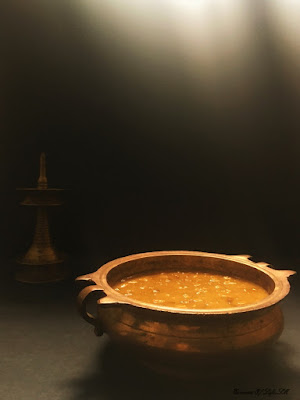
  • Heat Ghee in a heavy-bottomed pan/brass Uruli.
  • Fry the Coconut Pieces on a very low flame until it turns aromatic and into light golden colour.
  • Add Cashew Nuts and Raisins to the Ghee and fry until Raisins fluffs-up.
  • Pour Puree Mangoes to the above and cook on a low flame stirring occasionally.
  • Cook this on a low flame for about 5-7 minutes.
  • Gently pour the Jaggery Syrup to the above ingredients and give a quick stir.
  • Boil it on a low flame for about 8-10 Minutes.
  • Powder the Cardamoms with few teaspoons of Sugar into a fine powder. 
  • Add Cardamom Powder and Dry-Ginger Powder to the above and mix well.
  • Pour thin Coconut Milk into it and cook on a low flame for few minutes.
  • Finally, add Thick Coconut Milk and leave it on a low flame for a few minutes, stirring it continuously.
  • Switch off the Mambazha Pradhaman/Mango Payasam.
  • Serve Mambazha Pradhaman/Mango Payasam hot or cold.

For more recipes from GODS OWN COUNTRY - KERALA  click here...

NOTES :

  • Can also add few small pieces of Mangoes along with Mango Puree.
  • Adjust the amount of Jaggery to suit your taste preference.


PAYASAM, PRADHAMAN & kHEER, DESSERTS, FOR THE SWEET TOOTH, KONGU CUISINE, SADHYA
ELANEER/KARIKKU PAYASAM - TENDER COCONUT PAYASAM


     Kongu Nadu, the Land of Nectar - surrounded by Mountains, is a region comprising of Coimbatore, Tirupur, Erode, Pollachi, Udumalpet, Kangeyam, Avinasi, Palladam, Palani, Mettur, Karur, Salem, Athur, Namakkal, Dharapuram, hope I didn't miss any.a land comprising of  Coimbatore.  In spite of the long overturn of history with different invasion & rulers, Kongu Nadu was able to maintain its unique identity and Cuisine. This fertile area was blessed with its richness by Bhavani, Noyyal & Amaravathi Rivers.  Kongu Cuisine as such reflects the richness of the land and the uniqueness of the people.
     Kongunadu Cuisine stands apart for its tight-knit culinary traditions and cornucopia of fine ingredients & authentic tastes. We can find extensive usage of Coconut & Copra(dried coconut), Lentils, Millets, Groundnut, Sesame Seeds, Turmeric etc., in the Cuisine.  Most of the dishes use freshly ground spices.  When talking about Culinary innovations, special mention goes to Panchamritham, a combination of 5 ingredients like Banana, Dates, Grapes, Honey & Cane Sugar along with Ghee. In Kongu Cuisine, the traditional method of making Ghee uses Drumstick Leaves & Curry Leaves.  Dishes like Pathaneer Halwa, Pathaneer Payasam & Elaneer(Tender Coconut) Payasam are unique to the region.
     When talking about Elaneer Payasam, it is a delectable concoction prepared with Tender Coconut Shavings as a base in Tender Coconut Water, Cow's Milk & it can be sweetened with Sugar/Rock Sugar.  It has a mild texture with extraordinary aroma of fresh Coconut Shavings.  This simple and mildly sweet dessert is unique to Kongu Cuisine. If you are craving for something light but a flavourful dessert, then this Payasam is sure to appease your senses.
 

For more Recipes from KONGU CUISINE, Click here...


Cuisine - Kongu Cuisine (South India)
Recipe Type - Pradhaman/Payasam, Dessert
Difficulty - Easy
Serves - 4- 6
Author - SM

Preparation Time - 15-25 Minutes
Cooking Time - 20 -30 Minutes

For more Recipes on PAYASAM, PRADHAMANS & KHEERS, Click here...


HOW TO COOK ELANEER/KARIKKU PAYASAM - TENDER COCONUT PAYASAM


PAYASAM, PRADHAMAN & kHEER, DESSERTS, FOR THE SWEET TOOTH, KONGU CUISINE, SADHYA
ELANEER/KARIKKU PAYASAM - TENDER COCONUT PAYASAM


INGREDIENTS:

Tender Coconut Shavings - 11/2 Cup
Tender Coconut Water(Elaneer) - 1 Cup
Milk - 4 Cups
Condensed Milk - 1/2 Cup
Cardamom - 2 -3 Pods.


METHOD:

  • Grind half the amount of Tender Coconut Shavings along with 1/4 Cup of Tender Coconut Water & Cardamom Pods into a fine Paste & keep it aside. 
  • Cut the remaining Coconut Shavings into small pieces and keep it aside.
  • Mix the ground paste along with Milk & remaining Tender Coconut Water.
  • Mix the ingredients until well combined, make sure there are no lumps.
  • Boil this mixture on a heavy-bottomed pan/Uruli.
  • Cook this on a low flame stirring continuously for few minutes.
  • Pour in the Condensed Milk, small pieces of Coconut Shavings and give a quick stir.
  • Boil this on a low flame stirring it occasionally until Elaneer Payasam reaches the desired consistency.
  • Switch off the flame.
  • Serve Elaneer Payasam hot or cold.  Tastes better when cold/refrigerated.

For more SADHYA Recipes, click here...


PAYASAM, PRADHAMAN & kHEER, DESSERTS, FOR THE SWEET TOOTH, KONGU CUISINE, SADHYA
ELANEER/KARIKKU PAYASAM - TENDER COCONUT PAYASAM


NOTES :

  • Use slightly thick Tender Coconut Shavings for this recipe.
  • Adjust the sweetness to suit your preference.
  • Adding Cardamom is purely optional.
  • I have not added Cashew Nuts & Raisins roasted in Ghee in Elaneer Payasam. Can add it if you prefer.
  • Can substitute condensed milk with add 1/3 Cup of Sugar & additional 1 Cup of Milk.

FROM GODS ONW COUNTRY, SADHYA, LUNCH MENU, SADHYA ITEMS
KOOTTUKARI - PALAKKADAN STYLE KOOTTUKARI


     Along with the arrival of the Onam season, here comes another set of dishes which can be served in a Kerala Sadhya.  Kootukari is one of the most important side dishes served in a Sadhya.  A dish prepared with Bengal Gram Dhal, Elephant Foot Yam and Ash Gourd. Like most of the Kerala dishes, this dish is also loaded with coconut and what makes Koottukari extra special is the addition of roasted coconut at the end which adds a unique flavour, a wonderful aroma and a slight crunchy note in every bite of this Koottukari.
    Though Koottukari is prepared in different ways, this recipe here is a typical Palakkadan Style Koottukari which is my Mother's speciality. It comes along with a wide range of specifications from my Dad, how it should be cooked.  Right from cutting the vegetables, perfectly cooking the Bengal Gram Dhal and roasting the Coconuts to golden brown. This is my favourite side dish in the long list of Sadhya Items. When my Mom cooks a Mini Sadhya, may be for our birthdays, the three main side dishes which would be served in a Banana Leaf would be Avial, Koottukari and Inju Puli and her all-time special Varutharacha Sambar and some Thoran.
     In some regions of Kerala, Koottukari is prepared with Black Chickpeas and the vegetables added in to it also differs.  But mainly Ash Gourd, Elephant Yam, Raw Plantain are the vegetables used in Koottukari.  My Mom uses Bengal Gram Dhal(Kadala Paruppu), Elephant Yam(Chena) & Ash Gourd(Kumblanga/Elavan) in this recipe.


For more Recipes on SADHYA, Click here...


Cuisine - Kerala (South India)
Course - Side Dish
Spice Level - Low-Moderate
Difficulty - Easy
Serves - 4
Author - SM


Preparation Time - 15 -20 Minutes
Soaking Time - 20-30 Minutes
Cooking Time - 30 - 45 Minutes


HOW TO COOK KOOTTUKARI - PALAKKADAN STYLE KOOTTUKARI


INGREDIENTS:

For Koottukari:

Bengal Gram Dhal - 1/2 Cups
Ash Gourd - 1/2 Cup
Elephant Yam - 1/2 Cup
Turmeric Powder - 1/2 Teaspoon
Red Chilli Powder - 1 Teaspoon
Salt - To Taste
Jaggery - 1 Teaspoon

To Saute & grind Coarsely :

Coconut - 1/3 Cup
Peppercorns - few
Green Chillies - 2-3 Nos.
Coconut Oil - 1 Teaspoon

To Roast & for Tempering :

Coconut Oil - 2 Tablespoons
Mustard Seeds - 1 Teaspoon
Dry Red Chillies - 2 Nos.
Curry Leaves - 2 Sprig
Coconut -1/2 Cup


METHOD:

To Saute & grind Coarsely: 

  • Heat Coconut Oil in a pan, let the flame be at low.
  • Add slit Green Chillies, a Sprig of Curry Leaves, Peppercorns and 1/3 Cups of grated Coconut to the oil.
  • Fry this briefly on a very low flame for 1–2 minutes.  The idea is to get rid of the raw smell from the ingredients.
  • The Coconut shouldn't be over fried.  It should turn just glossy.
  • Immediately grind the ingredients into a coarse mixture.
  • Keep this aside.

For Palakkadan Koottukari :

  • Clean and wash the Bengal Gram Dhal 2–3 times or until water runs clear.
  • Soak it with ample of water for 20–30 minutes.
  • Once soaked, discard the water used for soaking.
  • Pour 1-11/2 Cups of Water to the Bengal Gram Dhal and cook it along with Turmeric Powder.
  • The dhal should not be over-cooked or turn mushy.
  • Meanwhile, Peel & Cut Yam & Ash Gourd into Cubes.
  • Once the Dhal is cooked, add the cubed Elephant Yam along with a dash of Salt & Red Chilli Powder.
  • Stir, Cover & Cook this on a low flame until the Elephant Yam is 3/4 cooked.
  • Now add the cubed Ash Gourds, cover & cook this along with the above ingredients on a low flame until both the vegetables turn soft and cooked.
  • Now add the ground coarse mixture and mix well.
  • Gently mix the ingredients until it is well combined.
  • Care should be taken not to mash the Dhal & Vegetables.
  • Add Jaggery and leave it on a very low flame for a few minutes.

To Roast & for Tempering :

  • Heat Coconut Oil in a Pan.
  • Splutter Mustard Seeds, Dry Red Chillies & Curry Leaves in it.
  • Add 1/2 Cup of grated Coconut and fry this on a low flame until it becomes golden brown in colour.
  • The coconut should be roasted until it is fragrant and crunchy.
  • Care should be taken not to burn the Coconuts while roasting it, which will spoil the overall taste of this Koottukari.
  • Pour the Tempering to the Koottukari and mix well.

NOTES:

  • I have used Bengal Gram Dhal in the recipe which is unique to Palakkadan Koottukari.
  • Some regions of Kerala cook the same recipe with Black Chick Peas. Cook accordingly.
  • The Dhal & Vegetables shouldn't be over-cooked or turn mushy.
  • Ample of Coconut Oil & Coconut used in the recipe gives an authentic taste. Adjust to your preference.
  • While tempering and roasting, the grated coconut should be roasted on a low flame until it turns into golden brown, fragrant and crunchy.
  • This gives an extraordinary texture and flavour to this Palakkadan Koottukari.

Traditional Kerala Olan served in a coconut shell, showcasing Ash Gourd, Pumpkin, Cow Peas, and Red Beans in a creamy coconut milk base, placed on a rustic dry banana leaf with curry leaves and vegetable pieces in the background.

Authentic Madhya Thiruvithamkoor Style Creamy Olan Recipe


Authentic Olan Recipe: A Traditional Kerala Sadhya Favourite

Olan: The Essence of Kerala Sadhya

    If you’ve ever experienced the rich, festive flavours of a Kerala Sadhya, you’ve likely tasted the creamy and subtle Olan.  Olan is a quintessential dish in traditional Kerala cuisine, known for its subtle yet rich flavours. This mild, creamy preparation of Ash Gourd, Pumpkin, and Cow Peas (or Red Beans) is a staple in Kerala Sadhya (feast). What sets Olan apart is its fragrant finishing touch of Coconut Oil and fresh Curry Leaves, making it a perfect complement to other dishes.


Explore the Rich Flavours of Olan: 

Madhya Thiruvithamkoor vs. Palakkadan Styles

    The Madhya Thiruvithamkoor Style, originating from the Kottayam, Pathanamthitta, Alappuzha, parts of Kollam, and Idukki regions, is known for its rich use of coconut milk. This style creates a creamy, luxurious Olan with a combination of Cow Peas, Red Beans & Ash Gourd, Pumpkins and adds copious amount of coconut milk that highlights the region’s preference.

Palakkad Style Olan made with vibrant orange pumpkin and green beans, served in a bowl, with fresh pumpkin pieces on the side.
 

    In contrast, the Palakkadan Style Olan is known for its simplicity and minimalism. My family’s version, which follows this style, uses local vegetables cooked in the coconut milk and focuses on a simpler combination of Pumpkin, Long Beans and Green Chillies, finished with a drizzle of Coconut Oil & Curry Leaves. This version is creamy & rich in its own subtle flavours.

 To read more about the Palakkadan Style Olan, its significance and cooking method, click the link...


History and Origin of Madhya Thiruvithamkoor Style Olan

    Madhya Thiruvithamkoor, also known as Central Travancore, is a region in Kerala that includes districts such as Kottayam, Pathanamthitta, Alappuzha, parts of Kollam, and Idukki. This area is renowned for its rich agricultural lands and diverse culinary traditions. The use of coconut milk in Madhya Thiruvithamkoor style Olan reflects the region's abundant coconut cultivation and its integral role in local cuisine.

Culinary Significance

    The Madhya Thiruvithamkoor Style of Olan is particularly celebrated for its generous use of coconut milk, which imparts a creamy texture and rich flavour to the dish. This style emphasizes the blending of local ingredients, such as Ash Gourd, Pumpkin, and Cow Peas, Red Beans with coconut milk, which is a staple in Kerala’s diet. The dish’s mild flavour is designed to complement the spicier and more robust dishes typically found in a traditional Kerala Sadhya (feast).

    In Kerala, Sadhya is not just a meal but a cultural event, often served during festivals and special occasions. The Madhya Thiruvithamkoor Style Olan, with its creamy coconut milk base, is a cherished component of this elaborate feast. The inclusion of Olan in a Sadhya signifies the importance of balance in flavours, where the subtlety of Olan enhances the overall dining experience, allowing the more intense flavours of other dishes to stand out.


Cuisine - Kerala (South India)
Course - Side Dish
Spice Level - Low
Difficulty - Easy
Serves - 4
Author - SM


Preparation Time - 5 -10 Minutes
Soaking Time for Beans - 6-8 Hours/Overnight
Cooking Time - 15 - 20 Minutes


"Unveil the Secrets of Easy Madhya Thiruvithamkoor Olan: Ingredients and Step-by-Step Guide"

Creamy Kerala Olan featuring Ash Gourd, Pumpkin, Cow Peas, and Red Beans in a coconut milk base, with pieces of pumpkin and ash gourd in the background and a sprig of curry leaves.

Traditional Olan Recipe - A Kerala Classic


Ingredients for Madhya Thiruvithamkoor Style Olan

  • Ash Gourd - 1 Cup, peeled and cubed
  • Yellow Pumpkin - 1 Cup, peeled and cubed
  • Cow Peas - 1/4 Cup
  •  Red Beans - 1/4 Cup
  • Green Chillies - 3-4, slit
  • Thin Coconut Milk - 1 Cup
  • Thick Coconut Milk - 1/2 Cup
  • Curry Leaves - 2 Sprigs
  • Coconut Oil - 1 Tablespoon
  • Salt - To Taste
  • Sugar - A Pinch (Optional)


Method for Madhya Thiruvithamkoor Style Olan 

Soaking & Cooking the Beans  


Cowpeas – also known as Lobia or Vanpayar

Cowpeas

Red Beans – also called Rajma or Red Cowpeas

Red Beans

  • Soak the Beans: Clean, wash, and soak Cow Peas and Red Beans in ample water overnight or for at least 6–8 hours. Alternatively, soak in hot water for 3–4 hours.
  • Cook the Beans: Discard the soaking water. Add 3 cups of fresh water and pressure-cook the beans for 2 whistles on high flame, then lower the heat and cook for another 3–4 whistles. Ensure the beans are tender but not overcooked.

For a detailed guide & Tips on cooking Beans, Lentils & Pulses, click here...

Preparing the Olan

  • Prepare the Vegetables: Peel the Ash Gourd and Yellow Pumpkin, and cut them into 1" cubes.
  • Combine Ingredients: Add the cubed vegetables to the cooked beans, along with salt, slit Green Chillies, and one sprig of Curry Leaves.
  • Cook with Coconut Milk: Pour in the thin Coconut Milk and cook the vegetables on a medium-low flame, stirring occasionally to prevent curdling.
  • Finish with Thick Coconut Milk: Once the vegetables are tender, add thick Coconut Milk and a pinch of sugar (if desired). Cook on very low heat, gently stirring. Avoid boiling to prevent curdling.
  • Add Final Touches: Turn off the heat, drizzle Coconut Oil over the dish, and add another sprig of Curry Leaves. Cover and let the Olan sit for 10–15 minutes to enhance the flavours.

Serve Madhya Thiruvithamkoor Style Olan as part of a Kerala Sadhya or with rice for a comforting meal.

Pro Tips & Notes:

  • Use fresh, thick coconut milk for the best taste.
  • Avoid overcooking the Beans & Vegetables; they should be tender but not mushy.
  • Keep the heat low to prevent curdling the coconut milk.
  • Finish with a drizzle of coconut oil and curry leaves for an authentic taste.

For more traditional Kerala Recipes and Sadhya favourites, subscribe to [Essence of Life - Food]

Why You’ll love this Recipe:

  • Quick & Easy: Ready in under 30 minutes.
  • Mild & Creamy: Balances out spicier dishes with its comforting texture.
  • Versatile: Ideal for festive occasions or everyday meals.

Bookmark this recipe for your Onam Sadhya or pin it for later. Enjoy the traditional flavours of Kerala with every bite!


Explore More Kerala Delights

Discover the flavours of Kerala with a wide range of recipes from Essence of Life - Food:

  • Sadhya Side Dishes
  • Palakkadan Style Olan Recipe
  • Traditional Kerala Sadhya Menu
  • Homemade Coconut Milk Recipe

    Olan, in its various forms, showcases the rich culinary heritage of Kerala. Whether you prefer the creamy Madhya Thiruvithamkoor Style or the simple Palakkadan Style, both versions offer a delightful taste of tradition. Try these recipes and bring the essence of Kerala to your table!

    Newer Posts Older Posts Home

    Search Essence of Life - Food

    Popular Posts

    • Pesaha Appam & Paal Recipe | Traditional Kerala Indri Appam for Maundy Thursday
    • How to Make Kerala Kanji | Traditional Rice Porridge with Payar, Chammanthi & Achar
    • Maida Chapati - All-Purpose Flour Chapati
    • Kizhi Parotta: Kothu Parotta and Salna Wrapped in Banana Leaves
    • Madurai Mutton Chukka Varuval

    Ebook - "What I Cook – For Onam"

    Ebook - "What I Cook – For Onam"
    Celebrate Onam the authentic way! Discover 25 timeless Kerala Sadya recipes in my ebook What I Cook – For Onam. From avial to payasam, bring home the flavours of tradition. Available now on Amazon!

    I Me Myself

    SM - Essence of Life
    Essence of Life - Food is all about daily cooking with a simple sense of taste and health. It is all about food. Not a day goes by without eating for most of us, so what we eat matters on the whole.

    Food in the mode of goodness increases the duration of life, purifies one's existence, and gives strength, health, happiness, and satisfaction. Above all ingredients, the most vital one in my kitchen is love.
    Sm
    @ Essence of Life - Food

    Subscribe Essence of Life - Food

    "Guide to our Cookie Policy"

    • Cookie Policy

    ASK FIRST!

    Please note that all rights for the photographs and texts on this blog, unless otherwise mentioned, rests with the author. Please do not use without permission.

    Labels

    AROUND THE WORLD 160 BAKING 23 BEVERAGES 18 BIRIYANI & PULAO 28 BREAKFAST 78 CURRIES 103 DESSERTS 118 FROM GODS OWN COUNTRY 178 From My Family's Kitchen - Heirloom Recipes 52 GLOSSARY 23 HOW TO... 64 KERALA PALAHARAM 20 KONGU CUISINE 21 KUIH MUIH 5 MALAYSIAN CUISINE 80 MIDDLE EASTERN CUISINE 12 Manvasanai - Flavours from Tamil Soil 126 PICKLES 26 RICE DISHES 65 ROTIS 9 SADHYA 117 SNACKS & SAVOURIES 69 SOUPS 10 SPICE POWDERS 18 TIFFIN ITEMS 64 VIRUNDHU 15 WINES 10 eBook 1