Essence of Life - Food
  • Home
  • From My Kitchen
    • Heirloom Recipes
    • From God's Own Country
    • Sadhya
    • Kongu Cuisine
    • Chettinaad Cuisine
    • South East Asian
    • Around the World
  • Ebook
  • I Me Myself
PICKLES
GOOSEBERRY PICKLE - NELLIKKAI URUGAI/ACHAR

     I do not get Gooseberries in the place where I live.  There are trees around the city, but I cannot see Gooseberries sold in the market. During our first trip of Malacca, one of the Malaysian city I always love to travel, which holds quite a lot of reminiscence of Fort Cochin.  A city which struck strong with culture and history.  I noticed that the banks of the Melaka River were lined with Gooseberry trees. Even I noticed that in one of the galleries in Malacca Palace Museum, there was a depiction of a popular legend -  King Parameswara was resting under a tree near a river during a hunt when one of his dogs cornered a mouse deer. In self-defence, the mouse deer pushed the dog into the river. Impressed by the courage of the deer, and taking it as a propitious omen of the weak overcoming the powerful, Parameswara decided then and there to build an empire on that very spot. He named it 'Malacca' after the tree where he had just taken shelter at, the Malacca tree which is nothing but a Gooseberry Tree.
     A few years back when I saw the tree in my neighbour's backyard loaded with a lot of Gooseberries, I had collected a huge batch and prepared lots of preserved Gooseberries & Pickles.  They were literally wondering whether the fruit was edible. Me, with my language skills(?!!!), couldn't explain any further. And for my dismay, that was the only time the tree yielded, and it withered off after it.
     So a trip to Little India in Singapore & Kuala Lumpur is incomplete without a batch of Gooseberries.  I love Gooseberry pickles and as a common scenario, the very next day of our trip I would prepare Gooseberry Pickles.  Gooseberry pickles can be prepared in two ways, one method is by using the preserved Gooseberries which are well seasoned and would have turned soft. Pickling gets easier this way.
     Alternatively, Gooseberry Pickles can be prepared in an instant method, where fresh Gooseberries are steamed for about 20-30 minutes or until they turn soft & cooked. Then follow the suit with the preparation of Pickle.
  This Gooseberry Pickle is loaded with a combination of tastes and flavours & it is equally spicy.  Gooseberry Pickle goes well with Curd Rice or simply serve a smidgen of this Gooseberry Pickle to go along with Plain Rice, Sambar/Curry/Rasam of your choice for a simple lunch or serve it in an elaborate Vazhayila Virundhu/Sadhya to add a tinge of uniqueness.


For more PICKLE RECIPES, Click here...


Cuisine - South Indian
Recipe Type - Pickle
Difficulty - Easy
Yields - 2- 21/2 Cups
Author - SM


Preparation Time - 20 - 30 Minutes
Cooking Time(With Preserved Gooseberries) - 15-20 Minutes
Cooking Time(Instant Gooseberry Pickle) - 30 - 45 Minutes
Maturing Time - Immediate


HOW TO MAKE GOOSEBERRY PICKLE - NELLIKKAI URUGAI/ACHAR

PICKLES
GOOSEBERRIES/AMLA/AMALAKI/NELLIKKAI


INGREDIENTS :

Gooseberries - 500 Gms.
Gingelly(Sesame) Oil - 1/2 Cup
Mustard Seeds - 1 Tspn
Turmeric Powder - 1 Tspn
Red Chilli Powder - 3 -4 Tbspn
Asafoetida - 1/2 Tspn
Fenugreek Seeds Powder - 1 Tspn
Salt - To Taste
Sugar - 1 Tspn
Vinegar - 2 Tbspn

METHOD 1 :

With Preserved Gooseberries/Gooseberries in Brine :
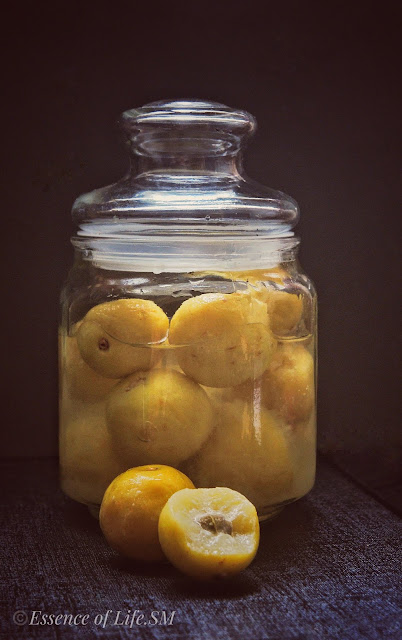
PICKLES
PRESERVED GOOSEBERRIES - GOOSEBERRIES IN BRINE
  • Drain the Gooseberries from the brine.
  • Deseed and separate the Gooseberries into Cloves and keep it aside.
  • Meanwhile, dry roast the Fenugreek seeds on a low flame until it splutters and turns fragrant.
  • Grind the roasted Fenugreek Seeds into a fine powder and keep it aside.
  • Heat Oil on a high flame until it fumes.
  • Lower the flame and splutter Mustard Seeds.
  • Add Turmeric Powder, Red Chilli Powder & Asafoetida Powder to the above and give a quick stir.
  • Pour in the Vinegar along with a pinch of Sugar and mix well.
  • Add the Gooseberry Cloves along with some Salt and mix well.
  • Cook the Pickle on a low flame for few minutes.
  • Finally, add powdered  Fenugreek seeds Powder to the above and mix well.
  • Leave this on a very low flame for a few minutes.
  • Switch off the flame and allow the Gooseberry Pickle/Nellikkai Urugai/Achar to cool down.
  • Store the Gooseberry Pickle/Nellikkai Urugai/Achar in a clean and dry Glass/Ceramic Jar.
  • Gooseberry Pickle/Nellikkai Urugai/Achar tastes great with Curd Rice and is the best accompaniment with Rice Gruel(Kanji/Porridge).
  • Serve a smidgen of Gooseberry Pickle/Nellikkai Urugai/Achar to go along with Plain Rice, Sambar/Curry/Rasam of your choice for a simple lunch or serve it in an elaborate Vazhayila Virundhu/Sadhya.


METHOD 2 :

Instant Gooseberry Pickle :

  • Clean, Wash and pat dry the Gooseberries.
  • Steam cook the Gooseberries for about 20-30 Minutes or until Gooseberries turn soft and cooked.
  • Allow it to cool.
  • Deseed and separate the Gooseberries into Cloves and keep it aside.
  • Meanwhile, dry roast the Fenugreek seeds on a low flame until it splutters and turns fragrant.
  • Grind the roasted Fenugreek Seeds into a fine powder and keep it aside.
  • Heat Oil on a high flame until it fumes.
  • Lower the flame and splutter Mustard Seeds.
  • Add Turmeric Powder, Red Chilli Powder & Asafoetida Powder to the above and give a quick stir.
  • Pour in the Vinegar along with a pinch of Sugar and mix well.
  • Add the Gooseberry Cloves along with some Salt and mix well.
  • Cook the Pickle on a low flame for few minutes.
  • Finally, add powdered  Fenugreek seeds Powder to the above and mix well.
  • Leave this on a very low flame for a few minutes.
  • Switch off the flame and allow the Gooseberry Pickle/Nellikkai Urugai/Achar to cool down.
  • Store the Gooseberry Pickle/Nellikkai Urugai/Achar in a clean and dry Glass/Ceramic Jar.


NOTES :

  • Care should be taken while dry roasting fenugreek seeds.  Do not burn them, which would totally spoil the taste of the pickle.
  • Adjust the amount of Red Chilli Powder to suit your spice level.
  • Pour ample of Gingelly Oil to the pickle.  This will prolong the shelf life of the pickle.
  • Avoid using steel/aluminium/copper container for preserving the Gooseberry Pickle/Nellikkai Urugai/Achar, as they tend to react with the acidic nature of salt and mangoes.
  • A suitable method is to store them in Clean and dry sterilized Glass/Ceramic/Porcelain Jars.
  • Always use clean & dry spoons while handling this Gooseberry Pickle/Nellikkai Urugai/Achar.
  • Wet jars/spoon can spoil the pickle as the moisture in them helps in the growth of Fungus and that would spoil the pickle. 
  • If you feel that extra oil should be added, once the pickle is made, Heat the Sesame Oil, cool it and then pour it over the pickle.
  • If stored properly,  Gooseberry Pickle/Nellikkai Urugai/Achar can last for a month at room temperature and up to a year in the refrigerator.
  • The Pickle should be stored in a dry and dark place.
  • In humid climates, it is advisable to keep the pickle refrigerated to avoid spoilage and for longer shelf life.
HOW TO...
HOW TO PRESERVE GOOSEBERRIES - GOOSEBERRIES IN BRINE

     Though Mangoes are synonymous to pickling in India, seasonal produce like Gooseberries, Lemon etc., find their place in an Indian pantry in terms of storage and preservation for later use.  Pickling has an age-old history & tradition which reflects every part of the world which is still prevalent in Indian households. Drying the produces in Sun or Pickling them in Vinegar or curing it with Salt or in Brine are few methods used for preserving the produces.  BRINE is basically a salt solution. Also Pickling in brine is free from any pathogenic bacteria. Pickling was one method to ensure year-long availability of seasonal products.
     Gooseberries of good quality, unspoiled ones without blemishes can be used for the purpose. Utter care should be taken before pickling them.  Thoroughly sterilize and dry the utensils or jars.  Wash and dry the Gooseberries before adding them into the brine.
     When it comes to preserved Gooseberries I cannot surely brush off my article without writing about my memories related to it.  When I was in my Primary Classes, my school was just a street away.  So there was no need of carrying Lunch Boxes or snacks for recess.  My classmates used to bring their lunch boxes and at least a few bought their snacks for recess time.  As a kid, I was always fancied by those packed snacks in colourful snack boxes.  It was during a season that they started bringing Salted Gooseberries along with Salt & Red Chilli Powder.  It became a trend around the classroom that I literally was urged to do the same.  As a common scenario, my Mom had a big bottle of Salted Gooseberries, well seasoned and cured.  As simple as that I planned to ask her to pack some for my recess period.  When I asked her, my so-called strict mother said, will anybody take such things to school?!!! Oh no, all my expectation went down the drain.  I was totally disappointed.  A few days later I took courage to take few Gooseberries and packed them in a Paper torn out from my notebook.  I even managed to pack some Red Chilli Powder and Salt.  Stealthily I kept it safe inside my school bag.  Mind you, I was only 6 years old then...  Next day, as usual, I took my bag and was about to leave to School, misfortune hit my way or maybe even panic could have struck my conscience... I dropped my bag, all the books along with those Gooseberries fell down.  Needless to say the look in my Mom's face.  What happened next is a history which everybody can guess...
      Another anecdote related to Salted Gooseberries goes with my husband.  If I start the story with the line... Once upon a time, there lived a naughty boy, it would be an understatement.  He is still the naughtiest.  A cranky little boy who has a great love for food.  His love for eating is so that he even forgets the school bag to school, but never his lunch bag.  He would always say who went to school to study?  I always wanted to play and eat.  When he was in Primary classes he studied in a convent.  The Nuns who were his teachers sold Salted Gooseberries to kids during the recess time. It was my husband's duty to sell those Gooseberries to his fellow classmates.  He loved to do the job because he stealthily took few cloves of Gooseberries floating apart in the jar, which those Nuns rarely noticed. A reward gifted by himself for the duty he was rendered into.  He has lots of stories related to food during his childhood days and this particular one always reminds me that every kid would have some memory related to such simple goodies back then.        
 

For more PICKLE RECIPES, Click here...

Cuisine - Indian
Recipe Type - Pickling
Difficulty - Easy
Yields - 2- 21/2 Cups
Author - SM

Preparation Time - 10 - 15 Minutes
Cooking Time - 5 Minutes 
Maturing Time - Few Weeks


HOW TO PRESERVE GOOSEBERRIES - GOOSEBERRIES IN BRINE

HOW TO,,,
HOW TO PRESERVE GOOSEBERRIES - GOOSEBERRIES IN BRINE


INGREDIENTS :

Gooseberries - 500 Gms
Salt - 1/2 Cup
Warm Water - 1/4 Cup

METHOD :

  • Boil the water and allow it to cool.
  • Clean the Gooseberries and allow them to dry on a clean kitchen towel.
  • Wipe them off with a clean cloth to get rid of any extra wetness.
  • Take a clean and dry Bottle or Bharani (Porcelain Jar).
  • Put some salt at the bottom of the Jar.
  • Put few Gooseberries over it.
  • Again put some Salt and top it up with Gooseberries.
  • Follow the suit until all the Gooseberries are salted.
  • Close the lid of the jar and mix well, until the Gooseberries are well coated with Salt.
  • Pour warm water into the jar and mix well.
  • Tightly close the jar and keep it aside in a dry & dark place for a few weeks.
  • Stir the Gooseberries every two days, so that the essence of Gooseberries are well infused into the brine.
  • Initially, the Gooseberries would float over the brine, but gradually they would absorb the brine and double their size.
  • Gooseberries will be ready within a few weeks time.
  • These can be stored in a dry and dark place.
  • In humid climates, it is advisable to keep them refrigerated to avoid spoilage.


NOTES :

  • This Brine preserved Gooseberries make tasty and unique, briny & spiced pickles, which taste awesome with curd rice.
  • Avoid using steel/aluminium/copper container for preserving the Gooseberries, as they tend to react with the acidic nature of salt and Gooseberries.
  • A suitable method is to store them in Clean and dry sterilized Glass/Ceramic/Porcelain Jars.
  • Always use clean & dry spoons while handling these preserved Gooseberries. 
  • Wet jars/spoon can spoil the pickle as the moisture in them helps in the growth of Fungus and that would spoil the Gooseberries. 
  • If stored properly, these preserved Gooseberries can last for a year or so.
  • Can use these preserved Gooseberries to prepare Gooseberries Pickle, Gooseberry Pachadi, Gooseberry Chutney etc., (Just use the Gooseberries and adjust the amount of salt in the recipe).
FOOD AS MEDICINE
HEALTH BENEFITS OF GOOSEBERRIES

      Gooseberries bring along a line of memories and anecdotes into my mind.  As far as I remember, my MOM always had a batch of Gooseberry Pickle and Uppilitta(Brined Gooseberries in her pantry.  Me, being a pickle lover used to devour on the seasonal pickles she makes.  When the Gooseberry season strikes, the market is loaded with Gooseberries.  There is one Old Man who sells seasonal goodies like Tender Mangoes, Lime and Gooseberries.  He carries a sack of these goodies on his head and calls out Vadu Mangai!!! Vadu Mangai!!! or Nellikkai!!! Nellikkai!!!.  His out of nowhere feeble, yet stern voice is still in my memory.  My Mom always buys Tender Mangoes/Lime/Gooseberries from this old man.
     As usual, I & my brother would grab a few fresh Gooseberries and eat it along with a mixture of Salt & Red Chilli Powder.  My DAD used to say that the first bite of a Gooseberry is Sour/Bitter to the taste and later at the moment of swallowing it turns out to be Sweet.  We both drink water which makes the sweet taste even more overwhelming.
     Amla/Amalaki/Nellikkai as the Indian Gooseberries are called in local languages is a renowned fruit in Indian culture.  It has been used as a food and medicine for many centuries for its endeavouring properties, nutritional & health benefits.  Ayurveda uses Gooseberries widely and has written scriptures which states and proves the therapeutical values of the fruit.  It is known for its antioxidant & antiseptic properties, enriched with Vitamin C and loaded with Iron, Calcium, Chromium etc.,
     According to the Hindu Mythology, it is believed to have originated from the drops of Amrit(Nectar of Immortality), which spilt while the Devas and Asuras(Demons) were churning the Ocean of Milk using Mount Mandara as the Churning Rod and Vasuki(the Serpent King) as the Churning Rope.  Therefore, Gooseberries claims the legend of longevity and cure for all diseases.  It is also believed that Lord Krishna dwells in the tree.  So the Gooseberry tree is considered to be sacred according to Hindu Mythology.
      Gooseberries are slightly Sour, Bitter and Sweet in taste.  They are loaded with nutrients like Minerals, Vitamins & Fiber.  Gooseberries help prevent digestive problems, help regulate Blood Glucose and increases the level of Good Cholesterol.  It is good for Diabetic Patients and also helps to get rid of Obesity.  Gooseberries help to Dehydrate the body and with dietary fibre decreases the chance of Constipation & Colon Cancer.  It also helps in maintaining healthy Bone and Teeth.  Gooseberries ease digestion, improves Liver Function, reduces Digestive Tract Issues and fight against Arthritis.  It also reduces the symptoms of Pancreatitis.  Gooseberries are rich in Vitamin C, Anti-oxidants, including Flavonoids and Polyphenols.  Because of this, Gooseberries are believed to prevent various forms of Cancer and DNA Damage.  Along with other benefits Gooseberries also has Antiviral & Antibacterial properties.


HEALTH BENEFITS OF GOOSEBERRIES


Boosts Immunity :

     Gooseberries are a natural immune booster as they are rich in Vitamins C and A, polyphenols, alkaloids, and flavonoids.  Also, it has potent antibacterial and anti-inflammatory properties. In Ayurveda, Gooseberry is often used to increase the white blood cells in the body, which are the main line of defence for the immune system. White blood cells attack and eliminate foreign toxins and substances into the bloodstream throughout the body.

Controls Diabetes & Lowers Cholesterol :

     Gooseberry contains chromium, which has a therapeutic value for diabetics. It stimulates the isolated group of cells that secrete insulin, thus reducing blood sugar in diabetic patients. When blood sugar is reduced, glucose is used by the cells as functional energy. Thus, the metabolism is stronger and you have more energy. Chromium also enhances the effect of beta-blockers, which are used for heart health, by reducing the levels of LDL (bad) cholesterol in the body.

Ease Digestion :

     The enzymes present in Gooseberries can help ease the digestion. It can help prevent diarrhoea as well as constipation and gout. Gooseberries contain both Tartaric and Maleic acid, thereby helping to reduce the chances of indigestion.

Body Detoxifier :

     Gooseberries have a high dose of dietary fibre.  Gooseberries Juice helps to get rid of Toxins and harmful elements from your liver, kidney, and digestive system.

Diuretic :

     Gooseberry is very high in water content and is also slightly diuretic in nature. It has the ability to increase the frequency and volume of urination. Urination helps our body eliminate unwanted toxins and excess levels of water, salt, and uric acid. A diuretic substance is beneficial for keeping kidneys healthy and for preventing urinary and uterine infections.


Constipation:

     Eating foods that are high in water content and fibre, such as Gooseberries help in hydrating the body and supports normal bowel movements. Gooseberries are described as a laxative fruit too. It provides relief from the various gastric syndromes and hyperchlorhydria (burning sensation in the abdomen). As a laxative, it helps flush out toxins or harmful substances that cause discomfort or illness, so the healing process can begin. It then cools the burning sensation and reduces the discomfort often felt during diarrhoea.

Improves Appetite :

     Consuming gooseberry powder with butter and honey before a meal can improve appetite. Gooseberry is also used as a remedy for fever, liver disorder, indigestion, anaemia, urinary problems, respiratory problems, cerebral, gastric, and cardiovascular illnesses. Gooseberry lowers cholesterol levels, increases red blood cell production, and strengthens teeth and nails.


Rich in Anti-oxidants :

     Gooseberries are rich in Antioxidants, including Flavonoids and Polyphenol. Because of this, Gooseberries are believed to prevent various forms of cancer and DNA damage.


Prevents Colon Cancer :

     Gooseberries are an excellent source of Dietary Fibre, Vitamin C and other antioxidants. With these components, Gooseberries can help combat the formation of free radicals which are known to cause cancer. The high fibre content in Gooseberries helps in the reduction in the possibility of Colon Cancer.


High Mineral Content :

     Gooseberries are loaded with Minerals like Iron, Zinc, Copper, Manganese, Potassium, Chromium etc.  The Iron and other minerals help in raising the level of Oxygen in blood and helps in increasing the Metabolism.

Lowers Hypertension/Blood Pressure :

     Maintaining a low Sodium intake & increasing Potassium intake helps to maintain healthy blood pressure. The impressive amount of Potassium in Gooseberries reduces the tension in blood vessels and arteries, helps in increasing blood circulation and lowering the stress on the heart by eliminating hypertension.


Healthy Heart :

     The Fiber, Potassium, Vitamin C, and Choline content in Gooseberries support heart health and thus helps in reducing Heart diseases. Gooseberry powder strengthens the heart muscles, so the blood circulation is more effective throughout the body. By reducing excess cholesterol buildup, chromium in Gooseberry powder can reduce the chances of atherosclerosis or plaque buildup in the vessels and arteries. This may reduce the chances of stroke and heart attack. The iron content in Gooseberry also promotes the creation of new red blood cells, thereby increasing circulation and the oxygenation of organs and cells to maximize growth and regeneration of tissues.


 Counter the effect of Smoking :

     The Coumaric Acid and Chlorogenic Acid, in Gooseberries, fight against Nitrosamines, which are the main Carcinogens found in Cigarettes. The presence of Vitamin A & Vitamin C in high quantities has shown to reduce the effects of Carcinogens. People who are regular smokers can also rely on Gooseberry to safeguard themselves from obstructive pulmonary diseases.

Eye Health:

     Gooseberry is a source of various Vitamins. The Vitamin A present in this fruit is known to possess the potential to strengthen and improve your vision. It has impressive carotene content, which has long been known for its powerful effect on vision-related conditions, including those that stem from the free radical damage. Vitamin A and carotene improves vision, while also lowering the risk of macular degeneration and night blindness.

Aids in Calcium Absorption

     Gooseberry helps the body absorb calcium in a positive way. Calcium is an essential component of our bones, teeth, and nails, and plays a part in ensuring we have beautiful, lustrous hair. One of the ways to obtain its benefits is by drinking diluted Gooseberry Juice on an empty stomach.

Strong Bones & Teeth :

     The ability of Gooseberries to absorb Calcium into the body proves beneficial for Bones and Teeth. Calcium is an essential mineral for strengthening the bones and teeth. Women, especially, in their menopause, should include Gooseberries in their diet to prevent osteoporosis.

Reduces Menstrual Discomfort :

     The Minerals & Vitamins in Gooseberry make it very useful in the treatment of menstrual cramps. Consuming Gooseberries on a regular basis ensures that its nutrients are always in the system and menstrual cramps can be prevented or reduced.


Skin:

     The antioxidants, such as Vitamin A, Vitamin C, and phenols present in Gooseberries play a major role in delaying premature ageing, improves skin texture, nourishes the skin, prevents skin diseases like eczema, controls acne and pimples and also helps in eliminating Dark Eye Circles. Topical Application of Gooseberry paste or juice and regular consumption of the fruit helps maintain healthy skin.

Healthy Hair & Scalp:

     As Gooseberries are packed with an array of Vitamins and Minerals, it is a potential natural remedy for strengthening your Hair.  It also helps to keep your hair fall under control. Regular use of Gooseberries & Gooseberries Juice is also known to promote hair growth. A paste created with Gooseberries can be used as a hair pack and shampoo or massage Gooseberry Juice into your scalp to get rid of Dandruff.


HOW TO SELECT & STORE GOOSEBERRIES

     Gooseberry is a sensitive fruit and should be careful in its selection and storage. Here are some helpful tips on how to select and store Gooseberries.


Selecting Gooseberries:

     While buying Gooseberries look for firm, brightly green coloured, having no bruises, damages, shrivelled skin etc.,


Storing Gooseberries :

  • Store Gooseberries in your refrigerator. Wrap the Gooseberries up in a plastic bag and place them in the coldest area of your refrigerator after sprinkling them with water.  If you store the Gooseberries properly, it will stay fresh for almost 2-3 weeks.
  • Normal room temperature can also be quite suitable for storing Gooseberries for a short time. Just make sure to check them regularly since they will shrivel or turn yellow more rapidly at room temperature.
  • Alternatively, clean, wash and dry the Gooseberries and add them into Salt.  Preserved Gooseberries stay good for a longer period of time.


HOW TO USE GOOSEBERRIES

You can consume Gooseberry as fresh fruit, juice, or in a dried powder form.

Fresh Gooseberry :
     Gooseberries are available in season in Indian stores. You can eat Gooseberries raw with salt and spices. You can also mix it with a teaspoon of honey. Honey balances the tart taste of Gooseberry. Can make fresh Gooseberry Juice, or make Chutney, Rasam, Pachadi etc., with Gooseberries.
Dried Gooseberry :
     Dried Gooseberry can be chewed on.  Some dried Gooseberries are Candied ones which may have a  lot of sugar added into it.
Gooseberry Powder:
     Powdered versions are available in the market.  This can be mixed with Water, Honey, or Curd/Yogurt and applied into hair or used as a face mask.
Gooseberry Oil:
    Gooseberry oil helps to strengthen the hair, prevents premature greying and stops hair fall.
Gooseberry Juice:
     Consuming Gooseberry Juice diluted with water early in the morning on an empty stomach helps keep the digestive system healthy and aids in managing blood sugar levels. 

Important: Food Safety :

     According to Ayurvedic practitioners, Gooseberries might not be safe for people having certain health conditions, such as people with low levels of iron or hypoglycemic disorders. You can also not eat Gooseberries if you are on any kind of anticoagulant medications or if you have poor immunity levels.
_______________________________________________________________________________

DISCLAIMER:

Please remember these treatments options are only meant as guidelines and in no way replaces the advice or treatment provided by your medical practitioner. It is always good to seek the advice of your physician, homeopath, naturopath, or herbalist for professional advice in any matter related to your health. This article is for information purposes only.


Authentic Achante Erachi Curry (Nadan Mutton Curry) served in a traditional clay pot, featuring coconut bites and rich gravy.

Palakkadan Mutton Curry from my Mom & Dads Kitchen


From The Heart of Palakkad: Nadan Mutton Curry – Achante Erachi Curry, A Three-Generation Legacy

Nadan Mutton Curry, or as we lovingly call it, Achante Erachi Curry (Dad's Mutton Curry), isn’t just a dish; it’s a living, breathing tradition in our family, faithfully followed for more than three generations. This authentic, native-style Palakkad (Kerala) Mutton Curry is a masterpiece of slow-cooked meat and freshly sautéed, ground spices. The rich, enveloping aroma and flavour of this curry reflect the true essence of the region and is the very taste of home. For any serious non-vegetarian enthusiast, this slow-cooked wonder, a true nadan (native) marvel, is where the story truly begins.


A Brief Introduction to the Culinary Heritage

    Nadan Mutton Curry/Palakkad (Kerala) style Mutton Curry has a tradition of its own. It is one of our family's proud recipes, followed for more than three generations. This is my Dad's special curry, prepared with freshly sautéed and ground spices, marinated and slow-cooked to yield that wonderful, deeply satisfying aroma and flavour. I have seen this type of curry served in almost all of our relatives' households in Palakkad—it’s the regional signature.

History and Origin: The Taste of the Region

    This curry's origins lie deep in the Palakkad region of Kerala. The hallmark of this authentic style is the use of freshly sautéed and ground whole spices, rather than pre-powdered ones (though I’ve offered a quicker cheat!). This commitment to frying and grinding the whole spices—Dry Chillies, Coriander Seeds, Peppercorns—is what unlocks the true depth of flavour and ensures the curry's rich, authentic colour and texture. It is a preparation method that values patience and yields profound results, reflective of the traditional cooking practices of the land.

Take a journey down memory lane with me! For more of that distinctive, heartwarming taste of home, be sure to check out a wide collection of Recipes from Palakkad Cuisine. Each one is uniquely regional and carries the unmistakable flavour of my Mom & Dad's kitchen, just as it’s always been.


My Nostalgia and Memory: The Only One That Counts

    Recently, when I was speaking to my Dad, he asked what I cooked, and I said Butter Chicken. And he came up saying, "Cook Nadan Curry that tastes better always." It is true to the fact, and being his only favourite, he always prefers this curry over any other non-vegetarian curries. My Mom & Dad prefer the traditional style of cooking and dishes. Whatsoever, this is the only version of a non-vegetarian curry cooked at home, maybe it is Chicken/Mutton.

    My parents, aunts, and uncles all share such fond memories of this curry, speaking of it like a true delicacy. The reason is simple, yet poignant: in those days, they only cooked chicken or mutton during very special occasions. And that perfect partner, the Dosa, was another rarity, popping up only once or twice a year. So, the combination of this rich, spicy curry and the soft white Dosa wasn't just a meal—it was the very definition of a celebrated feast, a memory of pure joy and abundance.

The absolute best combo with this curry is a Soft White Dosa, cooked in the old-school style—none of that crispy paper roast business! Nostalgic, flavourful and a true reminisense of home!!!

    This traditional pairing is reserved for special occasions like Sundays, when relatives or guests visit (ironically, I now find myself being the guest in my own home!), or during the celebration of Sankranthi (specifically, the Karkidaka Sankranthi in the month of Karkidakam(August)).

    This curry is the star dish at many significant Palakkadan feasts, such as the gatherings for the bride and groom with their families after a wedding, pre-wedding dinners, or even for solemn observances like the 40th-day commemoration of a death. This Mutton or Chicken Curry is a must! And along with it, the regional favourite, the Erachi/Kozhi Kumbalanga Curry (Mutton/Chicken Curry with Ash Gourd), often pops up as another essential dish.

Yet another classic Palakkadan dish? The Erachi/Kozhi Kumbalanga Curry (Mutton/Chicken with Ash Gourd) is a traditional star at all family gatherings and pairs perfectly with Matta Rice. Check out the recipe here!

    Whenever I am home, my Mom makes sure that she prepares this Curry. Dad, a big fan of this curry, starts saying even before my travel plan is confirmed that Achan will make this Nadan Mutton Curry when I am home. A recent reminiscence of my trip to CBE only confirmed this eternal truth. This is a spicy curry traditionally prepared along with Coconut Bites, and that nostalgia is irreplaceable.


Why You Will Love This Recipe

    What makes this Nadan Mutton Curry special is the commitment to freshly sautéed and ground ingredients, which are then used to marinate the meat and slow-cook it to perfection. While my Dad uses whole Dry Chillies and Coriander Seeds (which have to be fried on a low flame perfectly until aromatic), I’ve provided a streamlined version using powders. Know this: the former ingredients give out a much better flavour and texture to the curry. The colour, flavour, & texture of this Nadan Mutton Curry totally reflects that cherished regional preference. You’ll love the tradition, the heat, and the soul in every bite.

Recipe Overview

  • Cuisine: Kerala
  • Recipe Type: Curry
  • Yields: A generous batch
  • Servings: 4–6
  • Difficulty: Medium
  • Author: SM @ Essence of Life - Food

Time Estimate

  • Preparation Time: 20–30 Minutes
  • Marination Time: 15 - 30 Minutes 
  • Cooking Time: 30–45 Minutes 
  • Total Time: Approx. 1 hour 45 minutes 


How to Cook Achante Erachi Curry- Palakkadan Mutton Curry - Step-by-step Guide

Detailed close-up of tender mutton pieces and thengakothu (coconut bites) in the spicy, slow-cooked Palakkad curry gravy.
Close-up of Achante Erachi Curry with Coconut Bites


Ingredients

To Sauté & Grind:

  • 15 - 20 Shallots - 15–20 Nos.
  • 2 Ginger (1" Piece) - 2 Nos.
  • 2-3 Cloves Garlic - 2–3 Cloves
  • 1/2 Teaspoon Turmeric Powder 
  • 10-12 Whole Dry Red Chillies
  • 2 Tablespoons Coriander Seeds 
  • 1 Teaspoon Cumin Seeds 
  • 2 Teaspoons Peppercorns 
  • 2 Tablespoon Coconut Oil 
  • Salt to Taste

For Marination:

  • 500 grams Mutton (cleaned, washed, and diced)
  • Ground Paste (from the section above)
  • Salt to Taste (for the marination)


For Nadan Mutton Curry:

  • Coconut Oil - 2 Tablespoons
  • Mustard Seeds - 1 Teaspoon
  • Coconut Slices (1/2" Size) - 1 Cup
  • Curry Leaves - a Sprig
  • Onion - 1 No. (finely chopped)
  • Green Chillies - 2–3 Nos. (slit)
  • Tomato - 2 Nos. (finely chopped)
  • Tamarind - 1 Teaspoon (Optional)


Method - Detailed Cooking Instructions

Step 1: The Sauté and Grind (The Core Flavour)

  • Heat Coconut Oil in a Pan. Sauté Shallots, Ginger & Garlic until the Shallots turn translucent.
  • Add the Coriander Seeds and fry on a very low flame until the raw flavour goes (a few minutes).
  • Next, add the Whole Dry Red Chillies and fry again for a few minutes until they slightly fluff up.
  • Add the Turmeric Powder, Cumin Seeds, and Peppercorns and give a quick stir. Continue to fry the ingredients on a very low flame until they turn wonderfully aromatic.
  • Add Cumin Seeds and Peppercorns and fry for a while longer.
  • Switch off the flame and allow the ingredients to cool completely.
  • Grind the sautéed ingredients into a fine, smooth paste. Leave it aside for the marination.


Pro Tip : Sautéing the spice powders on a very low flame is absolutely non-negotiable. This step is what separates an average curry from this legendary Nadan Mutton Curry, ensuring the spices bloom perfectly without burning.

***Convenience Tip: If you prefer using pre-ground spices or are new to cooking with whole spices, you can substitute the whole spices with: Red Chilli Powder - 1 Tablespoon and Coriander Powder - 2 Tablespoons. Add the powders only after all the other ingredients are sautéed, ensuring you only fry them for a minute or so on a low flame until the raw flavour goes, and it helps to avoid scorching.


Step 2: Marination

  • Clean, wash, & dice the Mutton into cubes. Allow it to drain well in a colander.
  • Marinate the Mutton pieces with the ground paste. Add a dash of salt and give it a good mix.
  • Leave the marinated mutton aside for at least an hour—more if you have the time!


Pro Tip : Marinate the Mutton pieces and leave it aside for at least 1/2 an hour. This short spell allows the flavours to truly penetrate the meat, making the slow cooking even more effective.


Step 3: The Slow Cook

  • Heat the remaining Coconut Oil in a Pan or Pressure Cooker.
  • Splutter the Mustard seeds. Immediately add Curry Leaves & Coconut slices into it and fry for a while on a very low flame.
  • Sauté the finely chopped Onions and Green Chillies. Continue until the Onions turn perfectly translucent.
  • Add the finely chopped Tomatoes and cook until they turn soft and the oil separates from the mixture.
  • Now, add the marinated Mutton Pieces along with a dash of salt and give a quick stir to coat everything in the aromatic oil.
  • Pour 1/2 a Cup of Water (or as required for the consistency).
  • Cover the Pressure Cooker with the lid and cook until the meat turns perfectly tender and soft.
  • Once the meat is cooked, if desired, add the tamarind paste and mix well.
  • Cook this on a low flame until the raw flavour of the tamarind goes, and the curry reaches your desired, soul-warming consistency.
  • Switch off the flame. Serve hot!

Love Mutton/Lamb, Check my blog Essence of Life - Food for more Mutton Recipes.

Pro Tips and Notes

  • Tenderizing the Meat: I don't add curd/lime juice/vinegar to tenderize the meat for this specific curry, as this will alter its authentic taste. Instead, try using raw papaya!
  • A Quick Tip: Use a few pieces of Raw Papaya while cooking the meat. It is a natural 'MEAT TENDERIZER' containing an enzyme called Papain. This breaks down the connective tissue in the meat, making it soft and succulent without changing its taste or flavour.
  • Coconut Oil is Key: Coconut Oil gives an authentic taste to the Curry, but you can, of course, use any other vegetable oil if you must.
  • Coconut Slices : Adding Coconut slices to the Curry is optional, but highly recommended for that traditional texture. Some traditional recipes even call for adding White Pumpkin (Ash Gourd)/Kumbalanga in this Nadan Mutton Curry.
  • Spice Level: Adjust the amount of spices to suit your preference. This curry, traditionally, is a medium-high spice level.
  • Slow Cooking: Cook Mutton pieces on a low flame for about 15–20 minutes once the pressure cooker is opened. This will help the flavour get beautifully infused into the meat.

Serving Suggestions

  • Steamed Rice or the traditional Palakkadan Matta Rice.
  • Perfectly pairs up with Idli & Dosa 
  • Appam/Vellayappam, Idiyappam, Puttu, Pathiri etc.
  • Indian Breads like Chapati, Parotta/Roti Canai.
  • It is equally divine with richer rice preparations like Nei Choru/Malabar Ghee Rice or Peas Pulao.


Storage Suggestions

  • Refrigeration: The curry keeps well in an airtight container for 3–4 days. The flavour actually deepens overnight!
  •  Freezing: This curry freezes excellently. Store in a freezer-safe container for up to 3 months. Thaw overnight in the fridge and reheat thoroughly on the stovetop.

Rich, Rustic & spicy Palakkadan Erachi Curry in a traditional bowl, ready to be served with Matta Rice or Soft White Dosa.

Achante Erachi Curry - Palakkad Style Nadan Mutton Curry


FAQs

Q: Can I use pre-ground spice powders instead of whole spices? 

  • Yes, the recipe provided here uses powders for ease of process. However, for the most authentic and best flavour, my Dad's way (frying and grinding whole Dry Chillies & Coriander Seeds) is superior.

Q: Can this recipe be prepared with other meats? 

  • Absolutely! The same recipe can be prepared with Chicken or Beef too. The cooking time will need to be adjusted accordingly. For a Vegetarian Version - Mushrooms serves best(recipe coming soon)

Q: Is the Tamarind essential? 

  • Adding Tamarind is purely optional. It adds a slight tang that is common in some regional variations. Traditionally, the local varieties of tomato (nattu thakkali) provided that perfect required tartness. However, when you cannot get hold of them, adding a touch of tamarind paste does justice and helps balance the richness. Feel free to skip it if you prefer a richer, non-tart flavour profile.

Recipes You Might Like

This Achante Erachi Curry is just one star in the rich galaxy of recipes on Essence of Life - Food.

  • Erachi/Kozhi Kumbalanga Curry: A popular Palakkad favourite made with meat (mutton or chicken) and the gentle creaminess of ash gourd (kumbalanga).
  • Palakkadan Meen Puli: A classic, tangy fish curry made with tamarind (puli), cooked in a traditional Palakkad style.
  • Unakka Manthal Varuthathu: Crispy, rustic sun-dried sole fish fry that pairs beautifully with kanji or hearty curries.
  • Palakkadan Kaya Puli: A unique, tangy rasam-style dish made with tamarind and a touch of home-style nostalgia.
Authentic Palakkadan Erachi Kumbalanga Curry (Mutton/Chicken with Ash Gourd).
Palakkadan Erachi Kumbalanga Curry
Authentic Palakkadan Meen Puli (Tamarind Fish Curry).
Palakkadan Meen Puli
Crispy Unakka Manthal Varuthathu – Sun-dried sole fish fry.
Unakka Manthal Fry
Traditional Palakkadan Kaya Puli – Tangy tamarind rasam-style curry.
Kaya Puli – Mulagu Varutha Puli


The Final Word: A Taste of Palakkad, Slow-Cooked to Perfection 

    This Achante Erachi Curry is far more than just a Mutton Curry; it’s a tribute to my father, my mother, and the quiet, enduring traditions of Palakkad cuisine. Every mouthful is a rich, spicy, lyrical journey back to that feeling of home, confirming that some old ways truly are the best. It’s a bold flavour, a tender moment, and a connection to the past, all simmered to perfection. Now, go on! Don’t just cook this; experience it, and let that incredible aroma fill your kitchen!


CAKES
BANANA & WALNUT CAKE


     Banana & Walnut Cake –  moist, fluffy and full of wonderful flavours. What's great about this Banana Cake Recipe is that it takes very less preparation time.  Easy, tasty and mildly sweet, that it can be eaten as a teatime snack or for breakfast. The aroma of the baked Banana Cake is an absolute free treat.
     We get the best Banana Cake in Johor, Malaysia.  The HIAP JOO BAKERY, a small shop in the lanes of busy Johor Bahru.  It is a common scenario that this Bakery is always lined up with a queue in front of it. This is an absolute Old-school Bakery baking their goodies in the most traditional way, in a wood-fired oven. When kids are home, we usually make sure to go out to Johor Bahru City Centre early in the morning, for a Breakfast at Kopi Tiam, with Kopi, Milo, Bread Kaya Butter, Nasi Lemak, Mee, Curry Puff etc., Then undoubtedly we buy a box of Banana Cake from the Bakery opposite to the place.  On one such day, my Son told me, we should try Banana Cake at home.  And that caught my thoughts and there went my quest for best Banana Cake Recipe.
     It is always that one or two bananas in a bunch get too ripe, every now and then.  And when a whole bunch of Bananas shoot up in the Banana Tree in our backyard.  I usually have few bananas too ripe for the taste that I whip up a Banana Smoothie out of it or make some goodies out of it like Unniyappam, Unda Pori etc.,  On one of such instances, I incorporated this Banana Cake.  I wait until the Bananas get really speckled. Overripe Bananas yield Moist & Sweet Banana Cakes.
     This Banana Cake recipe is a simple, yet foolproof recipe and all the more it also leaves room for an additional mix of flavours, nuts etc.,  I love to add some Walnuts in this recipe which gives a place for crunchy bites in between the soft and moist cakes. Also, the flavour is not so overwhelming that the real aroma of Banana Cake do not get lost in the midst of it.

For more CAKE Recipes, Click here...

Recipe Type - Cake, Dessert
Difficulty - Medium
Yields - 1 Medium Sized Cakes
Author - SM

Preparation Time - 20 - 30 Minutes
Cooking Time - 45 Minutes - 1 Hour


HOW TO MAKE BANANA & WALNUT CAKE


CAKES
BANANA & WALNUT CAKE


INGREDIENTS :

For Banana Cake :

Bananas - 2 Nos.(large)
Walnuts - a Handful
All-Purpose Flour - 2 Cups
Baking Powder - 1¼ Tsp
Baking Soda - ½ Tsp
Salt -  ½ Tspn
White Sugar/Brown Sugar - 3/4 Cup
Butter - 1 Cup
Eggs - 2 Nos.
Vanilla Extract - 2 Tspn
Sour Cream/Buttermilk - 1/4 Cup


METHOD :

  • Preheat the oven at 180 Degree Celsius for about 10 - 15 Minutes.
  • Mash the Bananas along with Sour Cream/Buttermilk and keep it aside.
  • Toast the Walnuts on a very low flame until crisp & aromatic and keep it aside.
  • Sprinkle 1-2 Tablespoons of All-Purpose Flour(Take it from the measured Flour used for the cake) over the toasted Walnuts and toss them up well until the nuts are evenly coated with the Flour.
  • Powder the White Sugar/Brown Sugar(1 Cup) into a fine powder and keep it aside.
  • Sift the All-purpose Flour along with Baking Soda, Baking Powder and a pinch of Salt thrice.
  • In a large bowl beat Butter until soft, add powdered White Sugar/Brown Sugar and beat until it's well combined, soft & fluffy.
  • Add Eggs one at a time into the Butter mixture and beat well until soft and fluffy.
  • Add Vanilla Essence to the above mixture and beat it well.
  • Add the sifted Flour in batches alternating each batch with mashed Bananas & Sour Cream/Buttermilk mix.
  • Beat after each batch until the Flour is well combined into the mix.
  • Add half the amount of  Walnuts to the cake batter along with any remaining mashed Bananas.
  • Grease the Cake Tins and dust them up with the Flour.  Line the greased tins with Baking Paper.
  • Pour the Banana Cake Batter into the prepared tins and smoothen the tops.
  • Sprinkle the remaining toasted Walnuts on top of the Cake Batter.
  • Bake the Banana Cake in the preheated at the centre rack of the oven at 180 Degree Celsius for about 45 mins to 1 hour or until the skewers come out clean.
  • Let cool in the Cake Tin on a rack.
  • Remove the Banana Cake from the pan carefully and peel off the baking paper.
  • Cut the Banana Cake into the desired shape and store it in an airtight container.
  • Banana Cake stays good for 2-3 Days at room temperature.


For Longer Shelf Life :

  • Wrap it in plastic wrap and refrigerate the Cake.  Can be refrigerated up to a week.
  • Before serving remove them from the plastic wrap and serve once it reaches the room temperature.


NOTES:

  • Eggs and Butter should be at room temperature.
  • Can also add freshly grated Orange and Lemon zest to the Banana Cake.  This will give a mild citrusy aroma in the cake.
  • Can use Nuts like Walnuts, Cashew nuts, Blanched and toasted Almonds in Banana Cake.
  • Some recipes call for adding mild spices into the Banana Cake. Spices like Cinnamon, Nutmeg, suits well for the purpose.
  • Overripe Bananas yields moist and naturally sweet Banana Cake.
  • Can use White Sugar/Brown Sugar for Banana Cake.
  • Adjust the amount of Sugar to suit your sweet preference and sweetness of the Banana.
  • Sour Cream can be substituted with Greek Yogurt, Plain Yogurt or Buttermilk.
  • Adjust the baking time according to your oven settings.


Newer Posts Older Posts Home

Search Essence of Life - Food

Popular Posts

  • Pesaha Appam & Paal Recipe | Traditional Kerala Indri Appam for Maundy Thursday
  • How to Make Kerala Kanji | Traditional Rice Porridge with Payar, Chammanthi & Achar
  • Maida Chapati - All-Purpose Flour Chapati
  • Kizhi Parotta: Kothu Parotta and Salna Wrapped in Banana Leaves
  • Madurai Mutton Chukka Varuval

Ebook - "What I Cook – For Onam"

Ebook - "What I Cook – For Onam"
Celebrate Onam the authentic way! Discover 25 timeless Kerala Sadya recipes in my ebook What I Cook – For Onam. From avial to payasam, bring home the flavours of tradition. Available now on Amazon!

I Me Myself

SM - Essence of Life
Essence of Life - Food is all about daily cooking with a simple sense of taste and health. It is all about food. Not a day goes by without eating for most of us, so what we eat matters on the whole.

Food in the mode of goodness increases the duration of life, purifies one's existence, and gives strength, health, happiness, and satisfaction. Above all ingredients, the most vital one in my kitchen is love.
Sm
@ Essence of Life - Food

Subscribe Essence of Life - Food

"Guide to our Cookie Policy"

  • Cookie Policy

ASK FIRST!

Please note that all rights for the photographs and texts on this blog, unless otherwise mentioned, rests with the author. Please do not use without permission.

Labels

AROUND THE WORLD 160 BAKING 23 BEVERAGES 18 BIRIYANI & PULAO 28 BREAKFAST 78 CURRIES 103 DESSERTS 118 FROM GODS OWN COUNTRY 178 From My Family's Kitchen - Heirloom Recipes 52 GLOSSARY 23 HOW TO... 64 KERALA PALAHARAM 20 KONGU CUISINE 21 KUIH MUIH 5 MALAYSIAN CUISINE 80 MIDDLE EASTERN CUISINE 12 Manvasanai - Flavours from Tamil Soil 126 PICKLES 26 RICE DISHES 65 ROTIS 9 SADHYA 117 SNACKS & SAVOURIES 69 SOUPS 10 SPICE POWDERS 18 TIFFIN ITEMS 64 VIRUNDHU 15 WINES 10 eBook 1