Essence of Life - Food
  • Home
  • From My Kitchen
    • Heirloom Recipes
    • From God's Own Country
    • Sadhya
    • Kongu Cuisine
    • Chettinaad Cuisine
    • South East Asian
    • Around the World
  • Ebook
  • I Me Myself
Homemade crispy Murukku made with readymade Murukku flour, a must-have traditional snack for Diwali celebrations in Malaysia and Singapore.
Homemade Crispy Murukku – A Must-Have Traditional Snack for Diwali Celebrations, Made with Ready made Murukku Flour, Malaysia and Singapore Special


"Crispy Murukku Recipe with Malaysian Instant Murukku Mix: Your Go-To Delight for Diwali"

Diwali Recipes | Snacks & Savouries

    Yet another easy Murukku recipe using ready made Murukku mix! When it comes to making Murukku in Malaysia or Singapore, it’s always about using the trusted brands like Babas, Lingams, or Alagappa’s Murukku Mavu! These ready-made mixes are widely available in local markets and offer the perfect base for creating crispy, delightful Murukku that captures the essence of festive snacking. With their rich heritage and consistent quality, these brands have become a staple for many households during Diwali celebrations, ensuring that everyone can enjoy the delicious crunch of homemade Murukku without the fuss.

My Lazy Shortcut to Perfect Murukku

    When it comes to traditional snacks for Diwali celebrations, Murukku is undoubtedly a must-have. While many enjoy making this crispy delight from scratch, I’ve found my own shortcut—using trusted Malaysian brands like Baba’s and Lingam’s Murukku mixes. These ready-made flours make the process incredibly easy, without compromising on taste or texture.

Discovering Ready-Made Murukku Flour in Malaysia

    Ever since we moved to Malaysia, my cravings for Indian snacks kicked in. Initially, I would make simple snacks at home, but Murukku and other delicacies seemed out of reach. That’s when I discovered Baba’s, Alagappa's and Lingam’s Murukku flour in local Indian stores. I was thrilled to find these brands so easily available, allowing me to recreate the festive experience right at home.

Trials, Errors, and Finally, the Perfect Murukku

    My first attempts with the ready-made Murukku mix didn’t go as planned—the butter ratio suggested on the pack wasn’t quite right, resulting in Murukku that were either too hard or too oily. However, after several trials, errors, and some useful tips from friends, I finally cracked the perfect consistency. The key was adjusting the amount of butter and using chilled coconut milk during the kneading process. Now, I even enjoy experimenting with flavours (Garlic Murukku, Onion Murukku etc.,), making Murukku a staple for every Diwali celebration.


Note:  To get that perfect crispy texture, use chilled coconut milk and ice-cold water while kneading the dough. This tip makes a world of difference in achieving non-oily, melt-in-the-mouth Murukku.


Malaysian Murukku: A Must-Have for Diwali Celebrations

    The local Indian community in Malaysia and Singapore has made remarkable efforts to preserve their Indian roots and traditions. Even after living abroad for more than two generations, they continue to follow many rituals and festivals as devotedly as any Indian would. Murukku is more than just a staple snack in Indian households here; it’s a cultural symbol that has transcended boundaries. Interestingly, the region also features Chinese and Malay versions of Murukku, such as the popular Murukku Ikan (fish Murukku). It's truly fascinating to see how the Malaysian and Singaporean communities have embraced and adapted to the tradition of making Murukku, a cherished part of their own festive celebrations.


Click the link for a variety of Murukku Recipes perfect for Diwali Celebration!


Why This Recipe is a Diwali Favourite

    Among the various Murukku recipes I’ve tried, this one—using Baba’s or Lingam’s Murukku mix—is undoubtedly the best. The consistent quality and ease of preparation have made it a family favourite. It’s perfect for those who love the crunch of traditional snacks but prefer a convenient option. This Murukku recipe has become a highlight of our Diwali Bakshanam (snack) list, and it’s always eagerly anticipated by my family, especially my husband.


Pro Tip:  If you want to make your Murukku even more festive, add a pinch of asafoetida or a teaspoon of cumin seeds for a flavourful twist.


Malaysian and Singaporean Friends – This One’s for You!

    If you're based in Malaysia or Singapore, finding Baba’s, Lingam’s, or Alagappa’s Murukku mixes in local stores should be a breeze. These brands have become staples in many households, making Diwali preparations much simpler and ensuring everyone gets to enjoy the delicious crunch of homemade Murukku.


This is especially for my Malaysian and Singaporean friends, who can easily find these two brands - Babas & Lingams Murukku Mavu in local markets.


The Foolproof Murukku Recipe from Santhini

    This recipe actually comes from my friend Santhini, who has mastered the art of making crispy, tasty Murukku. She combines Baba’s and Lingam’s Murukku flour with coconut milk, and the result is always a treat! My husband is such a fan that he practically places a standing order with her every Diwali. Trust me, the taste is worth the wait, and it’s become one of our most cherished festival goodies.

    Santhini's Murukku recipe is truly foolproof, and is one of my all-time favourites at home. The best part? She uses chilled coconut milk and ice-cold water to knead the flour—maybe that’s the trick for those perfectly crispy Murukku! So, let’s dive into this easy, crispy, and flavourful Murukku recipe perfect for your 'Diwali Bakshanam' list!


If you love this crispy Murukku recipe, don’t miss out on my all-time favourite—Coconut Milk Murukku (Thengai Paal Murukku)! Crafted with Babas Murukku Mix, this delectable treat is a must-try for your festive table!


Instant Mix Murukku Recipe Overview

  • Cuisine - Indian
  • Recipe Type - Snacks
  • Spice Level - Low
  • Difficulty - Medium
  • Yields -  60-65 Medium-sized Murukkus
  • Author - SM

Total Cooking Time

  • Preparation Time - 25-30 Minutes
  • Cooking Time - 30 -45 Minutes


If you're short on time, don’t worry! There are also instant versions of Indian Sweets and Savories you can whip up quickly for last-minute celebrations.


Enjoy Food and Wishing you all a Happy Diwali!!!


How to Make Delicious Murukku Using Instant Murukku Mix: A Step-by-Step Guide

    Are you ready to impress your family and friends with homemade Murukku this Diwali? This step-by-step guide will show you how to create crispy, flavourful Murukku using convenient instant Murukku mix. Perfect for festive snacking or as a delightful addition to your Diwali spread, this recipe is both simple and rewarding!

Key Benefits of Using Instant Murukku Mix:

  • Time-Saving: Get your snack ready in no time!
  • Consistent Results: Enjoy perfectly crispy Murukku every time.
  • Less Hassle: No complicated ingredients needed—just mix and fry!

Follow these easy steps to create your own Murukku masterpiece. Let's dive in!


Quick Tip:  Always use fresh Murukku flour and fresh homemade/ store-bought coconut milk for the best results. Fresh ingredients are key to achieving the perfect taste and texture.


Ingredients for Instant Murukku:

  • 1 Packet (500 Grams = 2 Cups) Babas Murukku Mix
  • 1 Packet (500 Grams = 2 Cups) Lingams Murukku Mix
  • 3 Cups Coconut Milk
  • 1/2 Cup Butter
  • 2 Tablespoons Sesame Seeds
  • 2 Teaspoons Ajwain (Carom Seeds)
  • 2 Teaspoons Cumin Seeds
  • Ice Water (as required)
  • Salt (to taste)

To Deep Fry:

  • Oil
 

Method:

Preparing the Murukku Dough

  • Wash and Dry: Wash the Ajwain, Cumin Seeds, and Sesame Seeds separately. Allow them to dry on a kitchen towel.
  • Soften the Butter: Keep the Butter at room temperature until soft.
  • Chill the Coconut Milk: Refrigerate the Coconut Milk for about 2–3 hours, or until chilled.
  • Mix Ingredients: In a mixing bowl, combine both Murukku Flours, Butter, Ajwain, Cumin Seeds, Sesame Seeds, and Salt to taste.
  • Add Coconut Milk: Gradually pour in the chilled Coconut Milk to the mixture, kneading it into a smooth and soft dough.
  • Adjust Consistency:If the coconut milk is insufficient, add ice-cold water until you achieve a workable dough.


    **Pro Tip:** The key to crispy Murukku lies in the right ratio of liquid. Ensure the dough is pliable and free from cracks!


Frying the Murukku

  • Heat the Oil: In a deep pan, heat the oil over a medium flame.
  • Shape the Murukku: Fill the Murukku mould with some dough and press it through, forming swirls on the reverse side of a slotted spoon or directly into the oil.
  • Fry Until Golden: Carefully drop the shaped Murukku into the hot oil. Fry until they turn golden brown and the sizzling sound diminishes.
  • Drain Excess Oil: Remove the Murukku from the oil and place them on a paper towel to drain excess oil.
  • Repeat: Follow the same process for the remaining dough.
  • Cool and Store: Allow the Murukku to cool completely before storing them in airtight jars.
 

 Notes & Tips for Perfectly Crispy Instant Murukku:

  • Both Murukku packets yield about 4 cups of Murukku flour.
  • Ensure the dough is pliable—not too sticky or hard.
  • Use room temperature butter for better incorporation.
  • Avoid substituting butter with ghee or margarine to achieve the best texture.
  • For extra crispiness, using chilled coconut milk and ice-cold water is highly recommended.
  • Properly stored, these Murukkus stay fresh for up to 10 days!


Storage & Shelf Life

  • Once the Murukku cools completely, store them in clean, airtight glass jars or steel tins. Avoid plastic containers if you live in humid areas like Malaysia — they tend to soften the crunch.
  • Properly stored, your crispy Murukku will stay fresh and crunchy for up to 10–12 days.
  • If you’ve used fresh coconut milk, store the jar in a cool, dry place away from direct sunlight.


**Pro Tip:** Slip a small piece of butter paper at the bottom of the jar to absorb any residual oil and keep the Murukku crisp longer.


Serving Suggestions

  • Serve Murukku with your favourite evening chai or filter coffee — that’s the classic combo!
  • It’s also a lovely tea-time snack to serve guests during Diwali visits, alongside other Bakshanams like Ribbon Pakoda, Namak Para or Shakkar Para.
  • For festive gifting, wrap a few pieces in butter paper, place them in decorative tins or glass jars, and tie with a ribbon. Homemade gifts never go out of style — and Murukku always wins hearts!


Wrap Up Your Festive Season with Crispy Murukku

    There's nothing quite like the crunch of homemade Murukku to add a festive flair to your Diwali celebrations! This easy, foolproof recipe using Instant Murukku Mix allows anyone, even kitchen novices, to whip up a delicious batch of this traditional snack. With minimal ingredients and straightforward steps, you can enjoy a delightful treat that’s perfect for Diwali or any special occasion.

    The beauty of Murukku lies in its versatility. You can easily customise the flavour by adding spices or herbs of your choice. Plus, it keeps well, making it an ideal option for gifting or sharing with loved ones.

Elevate Your Festive Menu!

Make your festive menu even more exciting! Explore More Savoury Snacks!

  • Coconut Milk Murukku (Thengai Paal Murukku) – A melt-in-the-mouth variation made with Babas Murukku Mix and fresh coconut milk – rich, aromatic, and utterly addictive!
  • Bombay Mixture – A delightful twist on the classic!
  • Sakkar Para/Kala Kala (Sweet Diamond Cuts) – Sweet, flaky bites coated with sugar – a festive favourite that never fails to charm! 
  • Namak Para (Salted Diamond Cuts) – Light, crispy, and delightfully salty – the perfect balance to your Diwali sweets! 
  • Ottu Pakoda/Ribbon Pakoda – Crispy and savoury, perfect for munching!


    Discover more Traditional Snacks for Diwali celebrations that not only complement each other but also create an irresistible festive spread. Click here to explore more of your favourite savoury snacks for the Diwali season!


FAQs

Q. Can I use ghee instead of butter in this Murukku recipe?

  • It’s best to use butter for the right crisp texture. Ghee makes Murukku slightly harder and less airy.

Q. How do I fix Murukku dough that cracks while pressing?

  • Add a tablespoon of chilled coconut milk or ice water at a time until the dough becomes soft and pliable.

Q. Why is my Murukku absorbing too much oil?

  • Either the oil temperature is too low, or the dough has too much butter. Maintain medium heat and follow the butter ratio carefully.

Q. Can I make this Murukku ahead of Diwali?

  • Yes! Prepare it 2–3 days or a week before Diwali. Store in airtight containers once cooled completely.

Q. Is this recipe suitable for vegetarians?

  • Absolutely! It’s a fully vegetarian snack made with plant-based ingredients.


Get Cooking!

    So, don your apron and start creating this scrumptious Murukku. Enjoy the richness of tradition and the joy of sharing homemade treats. Don’t forget to bookmark this recipe for your future celebrations and share it with friends who’d love to try their hand at making traditional Indian snacks. 

    You can find My Murukku Recipe featured in the Malaysian Star Newspaper's Kuali food column.  Don't forget to check out the recipe.  With this classic snack ready in no time, you can spend less time in the kitchen and more time enjoying the festivities. Happy cooking!


Click the link to Try from a wide range of Festive Sweet & Snack Collection, perfect for this Diwali Celebrations!


    Make this Diwali memorable with delicious homemade treats that bring joy and tradition to your table!


A bowl of Kasi Halwa/Poosanikkai Halwa made from white pumpkin, topped with cashews and saffron, displayed on a Banana Leaf with a spoon beside it.
Golden Kasi Halwa/Poosanikkai Halwa – A Festive Delight!

"Kasi Halwa Recipe: Traditional Poosanikai Halwa for Festive Celebrations"

Kasi Halwa – A Traditional South Indian Delight

    Have you ever tasted a sweet that not only delights your palate but also evokes fond memories of celebrations?

    Kasi Halwa, also known as Poosanikai Halwa, is a classic South Indian sweet that hails from Karnataka. Made with ash gourd (white pumpkin, or "Poosanikai" in Tamil), sugar, ghee, and a hint of cardamom, this delectable dessert is garnished with cashew nuts and raisins fried in ghee for added richness. The authentic recipe doesn't call for milk, making it distinct from other halwa varieties. Often seen at South Indian weddings, especially Tamil Muslim celebrations, Kasi Halwa is a traditional staple served alongside the beloved Mutton Biriyani.

The Origins and Varieties of Halwa

    Though halwa originated in the Middle East, it has taken on diverse forms across the globe, influenced by regional cuisines. From fruits and vegetables to nuts and flours, many ingredients have been used to craft unique halwa recipes. However, festivals and special occasions bring halwa to the forefront in South Indian homes, where traditional preparation methods provide the dessert with its signature texture and consistency.

Pro Tip: If you're interested in trying other Traditional Halwa Recipes, check out Badam Halwa Recipe and Apple Halwa for more festive treats!

Why Kasi Halwa is a Must-Have Dish in South Indian Weddings

    My first encounter with Poosanikai Halwa was at a Muslim wedding feast. Ever since then, it has been the dish I eagerly look forward to, second only to the biriyani. In Coimbatore's R.S. Puram, there was a shop that sold hot Poosanikai Halwa, and it quickly became a family favourite. I'm unsure if the shop is still around, but its halwa was one of the best I've ever tasted. We even included it in my sister-in-law's engagement menu as one of the desserts!

Did You Know? South Indian weddings often feature this halwa as a special dish due to its delightful texture and taste. Read more about Traditional South Indian Muslim Wedding foods.

Choosing the Right Ash Gourd for Kasi Halwa

    The key to a perfect Kasi Halwa lies in selecting a mature, well-ripened white pumpkin. The older the ash gourd, the better the texture of the halwa. However, finding aged pumpkins can be tricky in local markets, especially when you need the whole vegetable. Since they are usually large, I often end up making a batch of Poosanikai Halwa rather than just using it for curries or Avial.

Preparing the Halwa: Tips for Perfect Texture

  1. Grate the White Pumpkin: Start by grating the ash gourd. This may be the most labour-intensive step due to the vegetable's high water content.
  2. Squeeze Out the Excess Water: It's essential to remove as much moisture as possible before cooking.
  3. Cook with Patience: Once the grating and squeezing are done, the rest of the process becomes relatively straightforward.

Pro Tip: If you enjoy making traditional sweets, try Badusha/Balushahi Recipe and Carrot Mysore Pak Recipe for more irresistible treats.


The Tradition Behind Kasi Halwa

    Poosanikai Halwa is not just a dish; it’s a celebration of tradition. The process of making it is often time-consuming, but the resulting texture and rich flavour are worth the effort. Its deep-rooted connection to festivals and weddings makes it a cherished part of South Indian culture.

Check Out: For more festival recipes, explore my Diwali Sweets Collection and add more traditional favourites to your celebrations!


Recipe Overview

  • Cuisine: Indian
  • Recipe Type: Sweet
  • Difficulty Level: Medium
  • Serves: 2-3

Author

  • Recipe by: SM

Time Required

  • Preparation Time: 20–30 Minutes
  • Cooking Time: 20–30 Minutes


    If you're short on time, don’t worry! There are also instant versions of Easy Indian Sweets and Savories you can whip up quickly for last-minute celebrations.


    Enjoy Food and Wishing you all a Happy Diwali!!!


 "Step-by-Step Guide to Making Kasi Halwa/Poosanikai Halwa at Home"


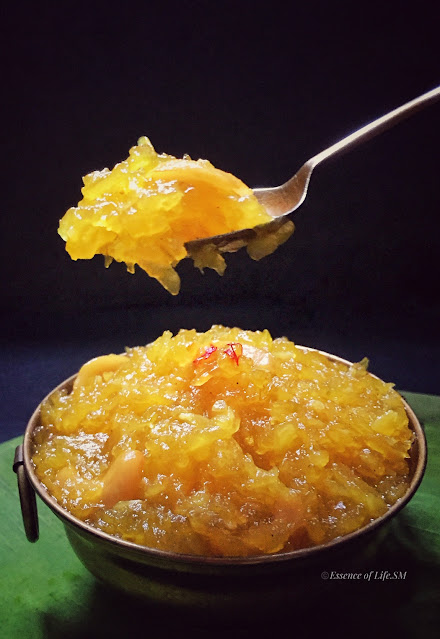
A close-up of a spoon lifting Kasi Halwa from a bowl, showcasing the rich texture and vibrant golden colour of the pumpkin-based traditonal Indian sweet.
Spoonful of Sweet Bliss – Kasi Halwa/Poosanikkai Halwa Magic

Ingredients for Kasi Halwa

  • 2 Cups White Pumpkin (Ash Gourd), grated and squeezed
  • 3/4 Cup Sugar
  • 2-3 Pods Cardamom, ground
  • Few Strands Saffron, soaked in warm water
  • 2–3 Tablespoons Ghee
  • 15-20 Cashew Nuts
  • Few Drops Yellow Food Colouring (Optional)
  • A Pinch of Salt


Method: How to make Authentic Kasi Halwa

Preparation Steps for Kasi Halwa / Poosanikai Halwa

    Follow these easy steps to prepare the White Pumpkin (Ash Gourd) before cooking. Proper preparation is key to achieving the perfect texture and flavour in your Kasi Halwa.

Clean and Cut the White Pumpkin

  • Wash and Cut: Thoroughly wash 2 cups of White Pumpkin (Ash Gourd) and cut it into manageable pieces.
  • Remove Seeds: Scoop out the seeds and any soft, fibrous portions from the centre.
  • Peel the Skin: Completely remove the green outer skin for a smooth and creamy texture.

Grate the White Pumpkin

  • Grate Evenly: Grate the peeled White Pumpkin using a fine grater. This ensures even cooking and a consistent texture in the halwa.
  • Rest the Grated Pumpkin: Leave the grated pumpkin to sit for 10-15 minutes. This helps release excess water naturally.

Pro Tip: Use a large, well-matured pumpkin for better texture.

Remove Excess Water

  • Squeeze Out Water: Place the grated pumpkin in a clean kitchen cloth. Twist and squeeze to extract the excess water. Removing excess moisture is essential to avoid a watery halwa.
  • Reserve Pumpkin Water: Save the squeezed-out pumpkin water for cooking later. It adds flavour and nutrients to the dish.

Pro Tip: Make sure to grate the pumpkin finely and squeeze thoroughly to get a rich, non-watery texture for the halwa.

Prepare Additional Ingredients

  • Cardamom Powder: Grind 2-3 cardamom pods along with a few teaspoons of sugar into a fine powder and set aside. This will give a fragrant flavour to the halwa.
  • Soak Saffron: Soak a few strands of saffron in warm water for enhanced colour and aroma.

Pro Tip: You can also grind the cardamom with a pinch of sugar to make a finer powder that mixes evenly in the halwa.


Cooking the Perfect Kasi Halwa / Poosanikai Halwa

Roast the Cashew Nuts

  • Heat Ghee: In a heavy-bottomed pan, heat 2 tablespoons of ghee over medium flame.
  • Roast Cashews: Add 15-20 cashew nuts and roast them until they turn golden brown. Set them aside for later use.

Cook the Grated White Pumpkin

  • Add the Pumpkin: To the remaining ghee in the pan, add the grated White Pumpkin.
  • Cook on Medium Flame: Stir the pumpkin over medium-low heat for a few minutes until it starts to soften.
  • Add Pumpkin Water: Pour in 1/2 cup of the reserved pumpkin water for extra flavour and nutrients.
  • Cook Until Soft: Continue cooking the pumpkin until it becomes tender, the raw aroma disappears, and all the water evaporates. Stir occasionally to prevent sticking.

Pro Tip: Ensure the grated pumpkin is cooked thoroughly before adding sugar, as it gives the halwa a wonderful texture.

Sweeten the Halwa

  • Add Sugar and Saffron: Once the pumpkin is dry, add 3/4 cup of sugar and the saffron-soaked water for a hint of colour and a delightful aroma.
  • Add Flavourings: Stir in the cardamom powder and roasted cashew nuts for a fragrant and nutty taste.
  • Optional Colouring: If desired, add a few drops of yellow food colouring and mix well.

Cook the Halwa to Perfection

  • Simmer the Mixture: Lower the heat and cook the halwa for 5–7 minutes until it starts to bubble and thicken.
  • Add More Ghee: Incorporate an additional tablespoon of ghee and stir continuously.
  • Final Cooking: Cook for another 5–7 minutes on low flame. Add a pinch of salt to balance the sweetness.
  • Check for Doneness: The halwa is ready when the ghee separates from the mixture, and it starts to leave the sides of the pan.

Pro Tip: For a richer flavour, add a small pinch of edible camphor along with the cardamom powder. This will give your Kasi Halwa a traditional touch.


Serving Suggestions

  • Serve Kasi Halwa warm or at room temperature.
  • Pair it with savoury snacks like Murukku or South Indian Mixture for a delightful festive spread.

Storage Tips

  • Store the halwa in an airtight container for up to 3–4 days.
  • Reheat in a microwave or on the stovetop with a spoonful of ghee to refresh the texture.

A spoonful of Kasi Halwa/Poosanikkai Halwa with a piece of cashew, highlighting the golden texture and festive appeal of this South Indian dessert.
Indulge in the Richness of Kasi Halwa/Poosanikkai Halwa - Perfect for Diwali Celebrations!

Frequently Asked Questions (FAQ)

Can I use milk instead of pumpkin water?

  • Yes, you can substitute the squeezed pumpkin water with the same amount of milk for a richer taste. However, the traditional recipe uses pumpkin water to enhance the authentic flavour.

Is it necessary to add yellow food colouring?

  • No, adding food colouring is optional. You can use natural saffron for a beautiful golden hue.

What if the halwa doesn’t thicken?

  • Cook the Halwa longer on a low flame, stirring continuously. Make sure the water content has fully evaporated before adding sugar.

Notes & Pro Tips for Perfect Kasi Halwa:

  • Sweetness Level: I used 3/4 cup of sugar for this Halwa. If you prefer it mildly sweeter halwa, decrease the quantity to 1/2 cup.
  • Grate the pumpkin evenly for uniform cooking.
  • The 2 cups of White Pumpkin mentioned is after squeezing out the water.
  • Use the reserved water to cook the pumpkin initially.
  • Some recipes call for milk, but using pumpkin water gives a lighter texture.
  • Saffron adds a natural colour and aroma, but food colouring can also be used for a vibrant look.
  • Add a pinch of salt to balance the flavours of the sweet dish.

Poosanikai Halwa for Festive Celebrations

    As you indulge in the delightful richness of Kasi Halwa, you're not just savouring a treat; you're celebrating a cherished tradition that brings loved ones together. Its luscious texture and aromatic flavours are sure to elevate your festive gatherings and leave everyone craving more!

Try a Twist! For a delicious variation, make a similar textured Halwa using Pears for a unique and fruity delight!


    So, gather your ingredients and whip up this heavenly dessert that’s perfect for sharing or gifting. Your kitchen will soon be filled with the sweet scents of celebration!

Looking for more traditional recipes? Check out these favourites:

  • Classic Boondi Ladoo
  • Bengali Lyangcha


    Have you tried this recipe? I’d love to hear your thoughts or any unique twists you added—share your experiences in the comments below!

Spread the Sweetness!

    If you love this recipe, share it with your friends and family, or bookmark it for your next festive cooking adventure!

Let’s make this Diwali sweeter together!


Crispy Garlic Murukku (Poondu Murukku) – golden South Indian snack made with rice flour, roasted gram, and garlic, served with whole garlic pods.

Crispy Garlic Murukku Recipe – Traditional South Indian Snack


Garlic Murukku | Poondu Murukku | (பூண்டு முறுக்கு) – Crispy South Indian Snack

    If there’s one festive snack that never fails to bring out the child in me, it’s Murukku. And this Garlic Murukku (Poondu Murukku) is my lazy-day, quick-fix, yet flavour-packed version of the traditional South Indian favourite. Made with Idiyappam Flour, roasted gram flour (pottukadalai), and a generous dose of garlic, this one’s my “I’m still not ready to soak, roast, or grind” snack. No apologies there.

    Every time i attempt to make Murukkus at home, I tell myself — “This time, I’ll make Murukku from scratch.” And every time, I find myself with a pack of Idiyappam Flour/Instant Murukku Mix in hand, convincing my conscience that shortcuts are perfectly fine as long as they taste like the real deal. And believe me, this one does! The house fills with that unmistakable aroma of garlic and butter mingling in hot oil — and before I can store them neatly in jars, half the batch disappears.

Why You’ll Love This Garlic Murukku

  • No soaking, roasting, or elaborate steps — ready in under an hour.
  • Crisp, flavourful, and beautifully aromatic with garlic.
  • Spicy or plain — choose your version.
  • Perfect for festive gifting or tea-time snacking.
  • Stays crisp for up to 10 days when stored right. 


    So, let’s dive into this easy, crispy, and flavourful Garlic Murukku recipe perfect for your 'Diwali Bakshanam' list!


If you love this crispy Murukku recipe, don’t miss out on my all-time favourite—Coconut Milk Murukku (Thengai Paal Murukku)! Crafted with Babas Murukku Mix, this delectable treat is a must-try for your festive table!


Garlic Murukku / Poondu Murukku  – Recipe Overview

  • Cuisine: South Indian
  • Course / Recipe Type: Traditional Snacks | Tea-time Snack | Festive Treat
  • Spice Level: Medium (can be adjusted to taste)
  • Difficulty: Medium
  • Yields: Approximately 40–45 medium-sized murukkus
  • Author: SM @ Essence of Life – Food

Time Estimate

  • Preparation Time: 25–30 minutes
  • Cooking Time: 30–45 minutes
  • Total Time: About 1 hour 15 minutes


Click the link for a variety of Murukku Recipes perfect for Diwali Celebration!

 How to Make Garlic Murukku (Poondu Murukku / பூண்டு முறுக்கு) - Step-by-step Guide

Poondu Murukku or Garlic Murukku – crunchy homemade snack from South India with garlic pods beside a jar of freshly fried murukkus.

Traditional Poondu Murukku | Garlic Murukku Recipe | South Indian Tea-Time Snack


Ingredients for Garlic Murukku

For the Dough

  • 3 Cups  Idiyappam Rice Flour
  • ¾ cup Pottukadalai / Roasted Gram Dhal Powder (sieved fine)
  • 3 tablespoons Butter (softened, room temperature)
  • 10–12 flakes Garlic
  • 6–8 nos Dry Red Chillies
  • 1 teaspoon Ajwain / Cumin Seeds
  • 1 teaspoon White Sesame Seeds
  • 1/4 teaspoon Asafoetida
  • Salt to taste
  • Boiling Water – approx. 1 cup (adjust as needed)

For Frying

  • Oil – for deep-frying

Protip: Always use boiling-hot water when kneading dough with idiyappam flour. It gives a smooth, pliable texture without cracks.


Step-by-Step Method – How to Make Garlic Murukku

Prepare the Garlic–Chilli Paste

  • Soak dry red chillies in hot water for 10–15 minutes.
  • Drain and grind them along with garlic flakes to a fine paste.
  • Optionally, sieve the paste through a fine mesh to remove seeds or large bits.

Protip: Sieving helps prevent the murukku achu from clogging — saves you mid-fry frustration!

Mix the Dry Ingredients

  • Powder the roasted gram (pottukadalai) finely and sieve once.
  • In a large bowl, mix idiyappam flour, pottukadalai powder, sesame seeds, ajwain/cumin (if using), asafoetida, and salt.
  • Add the softened butter and mix until crumbly.

Note: Butter is the secret to that crisp-yet-soft texture — don’t replace it with ghee or margarine.

Make the Dough

  • Add the garlic–chilli paste to the dry mixture.
  • Gradually pour in boiling water, little at a time, and knead into a smooth, soft dough.
  • The dough should be pliable and free from cracks — neither sticky nor hard.

Protip: If the dough feels dry, sprinkle a bit more warm water. If sticky, dust a little extra rice flour.

Shape & Fry the Murukku

  • Heat oil in a deep pan on medium flame.
  • Fill the murukku press with dough fitted with the star or three-hole plate.
  • Press the dough into spiral shapes directly into hot oil, or first onto a ladle/greased sheet and then slide it in.
  • Fry a few at a time until golden brown and crisp, turning once for even cooking.
  • Drain onto paper towels and cool completely before storing.

Note: Don’t overcrowd the oil. Murukku needs space to fry evenly and stay crisp.

Plain Garlic - no Spicy Version

  • Skip the red chillies and grind only garlic with a tablespoon of water.
  • For flavour, you can add ajwain or jeera instead — gives a lovely aroma and aids digestion.
  • Everything else remains the same.


Pro Tips & Notes – For the Perfect Garlic Murukku

  • The dough should be soft, smooth, and pliable — neither sticky nor too hard. Cracks mean your dough needs a touch more water.
  • Always use boiling-hot water while kneading if you’re using Idiyappam flour. That’s the secret to a perfectly crisp murukku.
  • Butter matters! Use softened, room-temperature butter — not ghee, margarine, or cold butter. It’s what gives that signature crisp and melt-in-mouth texture.
  • Grind the soaked red chillies and garlic flakes into a fine paste, then sieve it to remove seeds or large bits that can block the murukku achu holes.
  • The red chillies are optional — skip them for a milder version, or add more for a spicy festive twist.
  • Powder the roasted gram dhal (pottukadalai) finely and sieve it once for an even texture.
  • Always heat the oil well before frying, but fry on medium heat for even browning and to avoid burnt edges.
  • Drop only a few murukkus at a time; overcrowding lowers the oil temperature and makes them soggy.
  • Let the murukkus cool completely before storing — they turn perfectly crisp as they cool.
  • Store in airtight jars; they stay fresh for up to 7–10 days (if they last that long!).
  • For flavour variations, add ajwain, cumin seeds, or white sesame seeds — each adds its own aroma and crunch.
  • Avoid using a wet or heavy garlic paste — too much moisture will make the dough sticky.
  • If your murukku breaks while pressing, the dough is too tight; sprinkle a little warm water and knead again.
 

Serving Suggestions

  • Serve Garlic Murukku with evening tea, or add it to your Diwali Bakshanam collection. 
  • It also pairs beautifully with a hot cup of filter coffee when the evening rain decides to drop by uninvited.


Storage Tips

  • Allow murukku to cool completely before storing.
  • Store in airtight containers at room temperature.
  • Stays crisp for up to 10 days.
  • Avoid refrigerating — moisture will make it soggy.

Protip: Layer them between parchment if storing large batches to prevent breakage.

❓ FAQs

Q: Can I make this without a murukku press? 

  • You can try piping the dough through a small hole in a piping or polythene cone bag, but it can get messy; even a cheap plastic murukku press works far better for this recipe.

Q: My murukku broke while pressing. Why?

  • The dough might be too dry. Add a tablespoon of warm water and knead again.

Q: Can I make the dough ahead?

  • Best to make it fresh, but if needed, cover and refrigerate for a couple of hours. Bring to room temperature before pressing.

Q: Can I use store-bought murukku mix instead?

  • Absolutely! Just add the garlic–chilli paste to any instant mix and transform it into this flavourful Garlic Murukku.


Elevate Your Festive Menu!

Make your festive menu even more exciting! Explore More Sweets & Savoury Snacks!

  • Karachi Halwa (Cornflour Halwa) – That glossy, chewy, ghee-glazed halwa we all remember from our childhood sweet boxes – colourful, soft, and truly festive!
  • Coconut Burfi / Thengai Burfi – Fragrant coconut, sugar, and a hint of cardamom – simple, divine, and made in minutes!
  • Tapioca Murukku / Maravalli Kizhangu Murukku – Crunchy and mildly spiced, this tapioca twist on traditional murukku adds a beautiful earthy flavour.
  • Potato Murukku/ Urulaikizhangu Murukku – Soft inside, crisp outside – a lovely fusion of homely potatoes and classic South Indian crunch!
  • South Indian Mixture / Savoury Snack Mix – A festival jar staple – spicy, nutty, and irresistibly crunchy, perfect for munching through every celebration.
     

Click the link for a variety of Classic Indian Sweets perfect for Diwali Celebration!


Easy way but yet Authentic Murukkus

    And that’s my lazy-day, festive-perfect Garlic Murukku recipe — proof that you don’t need to toil for hours to get that authentic, crispy bite! The garlic adds just the right kick, the butter gives it melt-in-mouth softness, and the red chillies bring that gentle warmth that lingers with every crunch.

    Every time I make these, I tell myself — “Next time, from scratch.” Until then, I’m happily twirling away my instant Idiyappam flour version and pretending it’s a grand ancestral recipe. And while you’re at it, don’t miss my full Diwali Sweet & Snack Collection.


If you're short on time, don’t worry! There are also instant versions of Indian Sweets and Savories you can whip up quickly for last-minute celebrations.


DESSERTS, DIWALI RECIPES, FOR THE SWEET TOOTH
BASUNDI


     Basundi is a popular Indian Sweet especially from the Western Indian states of Gujarat and Maharashtra. Gujaratis are known for their Sweet Tooth and consider their desserts very seriously, which has paved the way for some of the most delectable Indian Desserts from this state. Basundi is a tasty & creamy dessert basically prepared with Milk - reduced, sweetened and flavoured. Traditionally Basundi is served in small earthen pots called 'Kulhar'.  Basundi is usually served along with Puri or serve it as a dessert. Basundi is one of the best way to end a scrumptious meal. 
    Basundi is prepared by boiling the Milk on a low flame stirring it at intervals until the milk is reduced & thickened. The Malai which forms at the top is skimmed and added into the Basundi. In North India, a similar Sweet dish called Rabri/Rabdi is also prevalent.  A call for any special occasion or during festivals like Diwali, Raksha Bandhan, Gudi Padwa, Navratri traditional desserts like Basundi, Rabri, Kheers etc., comes into limelight.  It is also one dessert which can be had during Vrat/fasting.
     Basundi is slightly time consuming recipe when it comes to preparation. The authentic recipe call for reducing and thickening the milk on a low flame, then it is sweetened with Sugar, flavoured with Cardamom, Nutmeg & Saffron Strands and elaborately garnished with slivered Nuts and Rose Petals.  Slow cooking on a low flame gives a rich & creamy texture with an off-white hue to the Basundi with an additional note of aroma from the ingredients. Even quick-cook methods with ingredients like Heavy Cream or Condensed Milk or Milk Powder can be added along with Milk to speed up the thickening process of Basundi. 


For more INDIAN SWEETS, Click here...


Cuisine - Gujarati, Maharashtrian (North Indian)
Recipe Type - Desserts
Difficulty - Easy
Serves - 3 - 4
Author - SM  

Preparation Time - 10 - 15 Minutes
Cooking Time - 30-45 Minutes


For more Recipes 'FOR THE SWEET TOOTH', Click here...


HOW TO MAKE BASUNDI

DESSERTS, DIWALI RECIPES, FOR THE SWEET TOOTH
BASUNDI


INGREDIENTS:

For Basundi:

Milk - 4 Cups
Condensed Milk - 11/2 Cups
Cardamom -5-6 Pods
Saffron - few Strands
Nutmeg Powder - a Pinch


For Garnishing:

Cashew Nuts - Few
Almonds -Few
Pistachios - Few
Rose Petals - Few
Saffron - Few Strands


METHOD :

For Basundi:

  • Grind Cardamoms and Nutmeg along with few teaspoons of Sugar into a fine powder and keep it aside. 
  • Finely Chop/Sliver the Nuts and keep it aside.
  • Soak Saffron strands in 1/4 Cup of warm milk and keep it aside.
  • Combine Milk and Condensed Milk in a heavy-bottomed pan and mix well.
  • Boil this mixture on a low flame stirring it at intervals.
  • After about 15-20 Minutes the mixture would start to thicken.
  • Scrap the sides and collect the cream(malai) which collects at the top.
  • Add it back into the Basundi mixture and mix well.
  • Pour in the soaked Saffron strands, add Nutmeg Powder, Cardamom Powder and give a quick stir.
  • Add half the amount of finely chopped/slivered Nuts and mix well.
  • Cook Basundi on a low flame for few more minutes or until it reaches the desired consistency.
  • Switch off the flame.
  • Garnish Basundi with remaining Chopped/Slivered Nuts, Rose Petals and few strands of Saffron, just before serving.
  • Serve Basundi warm or chilled. 
  • Can also serve Basundi with Puri, if doing so serve it warm.

For more 'PAYASAMS, PRADHAMANS & KHEERS', Click here...


DESSERTS, DIWALI RECIPES, FOR THE SWEET TOOTH
BASUNDI


NOTES:

  • Cook Basundi on a low flame stirring it at intervals, preferably in a heavy-bottomed pan.
  • Care should be taken that the milk does not scorch at the bottom, which will totally spoil the taste of the dessert. 
  • Grinding Cardamoms & Nutmeg with Sugar yield a fine powder.
  • Adding Saffron is purely optional.
  • Adjust the amount of Sugar to suit your Sweet Tooth.
  • Adjust the consistency of  Basundi to suit your preference.
  • Basundi tends to get thicker when chilled.
  • Garnish Basundi with preferred choice of Nuts.
  • Garnishing it with Rose Petals & Saffron strands are purely optional.
  • Traditionally Basundi is served with Puri. If it is served along with Puri, then make sure that the Basundi is warm.


A close-up of sprouted green gram sundal garnished with grated coconut, served in a wooden bowl, highlighting its fresh and vibrant ingredients.
Sprouted Green Gram Sundal - A Healthy Festive Snack

"Sprouted Green Gram Sundal: A Nutritious Festive Delight"

Sprouted Green Gram Sundal

    Navratri is a time for festivities, fasting, and wholesome food! This Sprouted Green Gram Sundal is not just a delightful snack; it’s packed with nutrition. Sprouted green grams are considered a superfood, brimming with protein and essential minerals. They also possess a cooling nature, making them perfect for the Indian climate during festive seasons.

Unlock the Nutritional Power of Beans, Lentils, and Pulses!

    Beans, lentils, and pulses are not just ordinary ingredients; they are nutritional powerhouses brimming with protein and dietary fibre. When you sprout these legumes, their chemical composition transforms, significantly boosting their vitamin content. This process also helps neutralise acids that can hinder nutrient absorption, making sprouted beans and grams even more beneficial for your health.

    Not only are these sprouted legumes easier to digest, thanks to the natural breakdown of amino acid protein bonds during sprouting, but they also serve as a versatile base for various dishes. Whether enjoyed raw in salads or cooked in hearty meals, sprouts are living foods that provide essential nutrients for your body.

Quick and Easy Preparation

    The beauty of this recipe lies in its simplicity. Sprouted green grams require minimal cooking time. If you prefer a raw option, just add the tempering to the sprouts, give it a quick stir, and it’s ready to serve! Alternatively, for a classic sundal, you can cook the sprouts briefly and then add the tempering.

Curious about how to make fresh and nutritious sprouts at home? Discover the Secrets to Sprouting Green Gram here!


Health Benefits of Sprouted Green Grams

    During Navratri and specifically in the Tamil month of Purattasi, many Hindus adhere to a strict vegetarian or Saatvic diet. The tradition of fasting and eating Saatvic food during Navratri prepares our bodies for the upcoming winter in India, boosting energy, enhancing immunity, and cleansing the digestive system.  Sprouted beans like green grams offer an array of health benefits:

  • Rich in Proteins and Fibres: Sprouts provide a complete protein profile, making them ideal for vegetarians.
  • Easier to Digest: The sprouting process breaks down amino acid protein bonds, making them easier on the stomach.
  • Nutrient-Rich: Sprouted beans contain increased vitamin content and help neutralise acids that inhibit nutrient absorption.


Explore a full list of Navratri Recipes for more Naivedhyam/Prasadham Recipes ideas perfect for the festive season.


Recipe Details – Sprouted Green Gram Sundal

  • Course: Side Dish | Healthy Snack
  • Spice Level: Mild to Moderate
  • Difficulty Level: Easy | Beginner-friendly
  • Servings: Serves 3–4 People
  • Recipe Author: SM

Total Time:

  • Preparation Time: 5–10 Minutes
  • Cooking Time: 15–20 Minutes

Food as Medicine: Discover the amazing Health Benefits of Moong Dhal! Click here to read more!.


Step-by-Step Guide: How to Create Nutritious Sprouted Green Gram Sundal!

 
Fresh green gram sprouts, showcasing their vibrant green color and delicate structure, perfect for healthy recipes.

Fresh Sprouts of Green Gram


Ingredients for Green Gram Sundal

For Sprouted Green Gram/Pasi Payar Sundal:

  • 1/2 Cup of Sprouted Green Gram/Pasi Payar
  • A pinch of Turmeric (Optional)
  • Salt to Taste
  • 1/2 Teaspoon of Ghee (Optional)
  • 1 1/2 Cups of Water

For Tempering & Seasoning:

  • 2 Teaspoons of Oil
  • 1 Teaspoon of Mustard Seeds
  • 1 Dry Red Chilli
  • 2 Green Chillies
  • A sprig of Curry Leaves
  • A pinch of Asafoetida
  • 3 Tablespoons of Grated Coconut


Method - How to Make Sprouted Green Gram Sundal

Cooking Sprouted Green Gram

In a Saucepan:

  • Rinse the sprouted green grams once or twice.
  • In a saucepan, add 1/2 Cup of Water, turmeric, ghee, and salt.
  • Cover and cook on medium flame for about 5 minutes, stirring occasionally.
  • Cook until the grams are soft yet separate, not mushy.
  • Drain any excess water for later use in dhal or rasam.

In a Steamer:

  • Rinse the sprouted green grams as before.
  • Add water to the idli vessel or steamer and bring it to a boil on medium-high flame.
  • Mix the sprouted green grams with turmeric, ghee, and salt, then steam for 5 minutes until soft but not mushy.


Satisfy your cravings! Find more delicious Green Gram and Moong Dhal recipes here!

Preparing the Sprouted Green Gram Sundal

  • Heat Oil: In a pan, heat oil.
  • Tempering: Splutter mustard seeds, black gram dhal, dry red chillies, green chillies, and curry leaves.
  • Add Asafoetida: Stir in a pinch of asafoetida.
  • Incorporate Coconut: Add grated coconut and sauté briefly.
  • Combine: Add the cooked green gram and stir well. Cook on low flame for a few minutes until everything is well incorporated.
  • Serve: Enjoy hot or cold as a side dish, evening snack, or Naivedhyam/Prasadham.

Storage and Usage Tips

  • Storage: Store any leftover sundal in an airtight container and refrigerate for up to 2 days.
  • Reheating: Gently reheat in a pan or microwave before serving. Avoid reheating repeatedly to maintain freshness.


Pro Tip: For Naivedhyam/Prasadham, always prepare fresh sundals, as leftovers are not suitable for offerings.


Notes & Tips for Nutritious Green Gram Sundal:

  • Butter or Ghee: Adding these while cooking enhances flavour and speeds up the process.
  • Ayurvedic Insight: Green gram cooked with ghee balances its dry qualities, but is optional.
  • Cooking Tip: Avoid overcooking for sundal recipes.
  • Spice Adjustments: Modify the number of green chillies and dry red chillies based on spice preference.
  • Variations: Try this recipe with black/white chickpeas, moong dhal, peanuts, green peas, cowpeas, red beans, kidney beans, or Bengal gram.

Cooking Guide: Looking for a complete guide on How to Cook Beans, Lentils, and Pulses? Click here to learn more!


Protein packed Evening Snack

    Green Gram Sundal is a delightful, nutritious addition to your Navratri celebrations. It’s perfect for those seeking healthy snack options that align with festive traditions. Not only does it taste amazing, but it also supports your health goals. Whether you’re looking for a quick side dish for lunch or a healthy evening snack, this sundal ticks all the boxes!

Ready to try more temple-style recipes? Explore my South Indian Prasadam Collection and recreate the divine flavours at home.

Make Your Navratri Celebrations Special

    Looking for more festival-friendly recipes? Check out beautifully curated 9-Day Navratri Menu for a variety of delicious dishes to serve during this auspicious time. You’ll find a selection of sundals, pongal, and other sweet treats to celebrate each day of Navratri.


Newer Posts Older Posts Home

Search Essence of Life - Food

Popular Posts

  • Pesaha Appam & Paal Recipe | Traditional Kerala Indri Appam for Maundy Thursday
  • Kizhi Parotta: Kothu Parotta and Salna Wrapped in Banana Leaves
  • How to Make Kerala Kanji | Traditional Rice Porridge with Payar, Chammanthi & Achar
  • Maida Chapati - All-Purpose Flour Chapati
  • Madurai Mutton Chukka Varuval

Ebook - "What I Cook – For Onam"

Ebook - "What I Cook – For Onam"
Celebrate Onam the authentic way! Discover 25 timeless Kerala Sadya recipes in my ebook What I Cook – For Onam. From avial to payasam, bring home the flavours of tradition. Available now on Amazon!

I Me Myself

SM - Essence of Life
Essence of Life - Food is all about daily cooking with a simple sense of taste and health. It is all about food. Not a day goes by without eating for most of us, so what we eat matters on the whole.

Food in the mode of goodness increases the duration of life, purifies one's existence, and gives strength, health, happiness, and satisfaction. Above all ingredients, the most vital one in my kitchen is love.
Sm
@ Essence of Life - Food

Subscribe Essence of Life - Food

"Guide to our Cookie Policy"

  • Cookie Policy

ASK FIRST!

Please note that all rights for the photographs and texts on this blog, unless otherwise mentioned, rests with the author. Please do not use without permission.

Labels

AROUND THE WORLD 160 BAKING 23 BEVERAGES 18 BIRIYANI & PULAO 28 BREAKFAST 78 CURRIES 103 DESSERTS 118 FROM GODS OWN COUNTRY 178 From My Family's Kitchen - Heirloom Recipes 52 GLOSSARY 23 HOW TO... 64 KERALA PALAHARAM 20 KONGU CUISINE 21 KUIH MUIH 5 MALAYSIAN CUISINE 80 MIDDLE EASTERN CUISINE 12 Manvasanai - Flavours from Tamil Soil 126 PICKLES 26 RICE DISHES 65 ROTIS 9 SADHYA 117 SNACKS & SAVOURIES 69 SOUPS 10 SPICE POWDERS 18 TIFFIN ITEMS 64 VIRUNDHU 15 WINES 10 eBook 1