Essence of Life - Food
  • Home
  • From My Kitchen
    • Heirloom Recipes
    • From God's Own Country
    • Sadhya
    • Kongu Cuisine
    • Chettinaad Cuisine
    • South East Asian
    • Around the World
  • Ebook
  • I Me Myself

CHUTNEYS & CONDIMENTS
VERKADALAI THUVAIYAL - GROUNDNUT/PEANUT CHUTNEY

     Verkadalai/Groundnut Thuvaiyal/Thogayal is a simple Lentil Chutney prepared with Groundnut(Peanut), Dry Red Chillies, Coconut and some seasonings. Groundnut is called as Verkadali/Nelakadalai in Tamil. This is a simple recipe which can be served along with steamed Rice or along with Dosa, Idli and Uthappams. It tastes best when served along with Ragi Kali(Ragi Mudde) or Ragi Koozh/Finger Millet Porridge. Verkadalai/Groundnut Thuvaiyal is a traditional South Indian Dish unique to Kongu Cuisine. 
    Verkadalai/Groundnut Thuvaiyal, Rasam, Sutta Appalam is one common and best combination for a simple South Indian Lunch Menu.  Serve steaming hot Rice and this wonderfully flavoured Verkadalai/Groundnut Thuvaiyal with a drizzle of melted Ghee.  The texture of this Thuvaiyal/Thogayal when served along with rice, ghee and accentuating aroma imparted from well-roasted Groundnut(Peanut) leaves a refreshing feel overall. When it comes to Vazhaiyilai Virundhu, Thuvaiyal/Thogayal is one dish serve along with other dishes.  Verkadalai/Groundnut Thuvaiyal can be served as one dish in a Virundhu.
     Groundnut(peanut) is one legume used extensively in  Kongu Cuisine as it is cultivated abundantly in Kongu region.  A thinner version of the same - Groundnut Chutney is also prepared with roasted Groundnuts, which is one popular Chutney from Kongu Cuisine.   Verkadalai/Groundnut Thuvaiyal recipe is similar to Paruppu Thogayal, Kollu Thuvaiyal and Chuttaracha Thenga Chammanthi where all the ingredients are roasted until fragrant and especially Tamarind is roasted directly over the flame, slowly and carefully without burning it and then, it is traditionally ground in an Ammikkal (A flat stone) and rotund round stone called Kozhavi.  Grinding them traditionally in a Stone Mortar and Pestle, brings out the natural oil from the ingredients, making it tasty and nutritious.  Verkadalai/Groundnut Thuvaiyal can be ground in a mixer-grinder or in a small blender, jar/coffee grinder.  Add very little or no water while grinding this Thuvaiyal. I have added Garlic Cloves, few teaspoons of Pottukadalai(Roasted Grams) and Asafoetida to cut down the gastric effect.

For more Recipes on CHUTNEYS & CONDIMENTS, Click here...


Cuisine - Kongu Cuisine(South India)
Recipe Type - Condiment
Spice Level - Medium - High
Difficulty - Easy
Serves - 3- 4
Author - SM


Preparation Time - 5 Minutes
Cooking Time - 5 - 7 Minutes


HOW TO COOK VERKADALAI THUVAIYAL - GROUNDNUT/PEANUT CHUTNEY

CHUTNEYS & CONDIMENTS
VERKADALAI THUVAIYAL - GROUNDNUT/PEANUT CHUTNEY

INGREDIENTS :

Groundnut(Peanut) - 1/4 Cup
Roasted Gram(Pottukadalai) - 2 Tspn(optional)
Coconut - 1/2 Cup
Dry Red Chillies - 4-5 Nos.
Garlic - 3 Nos.
Curry Leaves - 1 Sprig
Tamarind - 1 Small Lime Size
Salt - To Taste
Asafoetida - a Pinch
Oil - 2 Tbpsn


 METHOD :

  • Dry Roast the Groundnuts, peel and keep them aside.
  • Insert the Tamarind into a skewer and char it on a direct flame until the colour changes, for about 10-15 seconds. Keep this aside.
  • Heat Oil, roast the Dry Red Chillies until they fluff up.
  • Add Groundnut(Peanut) and roast it until they turn into light golden brown in colour and aromatic, on a very low flame.
  • Add Roasted Gram(Pottukadalai) to the above and roast it on a low flame briefly.
  • Add Garlic Cloves and Salt to the above ingredients, fry until garlic is well sautéed.
  • Saute on a very low flame until they turn dry.
  • Add Curry leaves, grated Coconut and fry until coconuts are dry and turn into a slight golden colour. (Care should be taken not to burn the ingredients).
  • Add Asafoetida Powder to the above and give a quick stir.
  • Switch off the flame and allow this mixture to cool.
  • Grind Verkadalai/Groundnut Thuvaiyal into a smooth paste in Mortar and Pestle or in a dry blender jar.
  • Add very little water(preferably no need to use water) while grinding Verkadalai/Groundnut Thuvaiyal.
  • Verkadalai/Groundnut Thuvaiyal is a perfect match for Steamed Rice, serve it with a drizzle of melted ghee over it.
  • Goes well with Dosa, Idli and Uthappam too.
  • It is one best combination to be served along with Ragi Kali(Ragi Mudde) or Ragi Koozh/Finger Millet Porridge.


NOTES :

  • You can use readily available roasted Groundnuts(Peanuts). If you are using raw ones, then you need to roast it on a medium flame until golden and aromatic.
  • I mostly use the Groundnuts with the skin for this Thogayal.  You can remove the skin if you prefer.
  • Adding Coconut is purely optional in this Thuvaiyal recipe.  Can prepare the same without adding coconuts too.
  • Can also do use coconut slices in the recipe.  If using coconut slices, roast them first, as they will take a longer time to fry. Then add the rest of the ingredients one by one.
  • Adjust the amount of Red Chillies and Tamarind to your preference. 
  • Charring the Tamarind over direct flame gives a slightly smoky flavour and brings out the sweetness from the tamarind.
  • If using tamarind with seeds, remove the seeds and threads if any and shred it into small pieces and then insert it into the skewer. Do not soak Tamarind in water for this recipe.
  • Roast all the ingredients on a very low flame until they turn into golden brown in colour and aromatic.
  • Care should be taken not to burn the ingredients, which would spoil the taste of the Verkadalai/Groundnut Thuvaiyal.
  • This is a dry Thogayal/Thuvaiyal, grinding it with mortar and pestle (Ammikkal) yields best results.
  • Can use a small blender/coffee grinder or mixer-grinder to grind this, if needed can add few drops of water to the mixture.
  • Adding Garlic Cloves & Asafoetida to the Verkadalai/Groundnut Thuvaiyal is truly optional.
  • Can convert it into a Chutney by grinding it along with a little bit of water.
  • Adjust the consistency of this Thuvaiyal to suit your preference.


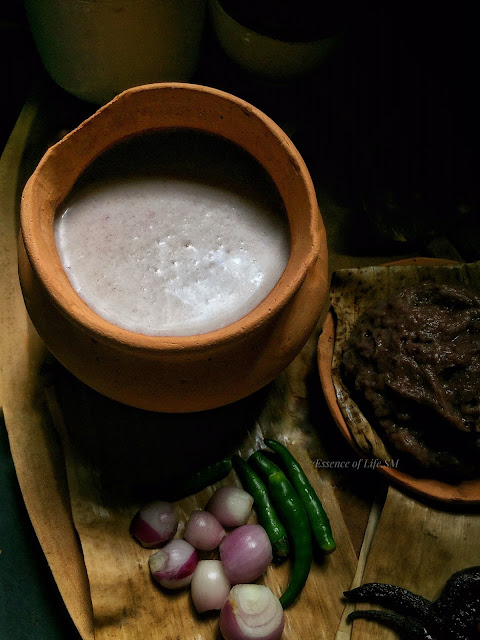
Ragi Koozh served in a clay pot, alongside Ragi Kali, bird’s eye chillies, shallots, and fried Mor Milagai – a rustic South Indian breakfast setup.

Traditional Ragi Koozh in Clay Pot – Fermented with Curd


Ragi Kanji / Ragi Koozh – A Simple, Soulful Bowl of Finger Millet Porridge

A Timeless South Indian Superfood for Gut Health & Cooling Comfort

    Ragi, or Finger Millet, is more than just a grain in South India—it’s a way of life. This tiny pearl-coloured grain, packed with fibre-rich bran, germ, and nutrient-dense endosperm, is a complete whole grain. It has quietly sat in our ancestral kitchens for centuries, long before the world labelled it a “superfood.” Today, thanks to the wellness wave, millets like Ragi are finally making their much-deserved comeback into modern, health-conscious homes.

    Growing up, I watched my mum stir up Ragi Kanji every single morning. A comforting ritual she still follows—her version is always sweetened with milk and love. She mills her own batches of homemade Ragi flour, saving a precious share for me to bring back every time I visit. Honestly, it’s my most treasured “takeaway” from home.

    For years, I followed suit—making the classic Ragi Health Drink or a semi-sweet porridge version. It wasn’t just for us adults—Ragi was the first food I gave both my children as babies. Mild, nourishing, and strengthening, it stayed in their diets till they turned three.

But here's where it gets rustic, magical—and nutritious.

Ragi Koozh: The Fermented Cousin of Ragi Kanji

    Ragi Kanji, fondly known as Ragi Koozh or “Kool” in local parlance, takes a more traditional, savoury path. Hugely popular in the hot, agrarian belts of Tamil Nadu and Kerala, this version is all about smart food science before science had a name. It’s simple: take leftover Ragi Kali (cooked millet dough), add a few cups of water, and leave it covered overnight. What you get the next morning is a slightly fermented, mildly tangy, deeply nourishing Finger Millet Porridge that does wonders to the body.

Soft Ragi Kali placed on a rustic palm frond plate (pakku mattai), styled with green chillies, shallots, and fried dried chillies — a traditional South Indian millet meal setting.

Ragi Kali – Cooked Finger Millet for Ragi Koozh

    This ancient breakfast was born in a time when refrigerators were unheard of, and “zero-waste” wasn’t a buzzword—it was a way of life. Fermentation wasn’t just preservation; it was enhancement. The transformation overnight not only alters taste but amplifies the probiotic benefits, making it easier to digest and more nutritious.

    Next morning, stir in some thick curd or yogurt, a pinch of salt, and here's where the fun begins—crush some sharp little pachai milagai (green chillies or bird’s-eye chillies), toss in a few shallots, ginger, and curry leaves, and there you go! A humble porridge that now bursts with seasonal flavours and medicinal value.

From Peasant Bowl to Power Breakfast

    What began as a frugal breakfast for farmers and fieldworkers—designed to sustain them through scorching days and physical toil—has now become a star in the healthy millet breakfast line up. With its cooling properties, long-lasting satiety, and energy-boosting profile, Ragi Koozh is the ideal summer morning bowl. Surprisingly (or not!), this peasant’s porridge also found its way to royal kitchens—and why not? Great taste knows no class!

    Cold, comforting, and incredibly gut-friendly, Ragi Koozh is an antidote to both summer heat and modern-day digestion issues.

The Method: Simple Science in an Earthen Pot

    Here’s the magic in motion: Add room-temperature water to pre-cooked Ragi Kali. Store it in a wide earthen pot—a vessel that breathes, cools, and coaxes flavours from the grain. Let it rest overnight.

    The next morning, mash the mix gently with a wooden ladle, or better still—your clean hands, just the way tradition intended. Stir in curd, salt, and that beautifully pungent combo of crushed shallots, green chillies, a hint of ginger, and curry leaves.

    What you’ll have is more than a breakfast. It’s a fermented ambrosia. It cools you down, energises your system, and floods your gut with friendly bacteria—all while tasting like home.

Ragi Koozh - Porridge 

    So here’s to Ragi Koozh—a bowl of simplicity with the wisdom of generations. No gadgets, no guilt, no gimmicks. Just grain, time, and tradition doing their work. Whether you’re a fan of millet-based diets, exploring ancestral foods, or simply seeking a light yet nourishing start to your day, this dish deserves a comeback in your kitchen too. 

South Indian Fermented Porridge

A traditional  Ragi Koozh (Finger Millet Kanji) is a cooling, probiotic-rich breakfast dish that nourishes your gut, boosts energy, and keeps you fuller for longer. With minimal ingredients and maximum nutrition, this humble millet meal is one of the oldest examples of Food as Medicine in Indian kitchens. 

Try it once, and your body will ask for it again.

Want more traditional cooling foods? Don’t miss recipes for Kambu Koozh, Pazhangkanji, Neer Mor / Sambharam —all rooted in age-old wisdom and full of summer healing.


Ragi Koozh Recipe Overview

  • Cuisine: South Indian
  • Category: Breakfast / Gut-Healthy Recipes
  • Spice Level: Low to Medium (adjustable)
  • Difficulty: Super Easy
  • Serves: 2 – 3
  • Author - SM @ Essence of Life - Food 

Time Estimate:

  • Preparation Time: 5 – 10 minutes
  • Cooking Time: 5 –10 minutes 
  • Fermentation Time: 7 – 10 hours or overnight (for best results)


Craving More Recipes Rooted in Tradition & Healing Through Food – Click to Explore the Food as Medicine Series


How to make Ragi Koozh Recipe (à®°ாகி கூà®´் / à®°ாகி கஞ்சி) – Tamil Nadu’s Traditional Fermented Finger Millet Drink


Close-up of Ragi Koozh in a clay pot, paired with green chillies, shallots, and ragi kali on banana leaf.

Ragi Koozh – Close-Up of the Cooling Finger Millet Porridge


Ingredients for Ragi Koozh (Fermented Finger Millet Porridge)

Fermenting Ragi Kali for Ragi Koozh

  • 1 cup Ragi Kali 
  • 2 to 2½ cups Water (at room temperature) 
 

New to Ragi Kali?  Try Quick & Easy Pressure Cooker Ragi Kali Method – perfect for beginners!


For Ragi Koozh/Finger Millet Porridge

  • 1 Cup Curd (sour, preferred) 
  • Salt – to taste
  • A handful of Shallots (finely chopped/crushed)
  • 2 Green Chillies (chopped/crushed)
  • A small piece of Ginger
  • A Sprig of Curry Leaves 

For Serving

  • Mor Milagai / Vadagam (optional) – Fried, to serve


Method - Step-by-Step Guide on How to make Ragi Koozh

Fermenting the Ragi Kali 

  • In a wide, preferably earthen pot, add the Ragi Kali and pour about 2-21/2 cups of water over it.
  • Cover and let it sit overnight for mild fermentation.
    • In summer: Leave on the counter.
    • In winter: Place in a warm spot or use the oven light trick.
       

Note: Fermentation gives Ragi  Koozh its distinctive tang and boosts gut health. 


How to Make Ragi Koozh – Traditional Method vs My Morning Blender Hack


Two Ways to Prepare This Nutritious Finger Millet Porridge

    Once the Ragi Kali gets fermented overnight, it’s time for the grand transformation — turning it into a smooth, soul-satisfying Ragi Koozh. Whether you stick to tradition or follow the quick blender hack like me, here are both ways to do it

Traditional Method – The Classic Route

    This is how it’s been done for generations — rustic, simple, and straight from the soul of Tamil homes.

Method 1:

  • Whisk 1 cup of curd with salt to taste until smooth.
  • Add finely chopped shallots, green chillies, a small piece of ginger, and curry leaves.
  • Stir this into the fermented Ragi Kali from the previous night.
  • Add water as needed to get that smooth, pourable porridge consistency.
  • Mix well and serve chilled (or at room temperature).

Note: Want some crunch? Sprinkle chopped shallots or add fried vadagams or mor milagai on top right before serving.


My Way – The Blender Method

Ideal for sensitive stomachs and anti-shallot-morning moods!

    At home, I tweak it to suit my husband’s morning preferences — he’s not fond of strong shallot breath before breakfast meetings (fair enough, right?). So here’s my streamlined, family-approved version:

Method 2:

  •  Add the following to your mixer jar:
– A handful of shallots
– 2 birds' eye chillies (kanthari mulagu/chilli padi)
– A small piece of ginger
– A sprig of curry leaves
  • Give it a quick blitz — just enough to crush everything coarsely (not a paste, please!).
  • Add the fermented and drained Ragi Kali, followed by 1 cup of curd.
  • Blend everything for 10 seconds — just a light mix.
  • Pour into your favourite bowl or traditional earthenware glass, thin it out with water if needed, and serve!
      

ProTip: This blender method makes your Ragi Koozh smooth, uniform, and easier to digest, while sneaking in all the goodness of shallots, chillies, and ginger.


Serving Suggestions:

Serve cold or at room temperature with:

  • Chopped Shallots and Green Chillies on the side
  • Fried Vadagams or Mor Milagai
  • Optionally, a spoon of Pickle or Thogayal of your choice


ProTip: Use earthenware cups or steel tumblers for that nostalgic street-side feel!


Storage Tips

  • Any left over, cooked & fermented Ragi Kali? Store it (without curd) in the fridge for up to 3 days.
  • Add curd, shallots, green chillies etc., only just before serving to retain taste and freshness.
  • Fermentation continues in the fridge, so flavour will intensify over time. 
  • Avoid reheating – this is best served cold or at room temperature for its full cooling effect.
 

Note: Once curd & seasonings  are added, consume within a day. 


South Indian-style Ragi Koozh breakfast platter with ragi kali, green chillies, shallots, and fried dried chillies, set on banana leaf.

Ragi Koozh – Rustic Fermented Millet Breakfast Platter


FAQs – Ragi Koozh Questions Answered

Q. Can I make it vegan?

  • Yes! Skip the curd. Let it ferment an extra 4–6 hours for a naturally tangy version.

Q. What’s the best time to drink Koozh?

  • Morning or midday. It’s cooling and ideal for hot weather—great after outdoor chores or workouts!

Q: Can I use store-bought curd for Ragi Koozh?

  • Yes! In fact, slightly sour curd gives the best flavour. Just ensure it's fresh and not too watery.

Q. Can I add buttermilk instead of curd?

  • Absolutely! Replace curd + water with thin buttermilk for a lighter version.

Q. Is it good for diabetics?

  •  Yes. Finger millet has a low glycaemic index and is excellent for blood sugar regulation. (Always consult a doctor, though.)

Q. Why is my koozh sticky or lumpy?

  • It may have overcooked or lacked enough water during simmering. Just dilute with water and stir well next time.

Q: Is Ragi Koozh good for weight loss?

  • Absolutely. It’s low GI, rich in fibre, and keeps you full longer—ideal for healthy weight management.

Q: Can I skip fermentation?

  • You can, but it won’t have the same tangy depth or probiotic benefits. Fermentation is the soul of this dish.

Q: Can I use store-bought ragi flour?

  • Yes, but make sure to cook it into Ragi Kali first before fermenting. Here's my Quick Pressure Cooker Ragi Kali Recipe for an easy start!

Q: Is Ragi Koozh good for digestion?

  • Indeed! Fermented ragi is gentle on the gut, probiotic-rich, and helps soothe acidity, bloating, and even mild ulcers.

Q: Is this kid-friendly?

  • Absolutely! Just tone down the spice—no bird’s eye chillies—and serve it as a mild porridge with curd and salt.   

    Looking for a sweet, wholesome version for toddlers and young kids? Try my Ragi Health Drink with Milk & Sugar – Baby-Friendly Recipe – a warm hug in a cup!


Final Notes & Pro Tips

  • Use an earthen pot to enhance the fermentation. It also keeps the koozh naturally cool.
  • If your Ragi Kali already had salt, go easy on adding more.
  • Want a looser consistency? Just add more water before serving. 
  • Add a handful of Vadagam or a spoon of raw mango pickle for a crunchy, tangy twist.
  • Hosting guests? Serve this with a side of Green Mangai Pachadi or Karuveppilai Thuvayal for bonus flavour points!

Recipes You Might Love

Fermented Cooling Foods

  • Pazhangkanji – The classic fermented rice porridge to beat the heat
  • Kambu Koozh – Nutty and nourishing pearl millet porridge

Refreshing Drinks to Beat the Summer Heat

  • Neer Mor / Sambharam – Spiced buttermilk to keep you cool
  • Panagam – Sweet, tangy, and perfect for Ram Navami celebrations
  • Nannari Sarbath – The herbal thirst-quencher you need this summer

Curd-Based Millet Dishes

  • Millet Thayir Sadham – Tangy curd rice with Kambu, Varagu, or Samai millets

Rustic & Comforting Meals

  • Ragi Kali – Traditional finger millet porridge, great with greens or karuveppilai thuvayal, or Karuvattu Kuzhambu


Food as Medicine – Why Ragi Koozh Rocks

  • Rich in calcium, magnesium, and iron
  • High in vitamin D, B6 & B12
  • Promotes gut health with natural probiotics
  • Excellent for lactating mothers
  • Regulates BP, aids digestion, and keeps acidity at bay
  • Mildly fermented—enhances absorption of nutrients

Curious about Finger Millet and its Benefits? Explore delicious, gut-friendly Recipes made with Ragi—from Snacks and breakfast tiffin to hearty drinks!


A Nourishing Tradition in Every Sip

    There’s something deeply grounding about a bowl of Ragi Koozh (à®°ாகி கூà®´்) — cooling, gut-healing, and beautifully rustic. This fermented finger millet porridge isn’t just a recipe; it’s a legacy stirred gently with ancestral wisdom and served with soul-soothing simplicity.

    Whether you’re rediscovering this humble millet drink from your village roots or tasting it for the first time, Ragi Koozh has a quiet power — to refresh, to restore, and to remind us of slower, mindful ways of living.

Try it chilled, spiced, or just plain. Serve it with pickle, poriyal, or fried fish. Let it nourish your mornings, cool your summers, and comfort your gut.

Have you tasted this age-old elixir?

    Drop your thoughts, tweaks, or memories in the comments below — I'd love to hear how Ragi Koozh plays a part in your kitchen!


Disclaimer: This content is intended for informational purposes only and is not a substitute for professional medical advice or treatment. Always consult your doctor, homoeopath, naturopath, or healthcare provider before making any changes to your health routine. Traditional remedies are wonderful, but your well-being comes first—so seek personalised guidance when needed.


A serving of soft and nutritious Ragi/Finger Millet Kali made effortlessly in a pressure cooker.

Pressure Cooker Ragi Kali: A Quick and Nutritious Delight


"Pressure Cooker Ragi Kali: Delicious, Nutritious, and Ready in Minutes"

Ragi/Finger Millet Kali

    Ragi, also known as Finger Millet, is a beloved millet variety in South India, cherished for its health benefits and versatility. One of the most traditional and popular dishes made with Ragi flour is Ragi Kali, also called Ragi Mudde or Ragi Sangkati. Historically, this nutritious dish was a breakfast staple for hard-working villagers, providing the energy needed for their laborious days in the fields. It even gained international fame when former Prime Minister Mr. Deve Gowda highlighted it as a favourite. 

Ragi Kali for the Busy Cook: The Quick and Easy Pressure Cooker Method 

    Making Ragi Kali the traditional way can feel like running a marathon—an epic challenge, especially for beginners, lazy bums, and busy bees. But don’t worry, fellow kitchen adventurers! I’ve got a foolproof, speedy method for making this classic dish in a pressure cooker.  A serving of soft and nutritious Ragi/Finger Millet Kali made effortlessly in a pressure cooker.

    This recipe is a total game-changer. Whether you’re just starting out, juggling a hectic work schedule, or simply prefer a quicker route to a delicious meal, this method delivers wonderfully silky, soft Ragi Kali with minimal effort. Perfect for a nutritious dinner after a long day, it’s about to become your new go-to recipe for ease and flavour.

Renaissance of Traditional Foods

     In recent years, there's been a revival of traditional foods like Ragi Kali, Ragi Koozh, Congee (Kanji), Neeragaram (Pazhankanji), Kambu Koozh, and Pothi Choru. These dishes, once confined to our grandparents' kitchens, are now making a comeback as people embrace nostalgia and health-conscious eating. Millets, in particular, have become a hit due to their nutritional value.

My Ragi Kali Adventure

    I had been hesitant to try making Ragi Kali, fearing it would be tricky. However, my husband was eager for me to give it a shot, especially after seeing his friends post pictures of Ragi Kali during the lockdown. With no other option, I embarked on this culinary journey. Devi, a friend, provided a step-by-step guide and a YouTube video, making the process seem easy. Her encouragement gave me the confidence to try, and the result was a perfectly soft and silky Ragi Kali, even on my first attempt!

Explore More: For more delicious Millet Based Recipes, click here...

Cuisine: South Indian
Course: Main Course
Difficulty: Medium
Serves: 2-3
Author: SM


Preparation Time: 5 Minutes
Cooking Time: 15–20 Minutes


For more Recipes with Ragi/Finger Millet, explore the link...

 "How to Make Ragi Kali in a Pressure Cooker: A Healthy and Speedy Recipe"

Delicious Ragi/Finger Millet Kali Perfectly Cooked in Pressure Cooker and Ready to Serve on Pakku Mattai

Quick & Easy Pressure Cooker Ragi Kali - Perfect for a Traditional Meal

Ragi Kali - Pressure Cooker Method: 

    This method is perfect for beginners and ensures a smooth, lump-free Ragi Kali every time.

Ingredients:

Ragi/Finger Millet Flour - 1 Cup
Water - 2 1/2 Cups
Salt - To Taste


Method: 

Step 1: Preparing the Ragi Mixture

  • Dilute Ragi flour in 1/2 cup of water, mixing thoroughly to avoid lumps. Add a dash of salt.
  • Gradually pour in the remaining 2 cups of water, mixing well.
  • Cook this mixture on a low flame, stirring continuously, until it thickens and is no longer sticky. Test by touching the mixture with wet fingers; if it doesn't stick, it's ready.

Step 2: Pressure Cooking

  • Pour 3 cups of water into the pressure cooker and bring to a boil.
  • Place the bowl with the Ragi mixture inside the pressure cooker and cover it with a lid.
  • Close the pressure cooker and cook on medium flame for 4–5 whistles.
  • Allow the pressure to release naturally, then open the lid and remove the bowl.
  • The Ragi Kali should now have a silky, pudding-like texture. Test again with wet fingers to ensure it's cooked.

Serving Instructions:

  • Scooping the Ragi Kali - Dip a round ladle in cold water and gently scoop out a portion of Ragi/Finger Millet Kali.
  • Rolling the Ball - Scoop and roll the ball into your preferred serving size.  If you find it difficult to handle hot Ragi Kali, drop it onto a greased plate and roughly roll it into a ball.  Dip your hands in cold water while rolling to avoid burns and to achieve a smooth finish.

Serving Suggestions:

  • Serve Ragi/Finger Millet Kali along with Kandaja Keerai (Mashed Spinach Curry), Nelakadalai (Groundnut) Chutney, Kollu Thuvaiyal or Thattapayar Kuzhambu.
  • Karuvattu Kuzhambu/Dried Fish Curry or Karuvadu(dried-fish) Fries are all-time favourites as accompaniments for these dishes.
  • Alternatively, it can be simply served with shallots, green chillies, or Mor Milagai.


Notes:

  • Mixing Ragi Flour - Mixing the Ragi/Finger Millet Flour in 1/2 cup of water initially helps you mix the flour quickly without any lumps.  Diluting it with all the water at once may take longer to achieve a lump-free mixture.
  • Cooking Steps - Ensure there are no lumps in the Ragi mixture before cooking.  Cooking the Ragi mixture first in a saucepan (Step 1) and then in a pressure cooker (Step 2) ensures the Ragi Kali is well-cooked and achieves the perfect texture.
  • Importance of Cooking Well - Ragi/Finger Millet should be thoroughly cooked to avoid indigestion.
  • Handling Ragi Kali - When rolling the Ragi Kali into a ball, scoop out the desired serving portion.
  • Leftover - If you have leftover Ragi Kali, soak it in water overnight and convert it into Ragi Koozh by diluting it with buttermilk or curd.


    In a world where quick and easy often wins the day, this pressure cooker Ragi Kali stands out as a beacon of nutritious tradition made simple. It's your perfect ally for a wholesome meal without the hassle. So, whether you’re a busy bee, a beginner, or just someone who loves a good shortcut, give this recipe a try. Ragi Kali is not just a meal; it's a nutritious tradition. Embrace this easy method to enjoy a delicious and wholesome dish that's rich in heritage and health benefits.  Your taste buds and your health will thank you!


MORINGA
HOW TO MAKE MORINGA TEA


      The Moringa Tree or a Drumstick Tree is indeed a useful tree to have around the house. It is a common scenario to see a lot of standalone houses in South India having a drumstick tree and our neighbourhood too was no exception. The tree supplied the needs not only to the owners but they were generous enough to share the Leaves or Drumsticks(Moringa Pods) to their acquaintances as well.  So we all benefited out of it some time or the other, and even whenever we wanted it, we had the liberty to ask them for Moringa Leaves or Pods. So the supply was readily available and I don't remember buying them at all.  When my Dad built a house in the heart of Coimbatore, according to his terms... Drumstick Tree was one among the first few trees planted in our backyard along with Coconut Tree, Curry Leaves, Guava, Papaya, Gooseberry, Mango and Senbaga Poo Tree.
      Then we had our own Moringa Tree in our backyard.  My Mom who was undergoing Menopause two decades back found her aid in Moringa Leaves.  Since then she is so obsessed with Moringa Tree & Leaves. And at the same time, I was in my Postpartum that she used to cook Moringa Leaves, Flowers and Moringa Pods daily.  Whatsoever I had to eat at least a spoonful of stir-fried Moringa Leaves with a dollop of Ghee. The scenes reminded me of the one from a Tamil Block Buster Movie "Mundhanai Mudichu" by director K.Bhagyaraj who states this vegetable as an aphrodisiac. The scene was so hyped & it instantaneously elevated the popularity of Drumsticks and Moringa Tree that until the date, name of the director has become synonymous to the Vegetable.    
     When I came to Malaysia, I was literally overwhelmed when I saw a big Moringa Tree in my backyard.  Which grew taller by day and flourished into the neighbourhood by scattering its seeds around.  Now I have two large trees in my backyard, totally ignored and one day one of the trees collapsed in the storm.  The fallen tree send me into a panic, only to realize what I would do without this tree. But the tree stood loyal to me, It shot up branches from the fallen butt and I had another tree growing up from the fallen one within months.
     Though I am lazy to use Moringa leaves in cooking, I regularly pluck a few leaves for my Moringa Tea and also while tempering Sambar & Rasam. And the tree has grown so tall that even it has become difficult to pluck the pods. Cleaning Moringa Leaves, according to me is one heck of a job which takes a long time and I hate doing tedious jobs.  But my mom cleans Moringa leaves with a knack that she does it within minutes, yet to master the skill.  The tree sees its worse when it is filled with Moringa Pods, some neighbours trying to pluck Moringa Pods, would rip down the branches and mess up the tree. Leaving me to cut and clean the branches scattered in my backyard.   
      So, coming to the story of Moringa Tea - A few months back on a Sunday I slept a little late due to my usual Back Pain which made me stay awake for a long time in the night and I slept off in the morning when the pain subsided.  It's a routine to call my parents on Sundays and I stick on to specific timing for it. It was a bit late when I called them & my Mom asked me why I was late. I said about my Back Pain & immediately she asked me to drink Moringa Leaves Tea, which had helped her solve the problem. Since then and I think it is past 4 months that I am regularly drinking this Moringa Tea. Even I was asked by my Ayurvedic Practitioner to take a shower in the water boiled along with Moringa Leaves or Moringa Bark for my Body pain.   
      Moringa Tree is considered as a Miracle Plant.  Moringa Tea prepared with the leaves of this tree has high levels of flavonoids or polyphenols. These are antioxidants that can help detoxify your body and strengthen the immune system. If you are lucky enough to have a Moringa tree in your backyard, then you will be able to easily make tea with fresh moringa leaves and reap its full nutritional benefits.  I make Moringa Tea with fresh leaves and it doesn't impart any taste or flavour into the tea.  You can also use dried or powdered Moringa Leaves.  The Leaves retain most of the Vitamins & Minerals even when dried & powdered.  Moringa Tea can be beneficial in treating many ailments like body pains, arthritis conditions and also helps to reduce the symptoms of Menopause. But be sure about what you are doing and follow the Home Remedies from trusted sources.  Follow it, only if it suits you.
 
Recipe Type - Drink/Home Remedy
Difficulty - Easy
Serves -  2-3
Author - SM  

Preparation Time - 5 Minutes
Cooking Time - 10-15 Minutes
 

HOW TO MAKE MORINGA TEA

MORINGA
HOW TO MAKE MORINGA TEA


INGREDIENTS:

Water - 1 Cup
Moringa Leaves - a Handful

Add-ons(Optional)

Honey

METHOD:

  • Clean & wash Moringa Leaves.
  • Boil 1 Cup of Water along with fresh Moringa Leaves.
  • Boil it for about 5 minutes or until the leaves turn tender and soft.
  • Add a teaspoon of Honey(Optional) and give a quick stir.
  • Cover and keep it aside.
  • Serve Moringa Tea hot or @ room temperature.
  • Can Drink this as your Morning Tea or any time of the day.

NOTES:

  • Fresh Moringa Leaves do not impart much of a taste or flavour into this Tea.
  • If you cannot get hold of fresh Moringa Leaves, substitute it with Store-bought Moringa Powder.
  • Moringa Powder imparts a strong metallic taste into this tea.
  • Adding Honey is purely optional.  I do not add Honey or any other sweeteners while making this Moringa Tea.
  • And I do not strain out the leaves.  We can also eat those blanched Moringa Leaves from the Tea.


HEALTH BENEFITS OF MORINGA LEAVES
 MORINGA LEAVES


     Moringa Leaves are small leaves of Moringa/Drumstick Tree.  It is a common scene in any South Indian household to plant a Moringa/Drumstick Tree in their kitchen garden.  A Moringa/Drumstick Tree is a slender tree with drooping branches with small leaves, white flowers and long pods of drumsticks.  In ancient days there was a belief that the leaves, Drumstick(long pods of the tree), the Seeds from the pods, Moringa Flowers, Bark of the tree and the Resin can cure more than 300 ailments. And the tree sticks on to the belief to date. It is exceptionally nutritious tree catering its benefits both as a vegetable and as a medicine and also used in various other forms.
     Moringa is a plant that is native to areas of India, Pakistan, Bangladesh, and Afghanistan. It is also grown in the Tropics. The leaves, bark, flowers, fruit, seeds, and root are used to make medicine. My Mom had her own tricks to make us eat vegetables. I grew up hearing that Moringa is loaded with Iron and benefits hair growth, gets rid of Anaemia etc., & etc., And during my Postpartum Moringa Leaves and Flowers were in my daily diet.  For building up strength, treating Anemia and also helps in secreting breast milk. The Leaves provide expectant mothers with necessary calcium, vitamins, zinc and iron. Calcium required for bone strengthening. Zinc plays a vital role in hair growth and skin health & Iron alleviates Anaemia.

MORINGA/DRUMSTICK TREE - "NATURE'S MIRACLE TREE"


Names of Moringa in Other Languages:

Tamil - Murungai
Malayalam- Muringa.
Kannada - Nugge
Telugu - Mulakkaya
Hindi - Saijan Patha
Marathi - Shevga
Gujarati - Saragvo
Bengali - Sajna Sag
Gujarati - Saragavo
Marathi - Shevaga Pan
Oriya - Sajna Sag
Punjabi - Surajana
Assamese - Sojina
Nepali - Sajiwan or Swejan
Sinhalese - Murunga
Bahasa Melayu - Kelor


MORINGA - NUTRITIONAL VALUE & USES

     Moringa is an important food source in most of the Cuisines around the world. It is one tree which can be easily grown and maintained.  Moringa Tree is one common plant seen in most of the South Indian households, alongside Curry Leaves Tree.  The leaves retain lots of Vitamins and Minerals, it can be used fresh or dried.
    Moringa is a good source of Proteins, Vitamins & Minerals. It is also rich in antioxidants which help protect cells from damage. Moringa Leaves are a rich source of Minerals like Iron, Calcium, Potassium, essential Amino Acids and Vitamin A, B & C.  It is a good source of dietary fibre too.
     Apart from Moringa Leaves, its Pods, Flower and Seeds can also be used.  There are even recipes with Moringa/Drumstick Tree Bark. The Moringa Leaves are cooked like Spinach, mostly stir-fried or as Curries.  Moringa Leaves are also dried, powdered and used as a Condiment.  It is also used to make Tea. The immature green pods (drumsticks) are prepared similarly to green beans, while the seeds are removed from more mature pods and cooked like peas or roasted like nuts. The seed cake remaining after oil extraction is used as a fertilizer and also to purify well water and to remove salt from seawater.

     Most of the parts of the Moringa/Drumstick Tree are used either for cooking or as a medicine.
It is commonly used as
  • Food
  • Oil
  • Medicine
  • Perfume
  • Beauty Products
  • Water Purifier
  • Cattle Fodder
  • Fertiliser
  • Natural pesticide
  • Machine Lubricant
  • Fuelwood and other uses


HEALTH BENEFITS OF MORINGA


HEALTH BENEFITS OF MORINGA LEAVES
MORINGA LEAVES


     Moringa has been used as a Natural Medicine for years.  Moringa Leaves can treat High Fever, Measles, Asthma.  Moringa Pods can increase Sexual Ability.  Moringa Bark is used to treat Prostate Tumors and fatigue.  Moringa is also widely used in Beauty Care Products.  One of the most useful usages of Moringa is that its seeds contain multi-electrolyte compounds which can filter water and hence it is used as a Water Purifier in rural areas. Apart from its various uses, the nutritional value of Moringa caters loads of Health benefits:

Treats Anemia:

     Moringa is believed to help a person’s body absorb more Iron and helps in increasing the Red Blood Cell count. Moringa is very helpful in treating and preventing Anemia and is also believed to treat Sickle Cell disease.


Treats High Blood Pressure:

Moringa contains compounds like Isothiocyanate and Niaziminin which proves beneficial to stop Arteries from thickening. This helps in reducing High Blood Pressure.


Regulate Blood Sugar Levels:

Moringa helps to reduce the amount of glucose in the blood, as well as sugar and protein in the urine. Alternatively increasing the haemoglobin levels and overall protein content. Moringa can help regulate blood sugar levels helping to reduce some diabetic symptoms. Grounded moringa leaves are successful at reducing lipid and glucose levels and regulating oxidative stress in diabetic patients, which means it lowers blood sugar and cholesterol and improves protection against cell damage.


Bone Health & Reduces Joint Pain:

Moringa contains Calcium, Phosphorous, Magnesium and Vitamin K, which help keep bones healthy and strong. The anti-inflammatory properties of Moringa are believed to help treat conditions such as Arthritis, heal damaged bones, reduce inflammation, pain and swelling.


Treats Edema:

Edema is a painful condition where fluid builds up in specific tissues in the body. The anti-inflammatory properties of Moringa are believed to prevent the development of Edema.


Protects the Liver:

Moringa can protect the liver against damage caused by anti-tubercular drugs and can quicken its repair process.


Preventing and Treating cancer

Moringa extracts contain properties that may help prevent cancer developing. It also contains niazimicin, which is a compound that suppresses the development of cancer cells.


For Skin & Hair

Moringa protects hair against free radicals and keeps it clean and healthy. Moringa contains Protein & minerals like Iron & Calcium which helps to protect skin cell damage.  It also contains hydrating and detoxifying elements, which also boost the skin and hair. It can be successful in curing skin infections and sores. Extract of moringa has been shown to help wounds close as well as reduce the appearance of scars.


Treats Bacterial Infections:

Moringa is known for its antibacterial, antifungal, and antimicrobial properties, which helps combat infections caused by Salmonella, Rhizopus and E.Coli.


Aids Digestion & Treats Stomach Complaints:

Antibiotic & Antibacterial Properties of Moringa help inhibit the growth of various pathogens & Vitamin B present in Moringa helps with Digestion.  Moringa can be used to treat Stomach disorders, such as constipation, gastritis, and ulcerative colitis.


Aids Weight Loss:

Moringa can be effective in reducing and controlling weight gain. Vitamin B present in Moringa helps with smooth and efficient digestion and can assist the body when converting food into energy, as opposed to storing it as fat.


Treats Mood disorders:

Moringa help treat depression, anxiety, and fatigue.


Healthy Heart

The powerful antioxidants found in Moringa extract might help prevent cardiac damage and has also been shown to maintain a healthy heart.


Treating Asthma:

Moringa may help reduce the severity of  Asthma attacks and protect against bronchial constrictions. It facilitates better lung function and breathing overall.


Protects against Kidney Disorders:

People who regularly eat Moringa may be less likely to develop stones in the kidneys, bladder or uterus High level of Antioxidants in Moringa helps to reduce the toxicity levels in the kidneys.


Eye Health

Moringa is a good source of Vitamin A and with its Antioxidant properties, Moringa helps to improve eyesight and also is used in treating infants with Vitamin A deficiency. Moringa may stop the dilation of retinal vessels, prevent the thickening of capillary membranes, and inhibit retinal dysfunction.


Treat Malnourishment:

Moringa has been used to treat undernourished children.  Malnourishment is a condition caused by poor diet or inability to absorb nutrients into the body.  Regular intake of Moringa helps improve the weight facilitating alongside with required Nutrients.


Breast-feeding:

Home remedies suggest that Moringa helps in increasing breast milk production. It is a regular scenario in any South Indian household to induce recipes with Moringa Leaves, Flowers & Pods to Mother's during the postpartum period.


Reduces Symptoms of Menopause:

Regular intake of Moringa by women during Post-menopause period has proven beneficial in easing up the menopausal symptoms such as hot flashes and sleeping disorders.


HEALTH BENEFITS OF MORINGA LEAVES
MORINGA LEAVES

Moringa in Daily Cooking:

Moringa Leaves, Moringa Flowers and Drumsticks are common ingredients used in Indian Cuisine.

DRUMSTICK/MORINGA PODS:

Drumstick or the long pods of Moringa are used while making Sambar, Curries, Stir-fries etc.,

MORINGA LEAVES:

  • The Leaves can be cooked into simple Stir-fries or converted into local treats like Poriyals, Thorans, Murungai Keerai Kootu or added into Sambar & Curries.
  • Can add these Moringa Leaves in Adai, Pesarattu, Thepla etc.,
  • Can make Keera Vadai with Moringa Leaves.
  • Leaves can be used to prepare Murungai Keerai Thuvayal(Chutney).
  • Can add few leaves while making Scrambled Eggs.
  • I stealthily sneak Moringa leaves along with Curry Leaves while tempering Sambar & Rasam.
  • Moringa Leaves can be used for making Murungai Keerai Podi or can be added into Paruppu Podi/Idli Podi/Karuveppilai Podi etc.,
  • Can make Moringa Tea with fresh or dried Moringa Leaves.
  • Can make a simple Soup with Drumstick Leaves.
  • Adding Moringa Leaves while making Homemade Ghee increases its Shelf life.

MORINGA FLOWERS:

  • Moringa Flowers can also be cooked in the same way as Moringa Leaves.
  • Moringa Flowers can be cooked into simple Stir-fries or converted into local treats like Poriyals, Thorans, Kootu or added into Sambar & Curries.

MORINGA BARK:

  • I even happen to eat a unique Sauce(Chutney) prepared using the Bark of Moringa Tree by my Husband's Grandmother Clemmi Thathi.
  • This was served as a side relish for Roasted Pork.
  • It can also be eaten as a side relish with any type of Roasted Meat, Chicken Turkey, Duck etc.,
  • This sauce can be seen as an integral sauce on every Anglo-Indian table during the Christmas and Easter Season

FOOD SAFETY:

     Using Moringa Leaves, Flowers or Pods as a Vegetable in normal cooking or in small proportions doesn't cater to any risk or side effects.  Moringa may possess anti-fertility qualities and is therefore not recommended for pregnant women.

*But when using it in the form of extracts and medications, consider using Moringa with Doctor's advise first.

Risk & Side Effects:

  • Do not use it along with Thyroid Medication - Levothyroxine is used to combat Thyroid problems. Compounds in the moringa leaf may aid the thyroid function, but it is advisable not to take it in combination with other Thyroid Medication.
  • Do not use Moringa extracts with any medications that might be broken down by the liver - Moringa extract may decrease how quickly this happens, which could lead to various side effects or complications.
  • Do not use it along with Diabetes medications: Diabetes medications are used to lower blood sugar, which moringa also does effectively. It is vital to ensure blood sugar levels do not get too low.
  • Do not use it along with High Blood Pressure medication - Moringa has shown to be effective at lowering blood pressure. Taking moringa alongside other drugs that lower blood pressure may result in it becoming too low.


_______________________________________________________________________________

DISCLAIMER:

Please remember these treatments options are only meant as guidelines and in no way replace the advice or treatment provided by your medical practitioner. It is always good to seek the advice of your physician, homoeopath, naturopath, or herbalist for professional advice in any matter related to your health. This article is for information purposes only.

Newer Posts Older Posts Home
Search Essence of Life - Food

I Me Myself

SM - Essence of Life
Essence of Life - Food is all about daily cooking with a simple sense of taste and health. It is all about food. Not a day goes by without eating for most of us, so what we eat matters on the whole. Food in the mode of goodness increases the duration of life, purifies one's existence, and gives strength, health, happiness, and satisfaction. Above all ingredients, the most vital one in my kitchen is love.
Sm
@ Essence of Life - Food

Popular Posts

  • Kizhi Parotta: Kothu Parotta and Salna Wrapped in Banana Leaves
  • Traditional Olan Recipe - A Kerala Classic from Madhya Thiruvithamkoor
  • How to Serve Onam & Vishu Sadhya: Tips for the Perfect Kerala Feast
  • Authentic Ambur Vaniyambadi Chicken Biryani Recipe (Traditional Tamil Nadu Style)
  • Avalose Unda Recipe – Traditional Kerala Sweet Made with Avalose Podi

Labels

AROUND THE WORLD BAKING BEVERAGES BIRIYANI & PULAO BREAKFAST CURRIES DESSERTS FROM GODS OWN COUNTRY From My Family's Kitchen - Heirloom Recipes GLOSSARY HOW TO... KERALA PALAHARAM KONGU CUISINE KUIH MUIH MALAYSIAN CUISINE MIDDLE EASTERN CUISINE Manvasanai - Flavours from Tamil Soil PICKLES RICE DISHES ROTIS SADHYA SNACKS & SAVOURIES SOUPS SPICE POWDERS TIFFIN ITEMS VIRUNDHU WINES eBook
Ebook - What I Cook - For Onam

Ebook - “What I Cook - For Onam”

Amazon.com/dp/B0CGPVY6J3

Indulge in Kerala’s Culinary Heritage: Traditional Onam Sadhya Recipes, with Expert Serving Tips! Celebrate Onam the authentic way! Discover 25 timeless Kerala Sadya recipes in my ebook. From avial to payasam, bring home the flavours of tradition. Available now on Amazon!

Essence of Life

Subscribe & Follow

© 2026 | Essence of Life - Food

  • Home
  • Ask First
    Please note that all rights for the photographs and texts on this blog, unless otherwise mentioned, rests with the author. Please do not use without permission.
  • Privacy Policy