Essence of Life - Food
  • Home
  • From My Kitchen
    • Heirloom Recipes
    • From God's Own Country
    • Sadhya
    • Kongu Cuisine
    • Chettinaad Cuisine
    • South East Asian
    • Around the World
  • Ebook
  • I Me Myself

ROSE MILK
ROSE MILK - BANDUNG ROSE SYRUP

  As quoted by somebody,
 
 Rose Milk is a Drink, but Bandung is a feeling!!! 
 
I am sure this quote would have been from a person who has tasted both Rose Milk  & Bandung.
 
    I think this is one drink which comes along with nostalgic memories to most of us.  But I am not sure when & where we got into liking Rose Milk.  I haven't had this drink when I was a kid.  Though summers went by with loads of fresh juices, then came Kissan Squash & Rasna.  An Orange flavoured Kissan Squash and sometimes Lemon Squash was a default item stored by my Mother. Along with Doordarshan came Roohafza, a ready-made Rose Syrup, and our trial with that went along just once. We didn't have a fridge then and so very rarely my Mom bought Ice Cubes from the nearby shop and made these drinks with ice cubes for us.  Me with the Tonsillitis and my brother with wheezing problem, we were never allowed to have cold items.
    Those were the days these drinks were extra special and making it cold with ice cubes took us to another level of excitement. I feel nowadays we stock up all kind of drinks in our refrigerator and make it so often.  What's lost in the midst of it, is the excitement we had as kids for these Cold Drinks. We had to wait all year until Summer for these cold treats, least to mention our doze of Ice creams (allowed only once during Summer).
    Well, when talking about Rose Milk, I can never skip the topic mentioning the Rose Milk served at Coimbatore Shree Annapoorna Gowrisankar. A trip to the restaurant is incomplete without this Rose Milk drink. And the tradition is still continued even by my kids, to date... And it so happened that when I took my Malaysian friend to CBE. I was so damn eager to treat her with this wonderful drink, thinking that she’d have never tasted it before. (Least I had the knowledge of Malaysian Food & Drinks then...). To my astonishment, she said, BANDUNG LAH!!!  Oh well, though I was a bit disappointed, I thought I have to taste it when I’m back home.    
    Rose Milk & Bandung - Both being the same drink, but the only difference is that Rose Milk is usually made with Rose Syrup mixed with Milk. Whereas, Bandung is prepared with Evaporated Milk or Condensed Milk and Rose Syrup. Both the drinks are topped with loads of Ice Cubes or served cold.  Bandung is slightly thinner compared to Rose Milk.  Another version called Syrup Bandung prepared without Milk/Evaporated Milk is another popular drink in Malaysia & Singapore. I have given the recipe for both Rose Milk & Bandung Rose Syrup in this post, and I have used ready-made Rose Syrup for the purpose.
    But the real love for this Rose Milk alias Bandung happened with the Rose Milk sold at a Cendol Stall near my son's University at Nilai.  He had got into a routine addiction for this Rose Milk.  This recipe is prepared with the Rose Syrup I bought from the stall. They even sell it topped with ingredients like Sweet Corn, Rajma, Barley or Grass Jelly(Cincau).
    Rose Milk is a quick & wonderful summer cooler made with rose syrup & milk.  Mix the Rose Syrup into the chilled Milk and there you go with a cooling & refreshing drink.  Chill it up in the refrigerator or serve it topped with ice cubes. The Pink Colour and above all the inviting Rose flavour is what is best about this drink.  It also serves best to be served as a non-alcoholic drink in your Party Menu.  Another advantage of this Rose Milk is that it happily falls under the category of a dessert masquerading as a drink.


For more JUICES, DRINKS & SMOOTHIES, Click here...

Recipe Type - Drink
Difficulty - Easy
Serves - 2
Author - SM  

Preparation Time - 5–10 Minutes
Chilling Time - Few Hours

For a detailed Recipe on HOW TO MAKE ROSE SYRUP, Click here...

HOW TO MAKE ROSE MILK - INDIAN STYLE


ROSE MILK
ROSE MILK - BANDUNG ROSE SYRUP


INGREDIENTS:


For Rose Milk:


Milk - 2 Cups (Chilled)
Rose Syrup - 3–4 Tablespoons
Ice Cubes - few

Optional Ingredients:


For Garnishing:


Basil(Sabja) Seeds - 1 Teaspoon
Rose Petals - few


METHOD:


  • Chill the Milk in the refrigerator for a few hours. 
  • Fill a Boston Shaker with some Ice Cubes.
  • Pour in the Rose Syrup & Chilled Milk into it.
  • Shake well until well combined.
  • Pour in the Rose Milk/Bandung into a tall glass.
  • Garnish Rose Milk with soaked Basil Seeds & fresh/dry Rose Petals (Optional).
  • Serve Rose Milk chilled, immediately.


NOTES: 


  • I usually chill the Milk in the refrigerator before making Rose Milk.
  • Can add more Ice cubes if you prefer to.
  • Traditional Rose Milk is not watery.
  • Adjust the amount of Rose Syrup to suit your preference and sweet level.
  • Garnishing the Rose Milk with Basil Seeds & Rose Petals are truly optional.
  • Can simply mix all the ingredients in a big bowl, too.


HOW TO MAKE BANDUNG ROSE SYRUP - MALAYSIAN STYLE


ROSE MILK
ROSE MILK-BANDUNG ROSE SYRUP


INGREDIENTS:


For Bandung Rose Syrup:


Evaporated Milk - 1/2 Cup
Water - 2 Cups
Rose Syrup - 3/4 Cup
Ice Cubes - a few

Optional Ingredients:


For Garnishing:


Sweet Corn - a few Teaspoons
Rajma/Red Bean - a few Teaspoons
Barley - a few Teaspoons
Cincau - a few pieces


METHOD:


  • In a large bowl, combine the Rose Syrup, Evaporated Milk.
  • Pour in the Water and stir well until well combined.
  • Top it up with few Ice cubes.
  • Pour in the Bandung Rose Syrup into a tall glass.
  • Garnish Bandung Rose Syrup with few teaspoons of cooked Barley/Rajma/Red Bean, few teaspoons of Sweet Corn or with few pieces of Grass Jelly(Cincau) (Optional).
  • Can add all the above garnishing or play around with one or two of your preferred ingredient.
  • Serve Bandung Rose Syrup chilled, immediately.

NOTES: 


  • Traditionally, Bandung Rose Syrup is slightly thinner than Rose Milk.  Adjust the consistency to suit your preference.
  • Can substitute Evaporated Milk with Condensed Milk (use about 2-3 Tablespoons).
  • Condensed Milk & Rose Syrup have added sugar in it.  Adjust accordingly.
  • Adjust the amount of Rose Syrup to suit your preference and sweet level.
  • Can add more Ice cubes if you prefer to.
  • Garnishing Bandung Rose Syrup with Barley or Rajma/Red Bean or Sweet Corn or with few pieces of Grass Jelly(Cincau)are truly optional.
  • If preferred, serve Bandung with all the above garnishing, or play around with one or two of your preferred ingredient.

CAKE
 EGGLESS MARBLE CAKE

     
    I am totally biased when it comes to certain recipes, and when it comes to baking a cake I have always felt the usage of All-purpose Flour, Butter & Eggs are a must for soft, moist and fluffy cakes.  At the least, my brain doesn't accept cakes without these ingredients and I feel that something is missing in the recipe.  When I came across with this Marble Cake recipe with NO EGGS, NO BUTTER & NO MILK, I was as usual skeptical.  Though impressed by the recipe and had jotted it down in my recipe book I was totally procrastinating the idea of making this Cake.    
    I had always wanted to try a Cake Recipe which would be suitable for Vegetarians and for people who are sensitive to Eggs. So finally went along with the recipe.  A quick fix cake recipe with very simple ingredients and not much of preparations.  No Eggs & No Butter and above all it is No Fuss & No Mess.  When you have a sudden craving for a good cake and you open the fridge to see that you do not have Eggs or Butter, then this Marble Cake recipe would come out be handy. You could never tell that it’s eggless, and the best part is it stays moist even after 3 or 4 days! i.e if at all, if there is any left!!!
    As skeptical as I was, I mixed the batter with not much of sieving, beating and fluffing it up processes. Until I baked I was not sure how the cake would turn out.  Curiously I was glancing into my oven quite frequently to see whether the Cake was rising enough, Ya, to my astonishment it did and baked precisely as I wanted it - Clean out!!!  Yet not satisfied I waited until the cake was perfect to be sliced and there I went for my final trial test - the tasting.  Was it moist, soft, fluffy and tasty... So many questions in my mind.  Yes, it was moist, soft, fluffy and all the tastier too. Amazingly, it was approved by all the other 3 at home - my husband & kids.
     This Moist Marble Cake is the easiest cake I’ve ever come across.  A soft, moist, sinfully-delicious Marble cake, which is Eggless and Butterless!  Use two bowls, a wire whisk and a wooden spoon to make this easy Marble Cake. You don't even need any fancy kitchen gadgets. You can make it with simple, affordable pantry staples! No Eggs, No Milk & No Butter needed for this Marble Cake.  It is an absolutely easy, tasty and a mildly sweet Cake, that it can be eaten as a teatime snack or for breakfast.
    So a final word, Cakes turn out to be soft, fluffy & moist even without EGGS & BUTTER. So now a question - Am I still biased with cakes which do not use Egg & Butter?  No... No... No... And wait. more Eggless & Butterless Cakes coming on its way...

Let's talk about the Ingredients in this Marble Cake:

  • All-purpose Flour - You can either use All-purpose Flour (standard) or gluten-free all-purpose flour.
  • Sugar - White Sugar or a mix of White Sugar & Brown Sugar is best. I wouldn’t recommend using all brown sugar, as I always find the flavour overpowering.
  • Baking Soda - Baking Soda gives the Marble Cake some ‘lift’, but also leavens the cake. 
  • Salt - Salt brings out the sweetness. According to me, it is a must for any cake, muffin or brownie! 
  • Curd/Yogurt - This is what replaces the Eggs and also gives stability to the Cake. That is the stability which avoids the cake from sinking!. Use fresh(not sour) Curd/Yogurt for the purpose.
  • Sunflower/Canola oil - Any standard oil is fine for this recipe preferably which has no overwhelming flavour/smell. I have used Sunflower Oil, as it is what I had.  You can get easy with any type of Vegetable Oil, Coconut Oil, Canola Oil, etc. 
  • Vanilla Extract - A MUST for any baked good especially for Cakes.  Helps to bring out an aroma unique to baked goods.
  • Water - To mix everything together!

For more CAKE Recipes, Click here...

Recipe Type - Cake, Dessert
Difficulty - Medium
Yields - 1 Medium Sized Cake
Author - SM

Preparation Time - 20 - 30 Minutes
Cooking Time - 45-50 Minutes


HOW TO BAKE EGGLESS MARBLE CAKE -

 NO EGG NO BUTTER MARBLE CAKE


CAKES
 EGGLESS MARBLE CAKE


*Please do read all the instructions for a perfectly textured Cake.
 

MEASURING THE INGREDIENTS(Updated as on 7th October 2020):

    My friend recently made this Cake and said the cake became dense. She had scooped out the flour and didn't level it off. So the quantity of Flour ended up to be more than necessary for the recipe making the cake dense.
    So, I am updating few tips for you to get perfect Cakes.  Make sure to measure the ingredients perfectly.  I have given both Cups & Grams measurement for your convenience.  Grams measurements works perfect, but if you do not have a weighing scale use Cup measurements.
     
    While measure the ingredients using a Cup make sure to follow these basic instructions for every ingredients. 

  • FLOUR - Use Spoon & Level Method.  Do not scoop out the floor from the container.  Instead spoon in the flour into the Cup. Do not pack the flour in the Cup and Do not tap the cup for the flour to settle down.  All these can alter the final texture of a Cake. After you have spooned in the Flour into the Cup use the back of a Knife or a spoon to level off the top of the measuring Cup.
  • COCOA POWDER - Follow the same method as for the Flour. And do not forget to sift it. 
  • BAKING SODA & BAKING POWDER - Both these ingredients can settle down in the containers in due course.  Shake it before scooping out with a spoon and then level the top with the back of a spoon or a knife.
  • SUGAR - Sugar is heavier then flour. So it is unlikely to settle down in the measuring cup. Scoop it out from the container with a spoon and then finally level it off with the back of a knife or a spoon.
  • BROWN SUGAR - Follow the same method as for Sugar.
  • LIQUIDS - Liquids such as Oil, Milk/Yogurt/Buttermilk, Fruit Juice & Water should be measured at the eye level. It would be advisable to use a liquid measuring Cup. Bend down to the eye level and make sure the measuring requirement is perfect.


INGREDIENTS:

For Vanilla Cake Batter:

Curd/Yogurt - 1/2 Cup(135 Gms)
Sugar - 1/2 Cup(120 Gms)
Vegetable Oil - 1/4 Cup(55 Gms)
Vanilla Extract - 1 Tspn
All-purpose Flour - 1 Cup(170 Gms)
Baking Soda - a Pinch
Baking Powder - 1/2 Tspn
Salt - a Pinch
Water - 2 Tbspn

For Chocolate Cake Batter:

Curd/Yogurt - 1/2 Cup(135 Gms)
Sugar - 1/2 Cup(120 Gms)
Vegetable Oil - 1/4 Cup(55 Gms)
Vanilla Extract - 1 Tspn
All-purpose Flour - 3/4 Cup(120 Gms)
Cocoa Powder - 1/4 Cup(50 Gms)
Baking Soda - a Pinch
Baking Powder - 1/2 Tspn
Salt - a Pinch
Water - 2 Tbspn

METHOD:

For Vanilla Cake Batter:

  • Sieve All-purpose Flour along with Baking Soda, Baking Powder & Salt once and keep it aside.
  • In a large bowl, combine Curd/Yogurt, Sugar & Oil.
  • Whisk it using a hand beater or a wire whisk until Sugar dissolves.
  • Just beat until the sugar dissolves, do not overbeat.
  • Now add the Flour mixture to the above and gently fold it up using a spatula.
  • Fold all the ingredients until well combined.
  • Pour in 2 Tbspns of Water and fold it again until well combined.
  • Keep the batter aside.

For Chocolate Cake Batter:

  • Sieve All-purpose Flour along with Cocoa Powder, Baking Soda, Baking Powder & Salt once and keep it aside.
  • In a large bowl, combine Curd/Yogurt, Sugar & Oil.
  • Whisk it using a hand beater or a wire whisk until Sugar dissolves.
  • Just beat until the sugar dissolves, do not overbeat.
  • Now add the Flour mixture to the above and gently fold it up using a spatula.
  • Fold all the ingredients until well combined.
  • Pour in 2 Tbspns of Water and fold it again until well combined.
  • Keep the batter aside.

For Eggless Marble Cake:

  • Preheat the oven at 180 Degree Celsius for about 10-15 Minutes.
  • Grease the Cake Tin and dust them up with the Flour. 
  • Line the greased Cake Tin with Baking/Parchment Paper.
  • Scoop out 2 Tbsps of Vanilla Cake Batter and pour it into the cake tin.
  • Take about 2 Tbspns of Chocolate Cake Batter in another scooper/ladle and pour it on top of the Vanilla Cake batter.
  • Follow the suit alternating between Vanilla Cake Batter & the Chocolate Cake Batter.
  • Let the Cake batter spread-out naturally.
  • Once all the batter is poured into the Cake Tin, gently hit the Cake Tin to settle(even-up) the batter.
  • Now, using the back of a spoon or a chopstick, make a Zig-Zag swirl through the batter once.
  • Gently move the back of a Spoon/chopstick once through the batter to get a marble-like design.
  • Care should be taken not to overdo it.
  • Bake the cakes in the preheated at the centre rack of the oven at 180 Degree Celsius for about 45 -50 Minutes or until the skewers come out clean.
  • Let the Marble Cake cool in the Cake Tin on a rack.
  • Remove the Marble Cake from the pan carefully and peel off the baking paper.
  • Cut the marble Cake into the desired shape and store it in an airtight box.
  • When stored properly it stays good for up to 3 days @ room temperature.

For Longer Shelf Life :

  • Wrap it in plastic wrap and refrigerate the Cake.  Can be refrigerated up to a week.
  • Before serving remove them from the plastic wrap and serve once it reaches the room temperature.


CAKE
 EGGLESS MARBLE CAKE

NOTES:

  • For easy removal, ensure there is an inch of baking paper (parchment paper) overhanging the edge of the baking pan.
  • For the best tasting vanilla cake, stick to flavourless vegetable oil. According to me, Sunflower Oil/Canola Oil works best.
  • This is a mildly sweet cake.  Adjust the amount of Sugar to suit your preference.
  • Be careful not to over mix the batter, otherwise, the cake will be dense and heavy.
  • For a marble-like swirl design, gently make a zig-zag movement through the layered batter with a thin stick/Chopstick or with the back of a thin spoon.
  • Do not overdo it which may mix up the layered battered.
  • Do not over-bake the cake, as it continues to cook in the pan as it cools.
  • Adjust the baking time according to your oven settings.


      When we saw the Web Series 'Queen' based on the life of late Tamil Nadu Chief Minister J. Jayalalitha, what caught along with the series was one recipe which came along a few times in the series. A Potato Curry which instantly caught my daughter's attention and there she wanted a similar-looking Potato Curry, I can say similar-looking & not tasting. If I had to make a justified version of the same Potato Curry which came in the series, or at least the one Ms. Jayalalitha liked.  I should have surely dined along with her, sharing the food send from another legendary Politician and Actor, Dr. M.G.R's house.  Or at the least, I should have been lucky enough to get the recipe from the cook.   
     No choice... As I was not lucky enough for such instances.  As usual, I tried along with my instincts to justify with a similar-looking Potato Curry and ah, mainly my only concern was to appease my daughter's taste buds.  So there came along and still coming along some new versions of Dry Potato Curries in my kitchen.  Even my son went along to try his own version of the same.  Whatever it is, a dish with Potatoes & my daughter goes head over heels for it.  She is always like,"I have never met a Potato, I didn't like..."   
     So here comes a simple Potato Recipe in a typical South Indian Style - "Urulai Kizhangu Varuval". Potatoes cooked, tempered and sautéed along with simple spices.  Quick and easy to make and suits well to be served along with both Roti & Rice or simply serve it as a side dish to go along with Rice, Sambar/Rasam/Curd.

For more Recipes with POTATOES, Click here...

Cuisine - South Indian
Course - Side Dish
Spice Level - Spicy
Difficulty - Medium
Serves - 3-4
Author - SM

Preparation Time - 5- 10 Minutes
Cooking Time - 10 - 15 Minutes


HOW TO MAKE URULAI KIZHANGU VARUVAL - DRY POTATO CURRY

INGREDIENTS :

To Cook Potatoes:

Potato - 4 Nos.
Turmeric Powder - 1/4 Tspn
Salt - To Taste

For Urulai Kizhangu Varuval:

Oil - 3 Tablespoons
Mustard Seeds - 1/2 Teaspoon
Curry Leaves - a Sprig
Onion - 1 No.
Garlic - 3–4 Cloves
Red Chilli Powder - 2 Teaspoons
*Fennel Powder - 1 Teaspoon
Curry Masala Powder- 1 Teaspoon
Salt - To Taste

METHOD:

To Cook the Potatoes:

  • Wash, clean & peel the Potatoes.  Cut them into medium-sized cubes.
  • Add enough water & Cook Potatoes along with Turmeric Powder and a dash of Salt.
  • Cook until Potatoes turn soft & cooked.
  • If there is any excess water, drain the Potatoes and keep it aside.

For Urulai Kizhangu Varuval:

  • Heat oil in a Pan, splutter Mustard seeds.
  • Immediately add Curry Leaves and give a quick stir.
  • Add finely chopped Onions & Garlic cloves to the above and sauté until onions turn translucent.
  • Now add Red Chilli Powder, Fennel Powder and Curry Masala Powder and fry this on a low flame until the raw flavour goes.
  • Add Cooked Potatoes and gently mix it until all the pieces are well coated with the Masalas.
  • Cook this on a low flame for about 5–7 minutes until the Potatoes are roasted well with the Masalas.
  • Stir the ingredients occasionally.
  • Care should be taken while stirring the Potatoes, make sure not to break or mash the Potatoes.
  • Switch off the flame and serve Urulai Kizhangu Varuval hot as a side dish.
  • This Urulai Kizhangu Varuval goes well with both Roti & Rice.


NOTES:

  • I have used 4 Big Potatoes in the recipe.
  • Can cook the same recipe with Baby Potatoes.
  • Do not overcook the Potatoes.
  • Adjust the amount of Spices to suit your spice level.
  • Can Substitute Curry Masala Powder with Garam Masala Powder/Mutton Masala Powder/Chicken Masala Powder.

*FENNEL POWDER:

     I usually use freshly roasted and ground Fennel Powder if I am using it in my recipes. Freshly roasted and ground Fennel Powder gives out a wonderful aroma and adds flavour to the dish it is added into.  You can get easy with ready-made Fennel powder, too.  If you are making fresh Fennel Powder, then
  • Dry roast the Fennel Seeds on a low flame until it splutters & turns fragrant.
  • Care should be taken not to burn the Fennel seeds, which would totally spoil the taste and flavour of the dish.
  • Once cooled, grind the Fennel Seeds into a fine powder and keep it aside.
  • I use my mortar and pestle to grind the roasted Fennel Seeds, as I normally use only a small amount in my recipes.
  • If you want to make a big batch and store it for further usage, can dry roast a big batch and grind it in a small blender jar or Coffee grinder.


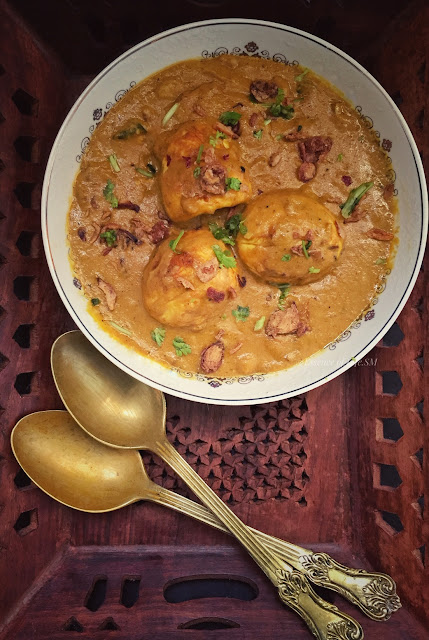
A bowl of Royal Nawabi Egg Korma, a creamy and rich Awadhi curry garnished with fried onions and fresh coriander.

Royal Nawabi Egg Korma - Rich Awadhi Delight


Discover the Rich Flavours of Nawabi Egg Korma: A Royal Indian Delight

When it comes to the quintessential curries of India, the Korma stands out as a regal choice. This indulgent dish, with its velvety texture and aromatic spices, is a true feast for the senses. Let’s dive into the world of Nawabi Egg Korma, a rich and creamy curry from Awadhi cuisine that is deeply rooted in Mughal culinary traditions.

What is Nawabi Egg Korma?

    Nawabi Egg Korma is a luxurious curry that showcases the art of slow cooking. Originating from the royal kitchens of Awadh, this dish reflects the grandeur of Mughal and Nawabi cuisines. It features hard-boiled eggs simmered in a luscious sauce made from ghee (clarified butter), yoghurt, a blend of aromatic spices, and a thick paste of nuts and poppy seeds, finished with a touch of fresh cream or milk.

Ingredients That Make Korma Special

Each ingredient in Nawabi Egg Korma plays a crucial role in achieving its distinctive taste:

  • Yoghurt/Curd: Adds a tender texture to the eggs and a subtle tanginess.
  • Spices: Infuses the dish with its unique and aromatic flavour profile.
  • Blanched Nuts (Cashews/Almonds) and Poppy Seeds: Act as thickening agents, providing a rich, creamy consistency.
  • Fresh Cream/Milk: Enhances the richness and smoothness of the curry.
  • Saffron: Imparts a delicate colour and fragrant undertone.

The Art of Cooking Korma

Traditionally, Nawabi Egg Korma is prepared using a technique called Dum-Pukht, where the curry is cooked slowly on a low flame with the lid on, allowing the flavours to meld without curdling the yoghurt. For ease, you can achieve a similar result by slow-cooking the curry in a pan. The hard-boiled eggs are first marinated with salt and turmeric, then shallow-fried before being added to the korma, ensuring they absorb all the rich flavours.

Variations of Korma Across India

In India, Korma is known by various names and styles:

  • Mughlai Korma
  • Shahi Korma
  • Nawabi Korma
  • Kashmiri Korma
  • South Indian Kurma

    While Mughlai, Shahi, Nawabi, and Kashmiri Kormas typically use nuts and cream as thickening agents, South Indian Kurmas rely on coconut and poppy seeds. The South Indian version is a delightful curry that pairs well with both roti and rice.

Perfect Pairings for Nawabi Egg Korma

This Nawabi Egg Korma is incredibly versatile and complements a variety of dishes. Serve it with:

  • Indian Breads: Parotta, Chapatis, Naan, Kulcha
  • Rice Dishes: Biryani, Pulao, Ghee Rice

For a complete meal experience, enjoy it with Maida (all-purpose flour) chapati or naan.


For more delicious Korma/Kurma recipes, click here...

Cuisine: Indian (North India)
Course: Side Dish
Spice Level: Low
Difficulty: Medium
Serves: 4
Author: SM

Preparation Time: 20–30 Minutes
Cooking Time: 30–45 Minutes

For more recipes with Eggs, click here...


Nawabi Egg Korma Recipe: A Royal Curry Experience

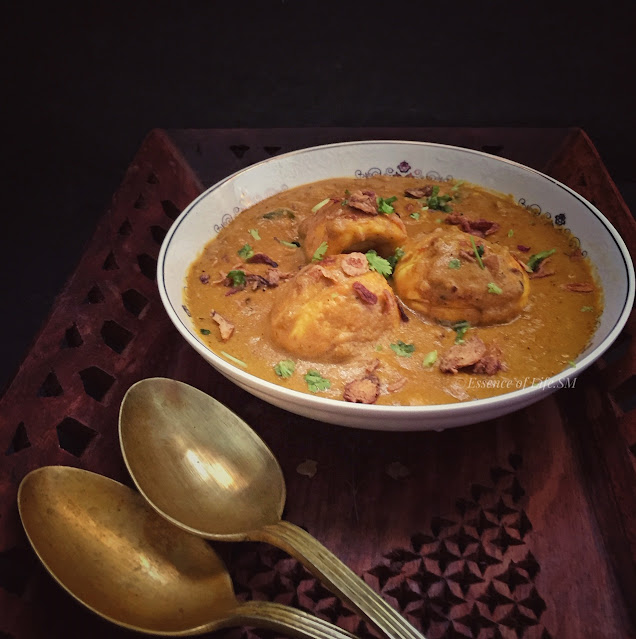
Close-up of Nawabi Egg Korma, featuring boiled eggs in a rich, creamy gravy topped with fried onions and coriander, presented in a white bowl on a wooden tray.

Nawabi Egg Korma - Rich & Creamy Awadhi Egg Curry


    Elevate your curry game with Nawabi Egg Korma, a sumptuous dish steeped in the rich culinary traditions of Awadhi and Mughlai cuisines. This recipe combines creamy yoghurt, fragrant spices, and slow-cooked eggs to create a dish fit for royalty.

Ingredients

For Cooking and Frying the Eggs

4 Eggs
Salt: To Taste
1/2 teaspoon Turmeric Powder
Oil: For Shallow Frying

For a detailed guide on making perfect hard-boiled eggs, click here...

For Nawabi Egg Korma

1 Onion, finely chopped
3-4 Green Chillies, slit
1-inch piece Ginger
5-6 Garlic Cloves
1/2 teaspoon Turmeric Powder
1 teaspoon Red Chilli Powder
1.5 teaspoons Cumin Powder
3 teaspoons Coriander Powder
1/2 cup Yoghurt/Curd
1 cup Milk
1/4 cup Birista (Fried Onions)
3 tablespoons Oil
Salt: To Taste
1 tablespoon Sugar


Spices

3 Cardamom Pods
1-inch piece Cinnamon, 2 sticks
1 Bay Leaf
5–6 Cloves


To Soak and Grind

1.5 teaspoons Poppy Seeds
10 Almonds
10 Cashew Nuts


To Garnish

1.5 teaspoons Garam Masala
1/4 cup Birista (Fried Onions)
2 tablespoons Ghee
A few Coriander Leaves (optional)
A few Saffron Strands (optional)


Method

Preparing and Frying the Eggs

  • Hard Boil the Eggs: Boil the eggs until firm, then peel.
  • Marinate: Rub the eggs with salt and turmeric powder. Let them marinate for 5-10 minutes.
  • Shallow Fry: Heat oil in a pan. Fry the marinated eggs until they are golden brown and crispy. Set aside.

Making Nawabi Egg Korma

  • Prepare Nut Paste: Dry roast poppy seeds on low heat until they pop. Soak them in hot water for 20–30 minutes. Blanch almonds and cashew nuts in hot water for 10–20 minutes. Grind the soaked nuts and poppy seeds into a fine paste.
  • Make Onion-Ginger-Garlic Paste: Grind onions, ginger, and garlic into a smooth paste.
  • Cook Spices: Heat oil in a wide pan. Add cardamom, cinnamon, bay leaf, and cloves. Sauté until fragrant.
  • Add Paste: Add the onion-ginger-garlic paste and cook until fragrant.
  • Spice It Up: Stir in turmeric powder, red chilli powder, cumin powder, and coriander powder. Pour in 1/2 cup of water and cook until the masalas are well-cooked and the oil separates.
  • Add Nut Paste: Mix in the nut paste and cook on low heat, stirring frequently.
  • Incorporate Yoghurt: Stir in the yoghurt and green chillies. Cook for a few minutes.
  • Add Eggs: Gently add the shallow-fried eggs to the korma. Cook on low heat.
  • Add Milk: Pour in the milk and simmer for 5–7 minutes, stirring occasionally. Be careful not to break the eggs.
  • Final Touches: Add birista, sugar, and adjust the salt. Cook until the korma reaches your desired consistency.
  • Garnish: Sprinkle garam masala, remaining birista, and ghee. Optionally, garnish with coriander leaves and saffron strands.

Notes

  • Poppy Seeds: Dry roasting and soaking help create a smooth paste and thick consistency.
  • Spice Level: Adjust green chillies to your preferred spice level.
  • Sugar: Optional, but recommended for balancing the flavours.
  • Consistency: Adjust thickness as desired.
  • Variations: This recipe can be adapted with chicken or lamb. Cook the meat according to your preference.
  • Serving Suggestions: Enjoy with Parotta, Chapatis, Naan, Kulcha or with Rice Dishes like Biryani, Pulao, Ghee Rice or steamed rice.


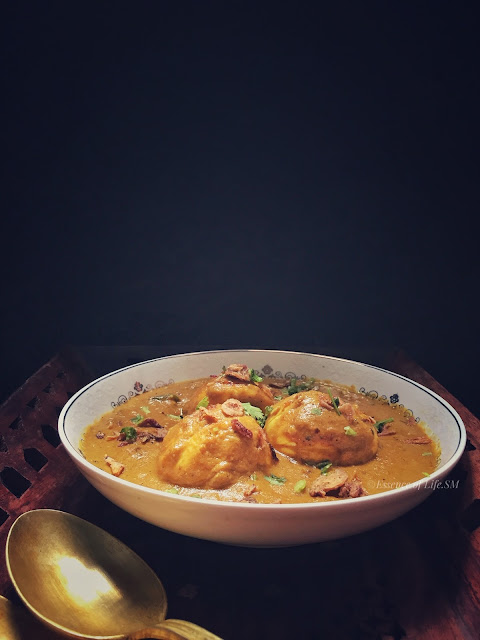
A beautifully presented bowl of Royal Nawabi Egg Korma, showcasing boiled eggs in a rich, creamy curry, garnished with fried onions and fresh herbs, placed on a wooden tray against a dark background with spoons beside it.

Royal Nawabi Egg Korma - Elegant Awadhi Cuisine


*How to Make Birista (Fried Onions)

    Fried onions add a delightful crunch and depth of flavour to your korma. Here's how to make them:

Ingredients

2 Onions, thinly sliced
Salt: To Taste
Oil: For Frying


Method

  • Prepare Onions: Peel and slice onions thinly. Pat dry with a towel to remove excess moisture.
  • Fry Onions: Heat oil in a pan to cover the onion slices. Fry on medium-high heat until golden brown, stirring regularly.
  • Drain and Store: Remove from oil and drain on paper towels. Cool completely and store in an airtight container. They stay fresh for up to a month when refrigerated.

*Tips: Ensure onion slices are evenly cut and moisture-free for crispy results.


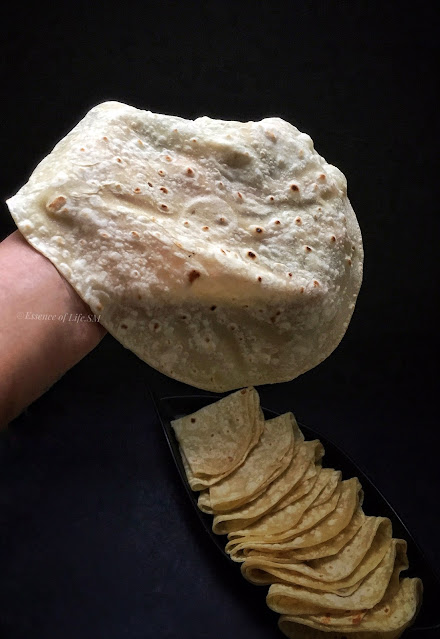
Close-up of a hand holding a fluffy, thin chapati made with Maida (all-purpose flour), showing its light texture and golden brown spots.

Fluffy Maida Chapati- All Purpose Flour Chapati


Perfect Maida Chapati Recipe: Thin, Soft, and Delicious

    Discover one of the most popular recipes on my blog, "Essence of Life - Food." This Maida Chapati recipe is a personal favourite and a hit among guests. Made perfectly thin and soft, these chapatis are a delightful twist on traditional Indian flatbread.

The Significance of Bread in Indian Cuisine

    Western countries boast a rich bread culture, with each nation having its unique bread. While Asia is predominantly rice-based, India presents a balanced culinary scene with both Roti (bread) and Rice as staples. Wheat and rice are central to Indian diets, creating a diverse food culture. Despite our expertise in bread-making, Indian breads often go uncelebrated compared to their international counterparts.

Chapati: The Quintessential Indian Bread

    Among the myriad of Indian breads, Chapati stands out as the foundation of all Rotis & Parathas. No Indian meal is complete without this essential flatbread. Traditionally made with finely milled whole wheat flour, Chapati is also known as Pulka or Roti. However, this recipe offers a unique twist by using all-purpose flour, known as Maida in India. Aside from my Mom, I've never known anyone else in our circle who makes these Maida Chapatis at home.


The Debate Around Maida

    In recent years, Indian households have shied away from Maida due to concerns over bleaching agents and health impacts. Despite the scepticism, I remain loyal to traditional recipes that call for Maida. I believe in preserving the authenticity of dishes like cakes and Malabar Parotta, which are best made with all-purpose flour.

 Maida/All-purpose Flour in Indian and Central Asian Cuisine

    Maida is extensively used in Indian and Central Asian cuisines. It is the key ingredient in various flatbreads such as Naan, Kulcha, Tandoori Roti, Parotta, Romali Roti are made using Maida. Deep-fried breads like Batura, Puri, and Luchi are also made with Maida. These breads hold a significant place in Indian cuisine, rivalling the importance of rice.

Preparing the Perfect Maida Chapati

To make Maida Chapati, you will need:

  • All-purpose flour (Maida), salt, and water.
  • Knead the ingredients into a soft dough and let it rest for 10–15 minutes to develop gluten. Form the dough into small balls, flatten them, and roll them out into circles using a rolling pin (Belan) on a rolling board (Chakla).

    For best results, use good quality Maida and ensure the dough is well-kneaded and rested. This makes the Chapatis soft, fluffy, and delicious. Rolling them into perfect rounds is a feat that can be acquired by practice. It is equally one of the easiest yet tricky dishes to prepare in terms of shape and softness.

    There are also automatic roti makers available on the market that automate the whole process. Even rolling these Maida Chapatis becomes easy with Chapati pressing machines. These Maida Chapatis tend to spring back to size when rolled, so make sure to roll out slightly bigger than normal Chapatis.

Cooking Maida Chapati

Cook the rolled-out dough on a preheated tava or griddle, turning until both sides are done. Avoid using oil or ghee if you prefer non-greasy Chapatis. These Chapatis remain soft even the next day, making them a great addition to daily menus.

Tips for Beginners

    This recipe is beginner-friendly. Use water at room temperature and add a few teaspoons of oil while kneading. Let the dough rest for 8–10 minutes to allow the gluten to develop, resulting in soft and nutritious Chapatis. My neighbour aunty whom we call Mami, once shared a valuable tip: the key to soft Chapatis lies in allowing the dough to prove for at least 8–10 minutes. 

Discover the Secret to Soft, Delicious Chapatis That Stay Fresh Even the Next Day

    I learned to make Chapati early on and perfected it through practice. And the most crucial step, my secret tip for perfect texture and softness, is adding flour to water instead of water to flour. This personal technique ensures the best results for making soft, delicious Maida Chapatis. It's a foolproof recipe in my kitchen, loved by my family, especially my kids. When you're bored by regular Chapatis, try this Maida variation for a delightful change.


For a detailed recipe on Chapati with Atta/ Whole Wheat Flour, click here...


Cuisine - Indian
Course - Main Course
Difficulty - Medium
Serves - 4
Yields - 15 Chapatis
Author - SM

Preparation Time - 5–10 Minutes
Leavening Time - 10–30 Minutes - 1 Hour
Cooking Time - 20–30 Minutes
 

Explore a wide range of exquisite Indian Bread Recipes, here...


Mastering the Art of Maida Chapati: A Family Favourite

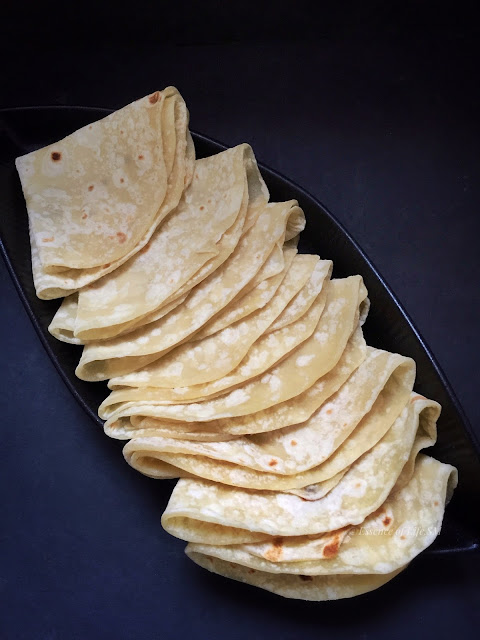
A black platter filled with neatly folded Maida chapatis, showcasing their soft and pliable texture.
Fluffy Maida Chapati- All Purpose Flour Chapati


Perfect Maida Chapati Recipe: Thin, Soft, and Delicious

Understanding Maida/All-purpose Flour

    Maida is made from wheat, finely milled without any bran, refined, and bleached. It is prepared from the endosperm, the starchy white part of the wheat grain, making it rich in carbohydrates and sugar. The milling process separates the bran and germ, resulting in a white, protein-rich flour. Despite being low in protein and fibre, Maida is highly extensible and stretchable, making it ideal for various Indian breads, pastries, and baked goods.

Ingredients:

Maida/All-purpose Flour: 3 Cups
Water: 1¼ Cups (Approximately)
Salt: To Taste
Sugar: 3–4 Teaspoons (Optional)
Oil: 2–3 Tablespoons


Method:

Kneading the Dough

  • Take 1¼ cups of water in a large bowl.
  • Add a dash of salt and optional sugar to the water.
  • Drizzle a few teaspoons of oil over the water and mix well.
  • Add 3 cups of Maida to the water mixture.
  • Mix until no visible water remains, but do not knead at this point.
  • Knead the mixture until it becomes smooth and soft, approximately 8–10 minutes.
  • Cover the bowl and let the dough rest for 30 minutes.

Notes:

  • Mixing Method: Add flour to the water mixture to retain the softness of the Chapatis.
  • Water Ratio: Use approximately 1¼ cups of water for 3 cups of Maida, adjusting based on the flour quality.
  • Kneading: Dip your fist in water if more moisture is needed and continue kneading for a softer & more pliable dough.

Resting the Dough

  • Cover the Dough: Wrap the well-kneaded dough with a wet kitchen towel, cling film, or plastic wrap, or cover the bowl tightly with a lid.
  • Let the dough rest for at least 8–10 minutes for the gluten to develop. For best results, rest for up to an hour, especially in cold weather.

Notes:

  • Moisture: Covering the dough traps moisture, preventing it from drying out.
  • Texture: Resting time tenderizes the dough, giving it a soft and springy texture.

Rolling the Dough

  • Divide and Roll: Divide the dough into equal portions and roll each portion into medium-sized, thin circles.

Notes:

  • Roll the dough slightly larger than normal Chapatis as Maida Chapatis tend to spring back.
  • Dust the rolling board with dry flour or well-powdered rice flour to prevent sticking and ensure soft Chapatis.
  • Do not use too much flour while you roll the dough. Chapatis tend to become hard if you use more flour on either side of the dough when rolling them.
A close-up of a golden brown Maida chapati held by hand, with a black platter of folded chapatis in the background.
Fluffy Maida Chapati- All Purpose Flour Chapati

Cooking the Maida Chapatis

Heat the Tava/Griddle:

  • Heat a Tava/Griddle on a high flame, then lower the flame before placing the rolled Chapatis on it.

Cook the Chapatis:

  • Wait for the colour to change slightly and the Chapatis to fluff up.
  • Flip and cook the other side until brown crispy spots appear.
  • Remove from the Tava/Griddle and place on a plate lined with a clean kitchen towel.

Serving Suggestions:

  • Stack the Chapatis, cover with the kitchen towel, and just before serving, smear with oil, butter, or ghee.
  • Serve hot with your choice of vegetarian or non-vegetarian side dishes or Raithas.

A black platter filled with neatly folded Maida chapatis, showcasing their soft and pliable texture.
Fluffy Maida Chapati- All Purpose Flour Chapati

Notes & Tips:

  • Temperature Control: Do not overheat the Tava/Griddle while cooking.
  • Condensation: Kitchen towels absorb moisture, preventing the Chapatis from getting soggy.
  • Storage: For later use, store Chapatis in an insulated casserole lined with a kitchen towel to maintain softness.

    This Maida Chapati recipe is truly foolproof, ensuring soft and pliable flatbreads that remain tender even the next day. It's a family favourite and a standout on my blog, consistently drawing rave reviews for its simplicity and deliciousness. Perfect for beginners and seasoned cooks alike, this recipe embodies the versatility and charm of Indian bread-making, making it an all-time popular choice among my readers. Give it a try and see why it's a staple in our home and a star on my blog - Essence of Life - Food.


Newer Posts Older Posts Home
Search Essence of Life - Food

I Me Myself

SM - Essence of Life
Essence of Life - Food is all about daily cooking with a simple sense of taste and health. It is all about food. Not a day goes by without eating for most of us, so what we eat matters on the whole. Food in the mode of goodness increases the duration of life, purifies one's existence, and gives strength, health, happiness, and satisfaction. Above all ingredients, the most vital one in my kitchen is love.
Sm
@ Essence of Life - Food

Popular Posts

  • Kizhi Parotta: Kothu Parotta and Salna Wrapped in Banana Leaves
  • Traditional Olan Recipe - A Kerala Classic from Madhya Thiruvithamkoor
  • How to Serve Onam & Vishu Sadhya: Tips for the Perfect Kerala Feast
  • Authentic Ambur Vaniyambadi Chicken Biryani Recipe (Traditional Tamil Nadu Style)
  • Avalose Unda Recipe – Traditional Kerala Sweet Made with Avalose Podi

Labels

AROUND THE WORLD BAKING BEVERAGES BIRIYANI & PULAO BREAKFAST CURRIES DESSERTS FROM GODS OWN COUNTRY From My Family's Kitchen - Heirloom Recipes GLOSSARY HOW TO... KERALA PALAHARAM KONGU CUISINE KUIH MUIH MALAYSIAN CUISINE MIDDLE EASTERN CUISINE Manvasanai - Flavours from Tamil Soil PICKLES RICE DISHES ROTIS SADHYA SNACKS & SAVOURIES SOUPS SPICE POWDERS TIFFIN ITEMS VIRUNDHU WINES eBook
Ebook - What I Cook - For Onam

Ebook - “What I Cook - For Onam”

Amazon.com/dp/B0CGPVY6J3

Indulge in Kerala’s Culinary Heritage: Traditional Onam Sadhya Recipes, with Expert Serving Tips! Celebrate Onam the authentic way! Discover 25 timeless Kerala Sadya recipes in my ebook. From avial to payasam, bring home the flavours of tradition. Available now on Amazon!

Essence of Life

Subscribe & Follow

© 2026 | Essence of Life - Food

  • Home
  • Ask First
    Please note that all rights for the photographs and texts on this blog, unless otherwise mentioned, rests with the author. Please do not use without permission.
  • Privacy Policy