Essence of Life - Food
  • Home
  • From My Kitchen
    • Heirloom Recipes
    • From God's Own Country
    • Sadhya
    • Kongu Cuisine
    • Chettinaad Cuisine
    • South East Asian
    • Around the World
  • Ebook
  • I Me Myself
A traditional Kerala Pothi Choru, consisting of Kerala Matta rice, fish curry, fish fry, omelette, cabbage thoran, chuttaracha thenga chammanthi, and kadu manga achar, all packed on a banana leaf.

Pothi Choru - Traditional Kerala Banana Leaf Lunch Pack

"Pothi Choru: Unwrapping the Flavours of Kerala’s Traditional Banana Leaf Lunch"

Pothi Choru: Traditional Kerala Banana Leaf Packaged Lunch

    Discover the rich tradition of Pothi Choru, a beloved Kerala dish wrapped in banana leaves. While I didn’t experience this custom firsthand during my childhood, it holds a special place in my heart through my husband’s nostalgic stories. He fondly recalls how his grandmother, Clemmie Thathi, would pack an array of authentic Kerala dishes in banana leaves for their journey home after a holiday. Though my own memories are limited to a time when my aunt, Rathna Chechi, and I shared dosa and thenga chammanthi wrapped in banana leaves, the experience left an indelible mark. The aroma of the dosa, chutney, and banana leaf remains vivid in my memory.

Traditional Kerala Banana Leaf Packaged Lunch

    Packaged lunches, whether for travel, picnics, or school, evoke many personal memories. While hot, freshly served food is undeniably satisfying, there's something uniquely delightful about meals wrapped in banana leaves. Known as 'Pothi Choru,' which translates to 'Packed Rice,' this traditional Kerala meal involves wrapping a variety of authentic dishes in banana leaves. The leaves are gently wilted by burning them slightly, then wrapped in newspaper, a common packing material of yesteryears. This method, once a practical tradition, has become a cherished nostalgic experience for many, capturing the essence of Kerala’s culinary heritage.


Pothi Choru - a Nostalgic Symbol

    Pothi Choru, translating to 'Packed Rice,' is a quintessential Kerala culinary tradition where a variety of authentic dishes are wrapped in banana leaves. This time-honoured method involves slightly wilting banana leaves by gently burning them, making them pliable for packing. The wrapped dishes are then enclosed in newspaper, a practical and readily available packing material from the past. This traditional approach, often used by grandmothers in Kerala, has become a nostalgic symbol of the rich food culture in the region.

    The charm of Pothi Choru lies not just in its taste, but also in its presentation. The use of banana leaves enhances the flavour of the food, imparting a unique aroma and texture. This method of packing, though a simple tradition, evokes a deep sense of nostalgia for many, connecting them to their cultural roots and cherished family memories.

The Process of Making Pothi Choru

  • Wrapping Authentic Kerala Dishes The process begins with carefully preparing a selection of Kerala's beloved dishes. These are then wrapped in banana leaves, which are slightly burnt to soften them and make them ideal for packaging.
  • Preparing Banana Leaves for Packing Banana leaves are gently wilted by burning them slightly until they become pliable. This preparation is essential for ensuring that the leaves can securely wrap the dishes and maintain their freshness.
  • The Use of Newspaper in Packaging Traditionally, the wrapped banana leaves are enclosed in newspaper, a common packing material of the past. This method not only keeps the food secure but also adds a touch of nostalgia to the experience.

Nostalgia and Cultural Significance

  • The Charm of Banana Leaf Packaging The use of banana leaves in packing Pothi Choru enhances the food’s aroma and texture, giving it a unique flavour that is deeply cherished in Kerala’s culinary culture.
  • The Tradition’s Evolution and Impact While the practice of wrapping meals in banana leaves might seem simple, it evokes a profound sense of nostalgia. For many, it connects them to cultural roots and cherished family memories, making it more than just a packing method.
  • Personal and Cultural Connections The tradition of Pothi Choru is a significant part of Kerala's food heritage. It represents a cultural connection and personal nostalgia, celebrated through the unique presentation and preparation of traditional dishes.


Pothi Choru, a Kerala-style lunch packed in a banana leaf, featuring Matta rice, spicy fish curry, fried fish, omelette, and traditional accompaniments like kadu manga achar and chammanthi.

Kerala Pothi Choru - A Classic Banana Leaf Takeaway Lunch


Customizing Your Pothi Choru: The Versatility of a Kerala Packed Lunch

A Flexible Feast - Tailoring Your Pothi Choru: The beauty of Pothi Choru lies in its versatility. The number and type of dishes included can vary each time you prepare it. Whether you prefer a simple or elaborate meal, you can easily customize the variety and quantity of dishes to suit your taste and convenience. The essence of Pothi Choru is in choosing what you love to eat, making it a personalized and satisfying experience.

Authentic Kerala Flavours in Every Bite: I’ve taken care to include the most traditional and authentic Kerala dishes in this Pothi Choru, prepared in the best way possible to capture the essence of this beloved meal.

Key Elements of an Authentic Pothi Choru The speciality of this Kerala-style packed lunch lies in its essential components:

  • Kerala Matta Rice: The heart of Pothi Choru is the Kerala Matta Rice, a rose-coloured, fibre-rich rice grown in Kerala. Known for its mild nutty flavour, this rice is a staple in traditional Kerala cuisine.
  • Coconut Oil: All the dishes in this Pothi Choru are cooked in pure coconut oil, enhancing the authenticity and delivering the true taste of Kerala.
  • Banana Leaf Aroma: The unique flavour and aroma of the burnt banana leaves infuse the meal, providing not only a distinctive taste but also offering hidden medicinal benefits.

The True Essence of Kerala Cuisine Every aspect of this preparation delivers a genuine experience of ‘Nadan Bakshanam’ (traditional food) from God’s Own Country, Kerala, served in the most authentic way.

Explore More traditonal Recipes from God’s Own Country – Kerala here...

Cuisine: Kerala
Menu: Lunch
Difficulty: Medium
Author: SM

Preparation Time: 45 Minutes – 1 Hour
Cooking Time: 2 Hours – 2.5 Hours

Pothi Choru Menu: 

Kerala Rose Matta Rice  – The Heart of Pothi Choru

Kerala Matta Rice

    This Pothi Choru menu features Kerala Rose Matta Rice, an indigenous rice variety native to Kerala, South India. Known for its high fibre content and low Glycaemic Index, Kerala Matta Rice stands out with its distinct nutty aroma, imparting a unique flavour to every dish. This rice is a staple in Kerala households and an essential component of a traditional Kerala Sadhya (banquet), making it a must-have in any authentic Pothi Choru.

Rice Options for Pothi Choru

While Kerala Matta Rice is the traditional choice, you can also use Parboiled Rice, Raw Rice, or Basmati Rice based on availability and preference. Flexibility is key when preparing Pothi Choru, so feel free to select the rice variety that best suits your needs.


Learn How to Cook Different Varieties of Rice.  For detailed instructions on How to cook various Types of Rice, click here...


Kerala Kadu Manga Achar - The Essential Pickle for Pothi Choru
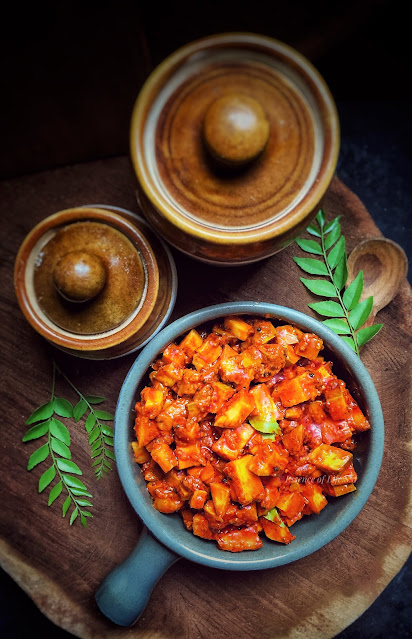
Kerala Kadu Manga Achar

      A traditional Kerala meal is incomplete without a tangy and spicy pickle, and Kadu Manga Achar is the perfect choice. This authentic Kerala-style raw mango pickle, known as Kadu Manga Achar, is made using fresh raw mangoes, garlic, chillies, ginger, and fragrant curry leaves. The bold flavours of this pickle add a delightful punch to the Pothi Choru, making each bite more enjoyable.

Pickle Variety for Pothi Choru:

     While Kadu Manga Achar is a traditional favourite, feel free to choose your preferred pickle to complement your Pothi Choru. Whether it’s Lemon Pickle, Lime Pickle, or another variety, the choice is yours.


      For more Delicious and Authentic Pickle Recipes, click here...

Condiment/Chutney: Chuttaracha Thenga Chammanthi

Chuttaracha Thenga Chammanthi    

Chuttaracha Thenga Chammanthi is a rich and flavourful chutney, also known as Chammanthi, that’s a must-have in traditional Kerala meals. Made with roasted coconuts, shallots, dry red chillies, and curry leaves, this thick chutney is seasoned perfectly with tamarind and salt. The unique smoky flavour from the roasted coconut and the blend of spices make this Chammanthi an irresistible accompaniment to your Pothi Choru.

Choosing Your Condiment for Pothi Choru

        While Chuttaracha Thenga Chammanthi is a traditional favourite, you can also opt for other authentic Kerala condiments such as Pacha Manga Chammanthi (raw mango chutney), Chemmeen Podi (dried prawn powder), Inji Curry (ginger curry), or Mulagu Chalichathu (spicy chilli chutney). Each adds a unique flavour to your meal.

Explore More Condiment & Chutney Recipes, Discover more Traditional Condiment and Chutney recipes to enhance your Pothi Choru experience, Click here...


Cabbage Thoran– A Classic Kerala Stir-Fry

Cabbage Thoran Kerala Style

    Cabbage Thoran is a quintessential Kerala dish, a simple yet flavourful stir-fry that perfectly complements the Pothi Choru menu. Made with finely chopped cabbage, this dish is lightly seasoned with mustard seeds, curry leaves, and grated coconut, creating a harmonious blend of taste and texture. The mild seasoning allows the freshness of the cabbage to shine, making it a delightful side dish.

Customizing Your Thoran
    While Cabbage Thoran is a popular choice, you can personalize your Pothi Choru by choosing other traditional Kerala stir-fries like Thoran, Poriyal or Mezhukkupuratti. These variations offer a range of flavours, from the crunchiness of stir-fried beans to the richness of sautéed root vegetables, each adding its unique touch to your meal.

    Explore a variety of traditonal Kerala style Stir-fries - Thoran, Poriyal & Mezhukkupuratti Recipes to enrich your Pothi Choru, here...

Authentic Kerala Prawn Roast – Kallu Shappu Style

Kerala Kallu Shappu Style Prawn Roast

Experience the fiery flavours of Kerala's local toddy shops with this Prawn Roast recipe, prepared in the iconic Kallu Shappu style. This dish is a perfect blend of succulent prawns cooked in a rich mixture of caramelized onions, a medley of spices, and aromatic coconut oil. The slow roasting process enhances the deep, robust flavours, making it an irresistible addition to your Pothi Choru.

Customizing Your Prawn Dish
While this spicy prawn roast is a classic, you can explore other delicious variations such as Chemmeen Ularthiyathu or Chemmeen Varattiyathu or Nadan Chemmeen Roast to suit your taste. Each dish offers a unique blend of flavours that beautifully complements the traditional Kerala meal.

Discover More Prawn Recipes, Explore a wide range of Prawn and Shrimp Recipes to find the perfect match for your meal. Click here...


Authentic Kerala Fish Curry with Raw Mangoes

Kerala Fish Curry with Raw Mangoes

Discover the vibrant flavours of Kerala Fish Curry with this traditional recipe featuring fresh raw mangoes and creamy coconut milk. This dish combines tender fish pieces with a tangy mango kick, creating a rich and satisfying curry that perfectly complements the Pothi Choru menu.

Customizing Your Fish Curry

    While this recipe highlights fish curry with raw mangoes, you can also enjoy other Kerala-style fish curries such as Meen Thilappichathu, Meen Vattichathu, Meen Mulakittathu, Alleppey Meen Curry, Palakkadan Meen Puli or Chemmeen Manga Curry. Each variant offers unique flavours and textures, allowing you to tailor your meal to your preferences.

      For more delightful  collection of Fish and Prawn Curry Recipes from Kerala to find the perfect addition to your Pothi Choru, Click here...


Delicious Kerala Style Fish Fry


Kerala Style Fish Fry

     Enjoy a classic Kerala Style Fish Fry with this simple yet flavourful recipe. Marinated fish fillets are shallow-fried in aromatic coconut oil, resulting in a crispy exterior and tender, juicy interior. This dish is a perfect accompaniment to your Pothi Choru menu, adding a delightful crunch and rich taste. 

Customizing Your Fish Fry

    This traditional fish fry recipe can be tailored to suit your taste. Experiment with different marinades and spices to create variations that match your preferences. Whether you like it spicy or mild, this recipe is versatile and always delicious.

      Explore a wide collection of Fish Fry Recipes to find additional delicious options and cooking tips, here...


Simple & Delicious Kerala Style Omelette

Kerala Style Omelette    

       Enjoy a classic Kerala Style Omelette with this easy recipe featuring whisked eggs combined with onions, green chillies, and seasoned with salt and pepper. The omelette is shallow-fried in aromatic coconut oil, enhancing its flavour and giving it a crispy texture that's perfect for your Pothi Choru menu.

Customizing Your Omelette

       Feel free to add your favourite ingredients to this basic omelette recipe. Whether you prefer extra vegetables, or spices, this versatile dish can be adjusted to suit your taste preferences.

      Looking for more delicious egg recipes? Discover a wide collection of Egg Recipes to find additional ideas and cooking tips, here...


Step-by-Step Guide to Packing Authentic Kerala Pothi Choru

A close-up of Kerala's Pothi Choru, showing rice, fish curry, fried fish, omelette, and side dishes neatly packed in a banana leaf and wrapped in newspaper.

Pothi Choru - Kerala's Traditional Banana Leaf Lunch Pack


Once the dishes are ready, let's see how to Perfectly Pack Pothi Choru: A Traditional Kerala Lunch Recipe

Preparing the Banana Leaves

  • Begin by thoroughly washing the banana leaves to remove any dirt.
  • Carefully slice off the centre rib from the underside of the leaf to make it more flexible.
  • Gently burn the banana leaves over direct flame, ensuring they wilt slightly without burning. This makes the leaves easier to handle and prevents them from breaking during packaging.

Setting Up the Packaging Base

  • Spread a newspaper or packing paper on a flat surface.
  • Place the wilted banana leaf on top of the paper.

Assembling the Pothi Choru

  • Serve a scoop of Kerala Matta Rice at the centre of the leaf.
  • Pour a portion of Fish Curry, including a piece of fish and mango, over the rice—just enough to mix with the rice.
  • Place a piece of Fish Fry at one corner of the rice.
  • Add a few spoonfuls of Prawn Roast next to the fish fry.
  • Follow with a spoonful of Chuttaracha Thenga Chammanthi, a smidgen of Kadu Manga Achar, and a few tablespoons of Cabbage Thoran.
  • Place the Omelette alongside the other dishes.

Wrapping the Pothi Choru

  • Carefully fold the banana leaf around the rice and dishes from all four sides, tucking it in tightly to create a neat packet.
  • Wrap the newspaper or packing paper around the folded banana leaf.
  • Secure the package tightly with kitchen twine or Vazha Naaru (thread from a banana tree).

The Pothi Choru Experience

    Once all the dishes are packed, allow the Pothi Choru to rest for a few hours. When you finally unwrap it, the combined aroma of the dishes and the burnt banana leaf will be a sensory delight. The rich flavours of the traditional 'Nadan Bakshanam' cooked in coconut oil infuse into the rice, creating a taste experience that’s truly unique. Whether you're packing this for travel, work, or just enjoying it at home, Pothi Choru is a culinary tradition worth savouring.

Indulge in Nostalgia

    Enjoy the Pothi Choru, and let the nostalgic aromas transport you to sweet food memories. Whether it's for a special occasion or just a simple meal at home, Pothi Choru offers a taste of Kerala's rich culinary heritage. Make this eco-friendly packaged lunch a part of your culinary repertoire and experience the flavours of God's Own Country in every bite!


Try This Nostalgic Pothi Choru Recipe Today!

     If this Pothi Choru recipe has taken you on a trip down memory lane, I’d love to hear all about it! Whether it's the joy of unwrapping the banana leaf or the burst of flavours that brought back childhood memories, your experience is precious. Share your thoughts and any personal twists you’ve added in the comments below—your stories make this journey worthwhile!

    Want to keep the tradition alive in your kitchen? Subscribe to ‘Essence of Life – Food’ and get a regular dose of nostalgic recipes delivered straight to your inbox. Let’s keep these flavours alive together!

    Lastly, don’t forget to rate this recipe and leave a review. Your feedback not only helps others but also inspires me to bring you more of these treasured recipes. Happy cooking!

SM


Hot filter coffee with froth in Dabarah and Tumbler, with a background showcasing the filter utensil and a small copper bowl full of palm sugar.

South Indian Filter Coffee in Traditional Dabarah and Tumbler


South Indian Filter Coffee: A Brew to Begin Your Day Right

    Start your mornings on a delightful note with a steaming cup of South Indian Filter Coffee. As a devoted coffee enthusiast, nothing invigorates me quite like the rich aroma and robust flavour of this traditional beverage. From the moment the fragrant scent wafts through the air to the first sip that tantalizes the taste buds, each element of South Indian Filter Coffee embodies a cherished ritual. Join me as we delve into the artistry and heritage behind this beloved brew, celebrating its status as a quintessential part of South Indian culture and culinary tradition

    What I love the most is the strong black coffee straight from the percolator without any sweetener or milk. The first thing I do is enjoy the aroma of freshly brewed coffee wafting from my wonderful coffee cup. Then, I take a small sip, cherish the taste, and, as I like to twist the age-old proverb, "there is many a Sip between the Cup and the Lip". My coffee cup surely understands this term as a sip, not a slip. Coffee is the only beverage I drink, and I am quite loyal (addicted) to it. My love for coffee is self-proclaimed. Anything in the name of coffee - "A coffee is a coffee is a coffee" - is quite captivating and levitating enough to propel your senses with its wonderful aroma and taste.

My Coffee Journey

    My first rendezvous with coffee takes me back down memory lane. I come from a family where tea is the main beverage to this date, and anything in the name of coffee has always been instant coffee. As a kid, my mom never allowed me to have tea or coffee. But when I fell sick, which was quite often during my childhood, my appetite would be low, and my dad would cajole me to eat something. During those pampering moments, I would quietly try to sneak Bru Coffee along with Rusk. However, during my board exam years, I started drinking coffee quite often to help me stay awake, and the practice eventually became a habit. Even during my childhood days, I would never miss a chance to drink coffee.

    Later, my love for coffee led me to learn the art of making my own filter coffee, a feat I always wanted to master. I love tasting the best coffees and am always in search of them. Starting with instant coffees and trio packs, to my all-time favourite - South Indian Filter Coffee, and extending to Mamak shop's long list of Kopi O, Kopi C, Nescafé, and white coffee, my latest favourite being Kopitiam Coffees. The list continues with various coffees like espressos, Americanos, and lattes from prominent eateries. It's only recently that I learned to perfectly order a coffee at such places. My trip to Italy was a revelation, introducing me to the true essence of coffee. It unlocked a new world of coffee making and tasting that forever changed my appreciation for this beloved beverage.

    There are many different ways coffee is made throughout the world. For instance, cold brew (my son's favourite) and iced coffee are made differently in every country. Countries like Turkey, Japan, Thailand, Malaysia, Vietnam, and Arabian countries have their own style of coffee preparation. India also has its unique way of making cold coffee and hot coffee - the filter coffee. Did you know that one of the most expensive coffees comes from the gut of a cat-like animal called Civet? Coffee Luwak or cat poop coffee. And when it comes to Turkish Coffee, I am fascinated by the vessel used for making Turkish coffee.

The Allure of South Indian Filter Coffee: A Taste of Tradition

    When I think of coffee, the one that immediately comes to mind is the incomparable South Indian Filter Coffee. It's not just a beverage; it's an experience. "Aha Filter Coffee, Besh Besh Romba Nannarukku" (Filter Coffee, Great! Great! It's really nice) perfectly captures the essence of this delightful concoction of milk, decoction, and sugar. The secret lies in the decoction brewed through a South Indian Coffee Filter, a slow drip method that results in a rich and strong coffee extract.

    South Indian filter coffee is traditionally served in a Dabarah and Tumbler, a pair of utensils that adds to the authentic experience. While instant coffee has gained popularity for its convenience, the depth and quality of flavour found in filter coffee remain unmatched. This method uses a unique coffee filter with two chambers. The upper chamber holds the coffee grounds and has holes that allow the brew to drip into the lower chamber. The coffee decoction collected is thick and strong, forming the backbone of this beloved drink.

    To prepare the perfect filter coffee, the decoction is mixed with milk and sugar, then poured back and forth between the Dabarah and Tumbler. This process not only aerates the coffee, creating a frothy top, but also enhances its texture and flavour. The result is a beautifully balanced cup of coffee, served at the perfect drinking temperature, with a satisfying froth on top. Known by various names such as Meter Coffee, Kumbakonam Degree Coffee, and Mylapore/Madras Kaapi, South Indian Filter Coffee is a testament to tradition and meticulous coffee preparation.

    In the ever-evolving world of coffee, the traditional South Indian Filter Coffee stands out, offering a taste of home and a reminder of the beauty in precision and patience. It's absolutely an authentic coffee experience.

For a detailed Recipe on How to make Coffee, Click here...

Cuisine - South Indian
Recipe Type - Beverage
Difficulty - Medium
Serves -2
Author - SM   


Brewing Time - 15-20 Minutes
Preparation & Cooking Time - 5–10 Minutes

Click here for an extensive collection Coffee Recipes...

How to make Traditional South Indian Filter Coffee


Closeup of hot filter coffee with froth in Dabarah and Tumbler, placed on a sofa armrest with a blurred background of a swing.

Closeup of Hot Filter Coffee in Dabarah and Tumbler


Essential Ingredients for Authentic Filter Coffee:

Coffee Decoction:

Finely ground coffee powder - 4 Tablespoons
Boiling water - ½ cup
 

For the Coffee:

Milk - ½ cup
Coffee decoction - 1-2 Tablespoons
Sugar or palm sugar - to taste
 

Serving:

Traditional Dabarah and Tumbler


Method - How to make Filter Coffee

Brewing the Decoction: 

  • Briefly heat the upper chamber of the coffee filter.
  • Add coffee powder and tamp it gently.
  • Pour boiling water over the coffee powder.
  • Cover and let it brew for 15–20 minutes.

Preparing the Coffee:

  • Heat the milk until it simmers.
  • Mix the decoction with hot milk and add sugar to taste.
  • Pour the mixture back and forth between the Dabarah and Tumbler to create froth.

Tips for the Perfect Filter Coffee

  • Use freshly ground coffee powder for the best flavour.
  • Always use freshly boiled milk.
  • Adjust the ratio of coffee powder and water to suit your taste.
  • Pouring the coffee back and forth aerates it, enhancing the flavour and creating a beautiful froth.

Tips & Tricks for the Perfect South Indian Filter Coffee

Selecting the Coffee Powder - best coffee for filter coffee:

  • Freshly Ground Coffee: I prefer buying freshly ground coffee powder from a local Kopitiam (Coffee Shop).
  • Indian Favourites: When in India, I used Green Label Coffee Powder, Café Coffee Day Coffee Powder, and Narasus Coffee, all of which work beautifully.
  • Experiment: Don’t hesitate to try different coffee powders to find your perfect blend.

Milk:

  • Freshly Boiled Milk: Always use freshly boiled milk for the best taste.
  • Reheating Milk: Avoid reheating milk, as it spoils the coffee’s flavour (use a double boiler method if necessary).
  • Milk Quality: Full cream milk is ideal for a richer, creamier coffee, often referred to as Degree Kaapi or Meter Kaapi.

Using the South Indian Coffee Filter:

  • Heat the Filter: Briefly heat the upper chamber (the part with holes) over a direct flame for about 4–5 seconds.
  • Assemble the Filter: Place the upper chamber over the lower chamber and add the coffee powder.
  • Tamping: Slightly press the coffee powder with the pressing disc, which ensures even distribution.
  • Alternative Method: You can also use an electric coffee maker to prepare the decoction.

Coffee Decoction:

  • Water Quantity: Use just the right amount of water to avoid a thin decoction.
  • Adjust Measurements: Tailor the amount of coffee powder and water to your preference.
  • Storing Decoction: Store the decoction in the refrigerator for up to a day if needed.
  • Adding Sugar: You can add sugar directly to the coffee powder for a thicker decoction.
  • Brewing: The first brew will be thick and strong. You can reuse the same mix for a lighter second brew, adding instant coffee powder for a blend of filter and instant coffee.

South Indian Filter Coffee:

  • Avoid Reheating: Never reheat the coffee as it affects the taste.
  • Temperature Control: Maintain the right temperature throughout the preparation.
  • Mixing: Pour hot milk and coffee decoction back and forth with sugar or palm sugar until the coffee froths. This aerates the coffee and dissolves the sugar thoroughly.
  • Balance: Don’t overdo the mixing to avoid ending up with cold coffee.
*Pro Tip: Practice makes perfect, and this rule definitely applies to making a perfect cup of South Indian Filter Coffee!

    South Indian filter coffee is more than just a beverage; it's a tradition and an art form. It is a unique Indian Coffee Recipe.  Whether you're a seasoned coffee lover or a newcomer to this delightful drink, mastering the perfect filter coffee is a rewarding experience. Enjoy every sip of this aromatic brew, served in the traditional Dabarah and Tumbler, and let it elevate your coffee moments.

Personal Note

    During my pregnancy, I stopped drinking coffee and tea. Since then, I quit drinking tea but couldn't resist the temptation of coffee. My kids know my love for coffee so well that my son always suggests places where we get good coffee, and my daughter makes me drool over her latest tries of good filter coffees in Coimbatore. She surprised me with a set of brass coffee Dabarah and Tumbler and prepared a wonderful filter coffee with palm sugar, capturing the moment with the picture above.


     Pomegranate-a fruit with a red hue, inside out, tiny red Arils/Seeds, which looks like Rubies embedded in a jewel, covered within a red rind. Pomegranates are not only beautiful, but these glorious red fruits are known for their amazing therapeutical uses. Pomegranate found its origin in Iran and was brought into Egypt in 1600 BC, where it was not only revered as an important food but was also widely used for its medicinal value. Pomegranates were considered to be a food of high esteem in those days.  The fact is evident as we can see these fruits in Egyptian Paintings and Tombs.  Many cultures consider Pomegranate as a symbol of fertility and prosperity.
     Eating the Pomegranate Arils or drinking it as a Juice, both ways the fruit proves to be beneficial.  It is one fruit which is equally good as a fruit and the juice.  The reason being the peel contains the maximum amount of antioxidants when juiced releases most of its nutrients.  Some find it difficult to deal with the little seeds, which makes juicing the fruit the best way to consume it.  All the more drinking Pomegranate Juice allows for quick and easy assimilation of nutrients into the bloodstream.
     Pomegranates are loaded with nutrients and has innumerable health benefits.  It is a great source of Antioxidants, Ellagic and Punicic Acid which are highly beneficial for cell regeneration and proliferation. Pomegranate Juice has a rich source of Vitamin A, C and E and Minerals such as Calcium, Phosphorous, Potassium, Iron, Folic Acid, Niacin, Thiamin, Folates and Riboflavin.

HEALTH BENEFITS OF POMEGRANATE JUICE

     Pomegranates have been used for its Medicinal Properties in the Middle East and in far East regions for over 100 years.  It was used as a Tonic to heal ailments like Ulcers and Diarrhoea.  The fruit and the Juice is believed to protect against Diabetes, Heart Diseases, Osteoarthritis, Cancer etc.,

  • Boosts Immunity - Pomegranate Juice has strong anti-bacterial and anti-microbial properties which help fight viruses & bacteria and boost our immunity system.
  • Prevents Anemia - Pomegranate Juice contains ample amount of iron. It helps in surmounting the red blood cell deficiency in the body
  • For a Healthy Heart - Pomegranate Juice keeps the Arteries flexible, decreases the inflammation in the lining of blood vessels, reduces the risk of blockages and thus helps maintain a healthy heart.
  • Regulates Blood Sugar Levels - Pomegranate Juice helps to regulate blood Sugar Levels.
  • Maintains Blood Pressure  - Pomegranate Juice helps to reduce High Blood Pressure.  It also keeps the blood from coagulating and forming blood clots.
  • Reduces the Risk of Cancer - High amount of Anti-oxidants in Pomegranate Juice helps to eliminate free radicals from the body and prevents the growth of Cancerous Cells.
  • Treats Diarrhoea and Dysentery - Pomegranate Juice is used in the treatment of diarrhoea and dysentery as it plays a vital role in the secretion of enzymes which aids proper digestion. Mixing 1 teaspoon of Honey in a glass of Pomegranate Juice is sure to cure indigestion problems.
  • Aids Digestion - Pomegranate Juice aids in the smooth functioning of the stomach, heart and liver. The high amount of dietary fibre in Pomegranate Juice helps to improve digestion and regulate bowel movement.
  • Prevents Dehydration -  Pomegranate Juice helps to control the thirst and hydrates the body.
  •  It also soothes urinary tract infection, eases the flow of urine and also helps to dissolve Gall Bladder Stones.
  • Weight Loss - Pomegranate Juice has no Saturated fats or Cholesterol, it is highly recommended for those aiming to lose weight.
  • Helps in Cartilage Regeneration - Pomegranate Juice relieves symptoms of arthritis and bone inflammation. It acts as an inhibitor on cartilage damaging enzymes and hence it is highly recommended for people suffering from Osteoarthritis.
  • Helps Prevent Alzheimers - A regular intake of Pomegranate Juice may curb the onset of neurological problems like Alzheimer disease.
  • Beneficial during Pregnancy -  Pomegranate Juice is a great source of a number of vitamins and minerals including folic acid which helps in the overall development of the foetus.  Potassium content in this juice help prevents leg cramps that are generally associated with pregnancy. When consumed regularly by expectant mothers, it is known to lower the risk of premature childbirth or birth of babies with low birth weight.
  • Good for Skin - Pomegranate Juice helps to reduce Wrinkles, heals scars, is also known to prevent Pimples.  The juice, when applied topically or taken as a drink is an excellent home remedy for healthy, vibrant and youthful skin.
  • For a Healthy Hair - Pomegranate Juice strengthens the hair follicles which in turn prevent hair fall, thus giving the hair a healthy and lustrous appearance.


Recipe Type - Drink
Difficulty - Medium
Serves - 1-2
Author - SM  

Preparation Time - 15 -20 Minutes


For more JUICES, DRINKS & SMOOTHIES, Click here...


HOW TO MAKE POMEGRANATE JUICE


INGREDIENTS :

Pomegranate Seeds - 2 Cups
Sugar/Honey - 1 Tbspn
Water -1/ 2 Cups

Add-ons(If preferred) :

Lime Juice - 1/2 Tbspn
Mint Leaves - Few


METHOD :

    • Using a knife, slice off the top part of the Pomegranate that looks like a crown.
    • Score the Pomegranate into 4 or 6 sections.
    • Break open the Pomegranate into sections.
    • Break apart the Pomegranate Arils and discard the rinds and linings.
    • Add Pomegranate Arils along with some Water into a blender.
    • Blend until all the Arils have been crushed.
    • Pour the Pomegranate Juice through a strainer. 
    • The pulp would be thick so it will take some time for the juice to be strained.
    • To speed up the process, press the pulp with a spoon/spatula.
    • I use my juicer jar(which came along with my blender) for the purpose, which has a strainer within which makes the process easier.
    • Collect the strained Pomegranate Juice in a bowl. 
    • Add Honey/Sugar to sweeten up the Juice.
    • Pour it into a tall glass and serve the Pomegranate Juice chilled or at room temperature.
    • Can add few teaspoons of Lemon Juice to add  zing to the Pomegranate Juice.
    • Muddle few Mint Leaves and pour chilled Pomegranate Juice over it for a mint flavoured Pomegranate Juice.

    NOTES :

    • Pomegranate can stain your hands, so wear a glove while cleaning the fruit.
    • It can also stain your clothes.
    • I have used 1 Big Fruit in this recipe and I made 2 Tall glasses of Pomegranate Juice out of it.
    • Adding Sweeteners to the drink is purely optional.
    • Adding Lemon Juice or Mint Leaves to the juice can give you an extra note of taste and flavour to Pomegranate Juice. But it is purely optional.
    • Freshly extracted Pomegranate Juice(without added sweeteners) can be stored in the refrigerator for about 2-3 days.

    Important - Food Safety :

    Few Precaution must be exercised while drinking Pomegranate Juice regularly.
    • Pomegranate Juice is not recommended for people suffering from Influenza, Cough and for those with a phlegmatic condition.
    • It is not advisable to drink Pomegranate Juice if you have Constipation.
    • Pomegranate Juice has certain antioxidants that lower the blood pressure.  Care should be taken while drinking this juice along with the medication prescribed to lower blood pressure. This can result in a condition with dangerously low blood pressure, known as 'hypotension'.
    • Pomegranate may cause allergic reaction to people with certain plant allergies and asthma. Allergic reactions may include, vomiting, red itchy eyes, hives and difficulty in breathing.
    • Pomegranate is also known to interfere with some medicines, particularly those to lower cholesterol levels known as statins.
    *Consult your physician before drinking Pomegranate Juice if you are under certain medications or known to have any allergies.
      _______________________________________________________________________________

      DISCLAIMER:

      Please remember these treatments options are only meant as guidelines and in no way replaces the advice or treatment provided by your medical practitioner. It is always good to seek the advice of your physician, homeopath, naturopath, or herbalist for professional advice in any matter related to your health. This article is for information purposes only.


             There is so-called cooking liberty when it comes to pickles.  An Indian kitchen finds such liberation with Pickles and Spice Powders, anything found in abundance is readily converted to be stored for later. This is a unique version of Instant Pickle prepared with Green Apples. Green Apple Pickle is a simple twist made on the Classic South Indian Pickle.  Needless to say, the fruit gives total justice to the Pickle with its soury tartness, mild sweetness and crunchy texture.
             When my MIL's Sister Winnie, Aunty visited us, she had prepared this Green Apple Pickle.  Since then, Green Apple Pickle is one variety of pickle readily stocked in my pantry.  Being a Pickle lover, anything in the name of Pickle is a must-try according to me.  But this Green Apples masquerades as Raw Mangoes, giving a deception to our taste buds at the first bite.  This is an Instant Pickle with a combination of tastes and flavours & it is equally spicy too.  Green Apple Pickle goes well with Curd Rice or simply serve a smidgen of this Pickle to go along with Plain Rice, Sambar/Curry/Rasam of your choice for a simple lunch or serve it in an elaborate Vazhayila Virundhu/Sadhya to add a tinge of uniqueness.


        For more PICKLE RECIPES, Click here...

        Cuisine - South Indian
        Recipe Type - Pickle
        Difficulty - Easy
        Yields - 2- 21/2 Cups
        Author - SM


        Preparation Time - 20 - 30 Minutes
        Maturing Time -Immediate

        HOW TO MAKE GREEN APPLE PICKLE

        INGREDIENTS:

        Green Apple - 2 No's.
        Gingelly (Sesame) Oil - 1/2 Cup
        Mustard Seeds - 1 Teaspoon
        Turmeric Powder - 1 Teaspoon
        Red Chilli Powder - 3 -4 Tablespoons
        Asafoetida - 1/2 Teaspoon
        Fenugreek Seeds Powder - 1 Teaspoon
        Salt - To Taste
        Sugar - 1 Teaspoon
        Vinegar - 2 Tablespoons

        METHOD:


        • Wash the Green Apples and pat dry them with a clean kitchen towel.
        • Core, De-seed and cut the Green Apples into Cubes.
        • In a large mixing bowl/jar, add the chopped Green Apple pieces along with salt and mix well.
        • Cover the bowl/jar and leave this aside for about 10–15 minutes.
        • Meanwhile, dry roast the Fenugreek seeds on a low flame until it splutters and turns fragrant.
        • Grind the roasted Fenugreek Seeds into a fine powder and keep it aside.
        • Heat oil on a high flame until it fumes.
        • Lower the flame and splutter Mustard Seeds.
        • Add Turmeric Powder, Red Chilli Powder & Asafoetida Powder to the above and give a quick stir.
        • Pour in the Vinegar along with a pinch of Sugar and mix well.
        • Add chopped Green Apples along with enough salt and mix well.
        • Cook the Pickle on a low flame for a few minutes.
        • Finally, add powdered Fenugreek seeds Powder to the above and mix well.
        • Leave this on a very low flame for a few minutes.
        • Switch off the flame and allow the Green Apple Pickle to cool down.
        • Store the Green Apple Pickle in a clean and dry Glass/Ceramic Jar.
        • Green Apple Pickle tastes great with Curd Rice and is the best accompaniment with Rice Gruel (Kanji/Porridge).
        • Serve a smidgen of Green Apple Pickle to go along with Plain Rice, Sambar/Curry/Rasam of your choice for a simple lunch or serve it in an elaborate Vazhayila Virundhu/Sadhya.

        NOTES :

        • The Green Apples should be absolutely dry & moist free before cutting them for the Pickle.
        • I have used Granny Smith Apples in the recipe.
        • Care should be taken while dry roasting fenugreek seeds.  Do not burn them, which would totally spoil the taste of the pickle.
        • Adjust the amount of Red Chilli Powder to suit your spice level.
        • Pour ample of Gingelly Oil to the pickle.  This will prolong the shelf life of the pickle.
        • Avoid using steel/aluminium/copper container for preserving the Green Apple Pickle, as they tend to react with the acidic nature of salt and mangoes.
        • A suitable method is to store them in a clean and dry, sterilized Glass/Ceramic/Porcelain Jars.
        • Always use clean & dry spoons while handling this Green Apple Pickle. 
        • Wet jars/spoon can spoil the pickle as the moisture in them helps in the growth of Fungus and that would spoil the pickle. 
        • If you feel that extra oil should be added, once the pickle is made, Heat the Sesame Oil, cool it and then pour it over the pickle.
        • If stored properly, Green Apple Pickle can last for a week at room temperature and up to a month in the refrigerator.
        • The Pickle should be stored in a dry and dark place.
        • In humid climates, it is advisable to keep the pickle refrigerated to avoid spoilage and for longer shelf life.    


             "An Apple a Day keeps the Doctor away if the Doctor is smart keep the Apple away." I know what comes into our mind is always the Red Apple and not the Green Variety.  Apples were considered as an expensive, a class ahead of time - food, during the 60s in India. Considered not only healthy, but even as an idea which hit Sir Isaac Newton to evoke his insight and come up with the 'Theory of Gravity'.
             My initial thoughts and memories of Apples have a lot with learning Alphabets 'A for Apple', even I had a beautiful big picture of a Red Apple longer than I remember.  When that picture started to wither off out of age, I made a collage over it in the process of restoring it.  Long forgotten and lost!  I still remember the picture and the front cover of a text book during my KG classes which had the picture of a man sitting under a tree and the Apple falling towards the ground.  Not really knowing what it depicted then... Later to realise that it was Sir Isaac Newton and the picture depicted a great invention i.e. GRAVITY.
             Apples as such are loaded with nutrients, but what makes Green Apple special is that it is loaded with Minerals, Proteins & Fiber. Green Apples are slightly Sour and Sweet in taste. They help prevent digestive problems, help regulate blood glucose and good cholesterol. Green Apples are loaded with dietary fiber, which helps to decrease the chance of Constipation & Colon Cancer. Green apples also help Lower Cholesterol Levels, ease Digestion, reduce Liver and Digestive tract issues. Green apples are rich in Antioxidants, including Flavonoids and Polyphenol. Because of this, Green Apples are believed to prevent various forms of cancer and DNA damage.


        HEALTH BENEFITS OF GREEN APPLE


        Ease Digestion :

             The enzymes present in Green apples can help ease the digestion. It can help prevent diarrhoea as well as constipation and gout. Green Apples contain both Tartaric and Maleic acid, thereby helping to reduce the chances of indigestion.

        Body Detoxifier :

             Green Apples have a high dose of dietary fibre, Green Apple Juice helps to get rid of Toxins and harmful elements from your liver, kidney, and digestive system. 

        Try this detoxifying juice prepared with Green Apple, Honey, Ginger and Lemon.


        Constipation:

             Eating foods that are high in water content and fibre, such as Green apple help in hydrating the body and supports normal bowel movements. Green Apples are described as a laxative fruit too.

        Rich in Anti-oxidants :

             Green apples are rich in Antioxidants, including Flavonoids and Polyphenol. Because of this, Green Apples are believed to prevent various forms of cancer and DNA damage.


         Prevents Colon Cancer :

             Green Apples are an excellent source of Dietary Fibre, Vitamin C and other antioxidants. With these components, Green Apples can help combat the formation of free radicals which are known to cause cancer. The high fibre content in Green Apples helps in the reduction in the possibility of Colon Cancer


        High Mineral Content :

             Green Apple is loaded with Minerals like Iron, Zinc, Copper, Manganese, Potassium, etc.  The Iron and other minerals help in raising the level of Oxygen in blood and helps in increasing the Metabolism.

        Lowers Hypertension/Blood Pressure :

             Maintaining a low Sodium intake & increasing Potassium intake helps to maintain healthy blood pressure. The impressive amount of Potassium in Green Apples reduces the tension in blood vessels and arteries, helps in increasing blood circulation and lowering the stress on the heart by eliminating hypertension.


        Healthy Heart :

             The Fiber, Potassium, Vitamin C, and Choline content in Green Apples support heart health and thus helps in reducing Heart diseases.


        Lowers Cholesterol :

             Regular consumption of Green Apples or Green Apple Juice decreases the levels of LDL cholesterol and triglycerides in the blood.

        Diabetics :

             Green Apples help to decrease lipid peroxidation, so it has found to be a protective food for people with type 2 diabetes.

        Good for Lungs :

             Regular consumption of Green Apple can cut down the risk associated with the onset of Asthma which is a hypersensitive allergic disorder.


         Counter the effect of Smoking :

             The Coumaric Acid and Chlorogenic Acid, in Green Apples, fight against Nitrosamines, which are the main Carcinogens found in Cigarettes. The presence of Vitamin A in high quantities has shown to reduce the effects of Carcinogens. People who are regular smokers can also rely on Green Apples to safeguard themselves from obstructive pulmonary diseases.


        Prevents Alzheimer's:

             Eating Green Apple every day prevents chances of old-age neurological disorders like Alzheimer’s.


        Eye Health:

             Green Apple is a source of various Vitamins. The Vitamin A present in this fruit is known to possess the potential to strengthen and improve your vision.


        Good for Blood Clotting :

             Green Apple is a potential source of Vitamin K, which helps the blood to coagulate and clot. Green Apple benefits in better wound repairing and healing. Women, who have extremely heavy periods, can consume Green Apples or Green Apple Juice to bring the bleeding under control.


        Strong Bones & Teeth :

             Green apple is rich in Calcium, which is essential for strengthening the bones and teeth. Women, especially, in their menopause, should include this drink in their diet to prevent osteoporosis.

        Skin:

             The antioxidants, such as Vitamin A, Vitamin C, and phenols present in Green Apple play a major role in delaying premature ageing, improves skin texture, nourishes the skin, prevents skin diseases like eczema, controls acne and pimples and also helps in eliminating Dark Eye Circles. Topical Application of Green Apple paste or juice and regular consumption of the fruit helps maintain healthy skin.

        Healthy Hair & Scalp:

             As Green Apples are packed with an array of Vitamins and Minerals, it is a potential natural remedy for strengthening your Hair.  It also helps to keep your hair fall under control. Regular use of Green Apple & Green Apple Juice is also known to promote hair growth. A paste created with Green Apple can be used as a hair pack and shampoo or massage Green Apple Juice into your scalp to get rid of Dandruff.


        HOW TO SELECT & STORE GREEN APPLES

             Green Apple is a sensitive fruit and should be careful in its selection and storage. Here are some helpful tips on how to select and store green apples.


        Selecting Green Apples

             While buying Green Apples look for firm, brightly coloured apples having no bruises, damages, shriveled skin etc., It is always better to prefer individual apples over the pre-packed ones. This way you’ll be able to smell the apples. Never buy the apples that smell musky.


        Storing Green Apples

        • Store Green Apples in your refrigerator. Wrap the apples up in a plastic bag and place them in the coldest area of your refrigerator after sprinkling them with water.  If you store the apples properly, it will stay fresh for almost 2-3 weeks.
        • Normal room temperature can also be quite suitable for storing green apples for a short time. Just make sure to check them regularly since they will ripen more rapidly at room temperature.
        • Apples can speed up the ripening process of other fruits as it emits a natural gas called Ethylene. To use these ‘ripening’ benefits of apples, wrap it up along with the unripe fruit in a plastic bag.


        RECIPES WITH GREEN APPLES

        Green Apples are not just delicious but healthy as well, provided that eat it in the right way.
        • While cooking apples, add a little bit of sugar. This done at the start of cooking can help the apples hold their shape better.
        • Green apples can be consumed in a number of ways. You can eat the whole fruit either peeled or unpeeled.
        • Can make an apple shake or simply extract juice out of it.
        • Make pies out of them or add them to your deserts, pudding or ice creams. 
        • The best way is to consume it as whole fruit, this way it retains all the natural nutrients.
        • Can make a detoxifying juice with Green Apple, Honey, Lemon & Ginger.

        Important: Food Safety :

        Do not eat the Seeds of an Apple because they are slightly poisonous and hence may prove detrimental to your health.

        _______________________________________________________________________________

        DISCLAIMER:

        Please remember these treatments options are only meant as guidelines and in no way replaces the advice or treatment provided by your medical practitioner. It is always good to seek the advice of your physician, homeopath, naturopath, or herbalist for professional advice in any matter related to your health. This article is for information purposes only.


        JUICES & DRINKS
        GREEN APPLE JUICE WITH HONEY, LEMON & GINGER


             When it comes to fresh fruit juices, there is always a preference level running in the family.  But anything in the name of a fruit or a fruit juice is always devoured with eyes shut by me.  I am the only person who loves the combination drinks at home and all these types of fruit juices are prepared to fascinate my taste buds.  Prepared for my whims and fancies.  I love smoothies and juices with a combination of fruits.
             This is a wonderful and all the more a detoxifying fruit juice prepared with Green Apples along with Ginger and Lemon.  I usually sweeten this drink with honey.  Combined together the ingredients which go into this drink helps boost immunity, aids digestion, increase your energy levels and detoxifies your body. Green Apple Juice helps to get rid of Toxins and harmful elements from your liver, kidney and digestive system. Though this drink might be a simple recipe, it comes with a punch. The flavours combine for a sweet-tart concoction that hits your taste buds with a spicy kick from Ginger.


        Recipe Type - Drink
        Difficulty - Easy
        Serves - 1
        Author - SM  

        Preparation Time : 3 -5 Minutes


        For more JUICES, DRINKS & SMOOTHIES, Click here...


        HOW TO MAKE GREEN APPLE JUICE WITH HONEY, LEMON & GINGER


        INGREDIENTS :

        Green Apple - 1 No.
        Ginger - 1" Piece
        Lemon Juice - 2 Tbspn
        Honey - 1 Tbspn

        METHOD:

        • Peel and cut Ginger into small pieces.
        • Core and Dice the Green Apple.
        • Grind Green Apple and Ginger in a blender until smooth.
        • Pour out the blended mixture into a tall glass.
        • Squeeze out the juice from Lemon.
        • Pour in the Lemon Juice and Honey to the blended mixture.
        • Stir thoroughly until well combined.
        • Top it up with Ice Cubes and serve Green Apple Juice chilled.

        NOTES :

        • I have not peeled the Green Apple, can do so if you prefer.
        • Adjust the amount of Honey to suit your taste preference.  

        FRIED RICE
        PETAI FRIED RICE


             Petai Fried Rice is a Spicy Fried Rice prepared with a unique addition to a simple Sambal Fried Rice - Petai/Stinky Beans along with Shrimps/Prawns, Eggs, Carrots, Greens and fresh home-made Sambal. The best about a Fried Rice is that it is quite adaptable, versatile and can cater to satisfy your whims and fancies. This spicy Petai Fried Rice is not the HOT type, but the spicy type which can treat your spice reckoned taste buds to utmost satisfaction.  Freshly prepared Sambal has an inviting fragrance when mixed along with the pervasive smell of Petai, which makes this Fried Rice inviting and beckons you to eat more.
             Petai is one of the must-try Malaysian Exotic Food. It is used in South East Asian cooking.  It has an acquired taste and a pervasive smell. So it is commonly called as "Stinky Beans". It has a bitter taste and emits a strong odour even after ingestion. Due to its flavour, it is usually cooked in Sambals with other vegetables like Okra, Kacang Botol (Winged Bean/Goa Bean) or with shrimps and served as side dish to rice. This recipe is a unique version of fried rice prepared with Petai.
             Sambal is a hot & spicy condiment mainly prepared with Red Chillies, Spices, Herbs and Aromatics.  Though Fried Rice/Nasi Goreng has nothing to do with being Spicy, it has adapted along with the Cuisine unique to Malaysia, Indonesia and Singapore.  It is a literal adaptation associated with Culture more than Cuisine where Sambal is one base condiment, sauce or relish which can be incorporated into almost every dish.
             I have prepared fresh Sambal for this Petai Sambal Fried Rice, by soaking Dry Red Chillies and grinding it along with Shallots, Garlic, Galangal and Belacan.  If you are from a region where these fresh ingredients aren't available, you can go for store-bought Sambal Paste from Asian Groceries.

        For more FRIED RICE RECIPES, Click here...


        Cuisine - Malaysian, Indonesian (South East Asian)
        Course - Main
        Spice Level - Medium-High
        Difficulty - Easy
        Serves - 4
        Author - SM


        Preparation Time - 15 - 20 Minutes
        Cooking Time - 25 -30 Minutes

        HOW TO MAKE PETAI FRIED RICE

        FRIED RICE
        PETAI FRIED RICE


        INGREDIENTS :

        For Sambal Paste :

        Dry Red Chillies -  5 Pieces.
        Birds-eye Chillies - 3 Pieces
        Shallots - 5 Nos.
        Garlic - 2 Cloves.
        Dry Shrimp Paste(Belacan) - 1 Tspn
        Galangal - a Small Piece
        Tamarind - 1 Tspn
        Salt - To Taste
        Palm Sugar (Gula Melaka) - 1 Tspn

        For Fried Rice :

        Jasmine Rice - 2 Cups (Cooked)
        Onions - 1 No.
        Garlic - 2 Cloves
        Bird's Eye Chillies - 1-2 Nos.
        Petai/Stinky Beans - 1/4 Cup
        Shrimps/Prawns - Few
        Bunapi Mushrooms - Few Stalks
        Carrot - 2 Tbspn
        Cabbage - few Shreds
        Light Soy Sauce - 1 Tbspn 
        Sambal - 3-4 Tbpsns
        Lemon Grass - 1 Stalk
        Salt - To Taste
        Sugar - 1 Tspn 
        Rice Wine Vinegar - 1 Tspn
        Oil - 2-3 Tbspn
          

        To Garnish :

        Scallions/Chives - Few Stalks

        METHOD :

        For Sambal Paste:

        • Soak the Dried Red Chillies in hot water for 20-30 minutes until they are soft.
        • Dry roast the Shrimp paste until fragrant.
        • Grind all the ingredients mentioned under 'For Sambal Paste' into a smooth paste and keep it aside.
        • Heat oil in a pan and sauté the ground paste on a high flame for about 10 minutes or until all moisture evaporates.
        • If the mix is a bit dry, add some more oil and sauté them on a low flame for another 5-10 minutes or until oil separate from the mix.
        • Add tamarind extract and boil it for another 5 minutes on a low flame.
        • Add salt and palm sugar and mix well.
        • At this stage, the sambal should be fragrant, if not sauté it for some more time.

        For more Recipes with SAMBAL, Click here...

        FOR PETAI FRIED RICE : 

        For a detailed recipe on How to cook Jasmine / Fragrant Rice, click here...

        • Cook the Fragrant rice as per instruction and allow it cool.
        • Cut Lemon Grass Stalk into small pieces, use just the white part of it.
        • Can Grind the Lemon Grass along with the Sambal ingredients, or just bruise them and add it while sautéing.
        • Peel, de-vein and wash the Prawns/Shrimps.  Keep them aside. 
        • Clean Wash and cut Petai into halves and keep it aside.
        • Heat Oil in a pan/wok, Sauté finely chopped Onions, Garlic and Bird's eye chillies until onions turn translucent.
        • Add Sambal Paste and fry this on a high flame for 2-3 minutes.
        • Pour in Light Soy Sauce and give a quick stir.
        • Add Petai/Stinky Beans along with Prawns/Shrimps and cook briefly on a high flame.
        • Add finely diced Carrots, Bunapi Mushrooms along with a dash of Salt and a pinch of Sugar.
        • Allow it to cook on a high flame for a few minutes. 
        • Add cooked Fragrant Rice.
        • Drizzle Rice Wine Vinegar over the rice.
        • Mix it well until every grain is well coated with the Sauces and Sambal.
        • Stir in finely shredded Cabbage and Scrambled Eggs(If adding) to the rice. 
        • Fry the rice on a high flame for few minutes or until the rice is dry(no more sticky). 
        • Switch off the flame. 
        • Garnish Petai Fried Rice with Scallions.
        • Serve Petai Fried Rice hot with any dips, sauces or side dishes of your choice.
        • Can serve it along with Fried Eggs or simply add scrambled Eggs to Petai Fried Rice.


        NOTES :

        • I used the long- wrinkled variety which is less spicy. To reduce the spiciness can snip off the soaked dry chillies into two and de-seed them.
        • Adjust the number of Chillies to suit your spice level.
        • Blend the shallots coarsely.
        • Grind the paste with less water to avoid splattering while sautéing the Sambal in high flame.
        • Can add Sugar instead of Palm sugar.
        • Any fragrant long-grained rice variety can be used for the recipe.
        • Use a day old cooked rice for best results. Obviously, keep the rice refrigerated.
        • Can add any vegetable of your choice along with Petai/Stinky Beans in this Petai Fried Rice.
        • Do not overcook Petai(Stinky Beans).
        • Can also add Chicken Pieces, Fish or any other Seafood. 
        • Can fry the Eggs and use them as a side dish or scramble them up and mix along with the fried rice. 


        NOODLES
        VEGETABLE HAKKA NOODLES


             Hakka Noodles is a dish prepared as per Hakka Cuisine, usually thin flat Rice Noodles are used for the purpose.  Hakka Chinese who are also known as Hakka Han, or the Han Chinese, who are related to the provincial areas of Guangdong, Jiangxi, Guangxi, Sichuan, Hunan and Fujian in China. A majority of these people migrated to various parts of the world centuries ago, among which India was one prominent destination that they headed to. In India, the Hakka Chinese settled in Tangra, Kolkata which later came to be known as the Chinatown of India. We can always find a China Town in almost all major cities around the world. A combination style of Bengali Cuisine(Kolkata) and the Hakka Chinese cooking style gave birth to what we know as 'Hakka Noodles' and various other Indo-chinese recipes.
            Vegetable Hakka Noodles is a recipe adapted from Chinese Cuisine but prepared more or less to suit an Indian Palate and taste buds.  Addition of Sauces and seasoning gives this dish a new dimension. The addition of Vegetables/Chicken/Egg and a choice of Sauce can convert this dish into different versions. This dish has invaded almost all restaurants in the name of Chinese food in India.  Almost all Indo-Chinese recipes are believed to have originated from India. Despite its popularity around India and being an epitome of Chinese food, this dish is virtually a replica of the original recipe in an Indo-Chinese style of cooking.
            My first acquaintance with Noodles was when they catered free Maggi Noodles Packets in Schools as a marketing process somewhere in 1984-85.  Least to mention the so-called stories and rumours lingered along with it.  Thin wriggly strands, some sachets of powders all made curious talks in school and among parents.  A simple community got quite sceptical with the arrival of a new product and why it was catered free.  But time took over the scene and Maggi in no time became a hit.  Even it was the very first marketing and advertising lesson I learned. Maggi/Noodles became an epitome of revolutionary cooking and eating, as were Burgers, Sandwiches, Pizzas which followed the suit into Indian kitchens. Looking back I feel that a vast arena of Cuisines and dishes have taken over the scenario even before we realized it. How things have changed is still a wonder to me!
         
        For more INDO-CHINESE RECIPES, Click here...


        Cuisine - Hakka Chinese Cuisine/Indo-Chinese
        Course - Main
        Spice Level  - Low
        Difficulty - Easy
        Serves - 3 - 4
        Author - SM

        Preparation Time - 20 - 30 Minutes
        Cooking Time - 15 -20 Minutes


        For more Recipes with NOODLES, Click here...


        VEGETABLE HAKKA NOODLES


        NOODLES
        VEGETABLE HAKKA NOODLES


        INGREDIENTS :

        To Cook Noodles :

        Noodles - 300 -400 Grams
        Water - To Cook the Noodles
        Oil - 1 Tspn
        Salt - To Taste

        For Vegetable Hakka Noodles :

        Onion - 1 No.(Large)
        Garlic - 2-3 Cloves
        Green Chillies - 2-3 Nos.
        Carrot - 1/4 Cup
        Beans - 1/4 Cup
        Green Bell Peppers/Capsicum - a Quarter
        Cabbage - few Shreds
        Spring Onions - Few
        Oil - 3-4 Tbspns
        Light Soy Sauce - 1 Tbspn
        Vinegar - 1 Tbspn
        White Pepper Powder - 1 Tspn
        Salt - To Taste
        Sugar - a Pinch

        METHOD :

        To Cook Noodles : 

        • Boil the water in a wide Bowl/Saucepan.
        • Once the water starts to boil, drizzle a Teaspoon of Oil along with some salt to the water and give a quick stir.
        • Carefully drop the Noodles into the boiling water and mix well.
        • There should be enough Water to cover the Noodles.
        • Do not cover the bowl while cooking the Noodles.
        • Cook until the Noodles turn slightly soft.
        • Switch off the flame.
        • Immediately pour it out into a colander.
        • Drain and wash it through cold running water.(This will stop the cooking process).
        • Can add a teaspoon of Oil at this stage.(Optional).
        • Gently toss the cooked Noodles and leave it aside.

        For Vegetable Hakka Noodles :

        • Cut Carrots and Beans into Julienne's and keep it aside.
        • Chop Bell Peppers into small cubes and chop Cabbage finely.
        • Heat Oil in a Pan, Sauté finely chopped Onions, Garlic and Green Chillies.
        • Let the flame be at the high.
        • Immediately add Julienne Carrots and Beans to the above and cook on a high flame for a few minutes.
        • Add Bell Pepper Cubes, sprinkle some Salt and Sugar over the vegetables and give a quick stir.
        • Do not overcook the Vegetables, they should have a crunchy texture.
        • Add Cooked Noodles and gently mix the ingredients in quick movements.
        • Let the flame be at the high.
        • Pour in the Light Soy Sauce, Vinegar and sprinkle a dash of White Pepper to the above and mix well.
        • Finally, add finely chopped Cabbage and mix well.
        • Once all the ingredients are well incorporated, switch off the flame.
        • Garnish the Vegetable Hakka Noodles with finely chopped Spring Onions.
        • Serve Vegetable Hakka Noodles hot with your preferred Sauces or Condiments.

         NOTES :

        • Any variety of Noodles can be used for the recipe.
        • Cook Noodles as per instruction, if you like your Noodles “al dente.”
        • Adding Oil while cooking the Noodles also yields a non-sticky Noodles, and they do not clump together.
        • Can use an extra bit of  Oil in the recipe.
        • Can add a pinch of MSG(Aji-no-moto) if preferred.
        • White Pepper can be substituted with Black Pepper. White Pepper helps to retain white colour and is mild compared to Black Pepper.
        • Do not overcook the vegetables, they should have a crunchy texture.
        • Adding Sugar while cooking the Vegetables helps to retain the colour.
        • Can add few teaspoons of Chilli Oil for a slightly spicier version of  Vegetable Hakka Noodles.
        • Can add scrambled eggs, Chicken/Fish/Prawns for a Non-vegetarian version of this recipe. 
        • Also get easy with the use of Sauces - try adding few teaspoons of Tomato Sauce/Red Chilli Sauce for a twist of flavour.
        Newer Posts Older Posts Home
        Search Essence of Life - Food

        I Me Myself

        A vintage-style horizontal oval frame showcasing ornate silver spoons on a dark rustic surface

        Essence of Life - Food is all about daily cooking with a simple sense of taste and health. It is all about food. Not a day goes by without eating for most of us, so what we eat matters on the whole. Food in the mode of goodness increases the duration of life, purifies one's existence, and gives strength, health, happiness, and satisfaction. Above all ingredients, the most vital one in my kitchen is love.

        Sm @ Essence of Life - Food

        Popular Posts

        • Kizhi Parotta: Kothu Parotta and Salna Wrapped in Banana Leaves
        • How to Make Kerala Kanji | Traditional Rice Porridge with Payar, Chammanthi & Achar
        • Pesaha Appam & Paal Recipe | Traditional Kerala Indri Appam for Maundy Thursday
        • Madurai Mutton Chukka Varuval
        • Maida Chapati - All-Purpose Flour Chapati

        Labels

        AROUND THE WORLD BAKING BEVERAGES BIRIYANI & PULAO BREAKFAST CURRIES DESSERTS FROM GODS OWN COUNTRY From My Family's Kitchen - Heirloom Recipes GLOSSARY HOW TO... KERALA PALAHARAM KONGU CUISINE KUIH MUIH MALAYSIAN CUISINE MIDDLE EASTERN CUISINE Manvasanai - Flavours from Tamil Soil PICKLES RICE DISHES ROTIS SADHYA SNACKS & SAVOURIES SOUPS SPICE POWDERS TIFFIN ITEMS VIRUNDHU WINES eBook
        Ebook - What I Cook - For Onam

        Ebook - “What I Cook - For Onam”

        Amazon.com/dp/B0CGPVY6J3

        Indulge in Kerala’s Culinary Heritage: Traditional Onam Sadhya Recipes, with Expert Serving Tips! Celebrate Onam the authentic way! Discover 25 timeless Kerala Sadya recipes in my ebook. From avial to payasam, bring home the flavours of tradition. Available now on Amazon!

        Essence of Life

        Subscribe & Follow

        © 2026 | Essence of Life - Food

        • Home
        • Ask First
          Please note that all rights for the photographs and texts on this blog, unless otherwise mentioned, rests with the author. Please do not use without permission.
        • Privacy Policy