Essence of Life - Food
  • Home
  • From My Kitchen
    • Heirloom Recipes
    • From God's Own Country
    • Sadhya
    • Kongu Cuisine
    • Chettinaad Cuisine
    • South East Asian
    • Around the World
  • Ebook
  • I Me Myself

VISHU SADHYA SPECIAL
CHAKKA AVIYAL - JACK FRUIT AVIYAL

     "Summer proclaims its arrival with a Midas touch" - Bunches of Golden Shower Flowers drooping out from the trees - Kani Konna Poo.  Shredding the beauty and bounty announcing the arrival of New Year in South India.  Vishu - Malayalam New Year & I have loads of memories celebrating this festival as 'Vishu' at home.  Vishu is round the corner and many of us have already been thinking what could be prepared for the special day's Sadhya spread out - Vishu Sadhya.

    When the Summer hits, the seasonal fruits like Chakka & Manga(jack fruit & Mango) could be found in abundance in the households.  A Kerala backyard would surely have a Jackfruit & a Mango Tree by default, and it is the season when the produce finds its peak.  Even the market would be loaded with Jack fruit & Mangoes.  Vishu which comes during the Season and a Vishu Sadhya would mostly showcase dishes with Raw or Ripe Jack Fruit & Mangoes.  Dishes like Mango Pachadi, Mambazha Pulissery, Manga Curry, Chakka Aviyal, Mambazha Pradhaman or Chakka Pradhaman would be cooked for Vishu Sadhya when Mangoes and Jack fruits are in season.  So, why not try out a dish with the seasonal produce for this year's, Vishu Sadhya?

    In a long list of side dishes served in a Sadhya, 'Aviyal'  takes a special place. It is a wonderful combination of cooked Vegetables in a Coconut-Curd (Yogurt) Mix, mildly spiced and seasoned to perfection.  Mostly local Vegetable are used to while preparing Aviyal. Here comes, a dish with a twist to the traditional Aviyal - Chakka Aviyal.  Chakka Aviyal is one of the most traditional methods of cooking Raw Jackfruits along with Jack fruit Seeds & Mangoes.  It is normally prepared with Raw Jack fruit & Mangoes.  Though the seeds from Raw Jackfruit are added, the Seeds from Ripe Jackfruit tastes great in this Chakka Aviyal adding an overall texture to the dish.  

VISHU SADHYA SPECIAL
CHAKKA AVIYAL - JACK FRUIT AVIYAL

    Raw/unripe Jackfruits have a neutral flavour and more or less it tastes like a root. You can add it to a variety of dishes, such as curries, Chakka Aviyal, Stir-fries or prepare Chips(Chakka Chips) etc.,   The idea of cutting into a massive, thick-skinned rind is quite intimidating. And if you have no experience doing such chores like me, then it is absolutely a feat which needs some help.   Jackfruit is green when unripe, with soft and not so-yellow interior.  Choose a Jackfruit which is Raw but not very tender and immature for Chakka/Jackfruit Aviyal.  It should have Fruit Pods and the seeds should be soft too. 


During the season where chakka or jackfruit is available aplenty, think up of unique ways to cook th...

Read more at: https://www.onmanorama.com/food/mrs-k-m-mathew/2018/06/30/chakka-aviyal.html

For more  SADHYA Recipes, click here...

Cuisine - Kerala (South India)
Course - Side Dish
Spice Level - Low - Moderate
Difficulty - Easy
Serves - 4
Author - SM 


Preparation Time - 15 - 20 Minutes
Cooking Time - 20 - 30 Minutes

For more recipes from GODS OWN COUNTRY - KERALA  click here...

HOW TO MAKE CHAKKA AVIYAL - JACK FRUIT AVIYAL - VISHU SADHYA SPECIAL


VISHU SADHYA SPECIAL
CHAKKA AVIYAL - JACK FRUIT AVIYAL

INGREDIENTS :

For Chakka Aviyal:

Unripe/Raw Jackfruit - 2 Cups
Jack Fruit Seeds - 1 Cup
Raw Mango - 1/2 Cup
Turmeric Powder - ½ Teaspoon
Water - 1/4 Cup
Salt - To Taste 
Sugar - a Pinch 

To Grind :

Green Chillies - 4–5 Nos.
Curry Leaves - 1 Sprig
Coconut - 1 Cup
Coconut Oil - 1 Teaspoon

For Final Seasoning:

Curd - 1/2 Cup
Coconut Oil - 1 Tablespoons
Curry Leaves - 2 Sprigs

METHOD:

To Clean & Cut the Raw Jack Fruit:

  • Cut open the unripe/raw Jackfruit, remove the centre core(which has latex).
  • Cut through the rags and remove the Fruit Pods along with the Seeds.
  • Can use few soft rags sticking on to the fruit pods for cooking.
  • Cut open the Fruit Pods and remove the seeds from the pods, discard the soft seed shells, then clean & peel the Jackfruit Seeds.
  • Chop the Fruit Pods and the soft Seeds & keep them aside.

To Clean & Cut the Jack Fruit Seeds:

  • Use a handful of Jack fruit seeds from fully ripe Jackfruit pods.
  • Peel off the white shell from the Jackfruit Seeds.
  • Soak the Jackfruit Seeds in Water for at least 3–4 hours or overnight.
  • Scrape out the brown skin from the Seeds (Soaking helps you to scrape out the skin easily)
  • Cut the Seeds into small pieces, wash and keep it aside.

For Chakka Aviyal: 

VISHU SADHYA SPECIAL
CHAKKA AVIYAL - JACK FRUIT AVIYAL
  • Cook the chopped Jackfruit Pods, soft jack fruit seeds & Jack fruit seeds (from Ripe Jack fruit) in 1/2 a Cup of Water along with Turmeric Powder and a dash of Salt. 
  • Alternatively, can cook the above ingredients in a Pressure cooker for a Whistle or two.
  • Cover the pan & cook the ingredients on a medium-low flame, stirring occasionally.
  • Once the Jackfruit Pods and Jack fruit Seeds turn soft and tender, switch off the flame.
  • Now add chopped Raw Mangoes and cook this on a low flame until the mangoes turn soft & cooked. 
  • Meanwhile, heat 1 Teaspoon of Coconut Oil in a pan, add slit Green Chillies and sauté in a very low flame for few seconds.
  • Immediately add Grated Coconuts, Curry leaves and give a quick stir.
  • Fry this on a very low flame for about a minute.
  • Grind this coarsely and keep it aside.
  • Add the coarsely ground Coconut Mix and mix well.
  • Leave this on a low flame for a few minutes, or until the raw flavour goes.
  • Pour in the Curd and give a quick stir.
  • Add a pinch of Sugar and mix well.
  • Simmer the mix for about 2–3 minutes, or until it turns semi-dry.
  • Finally, finish off the dish with a drizzle of Coconut Oil and garnish it with Curry Leaves.
  • Chakka Aviyal goes well with Kerala Rose Matta Rice or steamed Rice. 
  • Aviyal is one must-have dish when it comes to a Kerala Sadhya/Banquet.

NOTES :

  • Do not overcook the ingredients for this Aviyal.
  • I have used Raw Jack fruit, soft jackfruit seeds, Jack fruit seeds from ripe Jack fruits and Raw Mangoes in this Chakka Aviyal.  
  • Can also add Nendhra Kaya (Raw Nendhra Banana), Vellirikka(Yellow Cucumber), Drumsticks et., into this Aviyal.  Some even add a few pods of Ripe Jack Fruits into this Aviyal, which gives a slight sweetness to the dish.
  • Adjust the amount of Raw Mangoes to suit your preference of tanginess.
  • Do not over-fry the Coconut, the idea is to just give a quick stir in Coconut Oil, which would enhance the overall flavour of the dish and also removes the raw flavour from Green chillies and Coconuts. This is how my Mom does it.
  • Chakka Aviyal is a semi-dry dish.  Adjust the consistency accordingly.
  • Adding Sugar helps to balance the overall taste of this dish, but it is truly optional.
  • Fresh Coconut Oil & Curry Leaves gives an authentic taste to Aviyal, can use any oil of your choice.

JACKFRUIT JAM
CHAKKA VARATTI/VARATTIYATHU - JACKFRUIT JAM

    It is a common joke of a Malayalee that, if Sir Isaac Newton was born in India, instead of an apple, a jackfruit might have hit his head.  If so, the irony would be that he wouldn't have lived to proclaim his Law of Gravity.  Well, so is the popularity of this amazingly big fruit in God's Own Country.  Least to mention the variety of dishes made out of this fruit.  Right from a young raw jackfruit to the ripe one, at different stages of its growth, there comes a dish made out of Jack fruit in Kerala.

CHAKKA/PALA PAZHAM
JACK FRUIT

  • Idi Chakka Thoran/Podithuval - made from very young Raw Jack fruit.
  • Chakka Puzhukku/Chakka Aviyal/Chakka Chips/Raw Jackfruit Cutlets etc., from fully grown but still raw Jack fruits.
  • Chakka Pradhaman/Chakka Appam/Kumbilappam/Chakka Ada/ Chakka Varattiyathu/Chakka Puttu etc., from fully Ripe & Sweet Jackfruits.
  • Chakka Kuru Mezhukkupuratti/ Jack fruit Seeds Thoran/Chakka Kuru Manga Curry etc., out of Jack fruit seeds.

    So, when I got one full Jackfruit fresh from my husband's factory, I was taken aback not knowing how I could use up a whole Jackfruit, topped with my anxiousness of how to cut it and clean it.  Cleaning a jackfruit, yes I have done it, but cutting open a full fruit was a task on its own.  It was always done by my husband, who happened to be busy, couldn't extend a helping hand.  So, as they say, there's always a first time - I got into action and with all effort and preparation.  In the next two hours, I had a big bowl full of Sweet Jackfruit Pods and a box full of Jack fruit seeds.

CHAKKA/PALA PAZHAM
JACK FRUIT

    My next task was to try out Chakka Varittiyathu, my first ever trial with Jackfruit preserve.  Though I have seen my Mom & Dad making this numerous times, this was my first attempt in trying out Chakka Varattiyathu.  Chakka Varatti or Chakka Varattiyathu is nothing but a localized Jack fruit Jam from God's own country - Kerala. Chakka Varattiyathu is a Jam or a preserve made out of ripe & sweet Jack fruit ground or cut into small pieces cooked in Jaggery.  It is a kind of preserve which could last for up to a year, if done properly.  Yet another Summer treat with locally available seasonal fruit.

    Though a time-consuming process, A Kerala household is sure to have this preserve ready to be catered year round, a common household process of preserving the seasonal produce.  And needless to say that it could be eaten as a dessert and can be converted into delicacies like Chakka Pradhaman, Chakka Ada, Kumbilappam, Chakka Appam etc., when the Fruit is not in season. 

For more JAMS/PRESERVES RECIPES, Click here...


Cuisine - Kerala, India
Recipe Type - Preserve/Jam
Difficulty - Medium
Yields - 3- 31/2 Cups
Author - SM

Preparation Time - 25 - 30 Minutes
Cooking Time - 45 Minutes - 1 Hour

For more RECIPES WITH JACK FRUIT, Click here... 
  

HOW TO COOK CHAKKA VARATTI - CHAKKA VARATTIYATHU - JACKFRUIT JAM

JACK FRUIT JAM
CHAKKA VARATTI/VARATTIYATHU - JACKFRUIT JAM

INGREDIENTS:

For Chakka Varatti/Varttiyathu:

Jack fruit - 3 Cups
Jaggery - 11/2–2 Cups
Water - 3/4 Cup
Ghee - 2–3 Tablespoons
Cardamom Powder - 1/4 Tablespoon (Optional)
Dry Ginger Powder - 1/2 Tablespoon (Optional)


METHOD:

  • Add Jaggery into the Water, boil this on a high flame for few minutes.
  • Lower the flame and boil until the Jaggery syrup thicken slightly (honey like consistency).
  • Then switch off the flame & strain for any impurities.
  • Meanwhile, deseed and chop half the amount of Jackfruit pods into small pieces.
  • Then grind the remaining jackfruit into a paste and keep it aside.
  • In a heavy bottomed or a non-stick pan (preferably a bronze Uruli), gently pour in the Jackfruit paste & the Jackfruit slices and give a quick stir.
JACK FRUIT JAM
CHAKKA VARATTI/VARATTIYATHU - JACKFRUIT JAM

  • Cook this on a medium-low flame until all the water content in the Jackfruit paste is removed, and it is cooked through. Stir at regular intervals.
  • Now, pour in the Jaggery syrup and cook this on a low flame.
JACK FRUIT JAM
CHAKKA VARATTI/VARATTIYATHU - JACKFRUIT JAM

  • Sprinkle Cardamom & Dry Ginger powder and give a quick stir.
  • Stir it at regular intervals, scraping off the sides, and cook until the mixture turns thick.
  • The idea is to dehydrate the mixture.  It would turn out into a Jam like consistency.
JACK FRUIT JAM
CHAKKA VARATTI/VARATTIYATHU - JACKFRUIT JAM
  •  Pour in the Ghee and mix well. Let it sit on a very low flame for about 3–6 minutes.
  • Once you get the desired consistency, switch off the flame and allow it to cool down.
  • Ladle it out into clean and dry, sterilized jars.


JACK FRUIT JAM
CHAKKA VARATTI/VARATTIYATHU - JACKFRUIT JAM

NOTES:

  • For best results, choose well ripen & fresh Jackfruit for making this Chakka Varattiyathu.
  • Use a heavy bottomed or a non-stick pan, I prefer to cook this in a bronze Uruli.
  • Care should be taken while boiling the Jaggery syrup along with jackfruit purée. The mixture tends to bubble and splutter. Keep out your hands at a safe distance while stirring the mixture.
  • Add in the ghee once the Chakka Varttiyathu starts to thicken.  Otherwise, the Jaggery-jackfruit mixture absorbs ghee quickly, and you may need to add more ghee to get the desired consistency.  
  • Adjust the amount of Jaggery to suit your sweet tooth.  I have used 11/2 Cups of Jaggery in this recipe. 
  • Adding Cardamom & Dry Ginger Powder is purely optional.
  • Store them in clean and dry, sterilized jars.
  • Allow it to cool down completely before refrigerating.
  • Stays good for up to a year. 
  • For a traditional method of Canning, process the Jars using the hot water bath method for 10 minutes.
  • You can also freeze Chakka Varattiyathu, but make sure to leave a little space at the top of the jar, as it expands in the freezer.
  • Can cook Chakka Pradhaman, Chakka Ilayada, Chakka Unniyappam, Kumbilappan etc., with Chakka Varattiyathu.


NO OIL MANGO PICKLE
UPPILITTA MANGA ACHAR - NO OIL MANGO PICKLE

      My love for the pickle is time immemorial.  This was one pickle my mother made with Preserved Raw Mango slices - Uppilitta Manga Achar. Sliced Mangoes are kept in brine for a few days. Then they are seasoned with spices.  This is a watery pickle, unlike other pickles.  I love the taste of the Brine seasoned with spices.  This pickle is quite similar to Mavadu/Kannimanga Achar. As the Mangoes are well-preserved in brine, it tends to last long even without oil.  If you are worried about the storage, feel free to add a few tablespoons of gingelly oil into the pickle.

    This is the first time I am preserving raw mango slices.  When I had a few, more than enough raw mangoes, I came up with the idea of preserving it in brine, thinking of replicating my Mom's Uppilitta Manga Achar and also to make Uppu Manga Chalichathu.   This Briny Mango pickle or the Uppilitta Manga Achar taste awesome along with Curd Rice. Still another memory of Packed School Lunch.  This pickle is one delicacy which reminds me of Summer holidays. 


For more PICKLE RECIPES, Click here...

Cuisine - INDIAN
Recipe Type - Pickle
Difficulty - Easy
Yields - 2 - 21/2 Cups
Author - SM 


Preparation Time - 10 - 15 Minutes
Cooking Time - 5 - 10 Minutes
Maturing Time - Few Weeks   

For a detailed Recipe on HOW TO PRESERVE RAW MANGO SLICES, Click here...


HOW TO MAKE KANNIMANGA ACHAR/TENDER MANGO PICKLE/MAAVADU

NO OIL MANGO PICKLE
UPPILITTA MANGA ACHAR - NO OIL MANGO PICKLE


INGREDIENTS:

For Uppilitta Manga Achar:

Preserved Mango Slices/Uppilitta Manga - 2 - 3 Cups
Salt - 1/2 Cup
Turmeric Powder - 1 Teaspoon
Fenugreek Seeds - 1 -11/2 Teaspoons
Yellow Mustard Seeds -1-11/2 Tablespoons
Red Chilli Powder - 50 Grams
Asafoetida Powder - 1/2 Teaspoon


METHOD:
 
  • Dry roast Yellow Mustard Seeds, Fenugreek seeds in a very low flame until they splutter.
  • Remove from fire and allow it to cool.  Grind this into a coarse powder.
  • Dry Roast Red Chilli Powder in a very low flame for few minutes until the raw flavour goes.
  • Combine the ground Mustard Seeds, Fenugreek Seeds and Red Chilli Powder along with a bit of salt.
  • Pour the brine from the tender mangoes and bring this mixture to boil on a low flame.
  • Allow it cool.
  • Add preserved Mango into this mixture and mix well.   
  • Tightly cover the mouth of the jar and leave this in a cool, dry and dark place for a few weeks.
  • Mix the pickle every two days with a clean and dry spoon(preferably a wooden spoon).
  • The pickle is ready once the spice mixture is well infused into the tender mangoes.
  • This pickle tastes great with Curd Rice and is the best accompaniment with Rice Gruel(Porridge).
 

NO OIL MANGO PICKLE
UPPILITTA MANGA ACHAR - NO OIL MANGO PICKLE
NOTES:
  • Care should be taken while dry roasting mustard, fenugreek and chilli powder.  Do not burn them, which would totally spoil the taste of the pickle.
  • This pickle can also be prepared with Tender Mangoes/Mavadu/Kannimanga Achar in the same way.
  • This Brine preserved Mangoes slices make tasty and unique briny spiced pickles, which taste awesome with curd rice.
  • Can add about 3-4 Tablespoons of Gingelly oil, if preferred.
  • If you are adding oil, then, heat Gingelly(Sesame) oil until it fumes and allow it to cool. Then pour the Gingelly Oil into the briny pickle and mix well.
  • Avoid using steel/aluminium/copper container for storing the pickles, as they tend to react with the acidic nature of salt and mangoes.
  • A suitable method is to store them in clean and dry sterilized Glass/Ceramic /Porcelain Jars.
  • Always use clean & dry spoons(preferably wooden spoons) for the pickle. 
  • Wet jars/spoon can spoil the pickle as the moisture in them helps in the growth of Fungus and that would spoil the pickle. 
  • If stored properly, pickles can last for a year or so.


RAW MANGOES IN BRINE
HOW TO PRESERVE RAW MANGOES

    April marks the arrival of summer in India.  With sweltering heat comes along the seasonal local produces like Mangoes & Jack fruit.  The womenfolk utilize the heat to preserve the produces, get ready with pickling, drying etc.,  Summer in India has become so synonymous to these routines in my mind.  A default trip to our hometown in Kerala, where the backyard is lined up with number and number of Mango, Jackfruit, Cashew and Palm Trees.  All catering loads of memories wafting with smells and anecdotes.

    Loitering around the backyard (or should I say it as a farm, I am not sure) with my grandfather, pickling up Raw and Ripe Mangoes, warnings not to touch the Cashew fruit which can cause blisters with its caustic nature and its exotic aroma lingering throughout the backyard, dunking into a huge bunch of cool Palm fruit or the ice apple, which my grandfather would gently slice off the tops and would ask us to eat it up with an instantly made scoop(spoon) out of the sliced top.  And evening snacks would always be a freshly cut Jack fruit or steamed Tapiocas.  All these memories flock into my mind when I think of the brief Summer Vacations we have indulged in our childhood days.

    Then comes the regional New Year - Vishu or Tamil Puthandu during this Season.  I have always felt that a Vishu Sadhya would always be loaded with dishes made out of Mangoes or Jackfruit and Vegetables like Cucumber.  So, this year marking the beginning of Summer and with upcoming Vishu, I have planned to post a few recipes with Chakka, Manga and Vellirikka - so synonymous and unique to the Season.

RAW MANGOES IN BRINE
HOW TO PRESERVE RAW MANGOES

    Beginning with Raw Mangoes in Brine or simply the Uppilitta Manga.  Most of the South Indian households would have huge jars(Bharani) of Uppilitta Manga.  Which would readily be converted into pickles later when no mangoes are available or used in curries or condiments.  Uppilitta Manga or the Brined Mangoes are used to make Uppu Manga Chalichathu which is a wonderful condiment - spicy, tangy and flavour filled which can make you eat a whole pot of Rice.

    Here I have preserved slices of Mangoes in brine, like how my Mom makes.  Even Whole Raw Mangoes can be preserved in the same manner.  I would write up a post for instant Uppu Manga recipe in future, and it is how my MIL makes Uppu Manga by pressure/steam cooking it.  I still need to foolproof the storage period of preserving Mangoes in that manner.  Once I perfect it, you can see the method of making Instant Uppu Manga.Uppilitta manga in my blog.

RAW MANGOES IN BRINE
HOW TO PRESERVE RAW MANGOES

    This year I got fresh mangoes from my husband's factory, and he is bringing batches over batches of raw mangoes that I have converted it into a few types of Pickles and have also preserved a few in brine.  BRINE is basically a salt solution. Also, pickling in brine is free from any pathogenic bacteria. Pickling was one method to ensure year-long availability of seasonal products.


   Usually, tender mangoes or Kanni Manga are preserved in brine. But here I have preserved slices of Raw Mangoes in salt solution, which could be converted into pickles or used in curries or condiments. Fresh Raw Mangoes of good quality, unspoiled ones without blemishes can be used for the purpose. Utter care should be taken before pickling these mangoes.  Thoroughly sterilize and dry the utensils or jars. Stem, wash and dry the mangoes before cutting them into slices and adding them to the brine. 


For more PICKLE RECIPES, Click here...

Cuisine - Indian
Recipe Type - Pickling
Difficulty - Easy
Yields - 2- 21/2 Cups
Author - SM

Preparation Time - 10 - 15 Minutes
Cooking Time - 5 Minutes 
Maturing Time - Few Weeks

HOW TO PRESERVE RAW MANGOES - RAW MANGO SLICES IN BRINE

HOW TO PRESERVE RAW MANGOES

INGREDIENTS:

Raw Mangoes - 2-3 Cups
Salt - 1/2 Cup
Warm Water - 1/4 Cup

METHOD:

  • Boil the water and allow it to cool.
  • Clean & Wash the Mangoes and allow them to dry on a clean kitchen towel.
  • Wipe them off with a clean cloth to get rid of any extra wetness.
  • Then Cut the Mangoes into slices.
  • Take a clean and dry Bottle or Bharani (Porcelain Jar).
  • Put some salt at the bottom of the Jar.
  • Put few Mango slices over it.
  • Again, put some salt and top it up with Mango slices.
  • Follow the suit until all the mangoes are salted.
  • Close the lid of the jar and mix well, until the mangoes are well coated with salt.
  • Pour warm water into the jar and mix well.
  • Tightly close the jar and keep it aside in a dry & dark place for a few weeks.
  • Stir the mangoes every two days, so that the essence of mangoes are well infused into the brine.
  • Initially, the mango slices would float over the brine, but gradually they absorb the brine and double their size.
  • Sliced Raw Mangoes will be ready within a few weeks time.
  • These can be stored in a dry and dark place.
  • In humid climates, it is advisable to keep them refrigerated to avoid spoilage.


    RAW MANGOES IN BRINE
    HOW TO PRESERVE RAW MANGOES

NOTES:

  • Can preserve tender Mangoes(Kanni Manga/Kadu Mangai) in the same manner. 
  • Even whole raw Mangoes can be preserved in brine using the same method.  But the pickling time would be about 2-3 months or more, depending on the size of the raw mangoes used for preserving.
  • This Brine preserved Tender Mangoes or Cut Mangoes make tasty and unique, briny & spiced pickles, which taste awesome with curd rice.
  • Avoid using steel/aluminium/copper container for preserving the mangoes, as they tend to react with the acidic nature of salt and mangoes.
  • A suitable method is to store them in clean and dry sterilized Glass/Ceramic/Porcelain Jars.
  • Always use clean & dry spoons while handling these preserved mangoes. 
  • Wet jars/spoon can spoil the pickle as the moisture in them helps in the growth of Fungus and that would spoil the mangoes. 
  • If stored properly, these preserved mangoes can last for a year or so.
  • Can use these preserved mangoes to prepare Uppu Manga Chalichathu, Manga Chammanthi, Kannimanga Achar, Mango Pickles or in Curries. (Just use the Mangoes and adjust the amount of salt in the recipe).


VEGGIE & EGG
CAULIFLOWER & EGG STIR FRY

     Cauliflower & Egg stir-fry recipe is from my Mother's repertoire. Egg is one common ingredients in my Mom's kitchen and not a day goes without eggs.  Eggs turn out to be versatile and comes out in different versions & styles each day.  When we get bored with Egg Bhurji or Omelettes, she cooks up Eggs with Cauliflowers, Beans or Cabbage.  This was one frequented side dish I have taken in my Lunch Box, and so I have fond memories of her versions of Omelette with grated coconuts and Veggie & egg stir fries.

    Egg Bhurji is an Indianised Scrambled Egg converted to suit the Indian Palate.  What makes it different and unique is the addition of Spices. This recipe is similar to an Egg Bhurji with just an addition of finely chopped Cauliflowers along with it. Maybe we can all it as Cauliflower Egg Bhurji too.  This quick fix recipe goes well with both Roti & Rice. 

    Cauliflower & Egg Stir fry recipe comes handy for working folks who want to make something quick, healthy and delicious for their breakfast or for their kids' lunch box. This one is the best try for beginners venturing into cooking or students/bachelors living outside their homes. One of the best dish ever which is hassle-free and can be prepared with minimal ingredients.  Above all, combine it up with few Slices of Bread or Chapati for a complete meal.  Goes well with Rice too.
    

    In this Cauliflower & Egg Stir Fry Recipe, I have cooked Cauliflowers & then scrambled the Eggs with Onions, Turmeric Powder, Red Chilli Powder and Curry Masala(Mutton Masala).  You can also add some tomatoes while sautéing or substitute Red Chilli Powder with finely chopped Green Chillies.  You can also be easy with the Masala - use Garam Masala/Curry Masala/Mutton Masala... Anything which fancies you.  If you do not have any, simply prepare it with Onions and Green Chillies and finish off the dish with a sprinkle of Black Pepper Powder.  The options are to go along with your whims and fancies... or cook with what ingredients you readily have.  

For more EGG RECIPES, Click here...

Cuisine - Indian
Course - Side Dish
Spice Level - Medium
Difficulty - Easy
Serves - 2 -3
Author - SM

Preparation Time - 5-7 Minutes
Cooking Time - 7- 10 Minutes

HOW TO COOK CAULIFLOWER & EGG STIR FRY

VEGGIE & EGG
CAULIFLOWER & EGG STIR FRY

INGREDIENTS:

For Cauliflower & Egg Stir Fry:

Cauliflower - 2 Cups
Eggs - 2 Nos.
Onion - 1 No.
Garlic - 1 Clove
Turmeric Powder - 1/8 Teaspoon
Red Chilli Powder - 1/2 Teaspoon
Curry Masala/Mutton Masala Powder - 1 Teaspoon
Salt - To Taste
Oil - 2 Tablespoons


METHOD:

  • Clean and cut the Cauliflower into florets
  • Wash the Cauliflower florets and soak the florets in warm water with a pinch of Turmeric & a dash of Salt in it for a few minutes.
  • Allow it to dry in a colander.
  • Now, finely chop the Cauliflower.  
  • Heat oil in a pan over a high flame.
  • Reduce the flame to medium-low and add finely chopped Onions, Garlic and sauté it until Onions turn translucent.
  • Add Turmeric Powder, Red Chilli Powder and Curry Masala Powder to the above and fry this on a low flame until aromatic.
  • Add finely chopped cauliflower and give a quick stir.
  • Sprinkle a dash of salt and cook this on a low flame for a few minutes, or until the Cauliflowers turns soft and cooked.
  • Meanwhile, crack open the Eggs in a small bowl one by one and then combine it up in a big bowl.
  • Beat the Eggs lightly along with a dash of Salt.
  • Gently pour the beaten Egg into the Pan & Scramble the Eggs into tiny pieces on a medium-low flame until well cooked.
  • At this point, make sure to stir it up continuously and scramble the eggs well.
  • Once the eggs are finely scrambled and well-cooked, switch off the flame.
  • Finally, the Eggs and Cauliflower should have combined up well.
  • Serve Cauliflower & Egg Stir Fry hot with Roti or Rice.
  • This stir-fry goes well with hot fuming Rice & Rasam.(my personal preference).

NOTES:

  • Finely Chopped Cauliflowers tends to get cooked soon and also aesthetically looks good when combined with scrambled eggs.
  • I have used Red Chilli Powder in this recipe.  Can substitute it with 2-3 finely chopped Green Chillies.
  • I have used Curry Masala Powder, can substitute it with Mutton Masala/Garam Masala Powder.
  • Adjust the spices to suit your spice level.
  • The idea of breaking the eggs one by one in a small bowl and then combining it in a bowl is, by any chance one of the Eggs turns out to be bad, then the entire bowl gets wasted.
  • So I usually do this way while using up more than one egg in a recipe. 
  • Also, beating the eggs along with salt before scrambling it helps you to yield perfectly scrambled eggs.  
  • I like to scramble it up into tiny pieces and well cooked.
  • All the way while cooking I keep the flame at medium-low.
  • This way it doesn't smell "eggy" when packed in Lunch Boxes. 
  • Can cook the same recipe with finely chopped Beans/Cabbage instead of Cauliflower.


CHICKEN KOSHA
BENGALI CHICKEN KOSHA

    Sometime last year, my son send me a recipe and asked me to make it.  When I looked into the recipe, I was damn sure why he even asked me to make it.  The Chicken Curry had Potatoes in it.  Chicken/Mutton/Beef with Potatoes are liked head down by my hubby & kids.  So went along to make a new recipe - a Bengali Style Chicken Curry, the popular Chicken Kosha. 

    Chicken Kosha is a traditional Bengali way of cooking chicken. It is rated as high on spice level in local terms.  Pondering through the recipe and its history & origin, The word Kosha in Bengali means dry or with a little gravy but mostly quite dry in consistency. It’s a popular dish from a Bengali Kitchen & every Bengali family has their own version of cooking Kosha - may be Chicken/Mutton.  This recipe is the one my son send me and the way I cooked Chicken Kosha.  

    And experts suggests cooking this recipe in an Iron Wok, which brings out the dark colour unique to the authentic Kosha recipes.  But I personally would recommend removing the dish from the wok, once cooked.  Otherwise, the acidity in the Curry can react with the Iron wok giving a metallic taste to the dish, and also it can make the dish go very dark.  I learnt this during my initial days of cooking.  Traditional Kosha recipes and particularly Bengali style of cooking mostly use Mustard Oil.  You can get easy with your preferred Vegetable Oil while cooking this recipe, but Mustard oil gives the authentic flavour to Chicken Kosha.

For more BENGALI RECIPES, Click here...

Cuisine - Bengal, India
Recipe Type - Curry
Difficulty - Medium
Spice Level - Medium - High
Serves - 3 - 4
Author - SM  


Preparation Time - 15 -20 Minutes
Marinating Time - 1 Hour/Overnight
Cooking Time - 30 - 40 Minutes


For more RECIPES WITH CHICKEN, Click here...


HOW TO MAKE CHICKEN KOSHA - BENGALI STYLE SPICY CHICKEN CURRY

CHICKEN KOSHA
BENGALI CHICKEN KOSHA

INGREDIENTS:

To Marinate the Chicken:

Chicken - 1 Kg
Onion - 2 Nos.
Garlic - 7-8 Cloves 
Kashmiri Chilli Powder - 11/2 Teaspoons
Turmeric Powder - 1/4 Teaspoon
Garam Masala Powder - 1/2 Teaspoon
Oil - 1 -2  Tablespoons


For Chicken Kosha:

Oil - 1/4 Cup
Potato - 4-5 
Bay Leaf - 2 Leaves
Dry Red Chillies - 2-3 Nos.
Green Cardamoms - 4-5 Pods
Onions - 2 Nos.
Ginger Garlic Paste - 2 Tablespoons
Turmeric Powder - 1/2 Teaspoon
Red Chilli Powder - 11/2 Teaspoon
Coriander Powder - 11/2 Tablespoon
Cumin Powder - 1 Teaspoon
Tomato - 1 No.(Large)
Green Chillies - 4-5 Nos.
Black Pepper Powder - 1 Teaspoon
Lemon Juice - 1 Teaspoon
Sugar - 1 Teaspoon


METHOD:

To Marinate the Chicken:

  • Clean, Wash & cut the chicken into medium-sized pieces.  Wash them thoroughly and allow it to drain through a colander.
  • Heat oil in a pan and sauté 2 finely sliced Onions along with  a dash of Salt on a medium-low flame.
  • Slightly crush the Garlic Pods and add it along with the Onions and fry them on a medium-low flame until Onions turn into rich brown colour.
  • Adding salt while sautéing the Onions helps in speeding up the browning process.
  • Care should be taken not to burn the onions, which can make the dish bitter.
  • Once, the Onions turn into golden brown, remove it from the pan and allow it to cool down.
  • Now, marinate the Chicken Pieces with a dash of Salt, Kashmiri Chilli Powder, Garam Masala Powder, fried Onions & Garlic and Lemon Juice.
  • Mix well until well combined and keep it aside for about an hour or overnight.
CHICKEN KOSHA
BENGALI CHICKEN KOSHA

 For Chicken Kosha:

  • Peel, wash and cut Potatoes into large Cubes.
  • Leave the Cubed Potatoes in salted water until use.  Drain off any excess water before adding it into the hot oil.  
  • Heat 1/4 Cup of Oil in a wok and deep-fry the Potatoes(a small batch at a time).
  • Fry the Potato Cubes until golden brown and keep them aside.
  • In the remaining Oil, add Bay Leaves, Green Cardamoms & Dry Red Chillies(snapped into 2 or 3 pieces). 
  • Fry the spices on a very low flame until fragrant.
  • Add finely sliced Onions and sauté it on a medium-low flame until it turns into golden brown.
  • Now, add Ginger Garlic Paste and fry this on a low flame until the raw flavour goes.
  • Then add, Turmeric Powder, Red Chilli Powder, Coriander Powder & Cumin Powder and give a quick stir.  Fry this on a low flame for a few minutes.
  • Then add finely chopped Tomato and cook this on a low flame until the tomato turns soft & cooked.
  • Sprinkle some water if needed at this stage & Cook this Masala on a low flame for a few minutes until oil separates from the mix. 
  • Now add the marinated Chicken Pieces to the Kosha Masala along with Green Chillies slit into two.
  • Add about 1/2 cup of hot water to the above and mix well.
  • Cover & cook on a low flame until the Chicken pieces turn soft and cooked, stirring occasionally.
  • Once the chicken is cooked, add the fried Potatoes,  sprinkle some Pepper Powder and cook this on a low flame for a few minutes until the potatoes are well coated with the Kosha Masala.
  • Adjust the amount of Salt at this stage, add Sugar and leave the Chicken Kosha on a low flame until it reaches the desired consistency.
  • Chicken Kosha is a slightly dry gravy like Curry.  Adjust to your preference.
  • Once the Chicken is well done, switch off the flame and keep it covered for a few more minutes on the stove top.
  • Serve Chicken Kosha hot, with Roti, Naan, Paratha, Chapati, Kulcha, Batura, Puri, Luchi, Parotta.
  • Goes well with White Rice or or with steamed Basmati Rice. It can also be served along with with Rice Dishes, Biriyanis & Pulaos, Kichadi etc.,


    CHICKEN KOSHA
    BENGALI CHICKEN KOSHA

NOTES:

  • Can use any type of vegetable oil for the recipe. Mustard Oil gives an authentic flavour to the dish.
  • Slow cooking enhances the flavour of the dish.
  • Adding Kashmiri Chilli powder gives a vibrant colour with a red hue in the gravy.
  • Kashmiri Chilli Powders are less spicy but have a bright red colour.
  • If Kashmiri Chilli Powder is not available, use normal Dry Chilli Powder, but adjust the amount to suit your spice level.
  • Can use Red food colouring to do the job, if preferred - which I would suggest not to... 
  • While frying the onion slices for marinating, care should be taken not to burn them, which will totally spoil the taste of this dish.
  • The true flavour of Chicken Kosha comes from the intense flavours of spices & mustard oil.
  • Adding Sugar is purely optional, but helps to balance the overall taste notes in this Curry.

GOAN/COCHIN BRINJAL PICKLE
BRINJAL/EGGPLANT PICKLE

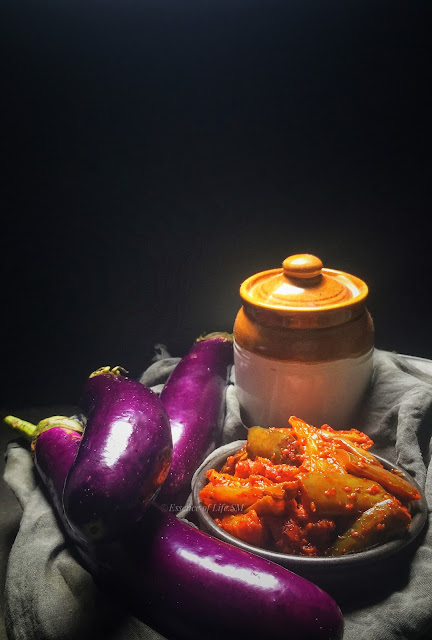
    If there's a pickle that never goes a long way in my pantry, then it is this Portuguese Style Brinjal Pickle. When I say this Pickle never goes a long way, the reason is that, most of the time when my MIL makes this recipe, it gets over the same day.  This Brinjal Pickle is a traditional recipe of the Catholic community of Goa.  I would surely add Cochin into the list too.  This dish is very common in Catholic community of Cochin too.  So, with a Portuguese lineage, living in Fort Cochin, my MIL's family and the most coveted "Clementina Joseph"(Clemmi Thathi), her mother, had traces of Portuguese culture in their lifestyle & cooking. And this Pickle is one from our family repertoire.

    This Brinjal/Egg plant Pickle is cooked mostly with the long variety Eggplants which do not have many seeds inside.  Soft and meaty Eggplants cooked into a pickle with a combination of western and local cuisine.  The use of Vinegar in Pickles is something which takes inspiration from Portuguese - Goan - Fort Cochin kitchens.  They make a wide range of Sweet & Sour Pickles with a tinge of Vinegar in it. Needless to mention, the sweet & Sour Lime Pickle most commonly made for banquets at this point.  And the use of Mustard Powder(coarsely ground Yellow Mustard) in pickles has a distinct Anglo-Indian root.

    Brinjal/Eggplant Pickle is a simple, quick pickle and doesn't require to be kept in brine or sun dried.  And mainly as any other common pickling ingredients like Mangoes, Lime, Gooseberries, Brinjal/Eggplant doesn't have the natural tanginess in it. So the addition of Vinegar balances the taste notes and also facilitates storing this pickle.  But importantly, this Brinjal pickles as it is, doesn't have the required acidity which makes it not safe to store it at room temperature.  I usually store this Eggplant Pickle in the refrigerator, and mostly I make only a small batch of it at a time.

    This Portuguese influenced Brinjal Pickle is a cornucopia of taste loaded in it.  A bit of sweetness is what you get with the first bite, then it gives you the note of sourness, slightly hitting the spiciness as you savour it around.  The star of the show is of course the meaty Eggplant/Brinjal, which gives a wonderful texture to this pickle.  Though this pickle is mostly served along with Rice, I love to eat it with Paratha/Chapatis.  The combination of flavours and tastes makes it a perfect combination with both Roti & Rice.

For more EGGPLANT/BRINJAL RECIPES, Click here...


Cuisine - Portuguese(Goan; Cochin)
Course - Pickle/Condiment
Spice Level - High
Difficulty - Medium
 Yields - 11/2 - 2  Cups
Author - SM


Preparation Time - 15 - 20 Minutes
Cooking Time - 30 - 45 Minutes

For more PICKLE Recipes, Click here...


HOW TO MAKE GOAN/COCHIN STYLE BRINJAL PICKLE - PORTUGUESE STYLE EGGPLANT PICKLE
GOAN/COCHIN BRINJAL PICKLE
BRINJAL/EGGPLANT PICKLE

INGREDIENTS:

For Brinjal/Eggplant Pickle:

Brinjal/Eggplant - 2 Cups
Green Chillies - 3-4 Nos.
Curry Leaves - 2 Sprigs
Ginger 1/2 inch - 1 Piece
Garlic - 10-12 Cloves
Mustard Seeds(Yellow) - 1 Teaspoon
Salt - To Taste
Oil - 1/3 Cups


For Pickle Paste(To Grind):

Turmeric Powder - 1/2 Teaspoon
Red Chilli Powder - 1 Teaspoon
Kashmiri Chilli Powder - 2-3 Teaspoons
Ginger 1/2 inch - 1 Piece
Garlic - 10-12 Cloves
Cumin Seeds - 1/4 Teaspoon
Vinegar - 3-4 Tablespoons


METHOD: 

  • Rinse the Eggplant in water.  Pat dry the eggplant and make sure there is no moisture in it.
  • Now cut the long Eggplant into four and then cut it into 2 inches long pieces.
  • Soak the Eggplant in salted water for a few minutes, or until use.  This prevents them from turning brown.
  • Finely chop the Green Chillies and Ginger.  Peel and cut the garlic into thin slices.
  • Meanwhile, dry roast the Yellow Mustard seeds on a very low flame for a few minutes.
  • Coarsely grind or Crush the Yellow Mustard Seeds and keep it aside.
  • Grind all the ingredients mentioned under,"For the Pickle Paste"adding Vinegar into a fine paste & keep it aside.
  • Now, heat oil in a wok.  Let the flame be at high and allow the oil to smoke off.
  • Then, reduce the flame to low and wait for a few minutes for the oil to slightly cool down.
  • Now add, Eggplant pieces and fry this on a low flame for a few minutes.   
  • The idea is just to remove the moisture from the vegetable.  Do not overcook this at this stage.
  • Remove the Eggplants from the oil and keep them aside.
  • In the remaining oil,  add finely chopped Green Chillies, Ginger, Garlic & Curry leaves.  
  • Sauté it on a low flame for a few minutes until the ingredients turn fragrant.
  • Then add the Pickle Paste and give a quick stir.
  • Add in the crushed Yellow Mustard Seeds, Salt & Sugar.  
  • Mix well and cook this on a low flame until the raw flavour goes & oil separates from the mix.
  • Now add in the Eggplant pieces and gently mix until the Eggplants are well coated with the Pickle mix.
  • Adjust the amount of salt & sugar and add in some Vinegar if needed.
  • Cook this on a low flame for a few minutes.
  • Switch off the flame and allow the pickle to cool down before storing.
  • This Pickle can be had immediately, not need of maturing time.
  • Store the Pickle in a clean and dry Glass/Ceramic Jar in a refrigerator.
  • Brinjal Pickle is served along with Rice & curry.  Goes well with Moru Curry/Moru Kachiyathu.
  • Brinjal/Eggplant Pickle tastes great with Parathas, Chapatis, Roti, etc.,  
  • Can pair it up with Curd Rice too.


    GOAN/COCHIN BRINJAL PICKLE
    BRINJAL/EGGPLANT PICKLE

NOTES:

  • The Eggplants should be absolutely dry & moist free before cutting them for the Pickle.
  • I have used the long purple variety of Eggplant.  These varieties(Purple/Green) suits well for this pickle.  As it has no/fewer seeds and also has a meaty texture.
  • Adjust the amount of Red Chilli Powder to suit your spice level.
  • Pour ample of Gingelly Oil to the pickle.  This will prolong the shelf life of the pickle.
  • If you feel that extra oil should be added, once the pickle is made, Heat the Sesame Oil, cool it and then pour it over the pickle.
  • Avoid using steel/aluminium/copper container for preserving the mangoes, as they tend to react with the acidic nature of salt and vinegar.
  • A suitable method is to store them in a clean and dry, sterilized Glass/Ceramic/Porcelain Jars.
  • Always use clean & dry spoons while handling this Brinjal Pickle. 
  • Wet jars/spoon can spoil the pickle as the moisture in them helps in the growth of Fungus and that would spoil the pickle. 
  • I personally suggest storing this Brinjal Pickle in the refrigerator to avoid spoilage.   


Newer Posts Older Posts Home
Search Essence of Life - Food

I Me Myself

A vintage-style horizontal oval frame showcasing ornate silver spoons on a dark rustic surface

Essence of Life - Food is all about daily cooking with a simple sense of taste and health. It is all about food. Not a day goes by without eating for most of us, so what we eat matters on the whole. Food in the mode of goodness increases the duration of life, purifies one's existence, and gives strength, health, happiness, and satisfaction. Above all ingredients, the most vital one in my kitchen is love.

Sm @ Essence of Life - Food

Popular Posts

  • Kizhi Parotta: Kothu Parotta and Salna Wrapped in Banana Leaves
  • How to Make Kerala Kanji | Traditional Rice Porridge with Payar, Chammanthi & Achar
  • Madurai Mutton Chukka Varuval
  • Maida Chapati - All-Purpose Flour Chapati
  • Fish Nirvana Recipe | Authentic Kerala Style Kingfish

Labels

AROUND THE WORLD BAKING BEVERAGES BIRIYANI & PULAO BREAKFAST CURRIES DESSERTS FROM GODS OWN COUNTRY From My Family's Kitchen - Heirloom Recipes GLOSSARY HOW TO... KERALA PALAHARAM KONGU CUISINE KUIH MUIH MALAYSIAN CUISINE MIDDLE EASTERN CUISINE Manvasanai - Flavours from Tamil Soil PICKLES RICE DISHES ROTIS SADHYA SNACKS & SAVOURIES SOUPS SPICE POWDERS TIFFIN ITEMS VIRUNDHU WINES eBook
Ebook - What I Cook - For Onam

Ebook - “What I Cook - For Onam”

Amazon.com/dp/B0CGPVY6J3

Indulge in Kerala’s Culinary Heritage: Traditional Onam Sadhya Recipes, with Expert Serving Tips! Celebrate Onam the authentic way! Discover 25 timeless Kerala Sadya recipes in my ebook. From avial to payasam, bring home the flavours of tradition. Available now on Amazon!

Essence of Life

Subscribe & Follow

© 2026 | Essence of Life - Food

  • Home
  • Ask First
    Please note that all rights for the photographs and texts on this blog, unless otherwise mentioned, rests with the author. Please do not use without permission.
  • Privacy Policy