 |
Perfectly Crisp Achappam Recipe (Kerala Rose Cookies) — A Golden Tradition
There is something inherently joyful about a perfect batch of Achappam. These stunning cookies are the epitome of delicate crunchiness, offering a lovely balance of subtle sweetness and rich coconut flavour. If you’ve ever tried to make them and ended up with more sunken ships than rose cookies, fear not! I’m going to walk you through every pro tip and trick I’ve learnt so you can bypass the drama and serve up baskets of these beautiful 'rose cookies' in no time.
A Globetrotter Snack: History and Origin of the Rose Cookie
Achappam is a true testament to the fascinating, and often circuitous, path of global cuisine. The unique rose shape and the method of frying the batter on a special hot-oil mould (the achu) trace their exact roots back to Scandinavian desserts. In countries like Norway, where they are called Rosettbakkels and Sweden, where they are called Struva, these delicate, deep-fried cookies have been a festive staple for centuries!
It was the Portuguese and Dutch colonial powers—who had trading footholds across both India and Southeast Asia—that introduced this cooking tool and technique to Asia in the 16th and 17th centuries.
In Kerala, the recipe was perfectly localized: the expensive European ingredients were swapped for our signature staples, rice flour and coconut milk, giving us the Achappam (അച്ചപ്പം). Meanwhile, in the Malay Archipelago, the exact same technique and similar local ingredients were used to create the celebrated local favourites like Kuih Loyang (brass cake) in Malaysia or Kembang Goyang (shaking flower) in Indonesia.
So, while Achappam and Kuih Loyang are near-identical twins, they are cousins who arrived in Asia separately, all stemming from the same European ancestor, and all perfectly adapted to our local, flavourful tastes. How clever is that?
"While the European originals (Rosettbakkels) rely on wheat flour and cream, the Asian adaptations—both our Achappam and the Malay Kuih Loyang—cleverly swapped these for the tropical staples of rice flour and rich coconut milk, creating a far lighter, crisper, and distinctively local texture."
 |
My Attempts with Rose Cookies: A Decade-Long Battle!
Like many traditional snacks, mastering Achappam felt like an impossibility for me. I once embarked on a true, decade-long kitchen drama, battling a beautiful brass mould that refused to let go of the batter, resulting in many frustrating, scrapped batches of "burntappams."
The excitement was real when I first moved to Malaysia and found readymade Achappam flour! I snagged a gorgeous brass mould (because if it’s brass, I love it!) and eagerly started frying. I shook, I nudged, I pleaded—but the batter was glued on. The whole unannounced batch of "mould stuck-burnt appams" ended up in the bin, a tragic waste of time and batter. For years, I waged a quiet war with that mould, seasoning it religiously and trying every trick. It kept failing!
However, my resolve—driven by the fact my son can happily gobble up a few tens of these snacks—eventually led to victory (thanks to a modern non-stick mould, the hero of my tale!). I’m going to walk you through every lesson I learnt the hard way, ensuring you skip the drama and go straight to the delight!
"Our journey through the flavours of Kerala has only just begun. From the snap of a Banana chips to the sweetness of a Sugiyan, there’s a story in every crunch. Check the link to more Kerala Nadan Palaharam recipes here, and bring the essence of the Kerala to your kitchen table."
 |
Why You Will Love This Fail-Proof Achappam Recipe
- Maximum Crispiness: Using non-roasted rice flour creates that delicate, professional snap!
- Authentic Kerala Flavour: The rich presence of first-extract thick coconut milk and coconut oil.
- Fail-Proof Method: A step-by-step guide on the "3-5 second dip" technique - guidance to prevent sticking or breaking.
- Beginner-Friendly: Clear instructions on consistency and mould management.Click here for the detailed Nendhra Banana Chips Recipe here and bring the soul of the Kerala streets to your kitchen."
Achappam Recipe Overview
- Cuisine: South Indian (Kerala), Around the World
- Recipe Type: Snack, Festival Food
- Yields: 30–35 cookies
- Servings: 8–10 people
- Difficulty: Medium
- Author: SM @ Essence of Life - Food
Time Estimate
- Preparation Time: 20 minutes
- Resting Time: 1–2 hours (Crucial!)
- Cooking Time: 45–60 minutes
- Total Time: Approx. 1 hour 5 minutes (Excluding rest)
How to Cook Authentic Kerala Style Achappam - Step-by-step Guide
 |
Ingredients
The Dry Essentials
- 4 Cups Rice Flour (Fine unroasted rice flour)
- 100 grams Sugar
- 1/2 teaspoon Cardamom Powder (Optional)
- Salt A generous pinch
The Wet Base
- 1/2 Cup Thick Coconut Milk
- 2 large Eggs (Room temperature)
For Frying
- Coconut Oil for deep-frying
Method: Detailed Cooking Instructions
Step 1. Preparing the Batter
- In a large mixing bowl, whisk the Eggs and Sugar together until well combined and the sugar is completely dissolved.
- Meanwhile, sieve the rice flour to ensure there are no lumps.
- Add the sieved rice flour to the egg mixture and mix well.
- Add the Thick Coconut Milk batch by batch, mixing thoroughly to ensure a smooth batter.
- Add the Salt and the Sesame Seeds (optional) and give it a final mix.
Pro Tip(Consistency Check): Dip a metal spoon into the batter. It should coat the spoon thinly; the batter shouldn't just flow off entirely, but a fine layer should stick to the metal. If it's too thick, add a tiny splash more coconut milk.
Step 2. Preparing the Oil and Mould
- Heat the Coconut Oil in a deep pan.
- Once the oil is hot, dip the Achappam mould (achu) into the oil and let it sit until the mould turns piping hot.
Toolkit Guide: Whether using brass or non-stick, the mould must be screaming hot to prevent sticking.
 |
| Crispy Achu Murukku - Rosette Cookies |
Step 3. Frying the Achappam
- Gently remove the hot mould from the oil and dip it into the batter.
- Stay put for 3–5 seconds. Do not submerge the mould completely; the batter should only cover the sides until1/2 way of its height.
- Gently lift the mould and dip it into the hot oil.(if the batter doesn't stick to the mould, then it means the mould is not hot enough)
- After a few seconds, give the mould a gentle shake so the Achappam falls off into the oil.
- Immediately turn the Achappam and cook on a low-medium flame until it reaches a beautiful golden brown.
- Remove and drain on absorbent paper.
- Repeat: Always reheat the mould in the oil before the next dip!
Pro Tips and Notes
- The Sugar Balance: I used cup sugar and felt it was sweet enough. If you prefer it sweeter, add a tbsp or two. However, avoid adding too much; excess sugar makes the batter stick to the mould and causes the Achappam to brown too quickly.
- The Stick Test: If the batter is too thick, the Achappam turns out thick and soft; if it's too thin, it will not stick to the mould. For the consistency test, simply Dip a metal spoon into the batter. It should coat the spoon thinly.
- Heat Control Strategy: This is crucial. Start by heating your oil on medium-high. Once it's really hot, reduce it to low-medium to fry. This ensures the rose cooks through without burning.
- The Crunch: Don't panic if they appear soft when first removed. They will hold their shape and gain their signature "snap" and crispiness as they rest and cool.
- Batter Management: Instead of dipping into the main bowl, transfer small batches of batter into a smaller, deep vessel as you go. This keeps the dipping process clean and prevents the main batter from heating up.
- Heating The Mould: Make sure you dip the mould back into the hot oil for at least a minute between every single cookie. It needs to be screaming hot to "sear" the batter into place.
The Toolkit: Mould(Achu) Maintenance & Care
 |
Glossary: The mould is an 'achu'. Achappam literally means 'bread/cake made with the mould'.
Seasoning a New Mould
- Wash it thoroughly with soap and water and dry completely with a dish towel.
- Immerse it in very hot oil and let it sit aside for a while. This creates a natural non-stick layer.
Reviving an Old Mould
- Soak it in tamarind water for 1–2 days to clean away any oxidation orSoak it in rice water (congee water) for a day
- Seasoning Brass: If using traditional brass, soak it in hot oil for 2 days before first use oror Soak it in rice water (congee water) for a day⚠️ Note: Avoid harsh acids (lemon juice, tamarind water etc.,) on brass.
Post-Fry Care
- Once finished, wash and dry your mould immediately.
- Grease it with a light coating of oil before storing to prevent rust and ensure it's ready for your next batch.
 |
Serving & Storage
- Serving: Best with evening tea or coffee. These are best enjoyed with a hot cup of "Kattan Chaya or Kaapi" (Black Tea/Coffee). They are the perfect companion for a rainy afternoon or a festive Christmas/Onam platter.
- Storage: Store in an airtight container at room temperature for up to 2-3 weeks. Briefly reheat in a toaster oven if they lose their snap.
FAQs: Quick Answers to Your Achappam Quandaries
Q: Can I make this with All-Purpose Flour (Maida) instead?
- A: Absolutely! While I personally prefer the authentic "Kerala Touch" of pure rice flour and coconut milk, a Maida combination works beautifully and is often easier for beginners.
Q: Why does my batter keep falling off the mould into the bowl?
- A: This usually means your mould isn't hot enough. It needs to be hot enough to "grip" the batter the moment they touch. Give it an extra minute in the hot oil.
Q: Why is my Achappam sticking and refusing to release into the oil?
- A: This happens for two reasons: either you submerged the mould completely (the top must stay dry!) or there is too much sugar in your batter, creating a sticky caramel effect.
Q: Is there a secret to the perfect crunch?
- A: Yes—the resting time. Letting your batter sit for at least an hour allows the rice flour to hydrate, and letting the fried cookies cool completely ensures the perfect snap.
Q: Can I make this eggless?
- Yes! Replace eggs with 1/4 cup extra coconut milk and a tablespoon of cornflour for binding.
Recipes You Might Like (More Traditional Kerala Snacks!)
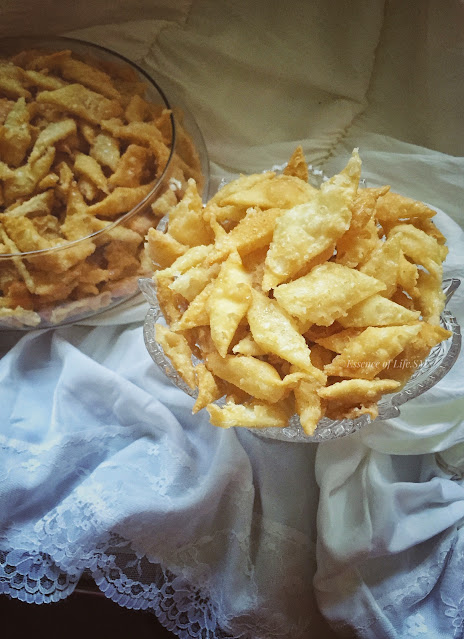
- Crispy Diamond Cuts – Another Easy Deep-Fried Sweet
- Avalose Unda (Roasted Rice Powder & Coconut Laddu) – An Authentic Kerala Nadan Palaharam
- Kul Kuls / Kalkals (Goan/Kerala Christmas Sweet) - Crunchy and Tasty
- The Perfect Unniyappam – Kerala Temple Delicacy


Perfecting the Classic - Achappam (അച്ചപ്പം)!
 |
So there you have it—a foolproof recipe guide for Achappam (അച്ചപ്പം)! It’s a recipe that requires a bit of patience and a good, well seasoned(or a non-stick) achu, but the reward is absolutely worth the effort. Whether you’re relishing the nostalgia of a Kerala Christmas or simply looking for that perfect, crispy Achappams to accompany your evening tea, this recipe yields you with that perfect golden Rose Cookies.
Did your Achappams release with a graceful shake or did they put up a fight? If you found these tips helpful, don’t forget to share this post with your fellow snack-lovers. And if you’re looking for more deep-fried delights, why not check out Pazham Pori recipe or try your hand at some traditional Ela Ada.


 — A Golden Tradition Achappam (അച്ചപ്പം) is the ul...)
0 Comments